
Revelation 8:9 is about the destruction caused by the burning mountain cast into the sea, symbolizing a cataclysmic event that brings devastation and upheaval.
9 a third of the living creatures in the sea died, and a third of the ships were destroyed.
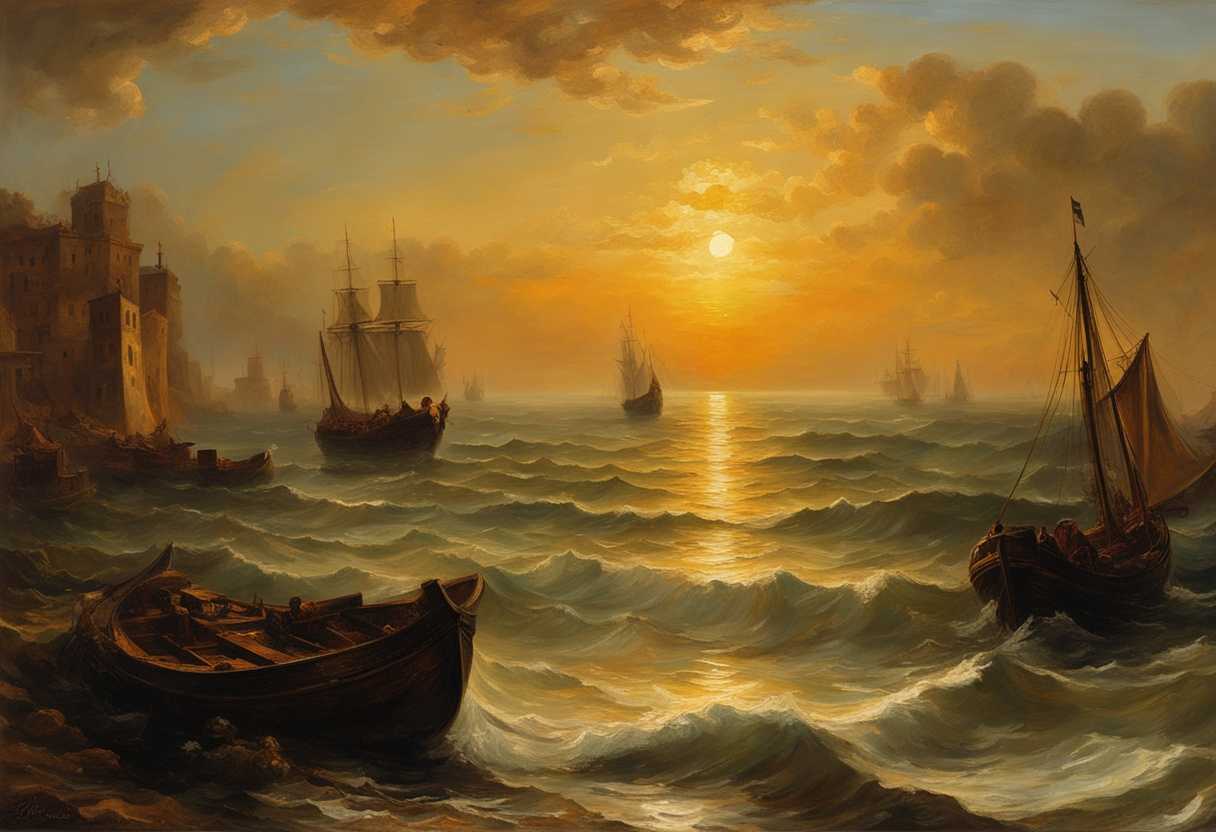
Setting the Scene for Revelation 8:9
In Revelation chapter 8, the scene is set in the heavenly realm where the seventh seal is opened, and seven angels are given seven trumpets. The atmosphere is tense as the angels prepare to sound their trumpets, signaling the beginning of the judgments that will be poured out on the earth. The air is thick with anticipation as the heavenly beings gather around the throne of God, ready to carry out His divine will.
Among the celestial beings present are the four living creatures and the twenty-four elders, who are bowing in worship before the Almighty. The angels, with their trumpets in hand, stand at attention, awaiting the command to sound the alarms that will unleash the judgments upon the earth. The scene is awe-inspiring, with flashes of lightning and peals of thunder emanating from the throne, underscoring the power and majesty of God.
As the angels prepare to sound the trumpets, a hush falls over the heavenly court, and all eyes are fixed on the throne. The tension is palpable as the moment of judgment draws near, and the fate of the earth hangs in the balance. In this pivotal moment, the angels stand ready to execute God’s will, bringing about the fulfillment of His divine plan for the redemption and restoration of all creation.
What is Revelation 8:9 about?
This verse from the Book of Revelation describes a catastrophic event where a third of the living creatures in the sea perish. The imagery used here is profound and evocative, depicting a scene of immense loss and devastation. Imagine the impact on the delicate balance of marine ecosystems when such a large portion of sea life is wiped out. This verse serves as a powerful reminder of the interconnectedness of all living beings and the consequences of environmental destruction.
Reflecting on this verse, we are prompted to consider our stewardship of the planet and our responsibility towards the natural world. How are our actions affecting marine life and the health of our oceans? What measures can we take to protect and preserve the diverse creatures that inhabit the seas? This verse serves as a call to action, urging us to reflect on our relationship with the environment and strive towards greater conservation efforts. Let us inspire ourselves to make choices that uphold the well-being of all living creatures, both on land and in the sea.
Understanding what Revelation 8:9 really means
The Book of Revelation, penned by the Apostle John during his exile on Patmos, unveils profound visions of divine judgments and ultimate redemption. Revelation 8:9 forms part of the intricate tapestry of the seven trumpets, heralding cataclysmic events that unfold upon the earth. In this verse, the second trumpet resounds, bringing forth devastation upon the sea, a realm often symbolizing chaos and nations in biblical imagery.
“A third of the living creatures in the sea died,” a stark proclamation of significant but not total destruction, serves as a warning of impending judgment. This partial devastation calls for introspection and repentance, urging humanity to heed the signs of divine displeasure. Furthermore, the mention of “a third of the ships were destroyed” underscores the economic repercussions of these judgments. Ships, essential for trade and commerce, represent the interconnectedness of nations and the fragility of worldly systems in the face of divine intervention.
Drawing parallels with other biblical passages enhances our understanding of Revelation 8:9. The plague of blood in Exodus 7:20-21, the signs of the end times in Matthew 24:7, and the groaning of creation in Romans 8:22 all converge to emphasize God’s sovereignty over nature and His redemptive plan for humanity. These interconnected threads weave a tapestry of divine justice and mercy, urging us to contemplate our role in the grand narrative of creation.
The relevance of Revelation 8:9 extends to contemporary issues, resonating with environmental concerns, economic stability, and the call to repentance. As we witness the degradation of our natural world and the volatility of global economies, this verse serves as a poignant reminder of the transient nature of earthly pursuits. It beckons us to realign our priorities, fostering stewardship of both the environment and our spiritual well-being.
Consider a coastal town devastated by an oil spill, mirroring the partial judgment described in Revelation 8:9. As marine life perishes and economic activities grind to a halt, the community grapples with the consequences of neglect and exploitation. This anecdote underscores the urgency of reflection and repentance, echoing the timeless message of Revelation for modern audiences.
In conclusion, Revelation 8:9 stands as a testament to the power and justice of God, inviting us to introspection and transformation. By delving into its depths and exploring its resonances with other scriptures, we unearth profound truths about divine sovereignty and human responsibility. Let us heed the call to repentance, embracing the hope of redemption amidst the tumult of a world in need of divine grace.
Are we willing to accept the consequences of our actions?
The verse highlights the consequences of our actions in a clear and direct manner. It serves as a reminder that we must be prepared to face the outcomes of our choices, whether they be positive or negative. We can approach life with a sense of responsibility and mindfulness by understanding and accepting this principle.
It is crucial to reflect on our decisions and behavior because they can have a significant impact not only on ourselves but also on others and the world around us. The verse emphasizes the concept of accountability and the importance of taking ownership of our actions. When we acknowledge the potential consequences of our choices, we can strive to act with greater integrity and make decisions that align with our values. We can cultivate a greater sense of awareness and conscientiousness in our daily lives by ultimately recognizing the significance of cause and effect. This awareness can empower us to make decisions that are grounded in wisdom and compassion, leading to more positive outcomes and a deeper sense of fulfillment.
Application
Let’s step up as stewards of our planet, just as we do at work or with our families. It’s time to take action, reflecting on how our choices affect the world we live in. Let’s commit to making sustainable choices in our daily lives to protect and nurture the earth’s beauty. Are you ready to embrace your role in safeguarding our planet for our children and grandchildren?

Reverend Michael Johnson is an experienced Church Minister with a profound expertise in spirituality and guidance. With a serene presence and a compassionate heart, he has faithfully served his congregation for over 20 years, leading them on a spiritual journey towards inner peace and enlightenment. Reverend Johnson’s extensive knowledge of religious philosophies and profound understanding of human nature have made him a trusted confidant and mentor to many, as he seamlessly weaves his profound wisdom into life teachings. Reverend Johnson’s calming demeanor and empathetic nature continue to uplift and heal souls, nurturing a sense of unity and tranquility within his community.