
Romans 1:1-4 is about Paul’s introduction and declaration of Jesus as the Son of God and his fulfillment of the prophecies through his resurrection from the dead, establishing his authority and demonstrating his power.
1 Paul, a servant of Christ Jesus, called to be an apostle, set apart for the gospel of God,
2 which he promised beforehand through his prophets in the holy Scriptures,
3 concerning his Son, who was descended from David according to the flesh
4 and was declared to be the Son of God in power according to the Spirit of holiness by his resurrection from the dead, Jesus Christ our Lord,
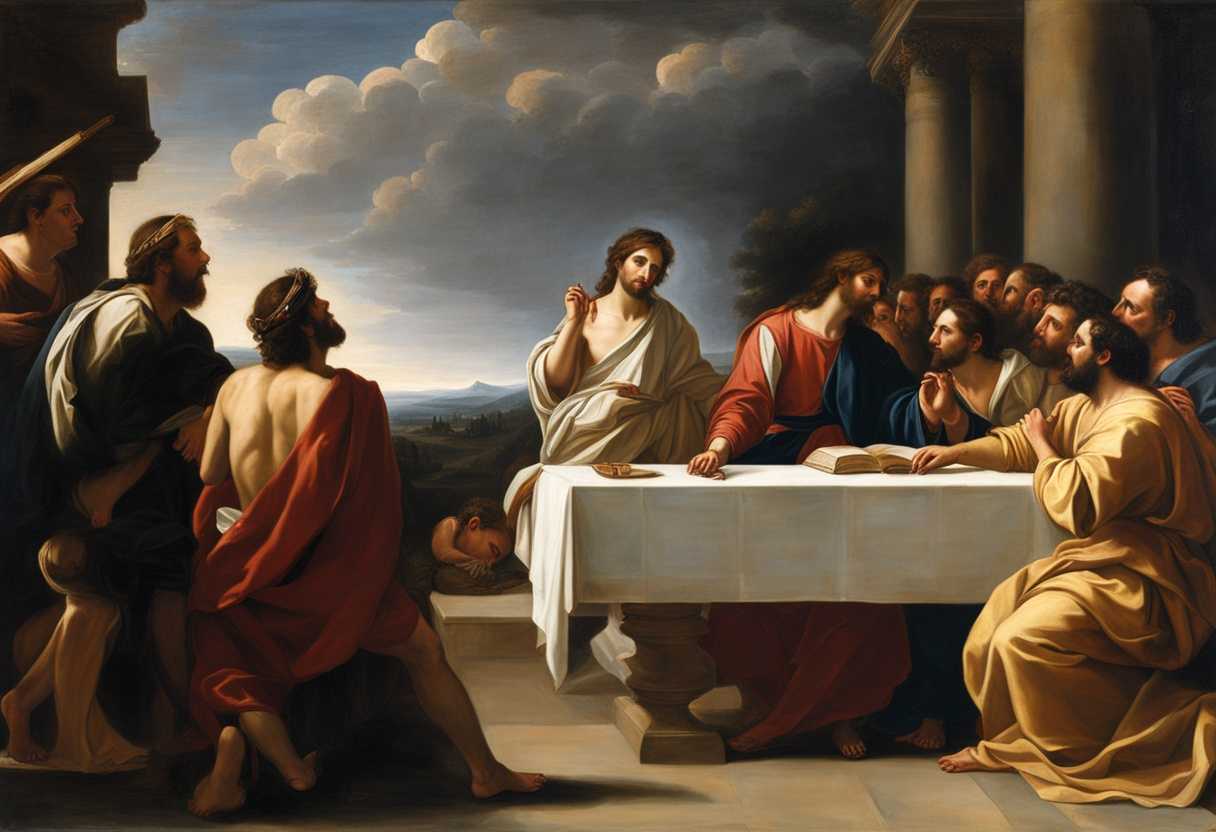
Setting the Scene for Romans 1:1-4
The scene in Romans 1:1-4 takes place in the city of Rome, where the apostle Paul is writing a letter to the Christians there. Paul, formerly known as Saul, had a dramatic conversion on the road to Damascus and became a devoted follower of Jesus Christ. He is now addressing the Roman church, introducing himself as a servant of Christ Jesus, called to be an apostle and set apart for the gospel of God.
Surrounded by parchment, ink, and a flickering oil lamp, Paul writes passionately about the power of the gospel to save all who believe. He emphasizes the importance of Jesus’ lineage, being descended from David according to the flesh, and declared the Son of God with power by his resurrection from the dead. Paul’s words are filled with conviction and purpose, as he lays the foundation for his teachings on faith, righteousness, and salvation through Jesus Christ.
The recipients of Paul’s letter in Rome are a diverse group of believers, both Jews and Gentiles, who have come to faith in Christ through various means. Some may have heard Paul preach during his travels, while others may have been introduced to the gospel by fellow believers. As they gather to read Paul’s letter, they are eager to learn more about the teachings of this passionate apostle and deepen their understanding of the gospel message.
What is Romans 1:1-4 about?
Paul is not just stating his identity as a mere preacher or missionary in this verse; he is humbly positioning himself as a servant of Christ. Paul emphasizes his dedication to serving the will of God and spreading the message of Jesus with humility and selflessness by calling himself a servant. This declaration highlights the depth of Paul’s commitment and the sincerity of his faith. Paul, as a servant of Christ, sees himself as an instrument of God’s will, devoted to carrying out his mission on earth.
Through this verse, Paul also underscores the divine calling he has received to preach the gospel of God’s Son. This calling is not a mere job or duty for Paul; it is a divine commission that shapes his entire existence and purpose. Paul emphasizes his divine calling, inviting us to reflect on our own sense of purpose and calling in life. What are we called to do? How are we serving a higher purpose or mission in our lives? Paul’s example challenges us to consider our own calling and to live with the same devotion and commitment to serving God’s will. This verse is a powerful reminder of the importance of humility, service, and divine calling in the life of a believer. Paul’s declaration sets a standard for how we should approach our faith and our mission in the world. We reflect on Paul’s words, inspiring us to embrace our own calling with the same humility, dedication, and sense of purpose.
Understanding what Romans 1:1-4 really means
Romans 1:1-4 opens the profound theological discussions in Paul’s letter to the Romans, laying the groundwork for the centrality of Jesus Christ in the gospel. In this passage, Paul identifies himself as a servant of Christ Jesus, highlighting humility and dedication to his calling. His acknowledgment of being “called to be an apostle” emphasizes a divine appointment, underscoring the sacred nature of his mission. By stating that he is “set apart for the gospel of God,” Paul signifies a life wholly dedicated to spreading the good news, reflecting his unwavering commitment to his faith.
The phrase “The gospel he promised beforehand through his prophets in the Holy Scriptures” bridges the gap between the Old Testament prophecies and the New Testament gospel, showcasing the continuity in God’s redemptive plan. Furthermore, the mention of Jesus as a descendant of David in His earthly lineage fulfills Messianic prophecies, affirming His rightful position as the promised Savior. The declaration that Jesus was appointed the Son of God in power through His resurrection from the dead by the Spirit of holiness solidifies His divine nature and triumph over death, serving as the ultimate proof of His identity.
Connecting Romans 1:1-4 to related biblical passages such as Isaiah 53, 2 Samuel 7:12-16, and Acts 13:32-33 reinforces the fulfillment of God’s promises through Jesus Christ. This passage resonates with contemporary audiences by emphasizing the significance of comprehending Jesus’ identity and mission, grounding the gospel in God’s eternal plan and offering a firm foundation for faith. Paul’s example of being “set apart” for a divine purpose can inspire individuals in today’s world to seek and fulfill their own God-given missions, finding profound meaning and fulfillment in their lives.
Consider the story of Sarah, a young woman who, feeling adrift and purposeless, found inspiration in Romans 1:1-4. Like Paul, she realized she could be “set apart” for a unique mission. This revelation led her to volunteer at a local shelter, where she discovered immense fulfillment and a sense of calling, transforming not only her own life but also positively impacting those she served. Romans 1:1-4 stands as a powerful introduction that not only sets the stage for the rest of the letter but also imparts timeless truths about identity, purpose, and the fulfillment of God’s promises through Jesus Christ.
What are the implications of Jesus being declared Son of God?
The declaration of Jesus as the Son of God in this verse carries significant implications for Christian theology and belief. The verse emphasizes Jesus’ divine nature and his unique relationship with God the Father by identifying him as the Son of God. This proclamation highlights Jesus’ authority, power, and holiness as God incarnate, distinct from any other created being.
Furthermore, recognizing Jesus as the Son of God also underscores his role as the promised Messiah who came to fulfill God’s redemptive plan for humanity. This title affirms Jesus’ identity as the one who brings salvation and reconciliation between God and humanity, offering eternal life through his sacrificial death and resurrection. It signifies his divine mission and the centrality of his teachings and actions in the Christian faith. Believers ultimately place their trust and faith in Jesus as the ultimate revelation of God’s love, grace, and truth by declaring him as the Son of God. It calls for a response of worship, obedience, and discipleship, acknowledging Jesus as Lord and Savior, and embracing the transformative power of his life and message in shaping the lives of his followers.
Application
Reflect on Paul’s powerful words about the gospel’s strength and our duty to follow Christ faithfully. Let his message spark a passion within you to spread the good news fearlessly to those in your circles, for our beliefs are built on Christ’s triumph over darkness. Will you seize the moment and declare the light of Christ to a world yearning for salvation?

Reverend Michael Johnson is an experienced Church Minister with a profound expertise in spirituality and guidance. With a serene presence and a compassionate heart, he has faithfully served his congregation for over 20 years, leading them on a spiritual journey towards inner peace and enlightenment. Reverend Johnson’s extensive knowledge of religious philosophies and profound understanding of human nature have made him a trusted confidant and mentor to many, as he seamlessly weaves his profound wisdom into life teachings. Reverend Johnson’s calming demeanor and empathetic nature continue to uplift and heal souls, nurturing a sense of unity and tranquility within his community.