
1 Then what advantage has the Jew? Or what is the value of circumcision?
2 Much in every way. To begin with, the Jews were entrusted with the oracles of God.
3 What if some were unfaithful? Does their faithlessness nullify the faithfulness of God?
4 By no means! Let God be true though every one were a liar, as it is written, “That you may be justified in your words, and prevail when you are judged.”
5 But if our unrighteousness serves to show the righteousness of God, what shall we say? That God is unrighteous to inflict wrath on us? (I speak in a human way.)
6 By no means! For then how could God judge the world?
7 But if through my lie God’s truth abounds to his glory, why am I still being condemned as a sinner?
8 And why not do evil that good may come?—as some people slanderously charge us with saying. Their condemnation is just.
10 as it is written: “None is righteous, no, not one;
10 as it is written: “None is righteous, no, not one;
11 no one understands; no one seeks for God.
12 All have turned aside; together they have become worthless; no one does good, not even one.”
13 “Their throat is an open grave; they use their tongues to deceive.” “The venom of asps is under their lips.”
14 “Their mouth is full of curses and bitterness.”
“Their feet are swift to shed blood;”
16 “in their paths are ruin and misery,”
17 and the way of peace they have not known.”
18 “There is no fear of God before their eyes.”
19 Now we know that whatever the law says it speaks to those who are under the law, so that every mouth may be stopped, and the whole world may be held accountable to God.
20 For by works of the law no human being will be justified in his sight, since through the law comes knowledge of sin.
21 But now the righteousness of God has been manifested apart from the law, although the Law and the Prophets bear witness to it—
22 the righteousness of God through faith in Jesus Christ for all who believe. For there is no distinction:
23 for all have sinned and fall short of the glory of God,
24 and are justified by his grace as a gift, through the redemption that is in Christ Jesus,
25 whom God put forward as a propitiation by his blood, to be received by faith. This was to show God’s righteousness, because in his divine forbearance he had passed over former sins.
26 It was to show his righteousness at the present time, so that he might be just and the justifier of the one who has faith in Jesus.
27 Then what becomes of our boasting? It is excluded. By what kind of law? By a law of works? No, but by the law of faith.
28 For we hold that one is justified by faith apart from works of the law.
29 Or is God the God of Jews only? Is he not the God of Gentiles also? Yes, of Gentiles also,
30 since God is one—who will justify the circumcised by faith and the uncircumcised through faith.
31 Do we then overthrow the law by this faith? By no means! On the contrary, we uphold the law.
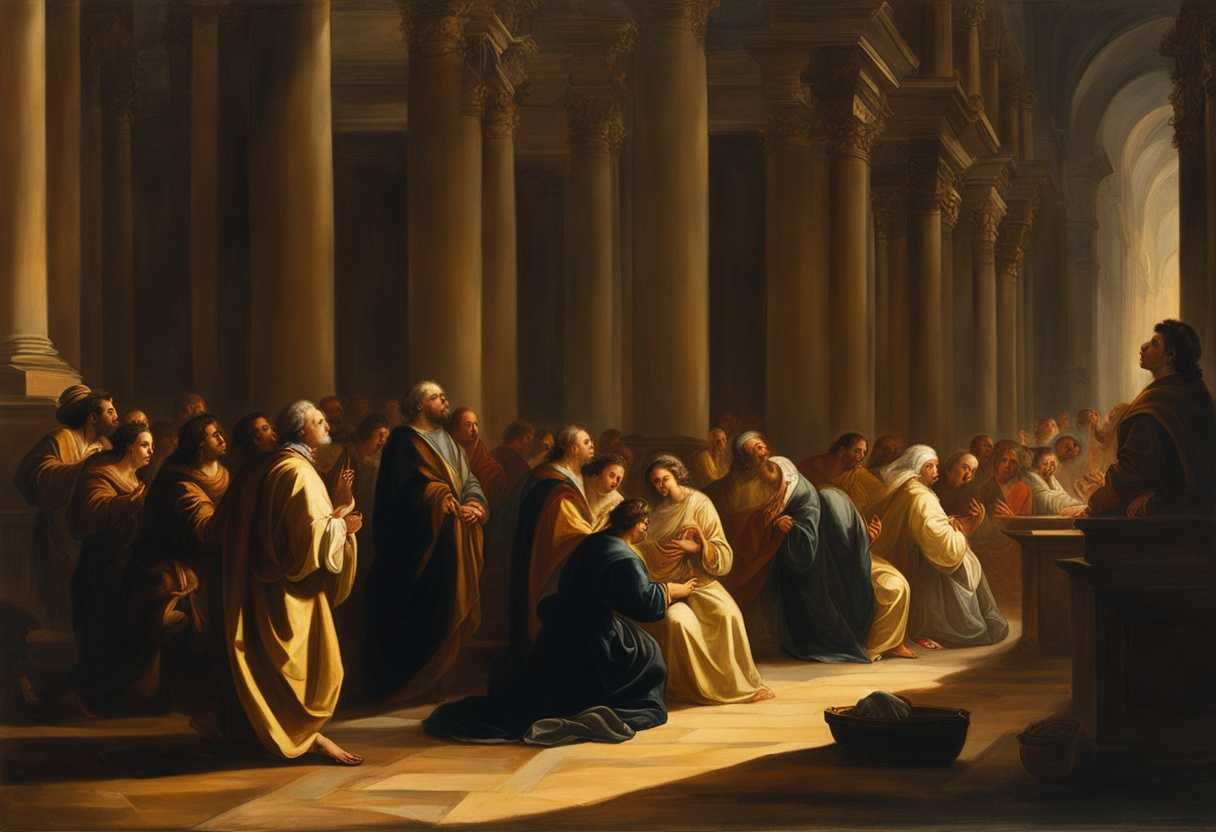
The True Meaning of Romans 3
The Epistle to the Romans, written by the apostle Paul, is a profound and influential work that has shaped Christian theology for centuries. Paul delves into the universal human condition in this chapter, addressing the fundamental issue of sin and the need for salvation through faith in Jesus Christ. Paul’s unwavering conviction in Romans 3 is that all people, both Jews and Gentiles, are under the power of sin. He cites various Old Testament passages to support this sobering truth, reminding us of the dire consequences of our fallen nature. However, the chapter also shines a light on the transformative power of God’s grace, which is freely offered to those who put their trust in Christ.
Throughout this passage, Paul skillfully weaves together the themes of God’s righteousness, the futility of human efforts to earn salvation, and the all-encompassing nature of the redemption found in Jesus. We will confront the stark reality of our own sinfulness as we delve into this chapter.
Romans 3:1-8
The passage in Romans 3:1-8 can be broken down into several important sections for analysis. Starting with the first few verses, Paul addresses the advantage of being a Jew. He raises the question of whether there is any benefit to being circumcised, which was a sign of the covenant between God and the Jewish people. Paul acknowledges that there are indeed advantages to being a Jew, as they were entrusted with the oracles of God. This means that the Jews were given the responsibility of preserving and passing down the teachings and laws of God as recorded in the Old Testament. This highlights the unique position of the Jewish people in God’s plan of salvation, as they were the chosen nation through whom God revealed Himself to the world.
However, Paul also emphasizes that just because the Jews had the Law, it did not make them exempt from sin or judgment. He clarifies that all, both Jews and Gentiles, are under the power of sin. This is a crucial point in the broader context of Romans where Paul is establishing that all humanity is in need of salvation, regardless of their religious background or adherence to the law. Paul emphasizes the universal need for redemption through faith in Christ by stating that both Jews and Gentiles are under sin.
Moving on to the latter part of the passage, Paul addresses a hypothetical argument that suggests that if our unrighteousness serves to show the righteousness of God, then we should be commended for our sins. This is a distortion of the truth to justify sinful behavior, which Paul strongly rejects. He argues that this kind of thinking is unjust and condemnable. It reveals a dangerous mindset that seeks to manipulate God’s righteousness for personal gain.
This section of Romans 3 serves as a reminder of the depravity of the human condition and the universal need for redemption through faith in Christ. It emphasizes that no one is exempt from sin and its consequences, and that salvation comes only through faith in Jesus Christ. This is a foundational Christian belief that is echoed throughout the Bible, such as in John 14:6 where Jesus declares, “I am the way and the truth and the life. No one comes to the Father except through me.” Paul’s words in Romans 3 reinforce the central message of the Gospel – that salvation is available to all who believe, regardless of their background or past sins.
Romans 3:9-20
The passage in Romans 3:9-20 begins by highlighting the Apostle Paul’s argument that both Jews and Gentiles are under sin. He starts by asking if Jews are any better off than Gentiles, and then unequivocally states that all, both Jews and Greeks (Gentiles), are under sin. This is an essential point in the Bible as it is a reminder that no one is exempt from sin or is righteous in the eyes of God based on their heritage, lineage, or works. It reaffirms the universal need for salvation through faith in Jesus Christ, rather than through adherence to the Law alone.
Paul continues by quoting several Old Testament passages to emphasize the universality of sin and the inability of humanity to save themselves through the works of the Law. The references to Psalms, Ecclesiastes, and Isaiah all point to the fact that no one is righteous, not even one. This draws a stark contrast between humanity’s fallen state and God’s holiness, underscoring the need for a Savior to bridge that gap.
The passage also delves into the futility of trying to earn righteousness through the Law. Paul argues that the Law serves to make us conscious of sin rather than provide a means of salvation. The Law highlights our shortcomings and points to our need for a Savior. This concept is echoed throughout the New Testament, particularly in the Gospels, where Jesus emphasizes the importance of faith and grace over legalistic adherence to rules and regulations.
One of the key messages of these verses is the idea of justification by faith. Paul makes it clear that no one will be justified in God’s sight by works of the Law but through faith in Jesus Christ. This theme is central to the entire book of Romans and is a cornerstone of Christian belief. The concept of justification by faith emphasizes that our salvation is a gift from God, received through faith, and not something we can achieve through our own efforts. Romans 3:9-20 serves as a stark reminder of the universal nature of sin, the insufficiency of human efforts to earn righteousness, and the centrality of faith in Christ for salvation. It challenges us to recognize our need for a Savior and to place our trust in Jesus Christ for justification and redemption. The passage encapsulates the essence of the gospel message and underscores the transformative power of faith in Christ.
Romans 3:21-26
Romans 3:21-26 is a pivotal passage in the book of Romans that delves into the core message of salvation by grace through faith in Jesus Christ. Let’s break down this verse into important sections for a detailed commentary.
-
“But now apart from the law the righteousness of God has been made known, to which the Law and the Prophets testify. The Apostle Paul addresses the transition from the Old Covenant, which was based on the Mosaic Law, to the New Covenant, which is centered on faith in Christ in this initial section. Paul emphasizes that the righteousness of God is now revealed apart from the law, a radical shift from the legalistic system of Judaism. The Law and the Prophets in this verse refer to the entire Old Testament scriptures that foreshadowed the coming of the Messiah. This transition highlights the continuity between the Old Testament and the New Testament, with Jesus fulfilling the prophecies and promises of the Hebrew scriptures.
-
“This righteousness is given through faith in Jesus Christ to all who believe. There is no difference between Jew and Gentile,”
Paul goes on to stress that this righteousness is not earned through adherence to the law but is received by faith in Jesus Christ. Here, Paul emphasizes the universality of salvation, stating that it is available to all who believe, regardless of their ethnic background. This was a radical concept at the time, as the Jews considered themselves God’s chosen people. Paul’s assertion that there is no distinction between Jew and Gentile in terms of salvation underscores the inclusive nature of the gospel message.
- “For all have sinned and fall short of the glory of God, and all are justified freely by his grace through the redemption that came by Christ Jesus.”
This section underscores the universal human condition of sinfulness and the need for redemption. Paul echoes his earlier declaration in Romans 3:23 that all have sinned and fallen short of God’s glory, highlighting the fundamental brokenness of humanity. However, the good news is that justification, or being declared righteous before God, is offered freely by His grace through the redemption accomplished by Christ Jesus. The concept of redemption here refers to the act of Jesus paying the price for our sins through His sacrificial death on the cross, thus reconciling us to God.
- “God presented Christ as a sacrifice of atonement, through the shedding of his blood—to be received by faith. Paul explains the mechanism of salvation through the sacrificial atonement of Christ in this section. The term “sacrifice of atonement” can also be translated as “propitiation” or “satisfaction,” conveying the idea that Christ’s death appeased God’s wrath towards sin and satisfied the demands of justice. This sacrificial act of Christ, marked by the shedding of His blood, serves as the means through which we receive salvation. Importantly, this salvation is not based on our own works or merit but is to be received by faith alone. This emphasis on faith as the vehicle for receiving God’s gift of grace underscores the central role of trust in Christ’s finished work on the cross in the process of salvation. Romans 3:21-26 encapsulates the essence of the gospel message of salvation by grace through faith in Jesus Christ. Paul highlights the transition from the Law to faith, the universal accessibility of salvation, the need for redemption due to human sinfulness, and the atoning sacrifice of Christ as the basis of justification. This passage serves as a foundational theological statement on the core tenets of Christianity and emphasizes the all-encompassing nature of God’s grace.
Romans 3:27-31
The verse in Romans 3:27-31 can be broken down into a few key sections that contribute to the overall message of this passage. Firstly, let’s address verse 27 which states, “Where, then, is boasting? It is excluded. Because of what law? The law that requires works? No, because of the law that requires faith.” This section emphasizes the importance of faith over works when it comes to salvation. The verse challenges the idea of boasting about one’s own accomplishments or good deeds as a means of earning salvation. It makes it clear that boasting is excluded because we are justified by faith, not by works.
The idea of faith versus works is a central theme in the Bible, particularly in the letters of Paul. Throughout the history of the Israelites and following the law of the Old Testament, there was a strong emphasis on works and adherence to laws to attain righteousness. However, Paul’s teachings in Romans emphasize that righteousness comes through faith in Jesus Christ, not through one’s own efforts or works. This concept of justification by faith alone is a fundamental aspect of the Christian faith and sets it apart from other religions that emphasize works-based salvation.
Moving on to verse 28, it says, “For we maintain that a person is justified by faith apart from the works of the law.” This further reinforces the idea that justification before God is not achieved by obeying the Mosaic Law or by performing good deeds, but rather through faith in Jesus Christ. This verse echoes the teachings of Paul in other letters, such as Ephesians 2:8-9 which says, “For it is by grace you have been saved, through faith—and this is not from yourselves, it is the gift of God—not by works, so that no one can boast.” This underscores the grace of God as the basis for salvation, which is received through faith. Paul brings up the idea in verses 29-30 that God is the God of both Jews and Gentiles, emphasizing that there is only one God for all people, regardless of their background. This was a radical concept during that time, as the Jews considered themselves God’s chosen people. Paul is breaking down barriers and highlighting the inclusivity of the Gospel message by stating that God is the God of both Jews and Gentiles. This inclusivity is a recurring theme in Paul’s letters, emphasizing that salvation is offered to all who believe, regardless of their ethnic or religious background.
Finally, verse 31 concludes by saying, “Do we, then, nullify the law by this faith? Not at all! Rather, we uphold the law.” This is an important verse that clarifies the relationship between faith and the law. While Paul emphasizes the primacy of faith for justification, he also acknowledges the importance of the law. The law still holds significance in guiding moral behavior and revealing God’s standards, even though it does not justify a person before God. Jesus himself affirmed the importance of the law in Matthew 5:17 when he said, “Do not think that I have come to abolish the Law or the Prophets; I have not come to abolish them but to fulfill them. Romans 3:27-31 provides a comprehensive overview of the relationship between faith, works, the law, and the inclusivity of God’s salvation. It clarifies that boasting is excluded because justification comes through faith in Christ, not through works. It emphasizes that God is the God of all people, both Jews and Gentiles, and that the law still plays a role in guiding moral behavior. This passage ultimately underscores the central role of faith in the Christian understanding of salvation and the inclusive nature of God’s redemptive plan for humanity.
After Romans 3
Romans 3 reminds us of the universal truth that all have sinned and fallen short of the glory of God. Despite our shortcomings, we find hope in the redemption that comes through faith in Jesus Christ. Through His sacrifice on the cross, we are justified freely by His grace. Let us remember that we derive our righteousness not from following the law, but from our faith in Christ as we reflect on the teachings of this chapter. We should hold fast to this truth as we continue our journey of faith, knowing that through Him we find forgiveness and salvation. We will walk in the light of His love, trusting in His mercy and grace to guide us in the chapters that lie ahead.

Reverend Michael Johnson is an experienced Church Minister with a profound expertise in spirituality and guidance. With a serene presence and a compassionate heart, he has faithfully served his congregation for over 20 years, leading them on a spiritual journey towards inner peace and enlightenment. Reverend Johnson’s extensive knowledge of religious philosophies and profound understanding of human nature have made him a trusted confidant and mentor to many, as he seamlessly weaves his profound wisdom into life teachings. Reverend Johnson’s calming demeanor and empathetic nature continue to uplift and heal souls, nurturing a sense of unity and tranquility within his community.