
Romans 4:13-21 is about Abraham’s unwavering faith in God’s promises, despite the obstacles and doubts presented by his circumstances, serving as a powerful example for believers to trust in God’s faithfulness and sovereignty.
13 For the promise to Abraham and his offspring that he would be heir of the world did not come through the law but through the righteousness of faith.
14 For if it is the adherents of the law who are to be the heirs, faith is null and the promise is void.
15 For the law brings wrath, but where there is no law there is no transgression.
16 That is why it depends on faith, in order that the promise may rest on grace and be guaranteed to all his offspring—not only to the adherent of the law but also to the one who shares the faith of Abraham, who is the father of us all,
17 as it is written, “I have made you the father of many nations”—in the presence of the God in whom he believed, who gives life to the dead and calls into existence the things that do not exist.
18 In hope he believed against hope, that he should become the father of many nations, as he had been told, “So shall your offspring be.”
19 He did not weaken in faith when he considered his own body, which was as good as dead (since he was about a hundred years old), or when he considered the barrenness of Sarah’s womb.
20 No unbelief made him waver concerning the promise of God, but he grew strong in his faith as he gave glory to God,
21 fully convinced that God was able to do what he had promised.
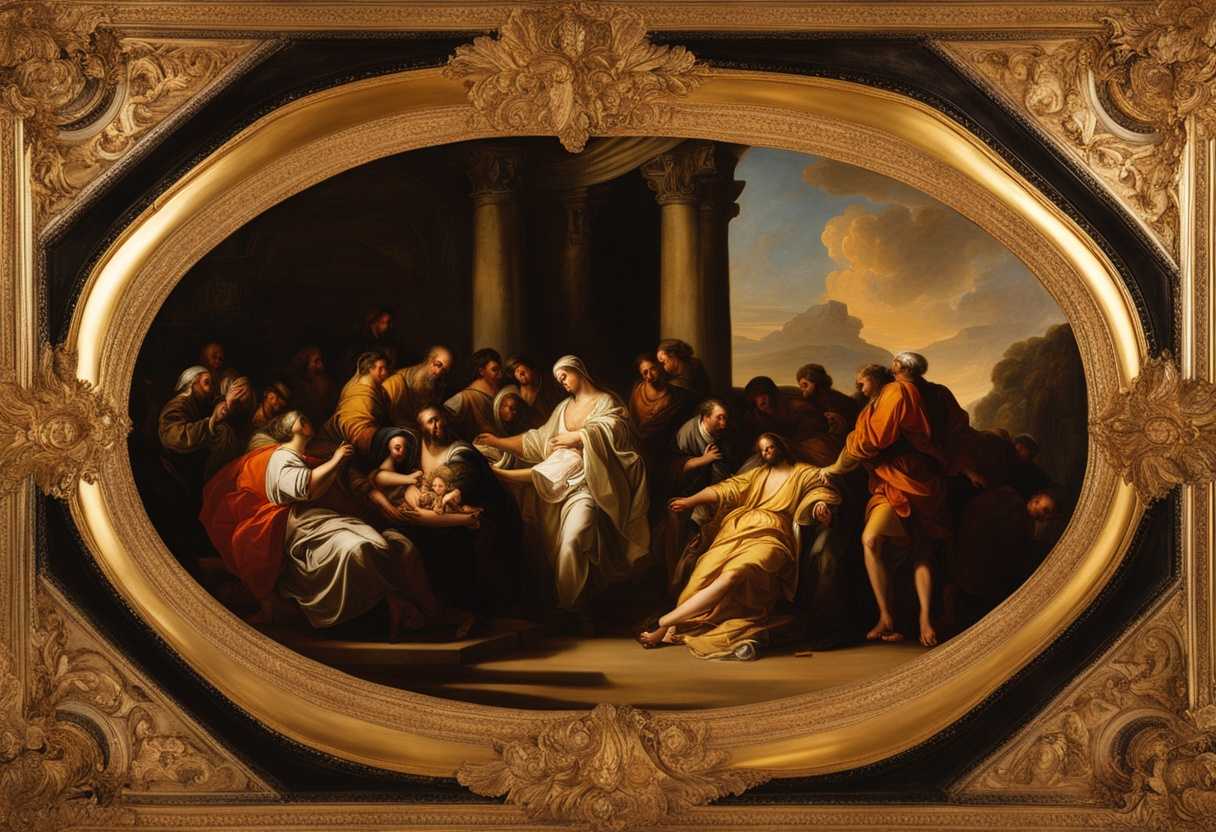
Setting the Scene for Romans 4:13-21
In Romans chapter 4, the apostle Paul sets the scene by discussing the faith of Abraham. Picture a serene evening in the ancient city of Ur, where Abraham, then known as Abram, resides with his wife Sarah. The sun is setting, casting a warm glow over the city as Abraham ponders the promise of God. He is troubled by the fact that he and Sarah are childless, despite God’s assurance that he will be the father of many nations.
As Abraham wrestles with doubt and uncertainty, he is visited by a divine presence. The Lord speaks to him, reaffirming the covenant and promising that his descendants will be as numerous as the stars in the sky. Abraham, though initially hesitant, chooses to believe in God’s promise and his faith is counted as righteousness. Sarah, who is listening nearby, is filled with awe and wonder at the faith of her husband.
Surrounded by the ancient architecture of Ur, with its towering ziggurats and bustling marketplace, Abraham and Sarah stand as a testament to unwavering faith in the face of impossibility. Their story serves as a powerful example of trusting in God’s promises, even when circumstances seem bleak.
What is Romans 4:13-21 about?
Let’s delve into the depth of this verse for a moment. The significance lies in the unwavering faith Abraham had in God’s promise, even when everything seemed impossible. This faith wasn’t just a passive belief but an active trust that led Abraham to obey God wholeheartedly. Through his trust and obedience, Abraham was considered righteous in God’s eyes, not because of his own actions or merits but because of his unshakeable belief in God’s faithfulness.
Now, let’s reflect on our own lives. Do we trust in God’s promises even when circumstances seem bleak? Do we have the faith to step out in obedience, even when it requires us to go against the norm? Just like Abraham, our righteousness is not based on our own goodness or works but on our faith in God and His unfailing promises. Let’s take inspiration from Abraham’s example and strive to trust in God wholeheartedly, knowing that He is faithful to fulfill His promises in His perfect timing.
Understanding what Romans 4:13-21 really means
In Romans 4:13-21, we delve into the promise God made to Abraham and the pivotal role faith plays in receiving God’s promises. Abraham holds a significant place in the Bible as the father of many nations, a man whose faith was counted as righteousness. Genesis 15:5-6 captures the essence of God’s promise to Abraham, assuring him of numerous descendants, a promise that extends to his spiritual descendants as well.
“Heir of the world” encapsulates the vastness of God’s promise to Abraham, hinting at a spiritual inheritance for all believers. This phrase underscores that righteousness is not attained through adherence to the law but through faith, echoing Ephesians 2:8-9’s emphasis on salvation by grace through faith. The mention of “against all hope, Abraham in hope believed” showcases Abraham’s unwavering faith in the face of seemingly insurmountable odds, mirroring Hebrews 11:1’s definition of faith as confidence in the unseen.
The relevance of this passage resonates in modern life, emphasizing the enduring importance of faith. Today, like Abraham, we encounter challenges that test our faith, requiring us to hold on steadfastly to our beliefs. Personal anecdotes or contemporary stories can illustrate how faith has been a guiding light in overcoming obstacles, echoing Abraham’s unwavering trust in God’s promises.
Consider Galatians 3:29, which ties believers to Abraham’s promise, affirming them as heirs according to the promise. James 2:23 further solidifies the link between faith and righteousness, showcasing how Abraham’s belief in God was credited to him as righteousness, earning him the title of God’s friend. These verses reinforce the timeless connection between faith, righteousness, and God’s promises.
In conclusion, Romans 4:13-21 illuminates the enduring power of faith in claiming God’s promises. Let us reflect on our own faith journeys, drawing inspiration from Abraham’s unwavering trust in God. May we find strength in our faith, knowing that like Abraham, we too can be counted as righteous through our belief in God’s promises.
How can we strengthen our faith in God’s promises?
To strengthen our faith in God’s promises, we can look to the example of Abraham as described in Romans 4:13-21. Abraham’s faith was not shaken by circumstances that seemed impossible, such as his old age and Sarah’s barrenness. Despite the odds, he remained fully convinced that God was able to do what He had promised. This trust in God’s ability to fulfill His promises is a key aspect of strengthening our own faith. Focusing on the character of God as revealed in His promises can strengthen our faith. The faithfulness, sovereignty, and goodness of God are evident in the promises He has made throughout the Bible. Remembering His past faithfulness in keeping His word can give us confidence that He will continue to do so in the future. Reflecting on these attributes of God can help us trust in His promises even when we cannot see how they will be fulfilled.
Lastly, meditating on God’s promises through prayer and studying the Scriptures can also strengthen our faith. Spending time in God’s Word allows us to internalize His promises and build a foundation of trust in Him. We can develop a deeper understanding of His faithfulness and grow in our confidence that His word will never fail by immersing ourselves in the truth of His promises.
Application
Let Abraham’s unwavering faith be a beacon of inspiration in your own life’s journey. Embrace the belief in God’s promises, just as he did, despite the challenges that may seem insurmountable. Strengthen your resolve and let your faith shine brightly in the midst of uncertainties. Will you choose to trust in the promises of the Almighty, just as Abraham did in the face of adversity?

Reverend Michael Johnson is an experienced Church Minister with a profound expertise in spirituality and guidance. With a serene presence and a compassionate heart, he has faithfully served his congregation for over 20 years, leading them on a spiritual journey towards inner peace and enlightenment. Reverend Johnson’s extensive knowledge of religious philosophies and profound understanding of human nature have made him a trusted confidant and mentor to many, as he seamlessly weaves his profound wisdom into life teachings. Reverend Johnson’s calming demeanor and empathetic nature continue to uplift and heal souls, nurturing a sense of unity and tranquility within his community.