
Romans 6:1-12 is about how believers are called to live in newness of life through their union with Christ, being set free from the power of sin and experiencing the transformation of their old selves into new righteous beings through faith and obedience.
What shall we say then? Are we to continue in sin that grace may abound?
2 By no means! How can we who died to sin still live in it?
3 Do you not know that all of us who have been baptized into Christ Jesus were baptized into his death?
4 We were buried therefore with him by baptism into death, in order that, just as Christ was raised from the dead by the glory of the Father, we too might walk in newness of life.
5 For if we have been united with him in a death like his, we shall certainly be united with him in a resurrection like his.
6 We know that our old self was crucified with him in order that the body of sin might be brought to nothing, so that we would no longer be enslaved to sin.
7 For one who has died has been set free from sin.
8 Now if we have died with Christ, we believe that we will also live with him.
9 We know that Christ, being raised from the dead, will never die again; death no longer has dominion over him.
10 For the death he died he died to sin, once for all, but the life he lives he lives to God.
11 So you also must consider yourselves dead to sin and alive to God in Christ Jesus.
12 Let not sin therefore reign in your mortal body, to make you obey its passions.
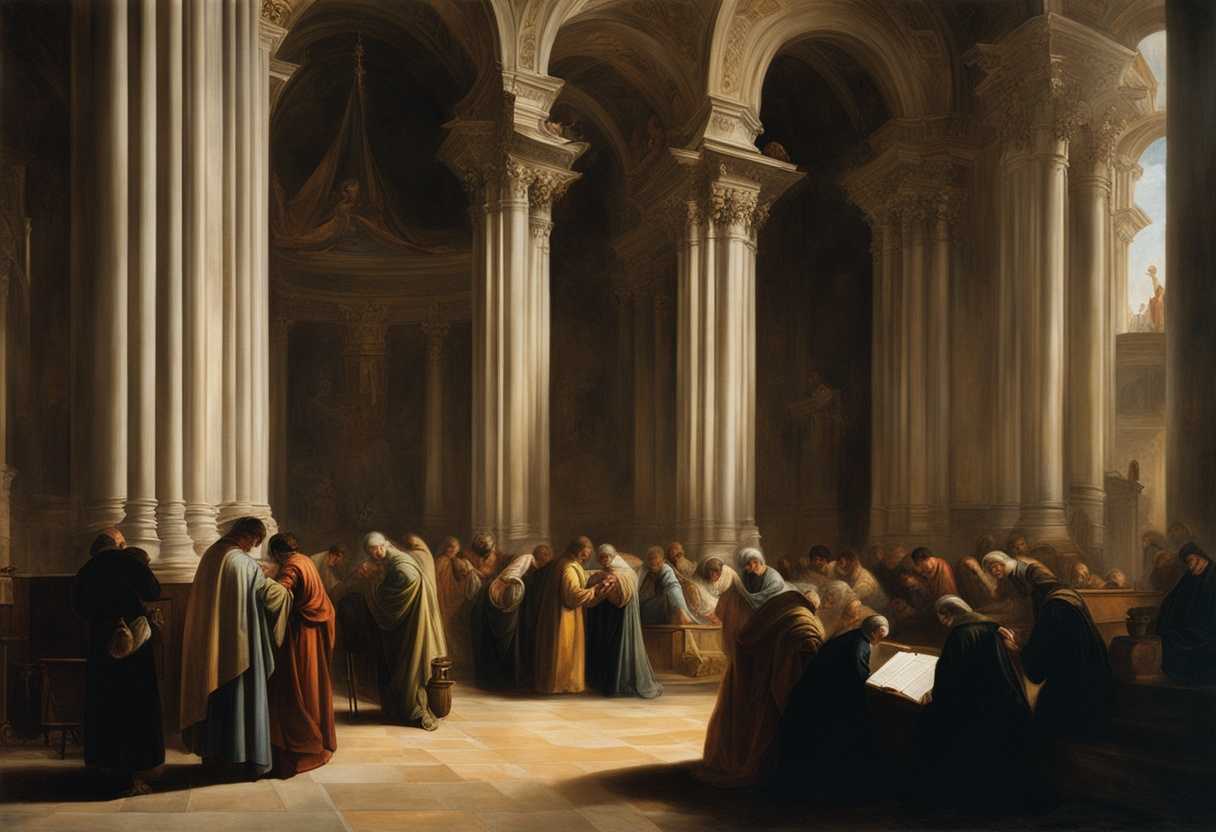
Setting the Scene for Romans 6:1-12
The scene in Romans chapter 6 opens with the apostle Paul addressing a group of early Christians in Rome. The believers have gathered in a humble meeting place, perhaps a small house or a secluded area where they could worship freely without persecution. The room is dimly lit by oil lamps, casting a warm glow on the faces of those present.
Among the group are men and women from various backgrounds, united by their faith in Jesus Christ. Some were Jews who had come to believe that Jesus was the long-awaited Messiah, while others were Gentiles who had been drawn to the message of salvation through grace. They sit attentively, eager to hear Paul’s words of wisdom and guidance.
As Paul begins to speak, his voice is filled with passion and conviction. He addresses the believers, reminding them of the importance of living a life that is dedicated to God. He urges them to resist the temptations of sin and to instead embrace the new life they have been given through Christ’s sacrifice. The room is filled with a sense of reverence and awe as Paul’s words sink deep into the hearts of those listening, inspiring them to live in a way that honors their faith.
What is Romans 6:1-12 about?
This verse vividly portrays the contrast between two states of being. It speaks to a transformation that is profound and life-changing. The first part, “Dying to sin, alive in Christ,” describes a shift from a life dominated by sinful desires to one filled with the life-giving spirit of Christ. This transformation is not merely a superficial change but a complete overhaul of one’s identity and purpose.
Furthermore, the verse calls believers to action by urging them to “offer yourselves to God as instruments of righteousness.” This call is a challenge to live out the new life in Christ actively, using all aspects of ourselves – our thoughts, words, and actions – as instruments to spread goodness and righteousness to the world. It prompts reflection on how we are currently using our lives and talents and pushes us to align them with God’s will for us.
So, as you ponder these words, consider the depth of change that is being asked of you. Are you truly willing to let go of your former way of living and embrace the new life that Christ offers? How can you actively serve as an instrument of God’s righteousness in your daily life? Let these questions guide your reflection and inspire you to live a more purposeful and fulfilling life in Christ.
Understanding what Romans 6:1-12 really means
In the book of Romans, specifically in verses 6:1-12, the Apostle Paul addresses the Christians in Rome, delving into the profound concepts of sin and grace, and how these should shape the lives of believers who have been transformed by their faith in Christ. Paul’s words challenge the notion that grace gives us a free pass to continue in sin, asking, “Shall we go on sinning so that grace may increase?” This rhetorical question highlights the absurdity of exploiting God’s grace for our own selfish desires, emphasizing the need for a genuine transformation in our hearts and actions.
Furthermore, Paul declares, “We are those who have died to sin; how can we live in it any longer?” Here, he speaks of a decisive break from the power and practice of sin that occurs when we become followers of Christ. This death to sin signifies a radical transformation in our lives, where our old self, characterized by sinful behaviors, is crucified with Christ, marking the end of our former way of life dominated by sin.
The imagery of being “baptized into Christ Jesus” symbolizes our union with Him in His death and resurrection, signifying our new life and identity in Christ. This baptism represents a public declaration of our faith and a spiritual rebirth into a life of righteousness and holiness. Paul’s exhortation to “not let sin reign in your mortal body” underscores the active role believers must play in resisting sin and allowing God’s transformative power to work in their lives.
Drawing parallels from other biblical passages, such as Galatians 2:20, Colossians 3:3, and Ephesians 4:22-24, we see a consistent theme of dying to the old self and embracing a new life in Christ. These verses reinforce the idea of living in accordance with our new identity as followers of Christ, characterized by righteousness, holiness, and a renewed mindset.
In today’s context, many struggle with the tension between sin and grace, often tempted to take advantage of God’s forgiveness without truly repenting and changing their ways. Understanding our identity in Christ is crucial in navigating this struggle, as it empowers us to live in a manner that reflects our new nature and honors God. The process of sanctification, guided by the Holy Spirit, enables believers to grow in their faith and live out the calling to be holy as God is holy.
Consider the story of an individual who, upon encountering Christ, experienced a profound transformation in their life. Through understanding their new identity in Christ, they were able to break free from habitual sin and live a life that glorified God. This narrative serves as a reminder of the transformative power of faith and the potential for growth and change in each of our spiritual journeys.
In conclusion, Romans 6:1-12 challenges believers to embrace their new identity in Christ, letting go of the old self and living in a way that reflects the grace and transformation they have received. As you reflect on these truths, may you find strength and guidance in your walk with God, empowered by His Spirit to live a life that honors Him in all you do.
How can we live in sin when dead to it?
We can live in sin when dead to it by understanding that when we accept Christ, we are also united with Him in His death and resurrection. This means that our old sinful selves have been crucified with Christ, and we are now free from the power sin once held over us. We are no longer slaves to sin, but instead, we are alive in Christ and have been given the power to live a new life.
Living in sin while being dead to it goes against the very essence of what it means to be a follower of Christ. It is a contradiction to claim that we have died to sin and are now alive in Christ, while continuing to willfully engage in sinful behavior. We, as believers, are called to walk in the newness of life that comes from our union with Christ’s death and resurrection, leaving behind our old way of living in sin.
Therefore, to live in sin while being dead to it is not only inconsistent with the transformation that has taken place in our lives through Christ, but it also undermines the power of the cross and the freedom that we have been given from the bondage of sin. We, as followers of Christ, are called to live in the reality of our new identity in Him, to walk in obedience and righteousness, and to allow His grace to empower us to resist the temptations of sin.
Application
Embrace the call to live a life aligned with your faith in Christ. Let go of past ways and step into a new path of righteousness. Transform yourself into an instrument of God’s purpose. Ready to start this journey of faith-filled action today?

Reverend Michael Johnson is an experienced Church Minister with a profound expertise in spirituality and guidance. With a serene presence and a compassionate heart, he has faithfully served his congregation for over 20 years, leading them on a spiritual journey towards inner peace and enlightenment. Reverend Johnson’s extensive knowledge of religious philosophies and profound understanding of human nature have made him a trusted confidant and mentor to many, as he seamlessly weaves his profound wisdom into life teachings. Reverend Johnson’s calming demeanor and empathetic nature continue to uplift and heal souls, nurturing a sense of unity and tranquility within his community.