
Ruth 4:1 is about Boaz meeting the other relative at the city gate to discuss the redemption of Ruth and her deceased husband’s property, showcasing themes of justice, redemption, and responsibility.
1 Now Boaz had gone up to the gate and sat down there. And behold, the redeemer, of whom Boaz had spoken, came by. So Boaz said, “Turn aside, friend; sit down here.” And he turned aside and sat down.
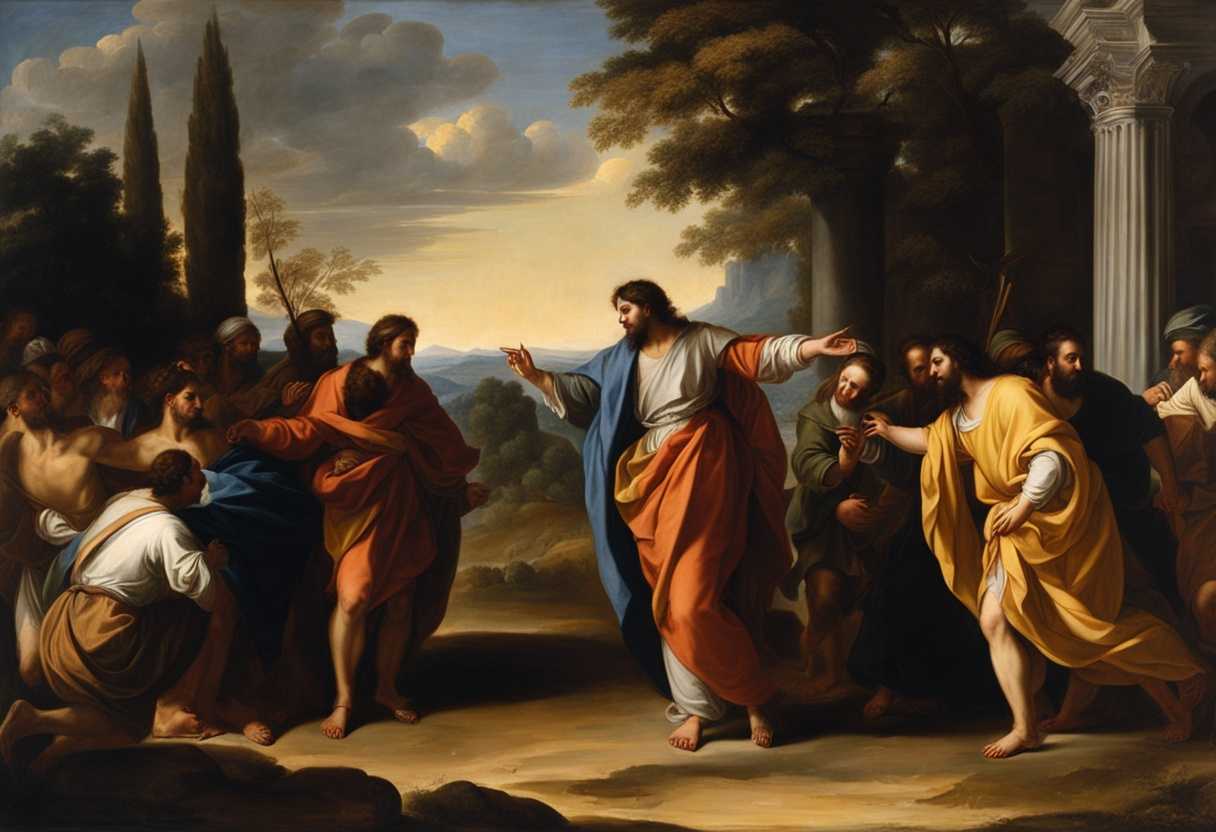
Setting the Scene for Ruth 4:1
In Ruth chapter 4, we find Boaz at the city gate, a place where important transactions and legal matters were often conducted in ancient times. Boaz had taken a keen interest in Ruth, a Moabite woman who had shown great loyalty to her mother-in-law, Naomi. Boaz was a close relative of Naomi’s late husband, and according to the custom of the time, he had the right to redeem the land that belonged to Naomi’s family.
As Boaz sat at the city gate, he waited for the other close relative, who had a prior claim to the land, to pass by. Boaz had gathered ten of the town’s elders as witnesses to the transaction that was about to take place. When the relative arrived, Boaz presented him with the opportunity to redeem the land that belonged to Naomi’s family. However, the relative declined, giving Boaz the legal right to redeem the land and marry Ruth.
The scene at the city gate was filled with tension and anticipation as the fate of Naomi and Ruth hung in the balance. Boaz’s actions not only secured the future of Naomi’s family but also demonstrated his love and commitment to Ruth. The city gate, a place of both business and social interaction, became the backdrop for a pivotal moment in the lives of these biblical characters.
What is Ruth 4:1 about?
The beautiful and profound concept of redemption is at play in this verse. Boaz, as a kinsman-redeemer, takes on the responsibility to redeem Ruth, who is a widow in need of protection and support. This act of redemption goes beyond just meeting a physical need—it also symbolizes a deeper spiritual truth. We see a reflection of God’s unconditional love and grace towards us as Boaz willingly steps in to help Ruth. Through Boaz’s actions, we are reminded of the redemptive power of love and the importance of caring for those in need. Boaz’s role as a kinsman-redeemer mirrors the love and sacrifice of Jesus in our lives as we ponder on this verse. How can we emulate Boaz’s example by being a source of redemption and support to those around us? We are encouraged to consider how we can actively participate in God’s redemptive work in the world by reflecting on the story of Boaz and Ruth, showing compassion, love, and generosity to those who are in need of help and support. God has redeemed us through Jesus Christ, just as Boaz redeemed Ruth, and we are called to extend that same love and grace to others.
Understanding what Ruth 4:1 really means
The Book of Ruth unfolds against the backdrop of a tumultuous period in Israel’s history, the time of the judges, where social and religious upheaval prevailed. Ruth, a devoted Moabite widow, accompanies her mother-in-law, Naomi, to Bethlehem, showcasing remarkable loyalty. Boaz, a relative of Naomi’s deceased husband, emerges as a potential “kinsman-redeemer,” tasked with marrying Ruth to preserve the family lineage.
As Boaz ascends to the town gate and takes his seat, a significant legal and public space in ancient Israel, he signals his intent to address Ruth’s redemption formally and publicly. The arrival of the guardian-redeemer, the closer relative with the first right of redemption, sets the stage for a crucial legal and moral resolution. These actions at the town gate symbolize the gravity and formality of the proceedings, highlighting the importance of integrity and transparency in matters of redemption.
Drawing from related biblical passages, such as Leviticus 25:25 and Deuteronomy 25:5-10, we glean insights into the concept of the kinsman-redeemer and the practice of levirate marriage, shedding light on Boaz’s pivotal role in Ruth’s life. Additionally, Proverbs 31:10-31 paints a portrait of a virtuous woman, mirroring Ruth’s qualities of loyalty, diligence, and faith, which resonate throughout the narrative.
The timeless themes of loyalty, redemption, and community support in Ruth’s story strike a chord in today’s world, where individualism often dominates. Ruth’s narrative serves as a poignant reminder of the enduring significance of family, community, and selfless love in our lives. The notion of a “redeemer” extends beyond its biblical context, urging us to uplift and support one another in times of need, embodying the principles of compassion and solidarity.
In a modern context, envision a scenario where a community rallies around a family facing adversity, akin to Boaz’s intervention. Perhaps a local business owner steps forward, offering financial aid or employment opportunities, ensuring the family’s stability and future. This contemporary parallel underscores the timeless relevance of the values encapsulated in Ruth 4:1, emphasizing the impact of kindness, responsibility, and communal support.
Ultimately, Boaz’s actions at the town gate exemplify integrity, responsibility, and a willingness to make personal sacrifices for the greater good. His story inspires us to emulate these virtues in our own lives, advocating for those in need and upholding the principles of community and family. Ruth 4:1 serves as a beacon of ethical conduct and compassion, urging us to navigate life’s complexities with grace, empathy, and a steadfast commitment to righteousness.
How can we demonstrate kindness and redemption in our lives?
We can demonstrate kindness in our lives by showing compassion and understanding to those in need. This can be done through acts of generosity, empathy, and support when others are going through difficult times. We can show kindness that reflects the love and compassion we have received from God by extending a helping hand and being there for others in their time of need.
Redemption can be demonstrated in our lives through forgiveness and reconciliation. We can seek redemption by acknowledging our mistakes, seeking forgiveness, and making amends, just as Ruth found redemption through the love and kindness of Boaz. We can experience the transformative power of redemption in our relationships and our own hearts by letting go of bitterness, resentments, and past wrongdoings. Through forgiveness and reconciliation, we can show others the grace and mercy that we have received from God.
Application
Let’s embody the wisdom of Ruth 4:1 in the workplace and at home, taking intentional steps towards justice and righteousness. Just like Boaz’s strategic decisions, let’s approach our challenges with care and thoughtfulness. Are we ready to make a difference with purpose and wisdom?

Reverend Michael Johnson is an experienced Church Minister with a profound expertise in spirituality and guidance. With a serene presence and a compassionate heart, he has faithfully served his congregation for over 20 years, leading them on a spiritual journey towards inner peace and enlightenment. Reverend Johnson’s extensive knowledge of religious philosophies and profound understanding of human nature have made him a trusted confidant and mentor to many, as he seamlessly weaves his profound wisdom into life teachings. Reverend Johnson’s calming demeanor and empathetic nature continue to uplift and heal souls, nurturing a sense of unity and tranquility within his community.