
Ruth 4:4 is about the legal custom of redeeming property and the importance of fulfilling one’s duty to preserve the family lineage and inheritance.
4 So I thought I would tell you of it and say, ‘Buy it in the presence of those sitting here and in the presence of the elders of my people.’ If you will redeem it, redeem it. But if you will not, tell me, that I may know, for there is no one besides you to redeem it, and I come after you.” And he said, “I will redeem it.”
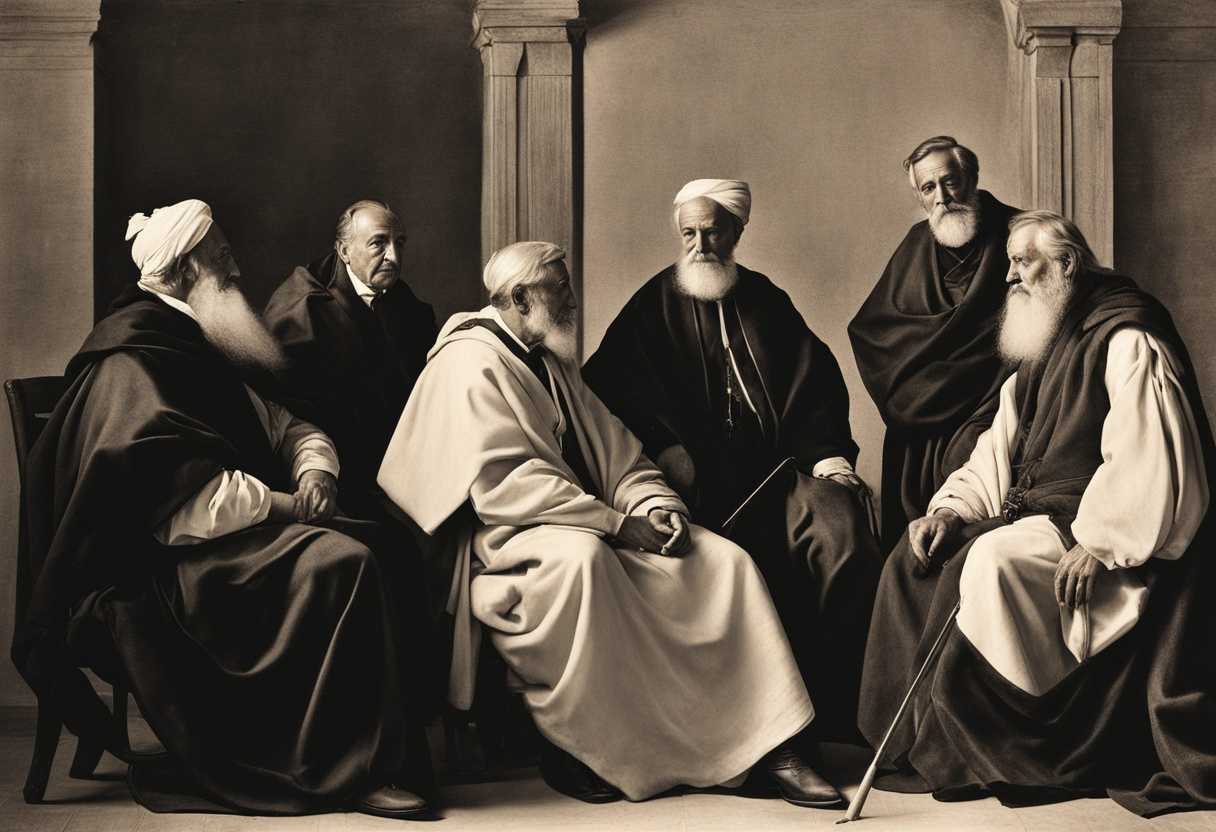
Setting the Scene for Ruth 4:4
In Ruth chapter 4, we find Boaz at the city gate, a place where important transactions and legal matters were often conducted in ancient times. Boaz had come to the city gate to meet with the close relative of Ruth’s late husband, as he sought to redeem the land that belonged to Elimelech, Ruth’s father-in-law. Boaz, being a kind and honorable man, was determined to fulfill his duty as a kinsman-redeemer and take Ruth as his wife to continue the family line.
As Boaz waited at the city gate, the close relative, whose name is not mentioned in the text, arrived, and Boaz called him to discuss the matter at hand. The scene is set in the bustling city gate, with merchants, travelers, and other townspeople going about their business. The dusty streets and the sound of camels and donkeys passing by would have provided the backdrop to this crucial moment in Ruth and Boaz’s story. The tension and anticipation in the air as the fate of Ruth and Naomi’s future hung in the balance would have been palpable as the two men discussed the redemption of the land and the hand of Ruth in marriage.
What is Ruth 4:4 about?
Boaz steps up to preserve the family inheritance of Ruth and Naomi, showing a beautiful act of redemption and generosity in this verse. Boaz ensures that their family’s legacy and financial stability remain intact by redeeming their land. This act goes beyond just fulfilling a legal duty; it demonstrates Boaz’s kindness, concern for others, and his willingness to help those in need. It is a reminder of the importance of looking out for one another, supporting family members, and ensuring that no one is left behind.
Think about how this act of redemption not only benefits Ruth and Naomi but also reflects Boaz’s character and values. It shows us the power of kindness and the importance of stewardship. Reflect on how this story can inspire us to be more compassionate and generous in our own lives. How can we follow Boaz’s example of standing up for others and protecting what is rightfully theirs? Let this verse remind us of the impact of our actions on the lives of those around us and encourage us to seek opportunities to help and support others, just as Boaz did for Ruth and Naomi.
Understanding what Ruth 4:4 really means
The Book of Ruth unfolds against the backdrop of a tumultuous period in Israel’s history, the time of the judges. In this narrative, we encounter Ruth, a Moabite widow who exemplifies unwavering loyalty to her Israelite mother-in-law, Naomi, by accompanying her back to Bethlehem. Boaz, a relative of Naomi’s deceased husband, emerges as a potential “kinsman-redeemer,” a figure tasked with safeguarding the interests of vulnerable family members.
Boaz’s words in Ruth 4:4, “I thought I should bring the matter to your attention,” convey a sense of transparency and adherence to proper legal and familial protocols. This phrase underscores the significance of conducting affairs with integrity and openness, ensuring that responsibilities are fulfilled in a clear and accountable manner. Furthermore, when Boaz states, “If you will redeem it, do so. But if you will not, tell me, so I will know,” he emphasizes the importance of clear communication and the willingness to accept one’s duties willingly and responsibly.
The verse continues with Boaz acknowledging, “For no one has the right to do it except you, and I am next in line,” demonstrating his respect for established norms and the rights of others. This humble acknowledgment of the rightful order of things reflects a deep reverence for tradition and a sense of duty towards family obligations. These principles of loyalty, integrity, and responsibility resonate across time and culture, serving as timeless guides for ethical conduct and relational harmony.
Drawing parallels from related biblical passages such as Leviticus 25:25 and Deuteronomy 25:5-10, we glean insights into the broader context of familial support and communal responsibility. Proverbs 3:27 further reinforces the theme of acting justly and fulfilling obligations promptly when one has the capacity to do so. These teachings underscore the enduring relevance of honoring commitments, supporting those in need, and upholding the fabric of community bonds.
In our contemporary context, where commitments are often fleeting and self-interest can overshadow communal welfare, the narrative of Ruth 4:4 challenges us to embody the virtues of a “kinsman-redeemer.” This metaphorical role urges us to actively engage in supporting and uplifting those around us who are vulnerable or in need. Just as Boaz stepped up to fulfill his duty towards Naomi and Ruth, we are called to emulate his example by acting with integrity, compassion, and a sense of communal responsibility.
Consider a scenario where a family business faces uncertainty following the founder’s passing. A relative steps in to manage the business, ensuring continuity, preserving jobs, and honoring the founder’s legacy. This modern-day illustration mirrors Boaz’s commitment to his role as a kinsman-redeemer, highlighting the enduring impact of values such as duty, integrity, and community support in contemporary settings.
In conclusion, Ruth 4:4 serves as a poignant reminder of the enduring importance of duty, integrity, and community solidarity. By internalizing and embodying these principles in our lives, we contribute to the cultivation of a more compassionate, responsible, and interconnected society. Reflect on how you can embody the spirit of a “kinsman-redeemer” in your spheres of influence, stepping up to support those in need and conducting yourself with integrity and compassion in all your interactions.
How does Boaz’s redemption of Ruth reflect God’s grace?
Boaz’s redemption of Ruth reflects God’s grace through his willingness to act as a kinsman-redeemer for her. The role of a kinsman-redeemer in Old Testament culture was to redeem or restore the rights and property of a relative in need. Boaz demonstrates God’s grace in action by stepping forward to fulfill this role for Ruth. He selflessly cares for Ruth and ensures that she is provided for and protected, even though she was a Moabite widow without any legal claim to his assistance.
Additionally, Boaz’s redemption of Ruth can be seen as a foreshadowing of Jesus Christ’s redemptive work on the cross. Jesus took on the sins of humanity and offered redemption and salvation to all who believe in Him in a similar way that Boaz took on the responsibility of redeeming Ruth. Boaz’s kindness and generosity towards Ruth mirror God’s grace towards His people, highlighting the themes of love, redemption, and restoration that are central throughout the Bible. Boaz’s redemption of Ruth ultimately serves as a powerful example of God’s grace and His provision for those in need.
Application
Seize the moment like Boaz did in Ruth 4:4. Don’t wait for opportunities to knock on your door – create them. Be fearless in your pursuit of what is right and just. Take charge of your life and make a difference, just as Boaz did. Will you step up to the plate and grab hold of your destiny today?

Reverend Michael Johnson is an experienced Church Minister with a profound expertise in spirituality and guidance. With a serene presence and a compassionate heart, he has faithfully served his congregation for over 20 years, leading them on a spiritual journey towards inner peace and enlightenment. Reverend Johnson’s extensive knowledge of religious philosophies and profound understanding of human nature have made him a trusted confidant and mentor to many, as he seamlessly weaves his profound wisdom into life teachings. Reverend Johnson’s calming demeanor and empathetic nature continue to uplift and heal souls, nurturing a sense of unity and tranquility within his community.