
1 The oracle of the word of the Lord concerning Israel: Thus declares the Lord, who stretched out the heavens and founded the earth and formed the spirit of man within him:
2 “Behold, I am about to make Jerusalem a cup of staggering to all the surrounding peoples. The siege of Jerusalem will also be against Judah.
3 On that day I will make Jerusalem a heavy stone for all the peoples. All who lift it will surely hurt themselves. And all the nations of the earth will gather against it.
4 On that day, declares the Lord, I will strike every horse with panic, and its rider with madness. But for the sake of the house of Judah I will keep my eyes open, when I strike every horse of the peoples with blindness.
5 Then the clans of Judah shall say to themselves, ‘The inhabitants of Jerusalem have strength through the Lord of hosts, their God.’
6 “On that day I will make the clans of Judah like a blazing pot in the midst of wood, like a flaming torch among sheaves. And they shall devour to the right and to the left all the surrounding peoples, while Jerusalem shall again be inhabited in its place, in Jerusalem.”
7 “And the Lord will give salvation to the tents of Judah first, that the glory of the house of David and the glory of the inhabitants of Jerusalem may not surpass that of Judah.
8 On that day the Lord will protect the inhabitants of Jerusalem, so that the feeblest among them on that day shall be like David, and the house of David shall be like God, like the angel of the Lord, going before them.
9 And on that day I will seek to destroy all the nations that come against Jerusalem.
10 “And I will pour out on the house of David and the inhabitants of Jerusalem a spirit of grace and pleas for mercy, so that, when they look on me, on him whom they have pierced, they shall mourn for him, as one mourns for an only child, and weep bitterly over him, as one weeps over a firstborn.”
11 On that day the mourning in Jerusalem will be as great as the mourning for Hadad-rimmon in the plain of Megiddo.
12 The land shall mourn, each family by itself: the family of the house of David by itself, and their wives by themselves; the family of the house of Nathan by itself, and their wives by themselves;
13 “On that day there shall be a great mourning in Jerusalem, like the mourning of Hadadrimmon in the plain of Megiddo.”
14 The land shall mourn, each family by itself: the family of the house of David by itself, and their wives by themselves; the family of the house of Nathan by itself, and their wives by themselves;
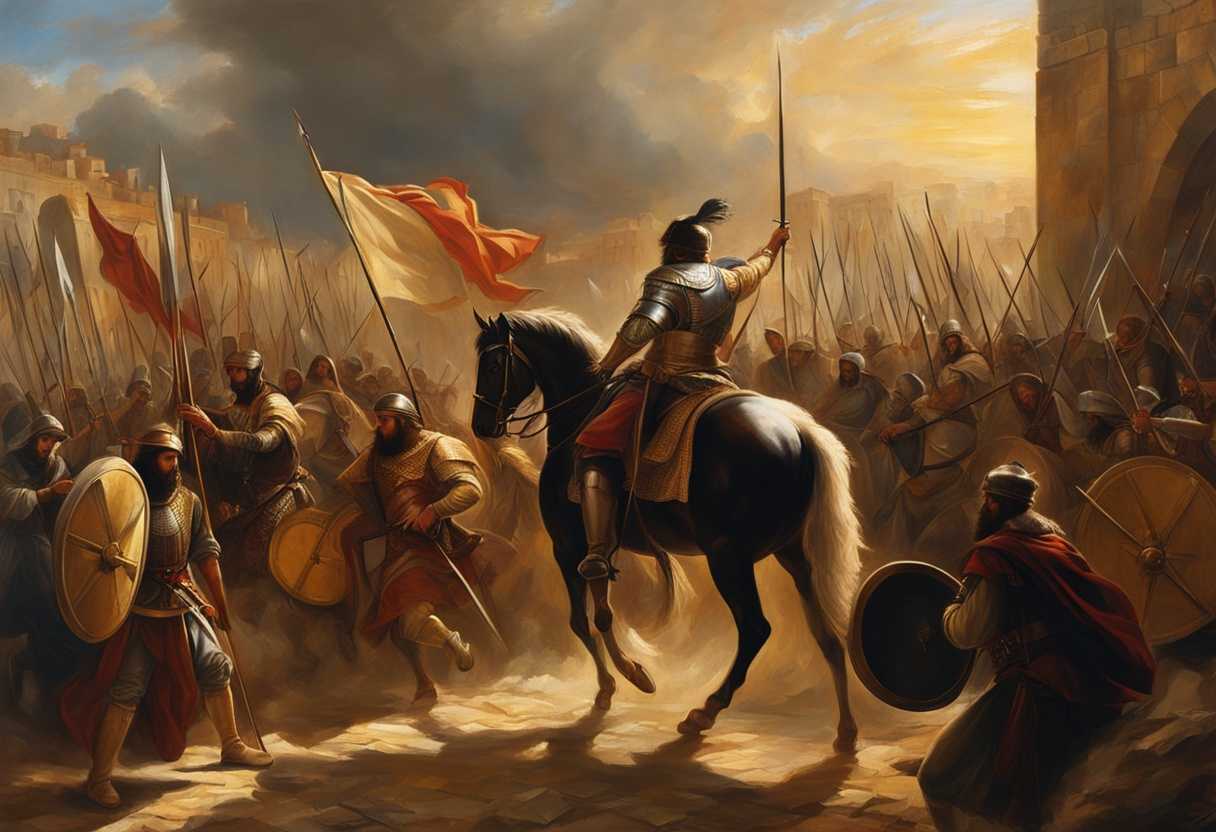
The True Meaning of Zechariah 12
The book of Zechariah was written by the prophet Zechariah, a Jewish exile who returned to Jerusalem after the Babylonian captivity. He was a contemporary of the prophet Haggai, and both men were instrumental in encouraging the people to rebuild the temple in Jerusalem. Zechariah provides a prophetic vision of the future in this chapter, foretelling the events that will unfold as God’s plan for the redemption of His people reaches its climax. The chapter begins with a declaration of God’s sovereignty over the nations, and then moves on to describe the pivotal role that Jerusalem and its inhabitants will play in the unfolding of these events.
Zechariah’s words echo the prophecies of other biblical authors, such as Ezekiel’s vision of the dry bones (Ezekiel 37) and the promise of a new covenant in Jeremiah 31. Zechariah’s message assures the ultimate victory of God’s kingdom as we delve into this chapter, speaking to the ongoing struggle between God’s people and the forces of evil.
Zechariah 12:1-3
Zechariah in Zechariah 12:1-3 speaks of a future event where Jerusalem will be a cup that sends the surrounding nations reeling. The first verse sets the scene by highlighting that God, who stretches out the heavens, lays the foundation of the earth, and forms the human spirit within a person, will make Jerusalem a cup that sends the surrounding peoples reeling. This imagery of Jerusalem as a cup signifies that the city will be a source of both judgment and intoxication for the nations around it. The power and control of this cup are in God’s hands, illustrating His sovereignty over all nations and His ultimate plan for Jerusalem. We must understand the significance of Jerusalem in the Bible as we delve deeper into these verses. Jerusalem holds a central place in God’s plan of redemption and is often referred to as the holy city in Scripture. Throughout the Bible, Jerusalem is associated with the presence of God, His chosen people, and His kingdom. The city has been a focal point for many significant events in biblical history, including the reign of King David, the building of the temple by Solomon, the return of the exiles from Babylon, and ultimately, the life, death, and resurrection of Jesus Christ.
Moving on to verse 2, we see that God promises to make Jerusalem a very heavy stone for all the peoples. This stone acts as a stumbling block and a burdensome weight for the nations that try to move or possess it. This imagery conveys the idea that any nation that tries to come against Jerusalem will not succeed and will be greatly burdened by their attempts. God’s protection and favor are clearly evident in His declaration regarding Jerusalem, emphasizing the city’s significance in His divine plan. Zechariah foretells of a future time in verse 3 when all the nations of the earth will gather against Jerusalem. This prophecy aligns with other passages in the Bible that speak of the nations coming against God’s chosen people. One notable example is found in Revelation 20:7-9, where it describes the nations gathering for battle against God’s people and the beloved city. Despite the apparent opposition and threat, the overarching message is that God will ultimately triumph over all His enemies and establish His kingdom with Jerusalem as its center. Zechariah 12:1-3 paints a vivid picture of Jerusalem’s pivotal role in God’s redemptive plan and the challenges it will face from the surrounding nations. It serves as a reminder of God’s sovereignty, protection, and ultimate victory over all who oppose His purposes. This prophecy not only points to historical events in ancient times but also foreshadows future events leading up to the establishment of God’s eternal kingdom. The significance of Jerusalem in biblical prophecy underscores the importance of aligning with God’s plans and recognizing His divine authority over all nations and peoples.
Zechariah 12:4-6
The verses in Zechariah 12:4-6 can be broken down into sections. “On that day, declares the Lord, I will strike every horse with panic and its rider with madness.”
2. “But for the sake of the house of Judah, I will keep my eyes open, when I strike every horse of the peoples with blindness.”
3. “Then the clans of Judah will say in their hearts, ‘The inhabitants of Jerusalem are my strength, through the Lord Almighty is their God. Zechariah prophesies about a future day in the first section, when the Lord will intervene in a powerful way by striking confusion and fear into the hearts of those who come against His people. This vision of divine intervention and protection encapsulates the theme of God’s sovereignty and his unwavering commitment to His chosen people. Despite the chaos and challenges faced by the Israelites, God assures them that He will step in to defend them when the time is right.
The second section emphasizes the distinction between the house of Judah and the other nations. While judgment and confusion are brought upon the enemies of Judah, God promises to watch over and protect His people. The concept of God’s protective gaze, promising to keep an eye open for the sake of His chosen ones, highlights the intimate relationship between God and His people. This theme of divine protection and care for His faithful is a recurring motif throughout the Bible, demonstrating God’s faithfulness to His promises. The clans of Judah in the final section declare their trust in the strength provided by the Lord Almighty. This proclamation points to a shift in perspective among the people of Judah, recognizing that their true source of strength and security lies in their relationship with God. The clans of Judah acknowledge God as their ultimate source of power, acknowledging His sovereignty and authority over their lives. This serves as a powerful reminder for believers to place their trust in God above all else, recognizing Him as the source of true strength and protection.
These verses in Zechariah 12 resonate with other passages in the Bible that speak of God’s protection and intervention on behalf of His people. Psalm 32:7 says, “You are my hiding place; you will protect me from trouble and surround me with songs of deliverance.”” This verse reinforces the idea that God is a refuge and a shield for those who trust in Him. Similarly, in Isaiah 41:10, it says, “So do not fear, for I am with you; do not be dismayed, for I am your God. I will strengthen you and help you; I will uphold you with my righteous right hand.” These verses echo the message of God’s unwavering protection and support for His people throughout history.
Zechariah 12:7-9
Several important sections in Zechariah 12:7-9 provide deep insights into the context and meaning of the verses. Let’s break it down step by step:
-
“The Lord will save the dwellings of Judah first, so that the honor of the house of David and of Jerusalem’s inhabitants may not be greater than that of Judah.” – This section refers to the salvation and protection that the Lord promises to the people of Judah. The House of David symbolizes the royal lineage of King David, who was a significant figure in Israel’s history. It shows that God’s salvation is not just for individuals but for the entire community by mentioning the honor of the house of David and Jerusalem’s inhabitants, ensuring that no group feels superior or neglected in the redemption process.
-
“On that day the Lord will shield those who live in Jerusalem, so that the feeblest among them will be like David, and the house of David will be like God, like the angel of the Lord going before them.” – This passage indicates a level of divine protection and empowerment that will be bestowed upon the people of Jerusalem. It draws a parallel between the feeblest individual in Jerusalem and King David, known for his courage and strength in the face of adversity. It signifies the exalted status and divine favor that will be bestowed upon the house of David by likening it to God and the angel of the Lord.
-
“On that day I will set out to destroy all the nations that attack Jerusalem.” – This section foretells a future event where God will intervene to defend Jerusalem against its enemies. Throughout the Bible, Jerusalem holds a significant place as the Holy City and the dwelling place of God’s presence. The promise of destroying nations that attack Jerusalem underscores God’s sovereignty and protection over His chosen city and people. We can see the overarching theme of God’s protection, salvation, and sovereignty over His people in understanding these verses. The mention of the house of David not only signifies a historical lineage but also points to the promised Messiah who would come from David’s line. Jesus Christ, often referred to as the Son of David, fulfills this Messianic prophecy and brings salvation not just to Judah or Jerusalem but to all nations.
The imagery of God’s protection making the feeblest like David serves as a reminder of God’s ability to strengthen and empower even the weakest among us. This echoes the theme found in 2 Corinthians 12:9-10 where Paul talks about God’s power being made perfect in weakness. God’s intervention to destroy the nations attacking Jerusalem reflects the ultimate victory of God over all His enemies, a theme echoed in Revelation where the ultimate triumph of God’s kingdom is celebrated. Zechariah 12:7-9 conveys a message of hope, strength, and divine protection for God’s people, emphasizing God’s faithfulness in defending and exalting those who trust in Him. The verses point to the fulfillment of God’s promises through the Messiah and the ultimate victory that believers will experience in God’s kingdom.
Zechariah 12:10-14
A spirit of grace and supplication will be poured out on the house of David and the inhabitants of Jerusalem in Zechariah 12:10-14. They will look on me, the one they have pierced, and they will mourn for him as one mourns for an only child, and grieve bitterly for him as one grieves for a firstborn son.” This section is powerful and poignant, highlighting the future mourning and repentance of the people of Jerusalem after recognizing and accepting Jesus Christ as their Savior.
The mention of the “house of David” is significant as it ties back to the lineage of Jesus. Jesus, being a descendant of David, fulfills the prophecy of the Messiah coming from the line of David. This shows the continuity and fulfillment of God’s promises throughout generations.
The piercing of Jesus is a direct reference to His crucifixion, highlighting the sacrificial nature of His death. This act of crucifixion is pivotal in Christianity as it is believed to be the ultimate sacrifice for the forgiveness of sins. The imagery of mourning for Jesus as for an only child or a firstborn son emphasizes the depth of sorrow and realization of the magnitude of Christ’s sacrifice.
The spirit of grace and supplication being poured out on the people signifies a turning point towards repentance and seeking God’s forgiveness. This transformation from a state of spiritual blindness to one of awareness and humility reflects the redemptive power of God’s grace and the transformative effect it can have on individuals and communities.
The verses following this talk about the individual mourning of families, emphasizing a personal and heartfelt repentance that extends beyond a collective mourning to a personal recognition of the need for salvation and forgiveness. This personal aspect is crucial in understanding the intimate relationship between God and each individual believer.
This passage serves as a reminder of the need for humility, repentance, and acceptance of Christ as Lord and Savior. It points to the eventual recognition of Jesus by the people of Jerusalem and their heartfelt repentance. This prophecy also foreshadows the universal recognition of Christ as the Messiah and the resulting transformation of hearts and lives. This message of redemption and grace is a timeless one that continues to resonate with believers today, emphasizing the power of Christ’s sacrifice and the need for personal repentance and acceptance of His saving grace.
After Zechariah 12
The people of Jerusalem had endured much hardship, but the Lord promised to pour out a spirit of grace and supplication upon them. They would look upon the one they had pierced and mourn for him as one mourns for an only child. This was a pivotal moment, a turning point where the people would finally recognize their Messiah. The prophet Zechariah knew that the road ahead would not be easy as the chapter drew to a close. The people would face opposition and persecution, but the Lord would be their shield and their strength. The next chapter would reveal how the people would respond to this newfound understanding, and the challenges they would face in the days to come.

Reverend Michael Johnson is an experienced Church Minister with a profound expertise in spirituality and guidance. With a serene presence and a compassionate heart, he has faithfully served his congregation for over 20 years, leading them on a spiritual journey towards inner peace and enlightenment. Reverend Johnson’s extensive knowledge of religious philosophies and profound understanding of human nature have made him a trusted confidant and mentor to many, as he seamlessly weaves his profound wisdom into life teachings. Reverend Johnson’s calming demeanor and empathetic nature continue to uplift and heal souls, nurturing a sense of unity and tranquility within his community.