
Zephaniah 3:1-8 is about God’s righteous anger towards the sinful actions of Jerusalem, warning of impending judgment and the call for repentance to avoid destruction.
1 Woe to her who is rebellious and defiled, the oppressing city!
2 She listens to no voice; she accepts no correction. She does not trust in the Lord; she does not draw near to her God.
3 Her officials within her are roaring lions;
her judges are evening wolves
that leave nothing till the morning.
4 Her prophets are fickle, treacherous men;
her priests profane what is holy;
they do violence to the law.
5 The Lord within her is righteous;
he does no injustice;
every morning he shows forth his justice;
each dawn he does not fail;
but the unjust knows no shame.
6 “I have cut off nations; their battlements are in ruins; I have laid waste their streets so that no one walks in them; their cities have been made desolate, without a man, without an inhabitant.”
7 I said, ‘Surely you will fear me; you will accept correction. Then your dwelling would not be cut off according to all that I have appointed against you.’ But all the more they were eager to make all their deeds corrupt.
8 “Therefore wait for me,” declares the Lord, “for the day when I rise up to seize the prey. For my decision is to gather nations, to assemble kingdoms, to pour out upon them my indignation, all my burning anger; for in the fire of my jealousy all the earth shall be consumed.”
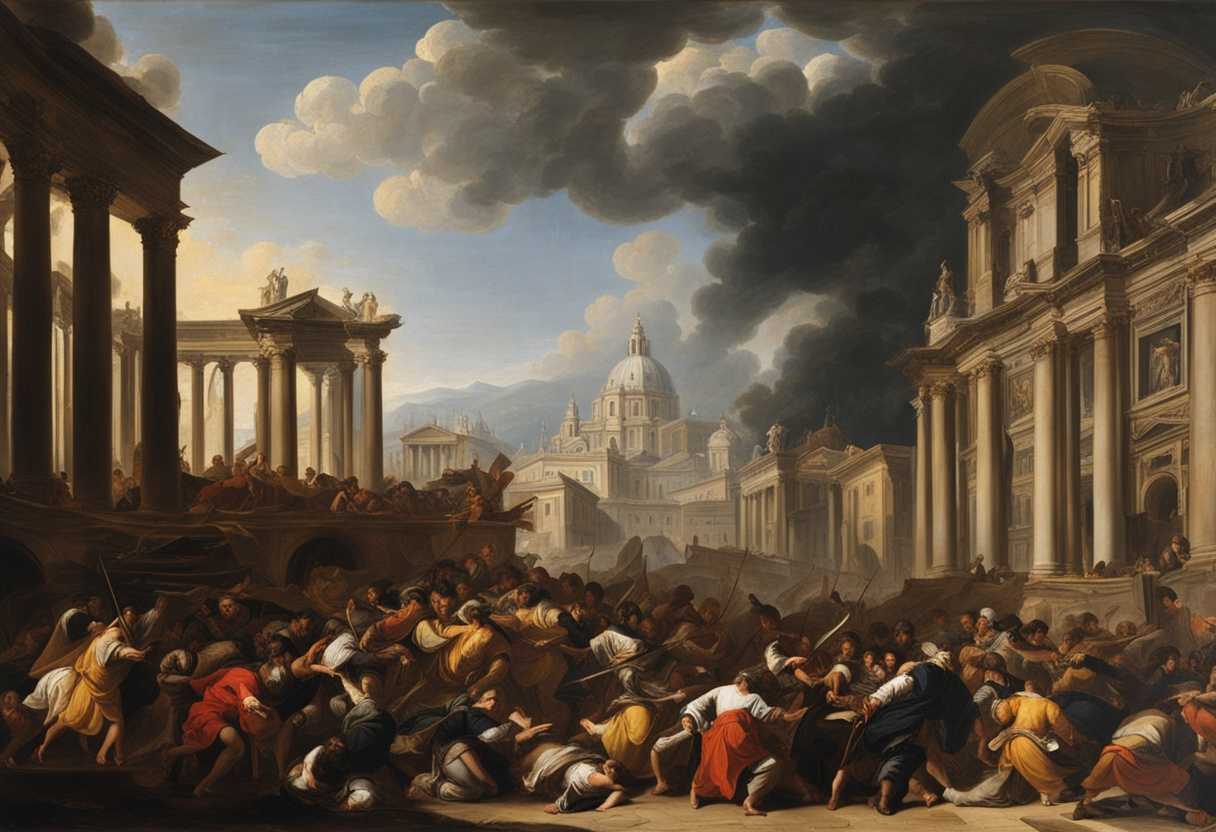
Setting the Scene for Zephaniah 3:1-8
In Zephaniah chapter 3, the scene opens in the ancient city of Jerusalem, a bustling metropolis filled with a mix of people from different backgrounds. The prophet Zephaniah stands in the courtyard of the temple, surrounded by a group of priests and scribes. They have gathered to hear his message from the Lord, as he warns them of the impending judgment that will come upon the city if they do not turn from their wicked ways.
Among the crowd are also some of the city’s rulers and officials, who have come to listen to Zephaniah’s words. The atmosphere is tense as the prophet speaks with urgency, his voice echoing off the stone walls of the temple. The people are restless, knowing that their actions have brought them to this point of divine retribution.
As Zephaniah continues to prophesy, he paints a vivid picture of the city’s sins and the consequences that will follow if they do not repent. The scene is filled with a sense of impending doom, as the prophet’s words hang heavy in the air. The people gathered in the courtyard are faced with a choice – to heed the warning and turn back to God, or to face the wrath that is to come.
What is Zephaniah 3:1-8 about?
This verse from Zephaniah carries a powerful message of both warning and hope. It depicts a scenario where Jerusalem, symbolizing a community or a nation, is facing the consequences of their rebellion against God. The passage illustrates the just and righteous judgment that awaits those who stray from the path of righteousness. It serves as a cautionary tale, reminding us of the importance of staying faithful to our beliefs and values.
However, amidst the looming judgment, there is a glimmer of hope for the remnant – those who remain faithful and true to their faith. The promise of restoration indicates that even in the face of adversity and turmoil, there is always a chance for redemption and renewal. It emphasizes the idea that no matter how far we may have strayed, there is always an opportunity to reconcile with God and experience His grace and mercy.
Reflecting on this verse, we are reminded of the consequences of our actions and the importance of staying steadfast in our faith. It prompts us to ponder on our own behaviors and beliefs and consider whether we are aligning ourselves with what is righteous and just. It also offers a message of encouragement, assuring us that no matter how dire the situation may seem, there is always hope for a brighter future if we choose to remain faithful and turn back to God.
Understanding what Zephaniah 3:1-8 really means
In the book of Zephaniah, a minor prophet, we delve into a poignant message directed towards the city of Jerusalem and its inhabitants. The prophet’s words serve as a stark reminder of the prevalent rebellion and impending judgment looming over the city. The purpose behind this prophetic message is clear – to confront the sins deeply rooted within the people and their leaders, while also forewarning them of the dire consequences awaiting their actions.
As we dissect the key phrases within Zephaniah 3:1-8, we encounter a vivid portrayal of the city’s moral and spiritual degradation. The phrase “Woe to the city of oppressors, rebellious and defiled!” sets a tone of severe condemnation, highlighting the city’s state of moral decay. The descriptors “oppressors,” “rebellious,” and “defiled” paint a picture of a society plagued by exploitation, disobedience, and impurity, respectively. Furthermore, the assertion that “She obeys no one, she accepts no correction” underscores the city’s stubborn resistance to change and refusal to heed warnings.
The imagery of “Her officials within her are roaring lions; her rulers are evening wolves” further accentuates the predatory and destructive nature of the city’s leadership. These metaphors depict a callous disregard for the well-being of the populace, emphasizing the leaders’ aggression and lack of empathy. Amidst this darkness, a glimmer of hope emerges with the affirmation that “The Lord within her is righteous; he does no wrong,” underscoring God’s unwavering justice and purity in contrast to the city’s corruption.
Drawing parallels with other biblical passages such as Isaiah 1:4, Jeremiah 5:1, and Micah 3:1-3, we witness a recurring theme of rebellion, corruption, and the scarcity of righteousness among the people and their leaders. These passages serve as poignant reminders of the consequences of straying from God’s path and the imperative need for repentance and realignment with His righteousness.
The relevance of Zephaniah’s message transcends time, resonating with contemporary society’s struggles against corruption, injustice, and moral decay. It beckons individuals and leaders alike to introspect, repent, and realign with God’s standards of righteousness. Just as a whistleblower’s actions can catalyze change in a corrupt system, Zephaniah’s prophecy serves as a clarion call for transformation and a return to justice and righteousness.
In conclusion, Zephaniah 3:1-8 stands as a poignant testament to the repercussions of sin and the paramount importance of upholding righteousness. It challenges us to reflect on our personal lives and the societal landscape, urging us to pursue justice, humility, and obedience to God. By embracing this message, we can strive towards fostering a community that mirrors God’s righteousness and compassion, embodying the transformative power of repentance and renewal.
What does it mean to seek God wholeheartedly?
Seeking God wholeheartedly means giving God your full devotion and pursuing Him with all of your heart. It involves seeking His presence, guidance, and will in all aspects of your life without reservation or holding back. This kind of seeking requires a sincere desire to know God more intimately, to align your thoughts and actions with His ways, and to prioritize your relationship with Him above all else.
When we seek God wholeheartedly, we are acknowledging His sovereignty, wisdom, and goodness, and we are entrusting our lives completely to Him. This kind of seeking involves actively seeking God through prayer, studying His Word, spending time in worship, and being obedient to His commands. It is a lifestyle of pursuing God with fervor, passion, and consistency, always seeking to deepen our relationship with Him and grow in our faith.
Application
In the tapestry of our lives, let us weave threads of righteousness and love that mirror God’s will. Reflect on your actions, seek repentance, and march towards a path illuminated by His grace. Will you answer the call to walk in His light and spread His love in all you do?

Reverend Michael Johnson is an experienced Church Minister with a profound expertise in spirituality and guidance. With a serene presence and a compassionate heart, he has faithfully served his congregation for over 20 years, leading them on a spiritual journey towards inner peace and enlightenment. Reverend Johnson’s extensive knowledge of religious philosophies and profound understanding of human nature have made him a trusted confidant and mentor to many, as he seamlessly weaves his profound wisdom into life teachings. Reverend Johnson’s calming demeanor and empathetic nature continue to uplift and heal souls, nurturing a sense of unity and tranquility within his community.