
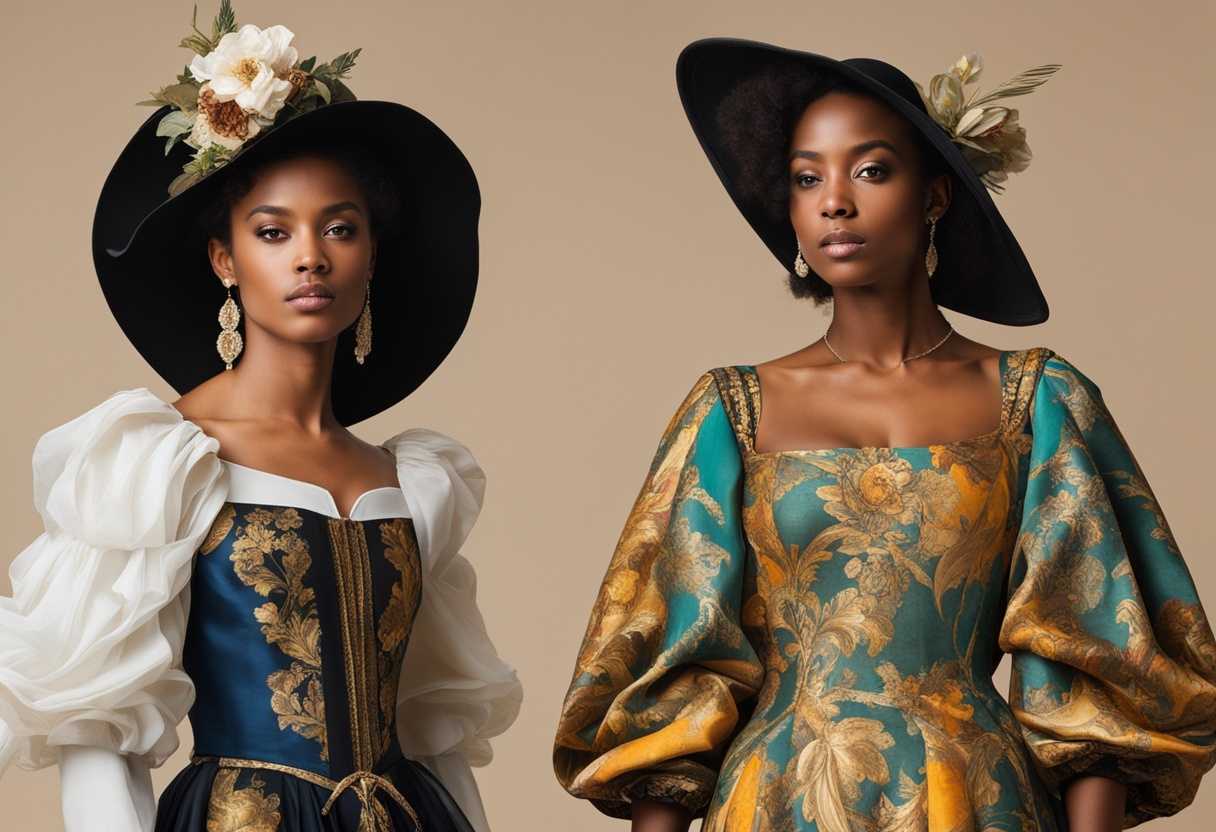
In the Bible, clothing often symbolizes identity, status, and moral condition; for example, garments represent righteousness (Isaiah 61:10) and shame (Genesis 3:7). Additionally, the act of putting on new garments can signify transformation and a new life in Christ (Ephesians 4:22-24).
Scripture
7 Then the eyes of both were opened, and they knew that they were naked. And they sewed fig leaves together and made themselves loincloths.
8 And they heard the sound of the Lord God walking in the garden in the cool of the day, and the man and his wife hid themselves from the presence of the Lord God among the trees of the garden.
9 But the Lord God called to the man and said to him, “Where are you?”
10 And he said, “I heard the sound of you in the garden, and I was afraid, because I was naked, and I hid myself.”
11 He said, “Who told you that you were naked? Have you eaten of the tree of which I commanded you not to eat?”
12 The man said, “The woman whom you gave to be with me, she gave me fruit of the tree, and I ate.”
13 Then the Lord God said to the woman, “What is this that you have done?” The woman said, “The serpent deceived me, and I ate.”
14 The Lord God said to the serpent, “Because you have done this, cursed are you above all livestock and above all beasts of the field; on your belly you shall go, and dust you shall eat all the days of your life.
15 I will put enmity between you and the woman,
and between your offspring and her offspring;
he shall bruise your head,
and you shall bruise his heel.”
16 To the woman he said, “I will surely multiply your pain in childbearing; in pain you shall bring forth children. Your desire shall be contrary to your husband, but he shall rule over you.”
17 And to Adam he said, “Because you have listened to the voice of your wife and have eaten of the tree of which I commanded you, ‘You shall not eat of it,’ cursed is the ground because of you; in pain you shall eat of it all the days of your life;
18 thorns and thistles it shall bring forth for you; and you shall eat the plants of the field.
19 By the sweat of your face you shall eat bread, till you return to the ground, for out of it you were taken; for you are dust, and to dust you shall return.
20 The man called his wife’s name Eve, because she was the mother of all living.
21 And the Lord God made for Adam and for his wife garments of skins and clothed them.
Biblical Significance of Clothing
In the Bible, clothing serves as a powerful metaphor that transcends mere physical appearance to convey deeper spiritual and moral significances. For instance, in Isaiah 61:10, the prophet conveys God’s commitment to redeem and restore His people by depicting salvation as a garment of praise, symbolizing righteousness that replaces the shame of sin. This imagery illustrates the transformative power of God’s grace, where the act of being clothed in righteousness signifies not only forgiveness but also an elevated status within the community of faith.
Moreover, the New Testament continues this theme, particularly in Ephesians 4:22-24, which encourages believers to “put off” their old selves, corrupted by deceitful desires, and “put on” the new self, created to be like God in true righteousness and holiness. This shift from old to new garments metaphorically illustrates the radical transformation that occurs when a person embraces faith in Christ. Overall, clothing in the Bible serves as a potent symbol of one’s identity, moral condition, and the profound transformation that accompanies a life devoted to God, inviting individuals to reflect on their spiritual state and the community they represent.
The theme of clothing as a symbol in the Bible can also be observed in the narrative of Adam and Eve, which emphasizes the connection between spiritual awareness and human dignity. Initially, they were naked and felt no shame, but upon disobeying God’s command, their eyes were opened, and they recognized their nakedness. In Genesis 3:21, after their transgression, God makes garments of skin for them, signifying both their loss of innocence and the divine provision for their new reality. This act of clothing them signifies God’s mercy, as He covers their shame while reminding them of the consequences of sin. It highlights the necessity of divine intervention in restoring human dignity and the need for covering when separated from God’s glory.
The prophetic literature often uses clothing to communicate the coming judgment and restoration. For example, in Zechariah 3:3-5, the high priest Joshua stands before the Lord in filthy garments, symbolizing the sin and impurity of the people. However, God intervenes, cleanses Joshua, and clothes him in clean vestments, representing the restoration of purity and divine favor. This imagery conveys the message that God can and will remove the stains of sin, offering His people new garments as a symbol of reconciliation and hope. Clothing thus not only signifies our moral and spiritual states but also serves as an emblem of God’s redemptive work in the lives of His people, emphasizing both the importance of personal responsibility and God’s grace in the journey towards holiness.
Symbol of Identity and Status
In biblical texts, clothing often serves as a reflection of one’s identity and social status. Different garments can signify various roles, such as priestly attire representing holiness and authority, or the rags of the poor indicating humility and need. The way individuals are clothed can also reveal their moral and spiritual condition, as seen in the contrast between the rich man in fine clothes and the poor man in tattered garments. Thus, clothing becomes a powerful symbol of one’s place within the community and relationship with God.
Representation of Spiritual Transformation
Clothing in the Bible frequently symbolizes spiritual transformation and renewal. The act of putting on new garments can represent a change in one’s life, such as moving from sin to righteousness or from death to life. This metaphor extends to the idea of being “clothed” with virtues such as compassion, kindness, and humility, suggesting that one’s outward appearance can reflect an inner spiritual reality. This transformation emphasizes the importance of aligning one’s external life with internal faith and character.
Sign of Covenant and Relationship
Clothing can also signify the covenant relationship between God and His people. Specific garments, such as those worn by the high priest, are designed to reflect the holiness and glory of God, serving as a reminder of the sacred relationship established through covenant. Additionally, the act of being clothed in God’s righteousness signifies acceptance and belonging within the divine family. This aspect of clothing highlights the importance of divine grace and the commitment to live in accordance with God’s will.
How to Embrace Modesty and Symbolism in Your Faith
Embracing modesty and symbolism in your faith is a beautiful journey that invites you to reflect on the deeper meanings behind your actions and choices. Modesty isn’t just about clothing; it’s a heart posture that prioritizes humility and respect for yourself and others, reminding us that our worth is not defined by outward appearances but by our character and relationship with God. As you navigate this path, consider how symbols—like the cross, a simple prayer, or even a quiet moment of reflection—can serve as reminders of your faith and commitment to living a life that honors God. Surround yourself with community, engage in conversations about what modesty means in today’s world, and let your choices reflect the love and grace you’ve received. Remember, it’s not about perfection but about progress; each step you take towards embracing these values can deepen your faith and inspire those around you.
Bible References to Clothing’s Significance:
Exodus 28:2-43: 2 And you shall make holy garments for Aaron your brother, for glory and for beauty.
3 You shall speak to all the skillful, whom I have filled with a spirit of skill, that they make Aaron’s garments to consecrate him for my priesthood.
4 These are the garments that they shall make: a breastpiece, an ephod, a robe, a coat of checker work, a turban, and a sash. They shall make holy garments for Aaron your brother and his sons to serve me as priests.
5 They shall take the gold, blue and purple and scarlet yarns, and fine twined linen.
6 “And they shall make the ephod of gold, of blue and purple and scarlet yarns, and of fine twined linen, skillfully worked.
7 It shall have two shoulder pieces attached to its two edges, so that it may be joined together.
8 And the skillfully woven band on it shall be made like it and be of one piece with it, of gold, blue and purple and scarlet yarns, and fine twined linen.
9 You shall take two onyx stones, and engrave on them the names of the sons of Israel,
10 six of their names on the one stone, and the remaining six on the other stone, in the order of their birth.
11 With the work of an engraver in stone, like the engravings of a signet, you shall engrave the two stones with the names of the sons of Israel. You shall enclose them in settings of gold filigree.
12 And you shall set the two stones on the shoulder pieces of the ephod, as stones of remembrance for the sons of Israel. And Aaron shall bear their names before the Lord on his two shoulders for remembrance.
13 You shall make settings of gold filigree,
14 two chains of pure gold, twisted like cords; and you shall attach the corded chains to the settings.
15 “You shall make a breastpiece of judgment, in skilled work. In the style of the ephod you shall make it—of gold, blue and purple and scarlet yarns, and fine twined linen shall you make it.
16 It shall be square and doubled, a span its length and a span its breadth.
17 You shall set in it four rows of stones. A row of sardius, topaz, and carbuncle shall be the first row;
18 and the second row a turquoise, a sapphire, and an emerald;
19 and the third row a jacinth, an agate, and an amethyst;
20 and the fourth row a beryl, an onyx, and a jasper. They shall be set in gold filigree.
21 There shall be twelve stones with their names according to the names of the sons of Israel. They shall be like signets, each engraved with its name, for the twelve tribes.
22 You shall make on the breastpiece twisted chains like cords, of pure gold.
23 You shall make on the breastpiece two rings of gold, and shall put the two rings on the two edges of the breastpiece.
24 and you shall put the two cords of gold in the two rings at the edges of the breastpiece.
25 And the other two ends of the two cords you shall attach to the two settings of filigree, and so attach it in front to the shoulder pieces of the ephod.
26 And you shall make two rings of gold, and attach them to the two shoulder pieces of the ephod, at its front, above the skillfully woven band of the ephod.
27 And you shall make two rings of gold, and attach them in front to the lower part of the two shoulder pieces of the ephod, at its seam above the skillfully woven band of the ephod.
28 And they shall bind the breastpiece by its rings to the rings of the ephod with a lace of blue, so that it may lie on the skillfully woven band of the ephod, so that the breastpiece shall not come loose from the ephod.
29 So Aaron shall bear the names of the sons of Israel in the breastpiece of judgment on his heart, when he goes into the Holy Place, to bring them to regular remembrance before the Lord.
30 And in the breastpiece of judgment you shall put the Urim and the Thummim, and they shall be on Aaron’s heart, when he goes in before the Lord. Thus Aaron shall bear the judgment of the people of Israel on his heart before the Lord regularly.
31 “You shall make the robe of the ephod all of blue.”
32 It shall have an opening for the head in the middle of it, with a woven binding around the opening, like the opening in a garment, so that it may not tear.
33 On its hem you shall make pomegranates of blue and purple and scarlet yarns, around its hem, with bells of gold between them,
34 A golden bell and a pomegranate, a golden bell and a pomegranate, around the hem of the robe.
35 It shall be on Aaron when he ministers, and its sound shall be heard when he goes into the Holy Place before the Lord, and when he comes out, so that he does not die.
36 “You shall make a plate of pure gold and engrave on it, like the engraving of a signet, ‘Holy to the Lord.’
37 You shall fasten it on a cord of blue and it shall be on the turban; it shall be at the front of the turban.
38 It shall be on Aaron’s forehead, and Aaron shall bear any guilt from the holy things that the people of Israel consecrate as their holy gifts. It shall regularly be on his forehead, that they may be accepted before the Lord.
39 “You shall weave the coat in checker work of fine linen, and you shall make a turban of fine linen, and you shall make a sash embroidered with needlework.
40 “For Aaron’s sons you shall make coats and sashes and caps. You shall make them for glory and beauty.
41 And you shall put them on Aaron your brother, and on his sons with him, and shall anoint them and ordain them and consecrate them, that they may serve me as priests.
42 You shall make for them linen undergarments to cover their naked flesh. They shall reach from the hips to the thighs;
43 They shall be on Aaron and on his sons when they go into the tent of meeting or when they come near the altar to minister in the Holy Place, lest they bear guilt and die. This shall be a statute forever for him and for his offspring after him.
Leviticus 16:4-32: 4 He shall put on the holy linen coat and shall have the linen undergarment on his body, and he shall tie the linen sash around his waist, and wear the linen turban; these are the holy garments. He shall bathe his body in water and then put them on.
5 And he shall take from the congregation of the people of Israel two male goats for a sin offering, and one ram for a burnt offering.
6 “Aaron shall offer the bull as a sin offering for himself and shall make atonement for himself and for his house.
7 Then he shall take the two goats and set them before the Lord at the entrance of the tent of meeting.
8 And Aaron shall cast lots over the two goats, one lot for the Lord and the other lot for Azazel.
9 And Aaron shall present the goat on which the lot fell for the Lord and use it as a sin offering,
10 But the goat on which the lot fell for Azazel shall be presented alive before the Lord to make atonement over it, that it may be sent away into the wilderness to Azazel.
11 “Aaron shall present the bull as a sin offering for himself, and shall make atonement for himself and for his house.
12 And he shall take a censer full of coals of fire from the altar before the Lord, and two handfuls of sweet incense beaten small, and he shall bring it inside the veil
13 and put the incense on the fire before the Lord, that the cloud of the incense may cover the mercy seat that is over the testimony, so that he does not die.
14 And he shall take some of the blood of the bull and sprinkle it with his finger on the front of the mercy seat on the east side, and in front of the mercy seat he shall sprinkle some of the blood with his finger seven times.
15 “Then he shall kill the goat of the sin offering that is for the people and bring its blood inside the veil and do with its blood as he did with the blood of the bull, sprinkling it over the mercy seat and in front of the mercy seat.”
16 Thus he shall make atonement for the Holy Place, because of the uncleannesses of the people of Israel and because of their transgressions, all their sins. And so he shall do for the tent of meeting, which dwells with them in the midst of their uncleannesses.
17 There shall be no man in the tent of meeting when he enters to make atonement in the Holy Place, until he comes out and has made atonement for himself and for his house and for all the assembly of Israel.
18 Then he shall go out to the altar that is before the Lord and make atonement for it, and shall take some of the blood of the bull and some of the blood of the goat, and put it on the horns of the altar all around.
19 He shall sprinkle some of the blood on it with his finger seven times and cleanse it and consecrate it from the uncleannesses of the people of Israel.
20 “And when he has made an end of atoning for the Holy Place and the tent of meeting and the altar, he shall present the live goat.”
21 And Aaron shall lay both his hands on the head of the live goat, and confess over it all the iniquities of the people of Israel, and all their transgressions, all their sins. And he shall put them on the head of the goat and send it away into the wilderness by the hand of a man who is in readiness.
22 And the goat shall bear all their iniquities on itself to a remote area, and he shall let the goat go free in the wilderness.
23 Then Aaron shall come into the tent of meeting and shall take off the linen garments that he put on when he went into the Holy Place and shall leave them there.
24 And he shall bathe his body in water in a holy place and put on his garments and come out and offer his burnt offering and the burnt offering of the people and make atonement for himself and for the people.
25 And the fat of the sin offering he shall burn on the altar.
26 And he who lets the goat go to Azazel shall wash his clothes and bathe his body in water, and afterward he may come into the camp.
27 And the bull for the sin offering and the goat for the sin offering, whose blood was brought in to make atonement in the Holy Place, shall be carried outside the camp.
28 And he who burns them shall wash his clothes and bathe his body in water, and afterward he may come into the camp.
29 “And it shall be a statute to you forever that in the seventh month, on the tenth day of the month, you shall afflict yourselves and shall do no work, either the native or the stranger who sojourns among you.
30 for on this day shall atonement be made for you to cleanse you. You shall be clean before the Lord from all your sins.
31 It is a Sabbath of solemn rest to you, and you shall afflict yourselves; it is a statute forever.
32 And the priest who is anointed and consecrated as priest in his father’s place shall make atonement, wearing the holy linen garments.
Deuteronomy 22:5-12: 5 “A woman shall not wear a man’s garment, nor shall a man put on a woman’s cloak, for whoever does these things is an abomination to the Lord your God.
6 “If you come across a bird’s nest in any tree or on the ground, with young ones or eggs and the mother sitting on the young or on the eggs, you shall not take the mother with the young.
7 You shall let the mother go, but the young you may take for yourself, that it may go well with you, and that you may live long.
8 “When you build a new house, you shall make a parapet for your roof, that you may not bring the guilt of blood upon your house, if anyone should fall from it.
9 “You shall not sow your vineyard with two kinds of seed, lest the whole yield be forfeited, the crop that you have sown and the yield of the vineyard.
10 You shall not plow with an ox and a donkey together.
11 You shall not wear cloth of wool and linen mixed together.
12 “You shall make yourself tassels on the four corners of the garment with which you cover yourself.
2 Kings 1:8: 8 They answered him, “He wore a garment of hair, with a belt of leather about his waist.” And he said, “It is Elijah the Tishbite.”
Isaiah 61:10: 10 I will greatly rejoice in the Lord; my soul shall exult in my God, for he has clothed me with the garments of salvation; he has covered me with the robe of righteousness, as a bridegroom decks himself like a priest with a beautiful headdress, and as a bride adorns herself with her jewels.
Ezekiel 16:10-14: 10 I clothed you also with embroidered cloth and shod you with fine leather. I wrapped you in fine linen and covered you with silk.
11 And I adorned you with ornaments and put bracelets on your wrists and a chain on your neck.
12 And I put a ring on your nose and earrings in your ears and a beautiful crown on your head.
13 Thus you were adorned with gold and silver, and your clothing was of fine linen and silk and embroidered cloth. You ate fine flour and honey and oil. You grew exceedingly beautiful and advanced to royalty.
14 And your renown went forth among the nations because of your beauty, for it was perfect through the splendor that I had bestowed on you, declares the Lord God.
Matthew 6:25-34: 25 “Therefore I tell you, do not be anxious about your life, what you will eat or what you will drink, nor about your body, what you will put on. Is not life more than food, and the body more than clothing?
26 Look at the birds of the air: they neither sow nor reap nor gather into barns, and yet your heavenly Father feeds them. Are you not of more value than they?
27 And which of you by being anxious can add a single hour to his span of life?
28 And why are you anxious about clothing? Consider the lilies of the field, how they grow: they neither toil nor spin,
29 yet I tell you, even Solomon in all his glory was not arrayed like one of these.
30 But if God so clothes the grass of the field, which today is alive and tomorrow is thrown into the oven, will he not much more clothe you, O you of little faith?
31 Therefore do not be anxious, saying, ‘What shall we eat?’ or ‘What shall we drink?’ or ‘What shall we wear?’
32 For the Gentiles seek after all these things, and your heavenly Father knows that you need them all.
33 But seek first the kingdom of God and his righteousness, and all these things will be added to you.
34 “Therefore do not be anxious about tomorrow, for tomorrow will be anxious for itself. Sufficient for the day is its own trouble.”
Matthew 22:11-14: 11 “But when the king came in to look at the guests, he saw there a man who had no wedding garment.
12 And he said to him, ‘Friend, how did you get in here without a wedding garment?’ And he was speechless.
13 Then the king said to the attendants, ‘Bind him hand and foot and cast him into the outer darkness. In that place there will be weeping and gnashing of teeth.’
14 For many are called, but few are chosen.
Mark 5:25-34: 25 And there was a woman who had had a discharge of blood for twelve years,
26 and who had suffered much under many physicians, and had spent all that she had, and was no better but rather grew worse.
27 She had heard the reports about Jesus and came up behind him in the crowd and touched his garment.
28 for she said, “If I touch even his garments, I will be made well.”
29 And immediately the flow of blood dried up, and she felt in her body that she was healed of her disease.
30 And Jesus, perceiving in himself that power had gone out from him, immediately turned about in the crowd and said, “Who touched my garments?”
31 And his disciples said to him, “You see the crowd pressing around you, and yet you say, ‘Who touched me?’”
32 And he looked around to see who had done it.
33 But the woman, knowing what had happened to her, came in fear and trembling and fell down before him and told him the whole truth.
34 And he said to her, “Daughter, your faith has made you well; go in peace, and be healed of your disease.”
Luke 8:27-35: 27 When Jesus had stepped out on land, there met him a man from the city who had demons.
28 When he saw Jesus, he cried out and fell down before him and said with a loud voice, “What have you to do with me, Jesus, Son of the Most High God? I beg you, do not torment me.”
29 For he had commanded the unclean spirit to come out of the man. (For many a time it had seized him. He was kept under guard and bound with chains and shackles, but he would break the bonds and be driven by the demon into the desert.)
30 Jesus then asked him, “What is your name?” And he said, “Legion,” for many demons had entered him.
31 And they begged him not to command them to depart into the abyss.
32 Now a large herd of pigs was feeding there on the hillside, and they begged him to let them enter these. So he gave them permission.
33 Then the demons came out of the man and entered the pigs, and the herd rushed down the steep bank into the lake and drowned.
34 When the herdsmen saw what had happened, they fled and told it in the city and in the country.
35 Then people went out to see what had happened, and they came to Jesus and found the man from whom the demons had gone, sitting at the feet of Jesus, clothed and in his right mind, and they were afraid.
John 19:23-24: 23 When the soldiers had crucified Jesus, they took his garments and divided them into four parts, one part for each soldier; also his tunic. But the tunic was seamless, woven in one piece from top to bottom.
24 so they said to one another, “Let us not tear it, but cast lots for it to see whose it shall be.” This was to fulfill the Scripture which says, “They divided my garments among them, and for my clothing they cast lots.” So the soldiers did these things,
Acts 9:36-39: 36 Now there was in Joppa a disciple named Tabitha, which, translated, means Dorcas. She was full of good works and acts of charity.
37 In those days she became ill and died, and when they had washed her, they laid her in an upper room.
38 Since Lydda was near Joppa, the disciples, hearing that Peter was there, sent two men to him, urging him, “Please come to us without delay.”
39 So Peter rose and went with them. And when he arrived, they took him to the upper room. All the widows stood beside him weeping and showing tunics and other garments that Dorcas made while she was with them.
Romans 13:12-14: 12 The night is far gone; the day is at hand. So then let us cast off the works of darkness and put on the armor of light.
13 Let us walk properly as in the daytime, not in orgies and drunkenness, not in sexual immorality and sensuality, not in quarreling and jealousy.
14 But put on the Lord Jesus Christ, and make no provision for the flesh, to gratify its desires.
1 Corinthians 11:4-15: 4 Every man who prays or prophesies with his head covered dishonors his head,
5 but every wife who prays or prophesies with her head uncovered dishonors her head, since it is the same as if her head were shaven.
6 For if a wife will not cover her head, then she should cut her hair short. But since it is disgraceful for a wife to cut off her hair or shave her head, let her cover her head.
7 For a man ought not to cover his head, since he is the image and glory of God, but woman is the glory of man.
8 For man was not made from woman, but woman from man.
9 Neither was man created for woman, but woman for man.
10 That is why a wife ought to have a symbol of authority on her head, because of the angels.
11 Nevertheless, in the Lord woman is not independent of man nor man of woman;
12 For as woman was made from man, so man is now born of woman. And all things are from God.
13 Judge for yourselves: is it proper for a wife to pray to God with her head uncovered?
14 Does not nature itself teach you that if a man wears long hair it is a disgrace for him,
15 but if a woman has long hair, it is her glory? For her hair is given to her for a covering.
Galatians 3:26-29: 26 for in Christ Jesus you are all sons of God, through faith.
27 For as many of you as were baptized into Christ have put on Christ.
28 There is neither Jew nor Greek, there is neither slave nor free, there is no male and female, for you are all one in Christ Jesus.
29 And if you are Christ’s, then you are Abraham’s offspring, heirs according to promise.
Ephesians 6:10-18: 10 Finally, be strong in the Lord and in the strength of his might.
11 Put on the whole armor of God, that you may be able to stand against the schemes of the devil.
12 For we do not wrestle against flesh and blood, but against the rulers, against the authorities, against the cosmic powers over this present darkness, against the spiritual forces of evil in the heavenly places.
13 Therefore take up the whole armor of God, that you may be able to withstand in the evil day, and having done all, to stand firm.
14 Stand therefore, having fastened on the belt of truth, and having put on the breastplate of righteousness,
15 and, as shoes for your feet, having put on the readiness given by the gospel of peace.
16 In all circumstances take up the shield of faith, with which you can extinguish all the flaming darts of the evil one;
17 and take the helmet of salvation, and the sword of the Spirit, which is the word of God,
18 praying at all times in the Spirit, with all prayer and supplication. To that end, keep alert with all perseverance, making supplication for all the saints,
Colossians 3:12-14: 12 Put on then, as God’s chosen ones, holy and beloved, compassionate hearts, kindness, humility, meekness, and patience,
13 bearing with one another and, if one has a complaint against another, forgiving each other; as the Lord has forgiven you, so you also must forgive.
14 And above all these put on love, which binds everything together in perfect harmony.
1 Timothy 2:9-10: 9 likewise also that women should adorn themselves in respectable apparel, with modesty and self-control, not with braided hair and gold or pearls or costly attire,
10 but with what is proper for women who profess godliness—with good works.
1 Peter 3:3-4: 3 Do not let your adorning be external—the braiding of hair and the putting on of gold jewelry, or the clothing you wear—
3 Do not let your adorning be external—the braiding of hair and the putting on of gold jewelry, or the clothing you wear—
Revelation 3:4-5: 4 Yet you have still a few names in Sardis, people who have not soiled their garments, and they will walk with me in white, for they are worthy.
5 The one who conquers will be clothed thus in white garments, and I will never blot his name out of the book of life. I will confess his name before my Father and before his angels.
Revelation 19:7-8: 7 Let us rejoice and exult and give him the glory, for the marriage of the Lamb has come, and his Bride has made herself ready;
8 it was granted her to clothe herself with fine linen, bright and pure— for the fine linen is the righteous deeds of the saints.

Reverend Michael Johnson is an experienced Church Minister with a profound expertise in spirituality and guidance. With a serene presence and a compassionate heart, he has faithfully served his congregation for over 20 years, leading them on a spiritual journey towards inner peace and enlightenment. Reverend Johnson’s extensive knowledge of religious philosophies and profound understanding of human nature have made him a trusted confidant and mentor to many, as he seamlessly weaves his profound wisdom into life teachings. Reverend Johnson’s calming demeanor and empathetic nature continue to uplift and heal souls, nurturing a sense of unity and tranquility within his community.