
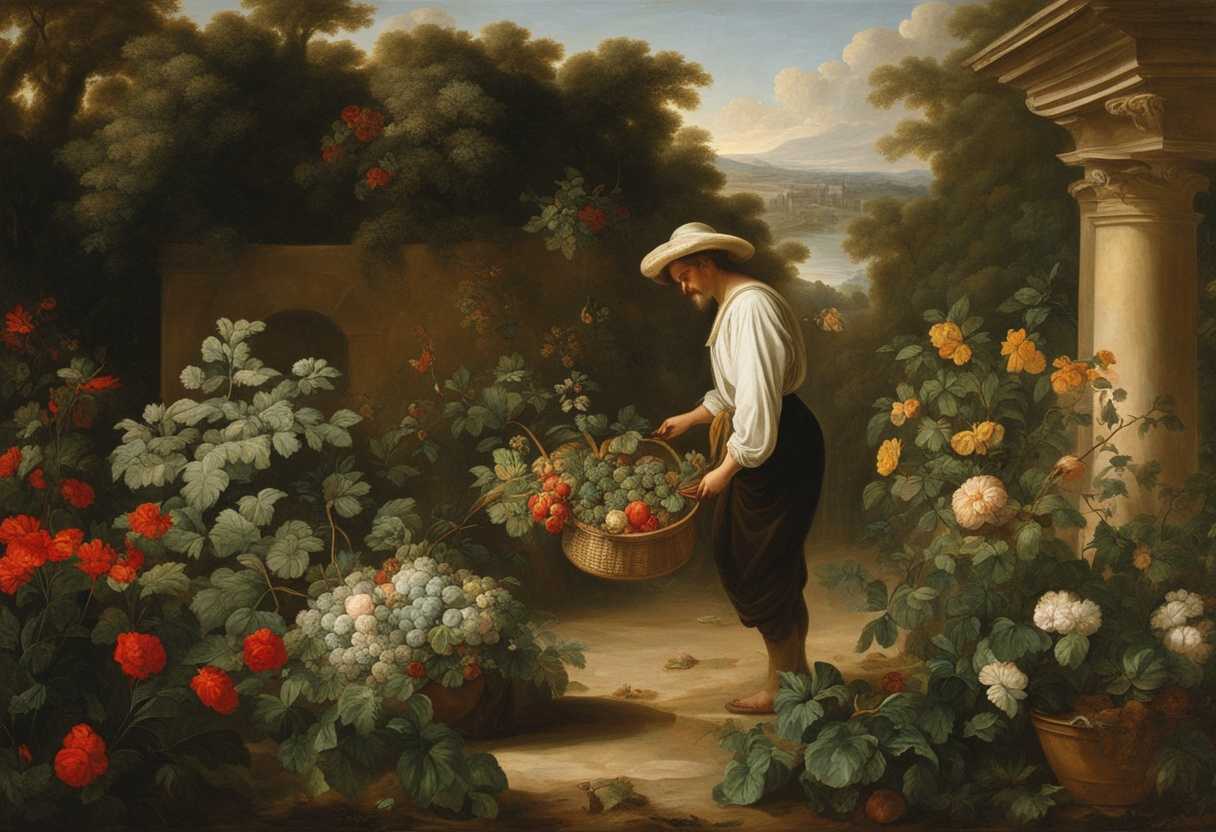
In the Bible, labor often refers to the work and effort individuals put forth in their daily tasks, emphasizing the dignity of work as seen in Genesis 2:15, where Adam is placed in the Garden of Eden to tend and keep it. Additionally, labor can symbolize the struggles and burdens faced in life, with passages like Galatians 6:9 encouraging perseverance in doing good despite weariness.
Scripture
15 The Lord God took the man and put him in the garden of Eden to work it and keep it.
16 And the Lord God commanded the man, saying, “You may surely eat of every tree of the garden,
17 but of the tree of the knowledge of good and evil you shall not eat, for in the day that you eat of it you shall surely die.”
Biblical Meaning of Labor
The broader meaning of labor in the Bible encompasses both the physical and spiritual dimensions of work, reflecting the significance of our daily efforts in serving God and others. In Genesis 2:15, where Adam is commanded to work the Garden, labor is presented as an integral part of human purpose, emphasizing that work is not merely a curse but a divine calling that holds intrinsic value. This notion is reinforced in Colossians 3:23-24, which calls believers to work heartily, as for the Lord rather than for men, suggesting that our labor is an act of worship and service. This perspective transforms mundane tasks into sacred opportunities to glorify God, instilling a sense of purpose and fulfillment in our labors.
Moreover, the Bible often portrays labor as encompassing the trials and tribulations inherent in life. Galatians 6:9 encourages believers to not grow weary in doing good, for in due season they will reap a harvest if they do not give up. This underscores a deeper spiritual reality: that laboring for righteousness and justice, though sometimes strenuous, yields eternal significance. Similarly, in Matthew 11:28-30, Jesus invites those weary from their burdens to find rest in Him, indicating that labor also includes the emotional and spiritual toil we encounter. Thus, biblical labor becomes a multi-faceted concept that celebrates the dignity of work while recognizing the challenges that accompany our efforts, urging believers to seek divine strength and eternal perspective amid their daily struggles.
The biblical understanding of labor extends beyond mere physical tasks, encompassing the spiritual integrity behind our actions and the ethical implications of our work. In Proverbs, for instance, the emphasis is often placed on diligence and the moral value of hard work. Proverbs 12:11 notes, “Whoever works his land will have plenty of bread, but he who follows worthless pursuits lacks sense.” This highlights the principle that labor in any form must be aligned with wisdom, encouraging believers not only to toil but to ensure that their efforts are grounded in purpose and righteousness. Such a perspective invites reflection on the motivations driving one’s work and serves as a call to engage in labor that fosters both personal growth and communal well-being.
Additionally, labor is depicted as a means of communal engagement and service to others throughout the scriptures. In 1 Thessalonians 4:11-12, Paul encourages believers to aspire to live quietly, to mind their own affairs, and to work with their hands, so as to earn the respect of outsiders and not be dependent on anyone. This mutual interdependence among community members suggests that labor is not just about personal success, but about contributing to the common good and building harmonious relationships. The idea of labor as a shared responsibility resonates throughout the New Testament, where believers are called to use their gifts and skills for the edification of the church and the surrounding world. This communal aspect of labor emphasizes that our work carries implications for justice, compassion, and support within the body of Christ, ultimately reflecting God’s kingdom values in our daily efforts.
The Divine Purpose of Work
In the biblical context, labor is often seen as a means of fulfilling God’s purpose for humanity. Work is not merely a necessity for survival but a calling that aligns individuals with God’s creative order. This perspective emphasizes that through labor, individuals can contribute to the flourishing of society and the stewardship of creation, reflecting God’s image in their efforts.
The Spiritual Dimension of Labor
Labor in the Bible also carries a spiritual significance, representing the idea of service and sacrifice. It is viewed as an opportunity for individuals to grow in character, develop virtues such as patience and perseverance, and cultivate a sense of community. This spiritual dimension highlights that work is not just about physical output but also about the inner transformation that occurs as one engages in labor with a heart aligned to God’s will.
The Promise of Rest and Renewal
Another broader meaning of labor in the Bible is the promise of rest and renewal that follows diligent work. The biblical narrative acknowledges the weariness that can accompany labor, yet it also offers the assurance of divine rest. This concept encourages believers to find balance in their lives, recognizing that while labor is essential, it is equally important to take time for rest and reflection, ultimately pointing to the hope of eternal rest in God’s presence.
How to Cultivate a Life of Faith and Service
Cultivating a life of faith and service is a beautiful journey that intertwines our relationship with God and our commitment to others. Start by deepening your personal connection with God through daily prayer and scripture reading; these practices not only ground you in His word but also open your heart to His guidance. As you grow in faith, look for opportunities to serve those around you—whether it’s volunteering at a local shelter, helping a neighbor in need, or simply offering a listening ear to a friend. Remember, service doesn’t always have to be grand; even small acts of kindness can reflect Christ’s love. Surround yourself with a community of believers who inspire and challenge you, and don’t hesitate to share your own struggles and victories. By living out your faith through service, you’ll not only enrich your own spiritual life but also become a beacon of hope and love in the world.
Bible References to the Meaning of Labor:
Exodus 20:8-11: 8 “Remember the Sabbath day, to keep it holy.
9 Six days you shall labor, and do all your work,
10 but the seventh day is a Sabbath to the Lord your God. On it you shall not do any work, you, or your son, or your daughter, your male servant, or your female servant, or your livestock, or the sojourner who is within your gates.
11 For in six days the Lord made heaven and earth, the sea, and all that is in them, and rested on the seventh day. Therefore the Lord blessed the Sabbath day and made it holy.
Proverbs 6:6-11: 6 Go to the ant, O sluggard; consider her ways, and be wise.
7 Without having any chief, officer, or ruler,
8 provides her bread in summer
and gathers her food in harvest.
9 How long will you lie there, O sluggard?
When will you arise from your sleep?
10 A little sleep, a little slumber,
a little folding of the hands to rest,
11 and poverty will come upon you like a robber, and want like an armed man.
Proverbs 14:23-24: 23 In all toil there is profit,
but mere talk tends only to poverty.
24 The crown of the wise is their wealth, but the folly of fools brings folly.
Ecclesiastes 3:9-13: 9 What gain has the worker from his toil?
10 I have seen the business that God has given to the children of man to be busy with.
11 He has made everything beautiful in its time. Also, he has put eternity into man’s heart, yet so that he cannot find out what God has done from the beginning to the end.
12 I perceived that there is nothing better for them than to be joyful and to do good as long as they live;
13 also that everyone should eat and drink and take pleasure in all his toil—this is God’s gift to man.
Ecclesiastes 4:9-12: 9 Two are better than one, because they have a good reward for their toil.
10 For if they fall, one will lift up his fellow. But woe to him who is alone when he falls and has not another to lift him up!
11 Again, if two lie together, they keep warm, but how can one keep warm alone?
12 And though a man might prevail against one who is alone, two will withstand him—a threefold cord is not quickly broken.
Ecclesiastes 5:18-20: 18 Behold, what I have seen to be good and fitting is to eat and drink and find enjoyment in all the toil with which one toils under the sun the few days of his life that God has given him, for this is his lot.
19 Everyone also to whom God has given wealth and possessions and power to enjoy them, and to accept his lot and rejoice in his toil—this is the gift of God.
20 For he will not much remember the days of his life because God keeps him occupied with joy in his heart.
Isaiah 65:21-23: 21 They shall build houses and inhabit them; they shall plant vineyards and eat their fruit.
22 They shall not build and another inhabit;
they shall not plant and another eat;
for like the days of a tree shall the days of my people be,
and my chosen shall long enjoy the work of their hands.
23 They shall not labor in vain
or bear children for calamity,
for they shall be the offspring of the blessed of the Lord,
and their descendants with them.
Matthew 11:28-30: 28 Come to me, all who labor and are heavy laden, and I will give you rest.
29 Take my yoke upon you, and learn from me, for I am gentle and lowly in heart, and you will find rest for your souls.
30 For my yoke is easy, and my burden is light.
Luke 10:1-2: 1 After this the Lord appointed seventy-two others and sent them on ahead of him, two by two, into every town and place where he himself was about to go.
2 And he said to them, “The harvest is plentiful, but the laborers are few. Therefore pray earnestly to the Lord of the harvest to send out laborers into his harvest.
John 6:27-29: 27 Do not work for the food that perishes, but for the food that endures to eternal life, which the Son of Man will give to you. For on him God the Father has set his seal.”
28 Then they said to him, “What must we do, to be doing the works of God?”
29 Jesus answered them, “This is the work of God, that you believe in him whom he has sent.”
1 Corinthians 3:8-9: 8 He who plants and he who waters are one, and each will receive his wages according to his labor.
9 For we are God’s fellow workers. You are God’s field, God’s building.
1 Corinthians 15:58: 58 Therefore, my beloved brothers, be steadfast, immovable, always abounding in the work of the Lord, knowing that in the Lord your labor is not in vain.
Ephesians 4:28: 28 Let the thief no longer steal, but rather let him labor, doing honest work with his own hands, so that he may have something to share with anyone in need.
Colossians 3:23-24: 23 Whatever you do, work heartily, as for the Lord and not for men,
24 knowing that from the Lord you will receive the inheritance as your reward. You are serving the Lord Christ.
1 Thessalonians 4:11-12: 11 and to aspire to live quietly, and to mind your own affairs, and to work with your hands, as we instructed you,
12 so that you may walk properly before outsiders and be dependent on no one.
2 Thessalonians 3:10-12: 10 For even when we were with you, we would give you this command: If anyone is not willing to work, let him not eat.
11 For we hear that some among you walk in idleness, not busy at work, but busybodies.
12 Now such persons we command and encourage in the Lord Jesus Christ to do their work quietly and to earn their own living.
1 Timothy 5:17-18: 17 Let the elders who rule well be considered worthy of double honor, especially those who labor in preaching and teaching.
18 For the Scripture says, “You shall not muzzle an ox when it treads out the grain,” and, “The laborer deserves his wages.”
Hebrews 4:9-11: 9 So then, there remains a Sabbath rest for the people of God,
10 for whoever has entered God’s rest has also rested from his works as God did from his.
11 Let us therefore strive to enter that rest, so that no one may fall by the same sort of disobedience.
James 5:1-6: 5 Come now, you rich, weep and howl for the miseries that are coming upon you.
2 Your riches have rotted and your garments are moth-eaten.
3 Your gold and silver have corroded, and their corrosion will be evidence against you and will eat your flesh like fire. You have laid up treasure in the last days.
4 Behold, the wages of the laborers who mowed your fields, which you kept back by fraud, are crying out against you, and the cries of the harvesters have reached the ears of the Lord of hosts.
5 You have lived on the earth in luxury and in self-indulgence. You have fattened your hearts in a day of slaughter.
6 You have condemned and murdered the righteous person. He does not resist you.
Revelation 14:13: 13 And I heard a voice from heaven saying, “Write this: Blessed are the dead who die in the Lord from now on.” “Blessed indeed,” says the Spirit, “that they may rest from their labors, for their deeds follow them!”

Reverend Ogunlade is a seasoned Church Minister with over three decades of experience in guiding and nurturing congregations. With profound wisdom and a serene approach, Reverend Ogunlade has carried out various pastoral duties, including delivering uplifting sermons, conducting religious ceremonies, and offering sage counsel to individuals seeking spiritual guidance. Their commitment to fostering harmony and righteousness within their community is exemplified through their compassionate nature, making them a beloved and trusted figure among the congregation.