
Heldai is a name mentioned in the Bible, specifically in Zechariah 6:10, where it refers to one of the individuals tasked with bringing silver and gold from the exiles in Babylon to make crowns for Joshua the high priest. The name Heldai itself is believed to mean “worldly” or “brass.”
Scripture
15 The twelfth for the twelfth month was Heldai the Netophathite, of Othniel; and in his division were 24,000.
Meaning of Heldai in the Bible
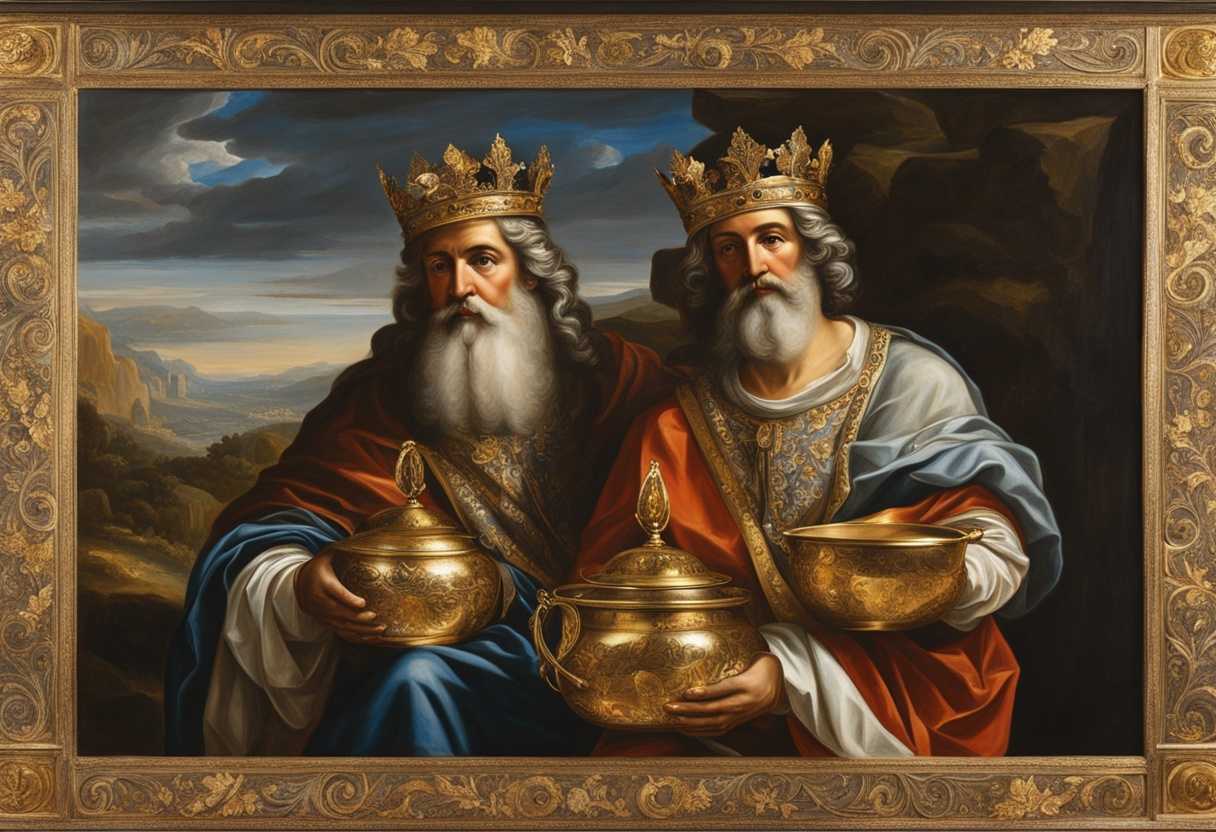
In the biblical context, the name Heldai, mentioned in Zechariah 6:10, has significant implications that go beyond mere identification of an individual. The verse describes how Heldai, along with others, was entrusted with the task of bringing precious materials to Jerusalem from the exiled community in Babylon to create crowns for Joshua, the high priest. This act of gathering silver and gold can be seen as symbolic of the restoration and re-establishment of God’s covenant community after the Babylonian exile. The intermingling of the exiled remnants with the materials from former lands can represent the transformative power of God to reclaim and repurpose what was once lost or deemed worldly (as the name ‘Heldai’ suggests).
Moreover, the act of crowning Joshua carries deep significance, as it signifies not only the honor bestowed upon the high priest but also the merging of the priestly and kingly roles in anticipation of the messianic figure. Zechariah’s prophetic vision (Zechariah 6:12-13) of a future high priest who will also reign underscores this blending of spiritual and temporal authority. In this light, Heldai is not just an individual; he becomes a conduit through which God’s promises and hopes for restoration are fulfilled. His name, meaning “worldly,” challenges us to see the potential of worldly things to be transformed into instruments of divine purpose, pointing to the overarching biblical theme of redemption and hope that resonates throughout Scripture, illustrating God’s ability to work through the most unexpected sources for His glory.
The significance of Heldai in the biblical narrative extends beyond his immediate role as a contributor to the restoration of the temple community. His presence reflects a broader theme of inclusion within God’s plan, emphasizing that individuals from diverse backgrounds can be part of divine renewal. This sentiment resonates with the overarching biblical vision of reconciliation and unity, as seen in various instances where God calls people from all nations to Him. Just as Heldai’s name implies a connection to the worldly, it invites contemplation on how God’s purpose can transcend national and temporal boundaries, echoing the call for inclusivity found throughout the Scriptures.
Additionally, Heldai’s actions symbolize the reawakening of a people who have endured hardship and exile. His involvement in the procession of bringing precious materials to Jerusalem signifies the collective effort of the returning exiles to re-establish their identity as God’s chosen people. This restoration theme is prevalent in numerous biblical texts that highlight the journey of rebuilding both physical structures, such as the temple, and spiritual foundations, such as worship and community. Together with figures like Joshua, Heldai embodies the bridge between past sorrow and future hope, illustrating that even those with worldly experiences hold an essential place in God’s redemptive story. As such, the name and role of Heldai invite reflection on our own participation in the narrative of restoration and our potential to contribute to the divine work being fulfilled in the present days.
Symbol of Divine Purpose
Heldai, a name that appears in the context of the biblical narrative, can be interpreted as a symbol of divine purpose and selection. In the biblical tradition, names often carry significant meanings that reflect the character or destiny of the individuals. Heldai’s inclusion in the lineage of significant figures suggests that he was chosen for a specific role in God’s plan, emphasizing the idea that every individual has a purpose within the divine framework.
Representation of Restoration
Heldai can also be seen as a representation of restoration and renewal. The context in which Heldai appears relates to the rebuilding of the temple and the restoration of the Jewish community after exile. This theme of restoration is prevalent throughout the scriptures, highlighting God’s commitment to redeem and restore His people. Heldai’s role in this narrative underscores the hope and promise of renewal that is central to the biblical message.
Connection to Leadership and Authority
Furthermore, Heldai’s mention in the biblical text can be associated with themes of leadership and authority. The figures surrounding Heldai often hold positions of influence, and his presence in the narrative suggests a connection to the leadership that guides the community. This reflects the broader biblical principle that God appoints leaders to fulfill His purposes, reinforcing the idea that divine authority is integral to the functioning of the community of faith.
How to Embrace God’s Support in Daily Life
Embracing God’s support in our daily lives is a transformative journey that begins with intentionality and openness. Start each day by inviting God into your morning routine—whether through prayer, meditation, or simply reflecting on His word. This sets a tone of reliance on His strength and guidance. Throughout the day, remind yourself of His presence by pausing to acknowledge Him in moments of stress or uncertainty; a quick prayer or a deep breath can reconnect you to His peace. Surround yourself with a community of believers who uplift and encourage you, as fellowship can be a powerful reminder of God’s love and support. Finally, keep a gratitude journal to document the ways you see God working in your life, which can help you recognize His hand in both the big and small moments. By cultivating this awareness, you’ll find that God’s support is not just a distant concept, but a daily reality that empowers you to navigate life’s challenges with grace and confidence.
Bible References to the Meaning of Heldai:
Zechariah 6:9-15: 9 And the word of the Lord came to me:
10 “Take from the exiles Heldai, Tobijah, and Jedaiah, who have arrived from Babylon, and go the same day to the house of Josiah, the son of Zephaniah.”
11 Take from them silver and gold, and make a crown, and set it on the head of Joshua, the son of Jehozadak, the high priest.
12 And say to him, ‘Thus says the Lord of hosts, “Behold, the man whose name is the Branch: for he shall branch out from his place, and he shall build the temple of the Lord.
13 It is he who shall build the temple of the Lord and shall bear royal honor, and shall sit and rule on his throne. And there shall be a priest on his throne, and the counsel of peace shall be between them both.”
14 “And the crown shall be in the temple of the Lord as a reminder to Helem, Tobijah, Jedaiah, and Hen the son of Zephaniah.”
15 “And those who are far off shall come and help to build the temple of the Lord. And you shall know that the Lord of hosts has sent me to you. And this shall come to pass, if you will diligently obey the voice of the Lord your God.”

Rev. François Dupont is a dedicated church minister with a wealth of experience in serving spiritual communities. With a calm and serene demeanor, he has been devoted to sharing the message of love, compassion, and tolerance for over two decades. Through his thoughtful sermons, compassionate counseling, and unwavering support, Rev. Dupont has touched the lives of countless individuals, allowing them to find solace and strength during difficult times. His serene presence and deep understanding of the human condition make him a trusted guide for those seeking spiritual nourishment and guidance.