
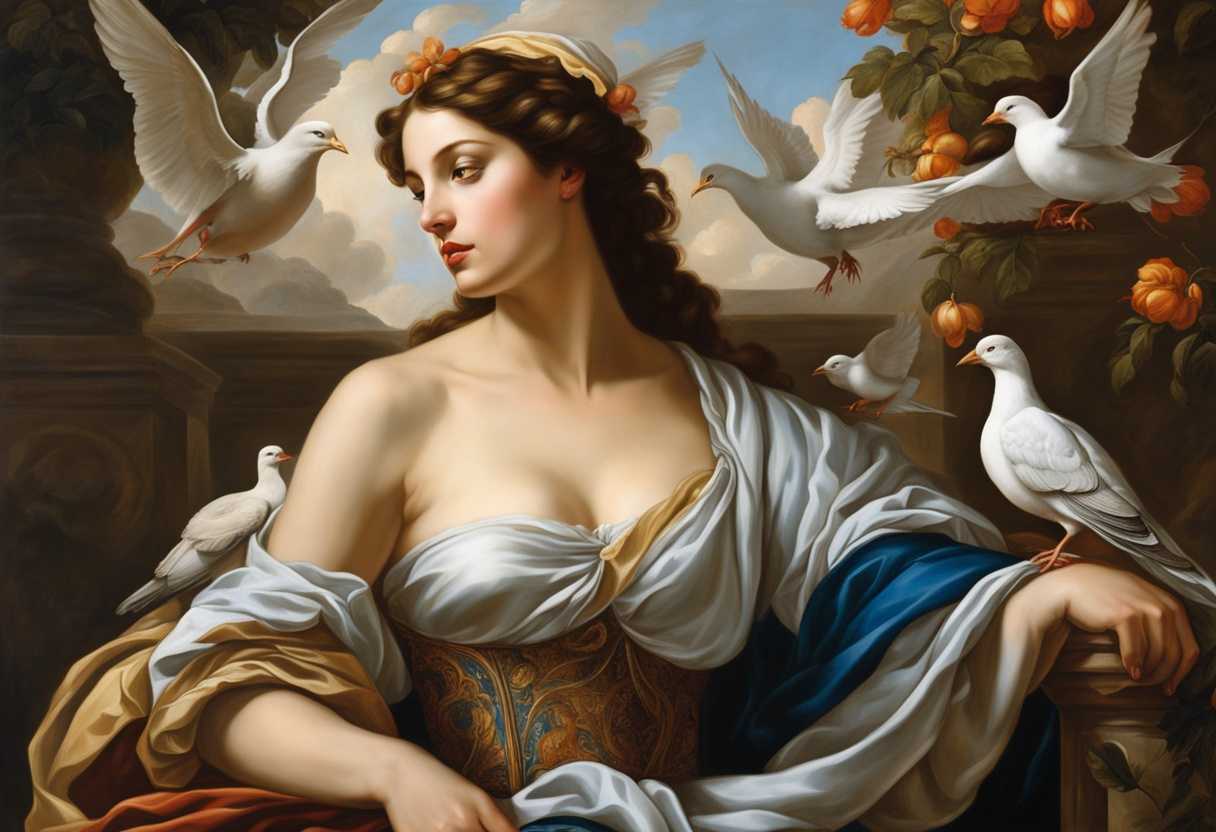
In the Bible, Jemima means “dove” and is the name of one of the daughters of Job, mentioned in Job 42:14. She is noted for her beauty and is given a share of her father’s inheritance alongside her sisters.
Scripture
12 And the Lord blessed the latter days of Job more than his beginning. And he had 14,000 sheep, 6,000 camels, 1,000 yoke of oxen, and 1,000 female donkeys.
13 And he had also seven sons and three daughters.
14 And he called the name of the first daughter Jemimah, and the name of the second Keziah, and the name of the third Keren-happuch.
15 And in all the land there were no women so beautiful as Job’s daughters. And their father gave them an inheritance among their brothers.
16 And after this Job lived a hundred and forty years, and saw his sons, and his sons’ sons, four generations.
17 And Job died, an old man, and full of days.
Meaning of Jemima in the Bible
The name Jemima, deriving from the Hebrew word for “dove,” carries rich symbolic meaning within the biblical context, particularly as it relates to themes of peace, comfort, and renewal. In Job 42:14, we find Jemima identified as one of the daughters of Job, who, after enduring immense suffering and loss, is restored with blessings from God, including the birth of his daughters. This restoration signifies not only Job’s personal revival but also a return to a state of peace and harmony, paralleling the gentle essence of a dove. The selection of the name “Jemima” for one of Job’s daughters highlights the divine favor and beauty that follows perseverance through adversity.
Moreover, Jemima’s inclusion in the inheritance along with her sisters (Job 42:15) underscores the progressive views of women in biblical narratives, where their value and rights as heirs were acknowledged. This act can be interpreted as a profound statement on equality and dignity in the context of societal norms. By giving Job’s daughters an inheritance, the text emphasizes their worth and establishes a legacy that goes beyond physical beauty to encompass spiritual and moral integrity, akin to the qualities of a dove. Thus, Jemima’s name and her story serve as a testament to the transformative power of faith and redemption, illustrating how beauty and grace can arise from trials, much like the resurrection of hope after despair.
Additionally, the name Jemima evokes an aura of beauty and divine blessing, reflecting the themes of restoration and the flourishing of life after hardship. The image of a dove, often associated with the Holy Spirit and divine presence in scriptures, resonates deeply with the notion of God’s ever-renewing grace. In various biblical passages, doves symbolize purity and innocence, enriching the character of Jemima as a figure who embodies the hope and peace that emerge from Job’s severe trials. The nurturing qualities linked to the dove further enhance her portrayal, representing the caring and supportive attributes of a woman in a familial context, especially following their father’s sufferings.
Furthermore, the mention of Jemima within the scope of Job’s story serves to highlight the familial ties and the foundational role of women in sustaining hope and faith in times of tribulation. The naming of Jemima and her sisters signifies a broader narrative of resilience and the importance of lineage in biblical literature. Their functions as caregivers and symbols of new life serve as a reminder that amid sorrow, there is also the capacity for joy and continuity. Jemima’s life can symbolize the ultimate outcome of perseverance: a legacy of hope, nurturing, and the potential for peace restored in the aftermath of chaos, resonating with the broader themes of the scriptures where personal tragedies often culminate in profound familial and communal blessings.
Symbol of Beauty and Grace
The name Jemima is often associated with beauty and grace. In biblical contexts, names frequently carry significant meanings, and Jemima, which means “dove,” symbolizes peace and purity. Doves are often seen as gentle creatures, representing tranquility and harmony. This connection to beauty and grace can reflect the ideal qualities of a virtuous life, encouraging individuals to embody these traits in their own lives.
Representation of Restoration and Hope
Jemima’s presence in the biblical narrative can also be interpreted as a symbol of restoration and hope. In the story of Job, her birth signifies a new beginning after a period of immense suffering and loss. This aspect of her name can serve as a reminder that even in the darkest times, there is potential for renewal and joy. The idea of hope is central to many biblical themes, and Jemima embodies the promise of brighter days ahead.
Connection to Family and Legacy
Jemima’s role as one of Job’s daughters highlights the importance of family and legacy in biblical teachings. Her inclusion in the narrative emphasizes the value of relationships and the continuity of family ties. In a broader sense, Jemima represents the idea that individuals contribute to their family’s story and heritage, reinforcing the significance of nurturing connections and passing down values through generations.
How to Embrace the Beauty of God’s Presence
Embracing the beauty of God’s presence is a transformative journey that begins with intentionality and openness in our daily lives. Start by carving out quiet moments for prayer and reflection, allowing yourself to be still and listen for His voice amidst the noise of the world. Engage with Scripture not just as a text, but as a living conversation with God—let His words wash over you and illuminate your heart. Surround yourself with a community of believers who inspire and uplift you, sharing in worship and fellowship that deepens your understanding of His love. Remember, God’s presence is not confined to grand moments; it can be found in the simple joys of life—a sunrise, a kind word, or a moment of gratitude. As you cultivate this awareness, you’ll find that His beauty is woven into the very fabric of your existence, inviting you to experience His grace in every breath you take.
Bible References to the Meaning of Jemima:

Rev. François Dupont is a dedicated church minister with a wealth of experience in serving spiritual communities. With a calm and serene demeanor, he has been devoted to sharing the message of love, compassion, and tolerance for over two decades. Through his thoughtful sermons, compassionate counseling, and unwavering support, Rev. Dupont has touched the lives of countless individuals, allowing them to find solace and strength during difficult times. His serene presence and deep understanding of the human condition make him a trusted guide for those seeking spiritual nourishment and guidance.