
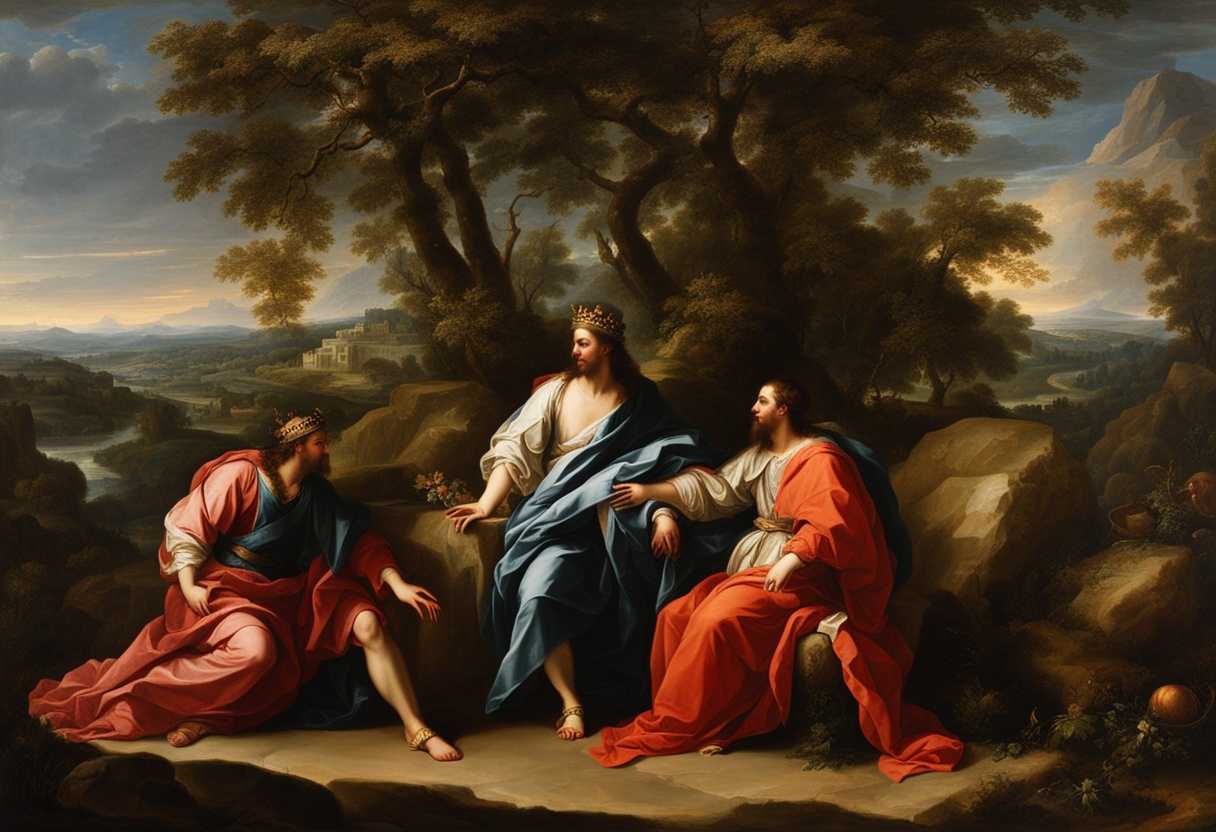
In the Bible, the name Joram means “Yahweh is exalted.” Joram is a name associated with two kings of Israel, one being the son of Ahab and the other, the son of Jehoshaphat, both of whom are mentioned in the books of Kings.
Scripture
16 In the fifth year of Joram the son of Ahab, king of Israel, when Jehoshaphat was king of Judah, Jehoram the son of Jehoshaphat, king of Judah, began to reign.
17 He walked in the way of the kings of Israel, as the house of Ahab had done, for the daughter of Ahab was his wife. And he did what was evil in the sight of the Lord.
18 And he walked in the way of the kings of Israel, as the house of Ahab had done, for the daughter of Ahab was his wife. And he did what was evil in the sight of the Lord.
19 Yet the Lord was not willing to destroy Judah, for the sake of David his servant, since he promised to give a lamp to him and to his sons forever.
20 In his days Edom revolted from the rule of Judah and set up a king of their own.
21 Then Joram passed over to Zair, and all his chariots with him. And he rose by night and struck the Edomites who had surrounded him and his chariot commanders.
22 To Edom. So Edom revolted from the rule of Judah to this day. Then Libnah revolted at the same time.
23 Now the rest of the acts of Joram, and all that he did, are they not written in the Book of the Chronicles of the Kings of Judah?
24 Joram slept with his fathers and was buried with his fathers in the city of David, and Ahaziah his son reigned in his place.
Meaning of Joram in the Bible
The name Joram, meaning “Yahweh is exalted,” embodies a significant theme in the biblical narrative, particularly in the context of the two kings who bore this name. Joram, son of Ahab, is a pivotal figure in 2 Kings, where he often grapples with the legacy of idolatry and the consequences of his mother’s influence, Jezebel. His rule is marked by conflict, as he battles against the Arameans and faces the prophetic judgment of Elisha (2 Kings 3:11-12). He ultimately embodies the tension between divine authority and human rebellion, emphasizing the need for God’s exaltation over earthly rulers. The narrative warns of the consequences when leaders fail to honor Yahweh, reflecting a broader biblical theme that God’s exaltation comes not from the might of kings but through faithfulness to His commandments.
In contrast, Joram, the son of Jehoshaphat, represents a more complex picture of kingship in Judah. His alliance with Israel through marriage and his approach to governance often led him away from the righteous path laid out by his father, who was known for his commitment to Yahweh. This Joram’s reign (2 Kings 8:16) also highlights the multifaceted ways in which leadership reflects and obscures God’s holiness. The name itself serves as a reminder that while God’s sovereignty and exaltation are central, human choices can obscure this truth, leading to both personal and communal consequences. Thus, the character of Joram invites reflection on how earthly authority can reflect or distort divine attributes and encourages a deeper understanding of fidelity to God’s purpose in leadership.
Beyond the accounts of the two kings named Joram, the name’s meaning and implications resonate throughout the narratives of Israel’s history. The dual nature of “Yahweh is exalted” as captured by these figures challenges readers to consider how the actions and choices of individuals in leadership roles shape the spiritual landscape of their communities. The contrasting lives of these two Jorams highlight a crucial biblical motif: the dynamic interplay between divine favor and human agency. Each king’s choices not only impacted their own reigns but also had repercussions for the nation, illustrating that leadership carries profound responsibility before God.
Additionally, the legacy of Joram extends to the thematic exploration of covenantal faithfulness within the broader biblical narrative. The kingship of both Jorams brings into focus the struggles faced by Israel and Judah to remain true to Yahweh amidst surrounding influences and pressures. This ongoing tension serves as a reminder that the exaltation of God is inextricably linked to His people’s faithfulness to Him. The mention of Joram in the Scriptures ultimately serves as both a cautionary tale and an assurance: while human leaders may falter, God’s sovereignty remains unchallenged. This theme invites reflection on our own lives and leadership, urging believers to seek alignment with divine principles to reflect the exaltation of Yahweh in all they do.
The Significance of Leadership and Legacy
The name Joram, which means “Yahweh is exalted,” reflects the importance of divine authority in leadership. In the biblical context, leaders are often seen as representatives of God’s will on earth. Joram’s reigns, both in Israel and Judah, illustrate the complexities of leadership, where the actions of a ruler can lead a nation toward faithfulness or away from it. This highlights the broader theme of how leadership impacts the spiritual and moral direction of a community.
The Consequences of Choices
Joram’s story serves as a reminder of the consequences that arise from personal and national choices. His decisions, influenced by the surrounding culture and his predecessors, demonstrate how one’s actions can lead to either blessings or curses. This theme resonates throughout the Bible, emphasizing the importance of making choices aligned with God’s commandments and the repercussions that follow when one strays from them.
The Role of Divine Judgment
The narrative surrounding Joram also underscores the theme of divine judgment. His reign is marked by conflict and idolatry, which ultimately leads to God’s judgment upon Israel. This reflects a broader biblical principle that God holds nations accountable for their actions, reinforcing the idea that divine justice is an integral part of the biblical narrative. The story of Joram serves as a cautionary tale about the need for repentance and the pursuit of righteousness in the face of divine expectations.
How to Embrace Divine Guidance in Daily Life
Embracing divine guidance in our daily lives is a beautiful journey that requires both intention and openness. Start by cultivating a habit of prayer and meditation, allowing yourself to quiet the noise of the world and listen for that still, small voice within. As you go about your day, invite God into your decisions, big and small, and seek His wisdom through scripture—verses like Proverbs 3:5-6 remind us to trust in the Lord with all our hearts and lean not on our own understanding. Pay attention to the nudges and signs that come your way; sometimes, divine guidance appears in the form of unexpected opportunities or the wise counsel of a friend. Remember, it’s not about having all the answers but about walking in faith, knowing that God is with you every step of the way, guiding you toward a life that reflects His love and purpose. Embrace this journey with an open heart, and you’ll find that divine guidance becomes a natural part of your everyday experience.
Bible References to the Name Joram:
2 Kings 9:14-29: 14 So Jehu the son of Jehoshaphat the son of Nimshi conspired against Joram. (Now Joram with all Israel had been on guard at Ramoth-gilead against Hazael king of Syria,
15 but King Joram had returned to be healed in Jezreel of the wounds that the Syrians had given him, when he fought with Hazael king of Syria. So Jehu said, “If this is your decision, then let no one slip out of the city to go and tell the news in Jezreel.”
16 So Jehu mounted his chariot and went to Jezreel, for Joram lay there. And Ahaziah king of Judah had come down to visit Joram.
17 Now the watchman was standing on the tower in Jezreel, and he saw the company of Jehu as he came and said, “I see a company.” And Joram said, “Take a horseman and send to meet them, and let him say, ‘Is it peace?’”
18 So the horseman went to meet him and said, “Thus says the king, ‘Is it peace?’” And Jehu said, “What do you have to do with peace? Go behind me.”
19 Then he sent out a second horseman, who came to them and said, “Thus the king has said, ‘Is it peace?’” And Jehu answered, “What do you have to do with peace? Go behind me.”
20 And the watchman told, saying, “He reached them, but he is not coming back. And the driving is like the driving of Jehu the son of Nimshi, for he drives furiously.”
21 Joram said, “Make ready.” And they made ready his chariot. Then Joram king of Israel and Ahaziah king of Judah set out, each in his chariot, and went to meet Jehu, and met him at the property of Naboth the Jezreelite.
22 And when Joram saw Jehu, he said, “Is it peace, Jehu?” He answered, “What peace can there be, so long as the whorings and the sorceries of your mother Jezebel are so many?”
23 And Joram turned his hands and fled, and said to Ahaziah, “Treachery, O Ahaziah!”
24 And Jehu drew his bow with his full strength, and shot Joram between the shoulders, so that the arrow pierced his heart, and he sank in his chariot.
25 Jehu said to Bidkar his aide, “Take him up and throw him on the plot of ground belonging to Naboth the Jezreelite. For remember, when you and I rode side by side behind Ahab his father, how the Lord made this pronouncement against him:
26 ‘As surely as I saw yesterday the blood of Naboth and the blood of his sons—declares the Lord—I will repay you on this plot of ground,’ declares the Lord. So now take him up and throw him on the plot of ground, in accordance with the word of the Lord.”
27 When Ahaziah the king of Judah saw this, he fled in the direction of Beth-haggan. And Jehu pursued him and said, “Shoot him also.” And they shot him in the chariot at the ascent of Gur, which is by Ibleam. And he fled to Megiddo and died there.
28 So his servants carried him in a chariot to Jerusalem, and they buried him in his tomb with his fathers in the city of David.
29 In the eleventh year of Joram the son of Ahab, Ahaziah began to reign over Judah.
2 Chronicles 21:1-20: 1 Jehoram his son reigned in his place and strengthened himself against Israel.
2 He had brothers, the sons of Jehoshaphat: Azariah, Jehiel, Zechariah, Azariah, Michael, and Shephatiah; all these were the sons of Jehoshaphat king of Israel.
3 Their father gave them great gifts of silver, gold, and valuable possessions, along with fortified cities in Judah, but he gave the kingdom to Jehoram, because he was the firstborn.
4 Now when Jehoram had ascended the throne of his father and was established, he killed all his brothers with the sword, and also some of the princes of Israel.
5 Jehoram was thirty-two years old when he became king, and he reigned eight years in Jerusalem.
6 He walked in the way of the kings of Israel, as the house of Ahab had done, for the daughter of Ahab was his wife. And he did what was evil in the sight of the Lord.
7 Yet the Lord was not willing to destroy the house of David, because of the covenant that he had made with David, and since he had promised to give a lamp to him and to his sons forever.
8 In his days Edom revolted from the rule of Judah and set up a king of their own.
9 Then Jehoram passed over with his commanders and all his chariots, and he rose by night and struck the Edomites who had surrounded him and his chariot commanders.
10 So Edom revolted from the rule of Judah to this day. Then Libnah revolted at the same time.
11 Moreover, he made high places in the hill country of Judah and led the inhabitants of Jerusalem into whoredom and made Judah go astray.
12 And a letter came to him from Elijah the prophet, saying, “Thus says the Lord, the God of David your father, ‘Because you have not walked in the ways of Jehoshaphat your father, or in the ways of Asa king of Judah,
13 but have walked in the way of the kings of Israel and have enticed Judah and the inhabitants of Jerusalem into whoredom, as the house of Ahab led Israel into whoredom, and also you have killed your brothers, of your father’s house, who were better than yourself,
14 behold, the Lord will bring a great plague on your people, your children, your wives, and all your possessions,
15 and you yourself will have a severe sickness with a disease of your bowels, until your bowels come out because of the disease, day by day.
16 And the Lord stirred up against Jehoram the anger of the Philistines and of the Arabians who are near the Ethiopians.
17 and they came up against Judah and invaded it and carried away all the possessions they found that belonged to the king’s house, and also his sons and his wives, so that no son was left to him except Jehoahaz, his youngest son.
18 And after all this the Lord struck him in his bowels with an incurable disease.
19 In the course of time, at the end of two years, his bowels came out because of the disease, and he died in great agony. His people made no fire in his honor, like the fires made for his fathers.
20 He was thirty-two years old when he began to reign, and he reigned eight years in Jerusalem. And he departed with no one’s regret. They buried him in the city of David, but not in the tombs of the kings.
2 Chronicles 22:1-9: 1 And the inhabitants of Jerusalem made Ahaziah, his youngest son, king in his place, for the band of men that came with the Arabians to the camp had killed all the older sons. So Ahaziah the son of Jehoram king of Judah reigned.
2 Forty-two years old was Ahaziah when he began to reign, and he reigned one year in Jerusalem. His mother’s name was Athaliah, the granddaughter of Omri.
3 He also walked in the ways of the house of Ahab, for his mother was his counselor in doing wickedly.
4 He did what was evil in the sight of the Lord, as the house of Ahab had done, for after the death of his father they were his counselors, to his undoing.
5 He walked in the ways of the house of Ahab, for his mother was his counselor in doing wickedly.
6 He returned to be healed in Jezreel of the wounds that he had received at Ramah, when he fought against Hazael king of Syria. And Ahaziah the son of Jehoram king of Judah went down to see Joram the son of Ahab in Jezreel, because he was wounded.
7 But it was ordained by God that the downfall of Ahaziah should come about through his going to visit Joram. For when he came there, he went out with Jehu the son of Nimshi, whom the Lord had anointed to destroy the house of Ahab.
8 And when Jehu was executing judgment on the house of Ahab, he met the princes of Judah and the sons of Ahaziah’s brothers, who attended Ahaziah, and he killed them.
9 He sought Ahaziah, and he was captured while hiding in Samaria, and he was brought to Jehu and put to death. They buried him, for they said, “He is the grandson of Jehoshaphat, who sought the Lord with all his heart.” And the house of Ahaziah had no one able to rule the kingdom.
Matthew 1:6-16: 6 and Jesse the father of David the king.
7 and Solomon the father of Rehoboam, and Rehoboam the father of Abijah, and Abijah the father of Asaph,
8 and Asa the father of Jehoshaphat, and Jehoshaphat the father of Joram, and Joram the father of Uzziah,
9 and Azor the father of Zadok, and Zadok the father of Achim, and Achim the father of Eliud,
10 and Hezekiah the father of Manasseh, and Manasseh the father of Amos, and Amos the father of Josiah,
11 and Josiah the father of Jechoniah and his brothers, at the time of the deportation to Babylon.
12 And after the deportation to Babylon: Jechoniah was the father of Shealtiel, and Shealtiel the father of Zerubbabel.
13 and Zerubbabel the father of Abiud, and Abiud the father of Eliakim, and Eliakim the father of Azor,
14 and Azor the father of Zadok, and Zadok the father of Achim, and Achim the father of Eliud,
15 and Eliud the father of Eleazar, and Eleazar the father of Matthan, and Matthan the father of Jacob,
16 and Jacob the father of Joseph the husband of Mary, of whom Jesus was born, who is called Christ.

Reverend Ogunlade is a seasoned Church Minister with over three decades of experience in guiding and nurturing congregations. With profound wisdom and a serene approach, Reverend Ogunlade has carried out various pastoral duties, including delivering uplifting sermons, conducting religious ceremonies, and offering sage counsel to individuals seeking spiritual guidance. Their commitment to fostering harmony and righteousness within their community is exemplified through their compassionate nature, making them a beloved and trusted figure among the congregation.