
In the Bible, “Naarah” refers to a young girl or maiden, often associated with youth and femininity. The term appears in various contexts, signifying either a literal young woman or symbolizing innocence and purity.
Scripture
14 Let the young woman to whom I shall say, ‘Please let down your jar that I may drink,’ and who shall say, ‘Drink, and I will water your camels’—let her be the one whom you have appointed for your servant Isaac. By this I shall know that you have shown steadfast love to my master.”
15 Before he had finished speaking, behold, Rebekah, who was born to Bethuel the son of Milcah, the wife of Nahor, Abraham’s brother, came out with her water jar on her shoulder.
16 The young woman was very attractive in appearance, a maiden whom no man had known.
Meaning of Naarah in the Bible
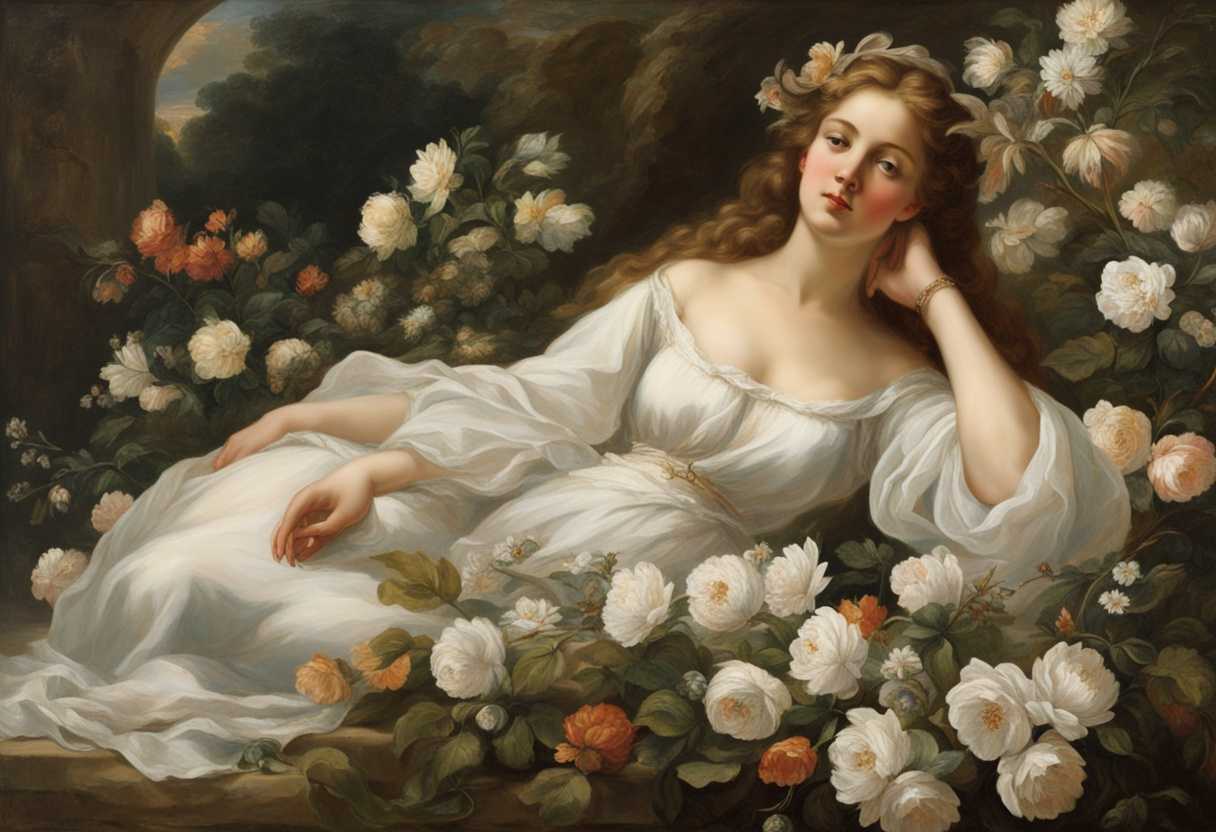
The term “Naarah,” derived from the Hebrew word meaning “young girl” or “maiden,” embodies significant themes of youth, femininity, and innocence throughout the Bible. In the context of biblical narratives, the appearance of a naarah often highlights a transition phase, representing the potential for growth and the experiences that shape a woman’s identity. For instance, in Genesis 24:16, when Rebekah is introduced as a beautiful and virgin naarah, her portrayal not only underscores her physical attributes but also sets the stage for her role in the covenantal promise through her marriage to Isaac. This illustrates how the concept of a naarah is intertwined with larger themes of divine timing and the unfolding of God’s plans through seemingly ordinary individuals.
Moreover, the use of “Naarah” can also evoke notions of purity and vulnerability. In Proverbs 30:19, the complexities of life are illustrated, and although not directly mentioning naarah, the spirit of innocence is captured within the exploration of youthful experiences and the lessons learned from them. Similarly, the narrative of sorrow and joy in the Book of Ruth emphasizes Ruth’s status as a na’arah when introduced to Boaz; her youth and resilience symbolize hope and renewal within the lineage of David. As such, naarah represents not just a phase of life but a representation of virtues such as faithfulness, purity, and the transformative journeys young women embark upon in the fabric of biblical history. This duality of physical and spiritual implications found in the concept of naarah enriches the understanding of feminine roles within scriptural contexts.
The concept of “Naarah” also connects deeply with the themes of service and agency in biblical narratives. Young women characterized as naarah sometimes fulfill pivotal roles that reflect their active participation in their communities and families. For example, in the story of Miriam, the sister of Moses, we see her depicted as a young maiden who courageously watches over her infant brother as he is placed in a basket in the Nile. Her actions not only underscore her protective instincts and resourcefulness but also highlight the essential role that young women play in the unfolding of God’s deliverance narrative for the Israelites. This representation of a naarah as an influential figure emphasizes the potential within youth to effect profound change and contribute meaningfully to God’s plans.
Furthermore, the word “Naarah” can also serve as a representation of societal expectations and the challenges young women may face as they navigate their identities. In the context of ancient Israelite society, a naarah was often viewed through the lens of marital aspirations and familial duty. However, instances where these young women exercise agency—be it through acts of bravery, bold decisions, or perseverance—subvert typical expectations and enrich their character arcs. The story of Esther showcases a young woman who rises against the backdrop of a perilous political landscape, ultimately leveraging her position to save her people. Through Esther’s courage and cleverness, the narrative illustrates that being a naarah encompasses not just innocence and youth, but also a potential for leadership, wisdom, and courage in the face of adversity, thus further expanding the thematic landscape associated with this term in Scripture.
Symbol of Youth and Purity
In the Bible, the term “Naarah” often signifies a young woman or maiden, embodying the qualities of youth and purity. This representation highlights the innocence and potential of young women in biblical narratives, often serving as a contrast to the complexities of adult life. The emphasis on purity also reflects the cultural values of the time, where a young woman’s virtue was highly esteemed and closely associated with her family’s honor.
Representation of Transition and Growth
The concept of “Naarah” also symbolizes a transitional phase in life, marking the journey from childhood to adulthood. This transition is significant in biblical contexts, as it often involves the young woman stepping into new roles and responsibilities, such as marriage or motherhood. The narratives surrounding “Naarah” can illustrate the challenges and growth that accompany this pivotal stage, emphasizing the importance of guidance and wisdom during such transformations.
Connection to Divine Purpose
Furthermore, “Naarah” can be seen as a representation of divine purpose and calling. Many young women in the Bible are depicted as being chosen for significant roles in God’s plan, whether through acts of bravery, faith, or service. This connection underscores the idea that youth is not merely a time of preparation but also a period where individuals can actively participate in fulfilling divine intentions, showcasing their potential to impact the world around them.
How to Embrace Purity and Strengthen Your Faith
Embracing purity is a beautiful journey that not only strengthens your faith but also deepens your relationship with God. Start by reflecting on what purity means to you—it’s not just about avoiding sin, but about cultivating a heart that seeks holiness in every aspect of life. Surround yourself with uplifting influences, whether through scripture, prayer, or fellowship with like-minded believers who encourage you to grow. Remember, it’s okay to stumble; what matters is your willingness to turn back to God and seek His forgiveness and guidance. Engage in regular self-examination, asking the Holy Spirit to reveal areas in your life that need refining. As you commit to this path, you’ll find that purity brings a profound sense of peace and strength, allowing you to stand firm in your faith amidst life’s challenges. Trust in God’s grace, and let it empower you to live a life that reflects His love and truth.
Bible References to the Meaning of Naarah:
Genesis 24:55-57: 55 But her brother and her mother said, “Let the young woman remain with us a while, at least ten days; after that she may go.”
56 But he said to them, “Do not delay me, since the Lord has prospered my way. Send me away that I may go to my master.”
57 They said, “Let us call the young woman and ask her.”
Judges 16:1-3: 1 Samson went to Gaza, and there he saw a prostitute, and he went in to her.
2 The Gazites were told, “Samson has come here.” And they surrounded the place and set an ambush for him all night at the gate of the city. They kept quiet all night, saying, “Let us wait till the light of the morning; then we will kill him.”
3 But Samson lay till midnight, and at midnight he arose and took hold of the doors of the gate of the city and the two posts, and pulled them up, bar and all, and put them on his shoulders and carried them to the top of the hill that is in front of Hebron.
1 Samuel 25:42-44: 42 And Abigail hurried and rose and mounted a donkey, and her five young women attended her. She followed the messengers of David and became his wife.
43 David also took Ahinoam of Jezreel, and both of them became his wives.
44 Saul had given Michal his daughter, David’s wife, to Palti the son of Laish, who was of Gallim.
2 Samuel 13:1-3: 1 Now Absalom, David’s son, had a beautiful sister, whose name was Tamar. And after a time Amnon, David’s son, loved her.
2 And Amnon was so tormented that he made himself ill because of his sister Tamar, for she was a virgin, and it seemed impossible to Amnon to do anything to her.
3 But Amnon had a friend, whose name was Jonadab, the son of Shimeah, David’s brother. And Jonadab was a very crafty man.
1 Kings 1:2-4: 2 So his servants said to him, “Let a young woman be sought for my lord the king, and let her wait on the king and be in his service. Let her lie in your arms, that my lord the king may be warm.”
3 So they sought for a beautiful young woman throughout all the territory of Israel, and found Abishag the Shunammite, and brought her to the king.
4 The young woman was very beautiful, and she was of service to the king and attended to him, but the king knew her not.
Esther 2:2-4: 2 Then the king’s young men who attended him said, “Let beautiful young virgins be sought out for the king.
3 And let the king appoint officers in all the provinces of his kingdom to gather all the beautiful young virgins to the harem in Susa the citadel, under custody of Hegai, the king’s eunuch, who is in charge of the women.
4 And let the young woman who pleases the king be queen instead of Vashti.” This pleased the king, and he did so.
Esther 2:7-9: 7 He was bringing up Hadassah, that is Esther, the daughter of his uncle, for she had neither father nor mother. The young woman had a beautiful figure and was lovely to look at, and when her father and her mother died, Mordecai took her as his own daughter.
8 So when the king’s order and his edict were proclaimed, and when many young women were gathered in Susa the citadel in custody of Hegai, Esther also was taken into the king’s palace and put in custody of Hegai, who had charge of the women.
9 And the young woman pleased him and won his favor. And he quickly provided her with her cosmetics and her portion of food, and with seven chosen young women from the king’s palace, and advanced her and her young women to the best place in the harem.
Esther 2:12-14: 12 Now when the turn came for each young woman to go in to King Ahasuerus, after being twelve months under the regulations for the women, since this was the regular period of their beautifying, six months with oil of myrrh and six months with spices and ointments for women.
13 Then in this way the girl came to the king: whatever she desired was given her to go with her from the harem to the king’s palace.
14 In the evening she would go in, and in the morning she would return to the second harem, to the custody of Shaashgaz, the king’s eunuch, who was in charge of the concubines. She would not go in to the king again, unless the king delighted in her and she was summoned by name.
Esther 2:15-17: 15 When the turn came for Esther the daughter of Abihail the uncle of Mordecai, who had taken her as his own daughter, to go in to the king, she asked for nothing except what Hegai the king’s eunuch, who had charge of the women, advised. And Esther won favor in the sight of all who saw her.
16 And when Esther was taken to King Ahasuerus, into his royal palace, in the tenth month, which is the month of Tebeth, in the seventh year of his reign,
17 the king loved Esther more than all the women, and she won grace and favor in his sight more than all the virgins, so that he set the royal crown on her head and made her queen instead of Vashti.
Esther 2:19-21: 19 Now when the virgins were gathered together the second time, Mordecai was sitting at the king’s gate.
20 Esther had not made known her people or kindred, for Mordecai had commanded her not to make it known.
21 In those days, as Mordecai was sitting at the king’s gate, Bigthan and Teresh, two of the king’s eunuchs, who guarded the threshold, became angry and sought to lay hands on King Ahasuerus.
Esther 2:22-23: 22 But Mordecai found out about the plot and told Queen Esther, who in turn reported it to the king, giving credit to Mordecai.
23 When the affair was investigated and found to be so, the men were both hanged on the gallows. And it was recorded in the book of the chronicles in the presence of the king.
Esther 2:23-25: 23 When the affair was investigated and found to be so, the men were both hanged on the gallows. And it was recorded in the book of the chronicles in the presence of the king.
24 But when the plot was known to Mordecai, he told it to Queen Esther, and Esther told the king in the name of Mordecai.
25 If it pleased the king, let a royal edict be issued, and let it be written among the laws of the Persians and the Medes, so that it may not be repealed, that Vashti is never again to come before King Ahasuerus. And let the king give her royal position to another who is better than she.

Reverend Michael Johnson is an experienced Church Minister with a profound expertise in spirituality and guidance. With a serene presence and a compassionate heart, he has faithfully served his congregation for over 20 years, leading them on a spiritual journey towards inner peace and enlightenment. Reverend Johnson’s extensive knowledge of religious philosophies and profound understanding of human nature have made him a trusted confidant and mentor to many, as he seamlessly weaves his profound wisdom into life teachings. Reverend Johnson’s calming demeanor and empathetic nature continue to uplift and heal souls, nurturing a sense of unity and tranquility within his community.