
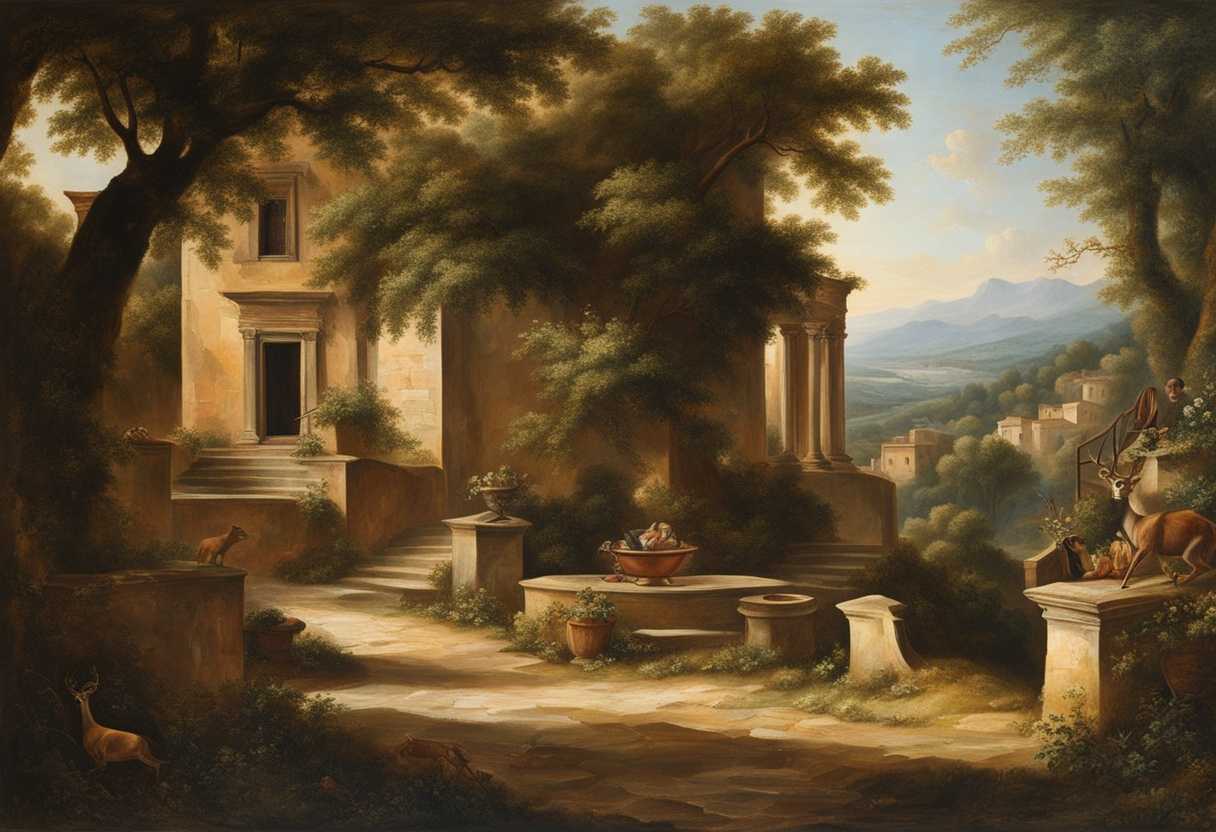
In the Bible, Ophrah refers to a town in the territory of Benjamin, mentioned in Judges 6 as the home of Gideon. The name Ophrah can mean “fawn” or “young deer” in Hebrew.
Scripture
11 Now the angel of the Lord came and sat under the terebinth at Ophrah, which belonged to Joash the Abiezrite, while his son Gideon was beating out wheat in the winepress to hide it from the Midianites.
12 And the angel of the Lord appeared to him and said to him, “The Lord is with you, O mighty man of valor.”
13 And Gideon said to him, “Please, sir, if the Lord is with us, why then has all this happened to us? And where are all his wonderful deeds that our fathers recounted to us, saying, ‘Did not the Lord bring us up from Egypt?’ But now the Lord has forsaken us and given us into the hand of Midian.”
14 And the Lord turned to him and said, “Go in this might of yours and save Israel from the hand of Midian; do not I send you?”
15 And he said to him, “Please, Lord, how can I save Israel? Behold, my clan is the weakest in Manasseh, and I am the least in my father’s house.”
16 And the Lord said to him, “But I will be with you, and you shall strike the Midianites as one man.”
17 And he said to him, “If now I have found favor in your eyes, then show me a sign that it is you who speak with me.
18 Please do not depart from here until I come to you and bring out my present and set it before you.” And he said, “I will stay till you return.”
19 So Gideon went into his house and prepared a young goat and unleavened cakes from an ephah of flour. The meat he put in a basket, and the broth he put in a pot, and brought them to him under the terebinth and presented them.
20 And the angel of God said to him, “Take the meat and the unleavened cakes, and put them on this rock, and pour the broth over them.” And he did so.
21 Then the angel of the Lord reached out the tip of the staff that was in his hand and touched the meat and the unleavened cakes. And fire sprang up from the rock and consumed the meat and the unleavened cakes. And the angel of the Lord vanished from his sight.
22 Then Gideon perceived that he was the angel of the Lord. And Gideon said, “Alas, O Lord God! For now I have seen the angel of the Lord face to face.”
23 But the Lord said to him, “Peace be to you. Do not fear; you shall not die.”
24 Then Gideon built an altar there to the Lord and called it, The Lord Is Peace.
Meaning of Ophrah in the Bible
Ophrah, a town located in the territory of Benjamin, carries significance beyond its geographical location in the Bible. Its mention in Judges 6 situates it as the home of Gideon, a judge chosen by God to lead Israel against the Midianites. The name Ophrah, translating to “fawn” or “young deer” in Hebrew, evokes themes of gentleness, healing, and renewal, which can be seen as reflective of Gideon’s journey. The metaphorical implications of a young deer also highlight vulnerability and potential—qualities essential for understanding the divine purpose. Gideon’s initial fear before he is called to lead (Judges 6:15) symbolizes the early struggles many face in fulfilling their divine destiny, akin to a young deer attempting to find its footing.
Spiritually, the town of Ophrah embodies a convergence of human frailty and divine empowerment. As Gideon encounters God in Ophrah, he receives assurance and strength to fulfill what appears to be an overwhelming task (Judges 6:12), ultimately becoming a vehicle of deliverance for Israel. This illustrates the broader biblical theme of God choosing the seemingly weak or insignificant to achieve His purposes. In this sense, Ophrah serves as a reminder that our humble beginnings, much like that of a fawn, can be transformed into vessels of divine might when placed in God’s hands. This reflects not only on the personal journey of faith but also on God’s overarching narrative of redemption throughout Scripture.
Ophrah’s significance extends beyond the immediate context of Gideon’s story, representing a locale where divine encounters yield transformative outcomes. The town signifies a threshold where the ordinary meets the extraordinary. It was in this place that Gideon first learned to hear and respond to God’s call, illustrating the importance of spiritual discernment and willingness to embrace a sacred mission amid everyday life. The choice of Ophrah for such a pivotal moment underscores a recurring biblical motif—God often initiates profound change in places that may seem unremarkable or overlooked, akin to the biblical theme of unassuming shepherds or fishermen being called to crucial roles in God’s redemptive plan.
Moreover, Ophrah invites reflection on the communal and environmental settings of spiritual awakenings. It serves as a cornerstone in the broader narrative of Israel’s struggle for purity and fidelity to Yahweh, particularly during their cyclical battles against oppression. The association of Ophrah with attributes like gentleness and vulnerability also raises discussions around community dynamics. As the Israelites rallied around Gideon, it became a place where faith was shared, nurtured, and strengthened, emphasizing the collective journey towards liberation. This notion resonates throughout the Scriptures, encouraging readers to recognize that ordinary spaces can hold profound significance, and that within communities—even those depicted as frail in their faith—there is immense potential for strength, resilience, and divine purpose.
A Place of Divine Encounter
Ophrah is significant as a location where divine encounters occur. It serves as a backdrop for pivotal moments in the biblical narrative, particularly in the story of Gideon. This setting emphasizes the theme of God choosing ordinary individuals for extraordinary purposes, highlighting the transformative power of divine calling.
Symbol of Faith and Obedience
The name Ophrah can also be interpreted as a symbol of faith and obedience. The events that transpire in this location illustrate the importance of responding to God’s call with courage and trust. The narrative surrounding Ophrah encourages believers to embrace their faith, even in the face of challenges, and to act in accordance with divine guidance.
Representation of Community and Heritage
Ophrah represents a community with a rich heritage, reflecting the interconnectedness of individuals within the broader narrative of Israel’s history. It serves as a reminder of the importance of community in the spiritual journey, where collective faith and shared experiences contribute to the growth and development of individuals and their relationship with God.
How to Nurture Your Faith and Grow Spiritually
Nurturing your faith and growing spiritually is a deeply personal journey that requires intentionality and openness to God’s guidance. Start by carving out time each day for prayer and reflection; this quiet communion with God can transform your heart and mind. Dive into Scripture, not just as a text to read, but as a living conversation with God—allow His words to challenge and inspire you. Surround yourself with a community of believers who encourage and uplift you; sharing your struggles and victories with others can deepen your understanding and commitment. Remember, spiritual growth is not a sprint but a marathon; be patient with yourself and trust that God is working in you, even when you can’t see it. Embrace the small moments of grace and let them lead you to a more profound relationship with Christ.
Bible References to the Meaning of Ophrah:
Judges 8:27-32: 27 And Gideon made an ephod of it and put it in his city, in Ophrah. And all Israel whored after it there, and it became a snare to Gideon and to his family.
28 So Midian was subdued before the people of Israel, and they raised their heads no more. And the land had rest forty years in the days of Gideon.
29 Jerubbaal the son of Joash went and lived in his own house.
30 Now Gideon had seventy sons, his own offspring, for he had many wives.
31 And his concubine who was in Shechem also bore him sons.
32 And Gideon the son of Joash died in a good old age and was buried in the tomb of Joash his father, at Ophrah of the Abiezrites.
Judges 9:1-6: 1 Now Abimelech the son of Jerubbaal went to Shechem to his mother’s relatives and said to them and to the whole clan of his mother’s family,
2 “Say in the ears of all the leaders of Shechem, ‘Which is better for you, that all seventy of the sons of Jerubbaal rule over you, or that one rule over you?’ Remember also that I am your bone and your flesh.”
3 And his mother’s relatives spoke all these words on his behalf in the ears of all the leaders of Shechem, and their hearts inclined to follow Abimelech, for they said, “He is our brother.”
4 And they gave him seventy pieces of silver out of the house of Baal-berith with which Abimelech hired worthless and reckless fellows, who followed him.
5 And he went to his father’s house at Ophrah and killed his brothers the sons of Jerubbaal, seventy men, on one stone. But Jotham the youngest son of Jerubbaal was left, for he hid himself.
6 And all the leaders of Shechem came together, and all Beth-millo, and they went and made Abimelech king, by the oak of the pillar at Shechem.
1 Samuel 13:17-18: 17 And raiders came out of the camp of the Philistines in three companies. One company turned toward Ophrah, to the land of Shual,
18 And another company turned toward Beth-horon; and another company turned toward the border that looks down on the Valley of Zeboim toward the wilderness.
1 Chronicles 4:14: 14 Meonothai fathered Ophrah; and Seraiah fathered Joab, the father of Ge-harashim, so-called because they were craftsmen.
1 Chronicles 7:22-24: 22 Their father Ephraim mourned many days, and his brothers came to comfort him.
23 He went in to his wife, and she conceived and bore a son, and he called his name Beriah, because disaster had befallen his house.
24 His daughter was Sheerah, who built both Lower and Upper Beth-horon, and Uzzen-sheerah.

Reverend Ogunlade is a seasoned Church Minister with over three decades of experience in guiding and nurturing congregations. With profound wisdom and a serene approach, Reverend Ogunlade has carried out various pastoral duties, including delivering uplifting sermons, conducting religious ceremonies, and offering sage counsel to individuals seeking spiritual guidance. Their commitment to fostering harmony and righteousness within their community is exemplified through their compassionate nature, making them a beloved and trusted figure among the congregation.