
The name Zachary, derived from the Hebrew name Zechariah, means “the Lord has remembered.” In the Bible, it signifies God’s faithfulness and remembrance of His covenant promises, often associated with the birth of John the Baptist and God’s intervention in human history.
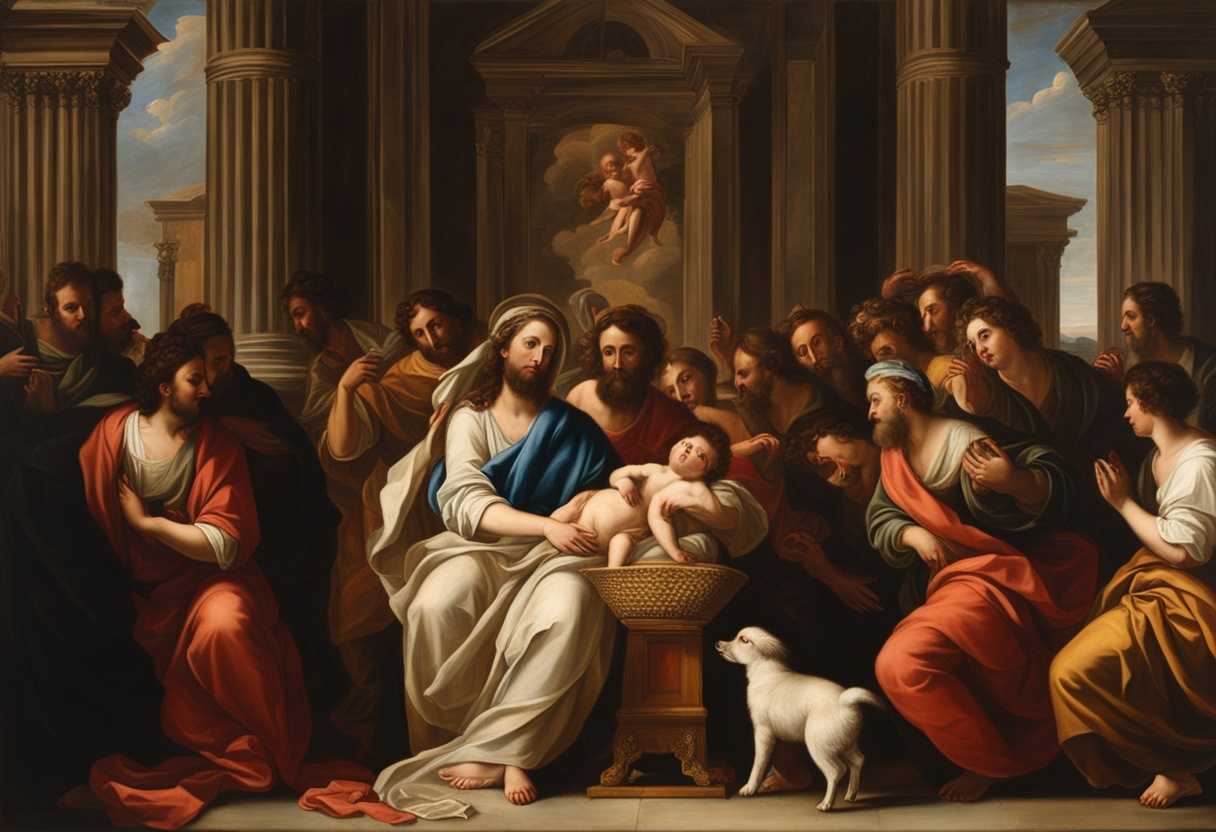
Scripture
5 In the days of Herod, king of Judea, there was a priest named Zechariah, of the division of Abijah. And he had a wife from the daughters of Aaron, and her name was Elizabeth.
6 And they were both righteous before God, walking blamelessly in all the commandments and statutes of the Lord.
7 But they had no child, because Elizabeth was barren, and both were advanced in years.
8 Now while he was serving as priest before God when his division was on duty,
9 according to the custom of the priesthood, he was chosen by lot to enter the temple of the Lord and burn incense.
10 And the whole multitude of the people were praying outside at the hour of incense.
11 And there appeared to him an angel of the Lord standing on the right side of the altar of incense.
12 And Zechariah was troubled when he saw him, and fear fell upon him.
13 But the angel said to him, “Do not be afraid, Zechariah, for your prayer has been heard, and your wife Elizabeth will bear you a son, and you shall call his name John.
14 And you will have joy and gladness, and many will rejoice at his birth.
15 for he will be great before the Lord. And he must not drink wine or strong drink, and he will be filled with the Holy Spirit, even from his mother’s womb.
16 And he will turn many of the children of Israel to the Lord their God,
17 and he will go before him in the spirit and power of Elijah, to turn the hearts of the fathers to the children, and the disobedient to the wisdom of the just, to make ready for the Lord a people prepared.”
18 And Zechariah said to the angel, “How shall I know this? For I am an old man, and my wife is advanced in years.”
19 And the angel answered him, “I am Gabriel. I stand in the presence of God, and I was sent to speak to you and to bring you this good news.
20 And behold, you will be silent and unable to speak until the day that these things take place, because you did not believe my words, which will be fulfilled in their time.”
21 And the people were waiting for Zechariah, and they were wondering at his delay in the temple.
22 And when he came out, he was unable to speak to them, and they realized that he had seen a vision in the temple. And he kept making signs to them and remained mute.
23 And when his time of service was ended, he went to his home.
24 After these days his wife Elizabeth conceived, and for five months she kept herself hidden, saying,
25 “Thus the Lord has done for me in the days when he looked on me, to take away my reproach among people.”
Spiritual Significance of the Name Zachary in the Bible
The name Zachary, which translates to “the Lord has remembered,” holds profound spiritual significance in the Biblical narrative, particularly when reflecting on themes of divine faithfulness and covenantal continuity. Throughout Scripture, God’s remembrance is a vital motif, often preceding significant acts of deliverance or promise fulfillment. For example, in Exodus 2:24, it is recorded, “And God heard their groaning, and God remembered his covenant with Abraham, with Isaac, and with Jacob.” This reiteration of God’s commitment illustrates how the name Zachary encapsulates the hope and assurance that God is consistently engaged with His people, actively recalling the promises made.
The connection of Zachary to the birth of John the Baptist serves as a pivotal point in this discussion. In Luke 1:13-17, the angel Gabriel announces the miraculous birth of John as a direct outcome of God’s remembrance, underlining the transformative power of divine intervention in history. This event signifies the transition from the long-awaited prophetic promises of the Old Testament to the unfolding of the New Testament narrative, where God fulfills His desires for restoration and redemption. Thus, the broader meaning of Zachary not only reminds believers of God’s faithfulness but also encourages them to trust in His overarching plan, knowing that He continually remembers His people and works providentially throughout history for their good.
The spiritual significance of the name Zachary can also be linked to themes of hope and renewal, encapsulated within God’s broader plan for humanity. The act of remembering, as denoted by the name, often invokes moments where restoration emerges from despair. Consider the stories of heroes in the Bible who, at critical junctures, experienced God’s remembrance: when God sought to redeem Israel from Babylonian exile, He reminded them of His everlasting covenant (Jeremiah 29:11). This consistent invocation of the divine memory embodies Zachary’s essence, urging believers to lean into their faith, especially during trials.
Furthermore, Zachary’s name resonates deeply within the New Testament’s discourse on redemption. The term reflects not only a promise of recollection but also underscores the invitation to participate in God’s unfolding narrative. As seen in the parables of grace and restoration, such as the Prodigal Son, God’s continual remembrance is an invitation for believers to return to Him, embracing their identity as beloved children of God. This aspect of Zachary’s name highlights the personal nature of divine remembrance—it is not merely a distant acknowledgment but an intimate engagement, fostering a profound relationship between God and His people. Thus, Zachary symbolizes hope and renewal, reminding the faithful that in every instance of divine remembrance lies an opportunity for transformation and new beginnings.
Divine Remembrance
The name Zachary, derived from the Hebrew name Zechariah, means “the Lord has remembered.” This spiritual significance emphasizes the idea that God is always aware of His people and their needs. It serves as a reminder that divine intervention and remembrance are integral to the faith journey, encouraging believers to trust in God’s timing and His plans for their lives.
Role of Prophecy and Preparation
Zachary is often associated with the prophetic tradition in the Bible. The name signifies a calling to prepare the way for God’s purposes. This reflects the broader spiritual theme of being instruments of God’s will, highlighting the importance of readiness and obedience in fulfilling one’s divine mission. It encourages individuals to be vigilant and proactive in their spiritual lives, preparing themselves and others for the coming of God’s promises.
Legacy of Faithfulness
The name Zachary also embodies the concept of faithfulness. Those who bear this name are often seen as exemplifying steadfastness in their faith and commitment to God. This spiritual significance underscores the importance of maintaining faith through trials and tribulations, serving as a testament to God’s faithfulness in return. It inspires believers to cultivate a legacy of trust and devotion, impacting future generations with their unwavering belief.
How to Embrace Divine Remembrance for a Stronger Faith
Embracing divine remembrance is a beautiful way to deepen your faith and cultivate a closer relationship with God. Start by setting aside intentional moments in your day to reflect on His goodness and the blessings in your life—perhaps through journaling or prayer. Remembering the times when God has been faithful in your life can serve as a powerful reminder of His unwavering love and presence. You might also find it helpful to memorize scripture that speaks to His promises, allowing these truths to anchor your heart during challenging times. Surround yourself with reminders of His faithfulness, whether through worship music, uplifting books, or fellowship with other believers. As you practice this divine remembrance, you’ll find that your faith grows stronger, and your trust in God deepens, enabling you to navigate life’s ups and downs with a renewed sense of hope and purpose.
Bible References to the Name Zachary:
Luke 1:57-80: 57 Now the time came for Elizabeth to give birth, and she bore a son.
58 And her neighbors and relatives heard that the Lord had shown great mercy to her, and they rejoiced with her.
59 And on the eighth day they came to circumcise the child. And they would have called him Zechariah after his father,
60 But his mother answered, “No; he shall be called John.”
61 And they said to her, “There is no one among your relatives who is called by this name.”
62 And they made signs to his father, inquiring what he wanted him to be called.
63 And he asked for a writing tablet and wrote, “His name is John.” And they all wondered.
64 And immediately his mouth was opened and his tongue loosed, and he spoke, blessing God.
65 And fear came on all their neighbors. And all these things were talked about through all the hill country of Judea.
66 And all who heard them laid them up in their hearts, saying, “What then will this child be?” For the hand of the Lord was with him.
67 And his father Zechariah was filled with the Holy Spirit and prophesied, saying:
68 “Blessed be the Lord God of Israel,
for he has visited and redeemed his people.
69 and has raised up a horn of salvation for us in the house of his servant David,
70 as he spoke by the mouth of his holy prophets from of old,
71 that we should be saved from our enemies and from the hand of all who hate us;
72 to show the mercy promised to our fathers and to remember his holy covenant,
73 the oath that he swore to our father Abraham,
74 that we, being delivered from the hand of our enemies,
might serve him without fear,
75 in holiness and righteousness before him all our days.
76 And you, child, will be called the prophet of the Most High; for you will go before the Lord to prepare his ways.
77 to give knowledge of salvation to his people
in the forgiveness of their sins,
78 because of the tender mercy of our God, whereby the sunrise shall visit us from on high
79 to give light to those who sit in darkness and in the shadow of death, to guide our feet into the way of peace.”
80 And the child grew and became strong in spirit, and he was in the wilderness until the day of his public appearance to Israel.
2 Kings 14:29-15:7: 29 And Jeroboam slept with his fathers, the kings of Israel, and Zechariah his son reigned in his place.
1 In the twenty-seventh year of Jeroboam king of Israel, Azariah the son of Amaziah, king of Judah, began to reign.
2 He was sixteen years old when he began to reign, and he reigned fifty-two years in Jerusalem. His mother’s name was Jecoliah of Jerusalem.
3 And he did what was right in the eyes of the Lord, according to all that his father Amaziah had done.
4 Nevertheless, the high places were not taken away. The people still sacrificed and made offerings on the high places.
5 And the Lord touched the king, so that he was a leper to the day of his death, and he lived in a separate house. And Jotham the king’s son was over the household, governing the people of the land.
6 Now the rest of the acts of Azariah, and all that he did, are they not written in the Book of the Chronicles of the Kings of Judah?
7 And Azariah slept with his fathers, and they buried him with his fathers in the city of David, and Jotham his son reigned in his place.
2 Chronicles 24:17-22: 17 Now after the death of Jehoiada the princes of Judah came and paid homage to the king. Then the king listened to them.
18 And they abandoned the house of the Lord, the God of their fathers, and served the Asherim and the idols. And wrath came upon Judah and Jerusalem for this guilt of theirs.
19 Yet he sent prophets among them to bring them back to the Lord. And they testified against them, but they would not pay attention.
20 Then the Spirit of God clothed Zechariah the son of Jehoiada the priest, and he stood above the people, and said to them, “Thus says God, ‘Why do you break the commandments of the Lord, so that you cannot prosper? Because you have forsaken the Lord, he has forsaken you.’”
21 But they conspired against him, and by command of the king they stoned him with stones in the court of the house of the Lord.
22 Thus Joash the king did not remember the kindness that Jehoiada, Zechariah’s father, had shown him, but killed his son. And when he was dying, he said, “May the Lord see and avenge!”
Nehemiah 12:1-26: 1 These are the priests and the Levites who came up with Zerubbabel the son of Shealtiel, and Jeshua: Seraiah, Jeremiah, Ezra,
2 Amariah, Malluch, Hattush,
3 and Shebaniah, Joshaphat, Nethanel, Amasai, Zechariah, Benaiah, and Eliezer, the priests, should blow the trumpets before the ark of God.
4 Iddo, Ginnethoi, Abijah,
5 and of the priests: the sons of Hobaiah, the sons of Hakkoz, the sons of Barzillai (who had taken a wife of the daughters of Barzillai the Gileadite and was called by their name).
6 These were the priests and the Levites who came up with Zerubbabel the son of Shealtiel, and Jeshua: Seraiah, Jeremiah, Ezra,
7 Sallu, Amok, Hilkiah, Jedaiah. These were the chiefs of the priests and of their brothers in the days of Jeshua.
8 And the Levites: Jeshua, Binnui, Kadmiel, Sherebiah, Judah, and Mattaniah, who with his brothers was in charge of the songs of thanksgiving.
9 and Bakbukiah and Unni and their brothers stood opposite them in the service.
10 And Jeshua fathered Joiakim, Joiakim fathered Eliashib, Eliashib fathered Joiada,
11 and Joiada the father of Jonathan, and Jonathan the father of Jaddua.
12 And in the days of Joiakim were priests, heads of fathers’ houses: of Seraiah, Meraiah; of Jeremiah, Hananiah;
13 and certain of the priests’ sons with trumpets: Zechariah the son of Jonathan, son of Shemaiah, son of Mattaniah, son of Micaiah, son of Zaccur, son of Asaph,
14 Of Malluchi, Jonathan; of Shebaniah, Joseph;
15 And of the Levites: Shemaiah the son of Hasshub, son of Azrikam, son of Hashabiah, son of Bunni;
16 and of Iddo, Zechariah of Ginnethon.
17 And the Levites: Jeshua the son of Azaniah, Binnui of the sons of Henadad, Kadmiel.
18 And the Levites in the days of Joiakim, Jeshua, and Johanan, and Jaddua were recorded heads of fathers’ houses; also the priests, to the reign of Darius the Persian.
19 And of Joiakim, the chiefs of the priests: Meraiah, of Jeremiah, Hananiah, of Ezra
20 And the rest of the people, the priests, the Levites, the gatekeepers, the singers, the temple servants, and all who have separated themselves from the peoples of the lands to the Law of God, their wives, their sons, their daughters, all who have knowledge and understanding,
21 And of the sons of Harim: Maaseiah, Elijah, Shemaiah, Jehiel, and Uzziah.
22 As for the Levites, in the days of Eliashib, Joiada, Johanan, and Jaddua, they were recorded heads of fathers’ houses; also the priests, to the reign of Darius the Persian.
23 And the sons of Levi, the heads of fathers’ houses, were written in the Book of the Chronicles until the days of Johanan the son of Eliashib.
24 And the chiefs of the Levites: Hashabiah, Sherebiah, and Jeshua the son of Kadmiel, with their brothers who stood opposite them, to praise and to give thanks, according to the commandment of David the man of God, watch by watch.
25 Mattaniah, Bakbukiah, Obadiah, Meshullam, Talmon, and Akkub were gatekeepers standing guard at the storehouses of the gates.
26 These were in the days of Joiakim the son of Jeshua, son of Jozadak, and in the days of Nehemiah the governor and of Ezra the priest, the scribe.
Zechariah 1:1-6: 1 In the eighth month, in the second year of Darius, the word of the Lord came to the prophet Zechariah, the son of Berechiah, son of Iddo, saying:
2 “The Lord was very angry with your fathers.
3 Therefore say to them, Thus declares the Lord of hosts: Return to me, says the Lord of hosts, and I will return to you, says the Lord of hosts.
4 Be not like your fathers, to whom the former prophets cried out, ‘Thus says the Lord of hosts, Return from your evil ways and from your evil deeds.’ But they did not hear or pay attention to me, declares the Lord.
5 Your fathers, where are they? And the prophets, do they live forever?
6 But my words and my statutes, which I commanded my servants the prophets, did they not overtake your fathers? So they repented and said, ‘As the Lord of hosts purposed to deal with us for our ways and deeds, so has he dealt with us.’”
Zechariah 3:1-10: 3 Then he showed me Joshua the high priest standing before the angel of the Lord, and Satan standing at his right hand to accuse him.
2 And the Lord said to Satan, “The Lord rebuke you, O Satan! The Lord who has chosen Jerusalem rebuke you! Is not this a brand plucked from the fire?”
3 Now Joshua was standing before the angel, clothed with filthy garments.
4 And the angel said to those who were standing before him, “Remove the filthy garments from him.” And to him he said, “Behold, I have taken your iniquity away from you, and I will clothe you with pure vestments.”
5 And I said, “Let them put a clean turban on his head.” So they put a clean turban on his head and clothed him with garments. And the angel of the Lord was standing by.
6 And the angel of the Lord solemnly assured Joshua,
7 “Thus says the Lord of hosts: If you will walk in my ways and keep my charge, then you shall rule my house and have charge of my courts, and I will give you the right of access among those who are standing here.”
8 Hear now, O Joshua the high priest, you and your friends who sit before you, for they are men who are a sign: behold, I will bring my servant the Branch.
9 For behold, on the stone that I have set before Joshua, on a single stone with seven eyes, I will engrave its inscription, declares the Lord of hosts, and I will remove the iniquity of this land in a single day.
10 In that day, declares the Lord of hosts, every one of you will invite his neighbor to come under his vine and under his fig tree.”
Zechariah 4:1-14: 1 And the angel who talked with me came again and woke me, like a man who is awakened out of his sleep.
2 And he said to me, “What do you see?” I said, “I see, and behold, a lampstand all of gold, with a bowl on the top of it, and seven lamps on it, with seven lips on each of the lamps that are on the top of it.
3 And there are two olive trees by it, one on the right of the bowl and the other on its left.”
4 Then I said to the angel who talked with me, “What are these, my lord?”
5 Then the angel who talked with me answered and said to me, “Do you not know what these are?” And I said, “No, my lord.”
6 Then he said to me, “This is the word of the Lord to Zerubbabel: Not by might, nor by power, but by my Spirit, says the Lord of hosts.
7 Who are you, O great mountain? Before Zerubbabel you shall become a plain. And he shall bring forward the top stone amid shouts of ‘Grace, grace to it!’”
4 Then the word of the Lord came to me, saying:
9 “The hands of Zerubbabel have laid the foundation of this house; his hands shall also complete it. Then you will know that the Lord of hosts has sent me to you.”
10 For whoever has despised the day of small things shall rejoice, and shall see the plumb line in the hand of Zerubbabel.
4 Then I said to him, “What are these two olive trees on the right and the left of the lampstand?”
12 And I said to him, “What are these two olive branches that are beside the two golden pipes from which the golden oil is poured out?”
13 He said to me, “Do you not know what these are?” I said, “No, my lord.”
14 Then he said, “These are the two anointed ones who stand by the Lord of the whole earth.”
Zechariah 6:9-15: 9 And the word of the Lord came to me:
10 “Take from the exiles Heldai, Tobijah, and Jedaiah, who have arrived from Babylon, and go the same day to the house of Josiah, the son of Zephaniah.”
11 Take from them silver and gold, and make a crown, and set it on the head of Joshua, the son of Jehozadak, the high priest.
12 And say to him, ‘Thus says the Lord of hosts, “Behold, the man whose name is the Branch: for he shall branch out from his place, and he shall build the temple of the Lord.
13 It is he who shall build the temple of the Lord and shall bear royal honor, and shall sit and rule on his throne. And there shall be a priest on his throne, and the counsel of peace shall be between them both.”
14 “And the crown shall be in the temple of the Lord as a reminder to Helem, Tobijah, Jedaiah, and Hen the son of Zephaniah.”
15 “And those who are far off shall come and help to build the temple of the Lord. And you shall know that the Lord of hosts has sent me to you. And this shall come to pass, if you will diligently obey the voice of the Lord your God.”
Zechariah 8:1-8: 1 And the word of the Lord of hosts came, saying:
2 “Thus says the Lord of hosts: I am jealous for Zion with great jealousy, and I am jealous for her with great wrath.”
3 Thus says the Lord: I have returned to Zion and will dwell in the midst of Jerusalem, and Jerusalem shall be called the faithful city, and the mountain of the Lord of hosts, the holy mountain.
4 Thus says the Lord of hosts: Old men and old women shall again sit in the streets of Jerusalem, each with staff in hand because of great age.
5 And the streets of the city shall be full of boys and girls playing in its streets.
6 Thus says the Lord of hosts: If it is marvelous in the sight of the remnant of this people in those days, should it also be marvelous in my sight, declares the Lord of hosts?
7 Thus says the Lord of hosts: Behold, I will save my people from the east country and from the west country.
8 and I will bring them to dwell in the midst of Jerusalem. And they shall be my people, and I will be their God, in faithfulness and in righteousness.

Rev. François Dupont is a dedicated church minister with a wealth of experience in serving spiritual communities. With a calm and serene demeanor, he has been devoted to sharing the message of love, compassion, and tolerance for over two decades. Through his thoughtful sermons, compassionate counseling, and unwavering support, Rev. Dupont has touched the lives of countless individuals, allowing them to find solace and strength during difficult times. His serene presence and deep understanding of the human condition make him a trusted guide for those seeking spiritual nourishment and guidance.