
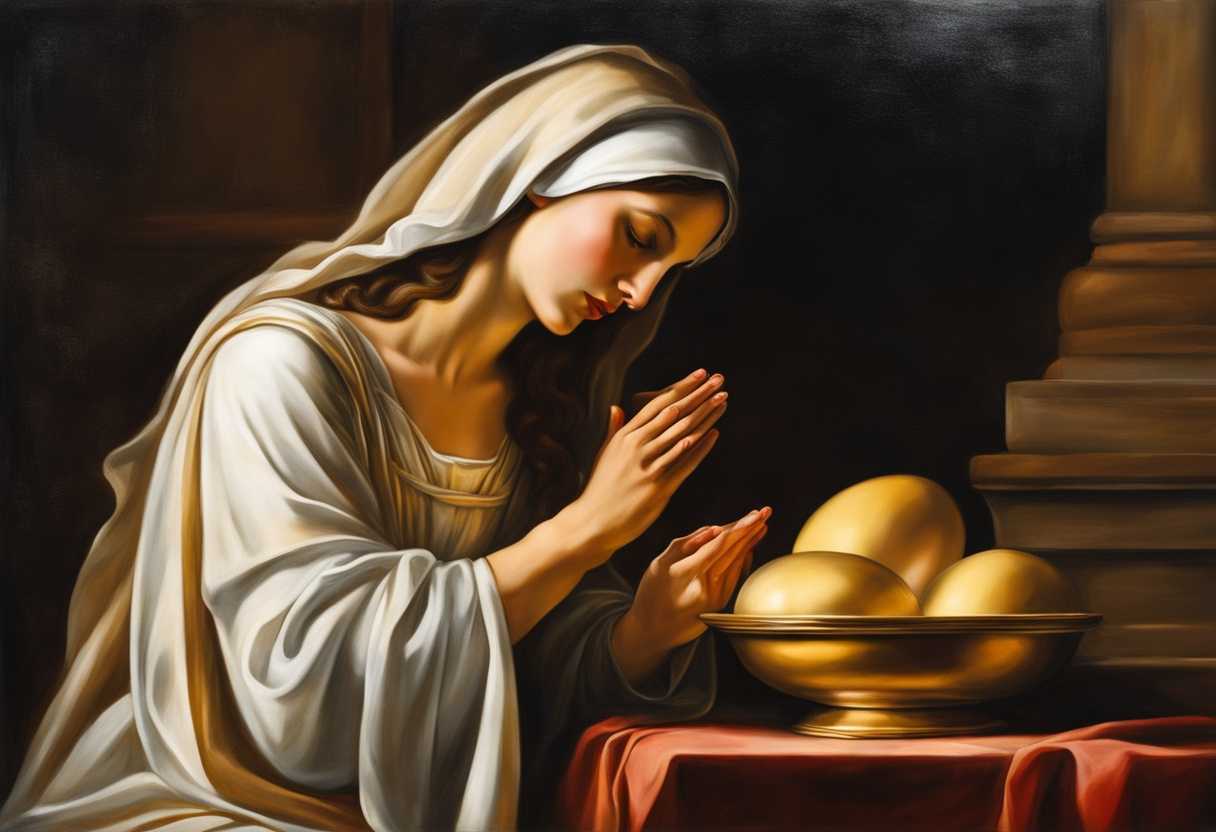
In the Bible, the alabaster box, often associated with the story of a woman anointing Jesus, symbolizes great value and sacrifice, representing the woman’s devotion and the precious nature of her offering. It is mentioned in passages like Matthew 26:6-13 and Mark 14:3-9, highlighting the importance of honoring Christ with our most treasured possessions.
Scripture
6 Now when Jesus was at Bethany in the house of Simon the leper,
7 a woman came up to him with an alabaster flask of very expensive ointment, and she poured it on his head as he reclined at table.
8 But when the disciples saw it, they were indignant, saying, “Why this waste?
9 For this ointment could have been sold for a large sum and given to the poor.
10 But Jesus, aware of this, said to them, “Why do you trouble the woman? For she has done a beautiful thing to me.
11 For you always have the poor with you, but you will not always have me.
12 in pouring this ointment on my body, she has done it to prepare me for burial.
13 Truly, I say to you, wherever this gospel is proclaimed in the whole world, what she has done will also be told in memory of her.
Meaning of Alabaster Box in the Bible
The alabaster box, notably referenced in the Gospels of Matthew (26:6-13) and Mark (14:3-9), serves as a profound symbol of devotion and sacrifice in the biblical narrative. In these accounts, an unnamed woman breaks the box, which contains costly perfume, to anoint Jesus as an act of reverent worship and recognition of His imminent sacrifice. This act, perceived by some as extravagant and wasteful, echoes the theme of true devotion that transcends societal norms and material considerations. Jesus himself defends her actions, proclaiming that she has performed a good deed for Him, indicating that acts of true love toward God often come at a personal cost and should be viewed through the lens of faith rather than mere practicality.
Moreover, the alabaster box invites believers to reflect on what they consider valuable in their own lives. Just as the woman offered her most precious possession, followers of Christ are called to offer their time, talents, and resources in service to God and others (2 Corinthians 9:7). The alabaster box emphasizes that the worth of one’s offerings lies not in their monetary value but in their heartfelt intention and the love that drives them. It encourages a life of radical generosity and worship, reminding us, as mentioned in Romans 12:1, to present our bodies as living sacrifices, holy and pleasing to God—a true act of worship that is as valuable as the costly perfume contained in that alabaster box.
In addition to the Gospel references, the alabaster box can be seen as emblematic of the deep spiritual truths found throughout the Bible. Its significance extends beyond a singular act of devotion to embody a larger narrative of surrender and the transformative power of love. The woman’s act of breaking the alabaster box reveals an essential truth about the nature of worship; it requires both vulnerability and the willingness to give up what is precious. This mirrors the profound messages found in the Old Testament, where offerings often demanded the best from individuals as a reflection of their heart’s posture toward God. Just as the fragrant perfume filled the room with its aroma, so too does a life of sacrificial love and worship have a far-reaching impact, influencing those around us in ways that are often unseen yet profoundly felt.
Moreover, the alabaster box can serve as a metaphor for the human heart. Its fragile exterior and valuable contents symbolize the inner workings of faith — a treasure that is both easily broken yet numinous in its beauty when offered to the Lord. The stories of the Great Commission and the rich young ruler further illustrate this theme, emphasizing that true discipleship entails a willingness to forsake our comforts and earthly attachments in pursuit of a greater calling. This invites an introspective journey among believers to examine what we hold dear and how we can better align our lives with the values of Christ’s kingdom—ultimately echoing the essence of the alabaster box: the beauty of a life poured out in love and anointing for the sake of others. By embracing this offering, we commit to fostering a legacy that honors God and enhances the world around us, much like the enduring fragrance of the perfume long after the box was broken.
Symbol of Sacrifice and Devotion
The alabaster box, often associated with the act of anointing Jesus, represents profound sacrifice and devotion. The costly perfume contained within the box signifies the willingness to give one’s best to God. This act of pouring out precious ointment can be seen as a metaphor for surrendering personal treasures, time, and energy in service to a higher purpose. It illustrates the idea that true worship involves not just ritual, but a heartfelt offering of oneself.
Representation of Redemption and Transformation
The alabaster box also symbolizes redemption and transformation. The act of breaking the box to release the perfume signifies breaking away from the old self and embracing a new identity in Christ. This transformation is often accompanied by a release of the past and an acceptance of grace. The fragrance that fills the room serves as a reminder of the beauty that can emerge from brokenness, highlighting the theme of renewal and the power of God’s love to change lives.
Contrast Between Worldly Values and Spiritual Riches
Furthermore, the alabaster box serves as a contrast between worldly values and spiritual riches. The expensive nature of the perfume challenges societal norms that prioritize material wealth and status. In this context, the act of anointing Jesus with such a costly substance emphasizes the idea that spiritual devotion and love for God surpass earthly possessions. It invites believers to reflect on what they value most and encourages a shift from materialism to a focus on eternal significance.
How to Deepen Your Christian Faith Through Everyday Actions
Deepening your Christian faith through everyday actions is a beautiful journey that invites you to weave your beliefs into the fabric of your daily life. Start by embracing small, intentional acts of kindness—whether it’s offering a smile to a stranger, helping a neighbor, or volunteering your time at a local charity. These actions not only reflect Christ’s love but also create opportunities for you to share your faith in meaningful ways. Incorporate prayer into your routine, perhaps by setting aside a few moments each morning to connect with God, or by turning mundane tasks into moments of gratitude and reflection. Remember, it’s in the little things—like showing patience in a frustrating situation or choosing forgiveness over resentment—that you can truly embody the teachings of Jesus. As you cultivate these habits, you’ll find that your faith grows deeper, becoming a source of strength and joy in your everyday life.
Bible References to the Alabaster Box:
Mark 14:3-9: 3 And while he was at Bethany in the house of Simon the leper, as he was reclining at table, a woman came with an alabaster flask of ointment of pure nard, very costly, and she broke the flask and poured it over his head.
4 There were some who said to themselves indignantly, “Why was the ointment wasted like that?
5 For this ointment could have been sold for more than three hundred denarii and given to the poor.” And they scolded her.
6 But Jesus said, “Leave her alone. Why do you trouble her? She has done a beautiful thing to me.
7 For you always have the poor with you, and whenever you want, you can do good for them. But you will not always have me.
8 She has done what she could; she has anointed my body beforehand for burial.
9 And truly, I say to you, wherever the gospel is proclaimed in the whole world, what she has done will be told in memory of her.”
Luke 7:36-50: 36 One of the Pharisees asked him to eat with him, and he went into the Pharisee’s house and reclined at table.
37 And behold, a woman of the city, who was a sinner, when she learned that he was reclining at table in the Pharisee’s house, brought an alabaster flask of ointment,
38 and standing behind him at his feet, weeping, she began to wet his feet with her tears and wiped them with the hair of her head and kissed his feet and anointed them with the ointment.
39 Now when the Pharisee who had invited him saw this, he said to himself, “If this man were a prophet, he would have known who and what sort of woman this is who is touching him, for she is a sinner.”
40 And Jesus answering said to him, “Simon, I have something to say to you.” And he answered, “Say it, Teacher.”
41 “A certain moneylender had two debtors. One owed five hundred denarii, and the other fifty.
42 When they could not pay, he cancelled the debt of both. Now which of them will love him more?”
43 Simon answered, “The one, I suppose, for whom he cancelled the larger debt.” And he said to him, “You have judged rightly.”
44 Then turning toward the woman he said to Simon, “Do you see this woman? I entered your house; you gave me no water for my feet, but she has wet my feet with her tears and wiped them with her hair.
45 You gave me no kiss, but from the time I came in she has not ceased to kiss my feet.
46 You did not anoint my head with oil, but she has anointed my feet with ointment.
47 Therefore I tell you, her sins, which are many, are forgiven—for she loved much. But he who is forgiven little, loves little.
48 And he said to her, “Your sins are forgiven.”
49 Then those who were at table with him began to say among themselves, “Who is this, who even forgives sins?”
50 And he said to the woman, “Your faith has saved you; go in peace.”
John 12:1-8: 1 Six days before the Passover, Jesus therefore came to Bethany, where Lazarus was, whom Jesus had raised from the dead.
2 So they gave a dinner for him there. Martha served, and Lazarus was one of those reclining with him at table.
3 Mary therefore took a pound of expensive ointment made from pure nard, and anointed the feet of Jesus and wiped his feet with her hair. The house was filled with the fragrance of the perfume.
4 But Judas Iscariot, one of his disciples (he who was about to betray him), said,
5 “Why was this ointment not sold for three hundred denarii and given to the poor?”
6 He said this, not because he cared about the poor, but because he was a thief, and having charge of the moneybag he used to help himself to what was put into it.
7 Jesus said, “Leave her alone, so that she may keep it for the day of my burial.”
8 For the poor you always have with you, but you do not always have me.”

Rev. François Dupont is a dedicated church minister with a wealth of experience in serving spiritual communities. With a calm and serene demeanor, he has been devoted to sharing the message of love, compassion, and tolerance for over two decades. Through his thoughtful sermons, compassionate counseling, and unwavering support, Rev. Dupont has touched the lives of countless individuals, allowing them to find solace and strength during difficult times. His serene presence and deep understanding of the human condition make him a trusted guide for those seeking spiritual nourishment and guidance.