
In the Bible, frankincense is a fragrant resin used in ancient rituals and offerings, symbolizing purity and divinity. It is mentioned in contexts such as the gifts brought to Jesus by the Magi in Matthew 2:11 and as part of the holy incense in Exodus 30:34.
Scripture
34 The Lord said to Moses, “Take sweet spices, stacte, and onycha, and galbanum, sweet spices with pure frankincense (of each shall there be an equal part),
35 You shall make of these a sacred anointing oil blended as by the perfumer; it shall be a holy anointing oil.
36 You shall beat some of it very small, and put part of it before the testimony in the tent of meeting where I shall meet with you. It shall be most holy to you.
37 And the incense that you shall make according to its composition, you shall not make for yourselves. It shall be for you holy to the Lord.
38 Whoever makes any like it to use as perfume shall be cut off from his people.
Meaning of Frankincense in the Bible
In the Bible, frankincense is not merely a fragrant resin but represents profound spiritual significance. Its inclusion among the gifts presented to Jesus by the Magi in Matthew 2:11 highlights its value as an offering fit for a king. The passage states, “And when they were come into the house, they saw the young child with Mary his mother, and fell down, and worshipped him: and when they had opened their treasures, they presented unto him gifts; gold, and frankincense, and myrrh.” Here, frankincense symbolizes the acknowledgment of Christ’s divine nature, as it was traditionally associated with worship and was an integral part of temple offerings, thus linking Jesus to divine worship from His very beginnings.
Frankincense also plays a significant role in the sacrificial system outlined in the Old Testament, particularly in Exodus 30:34, where it is designated as a critical component of the holy incense: “And the LORD said unto Moses, Take unto thee sweet spices, stacte, and onychus, and galbanum; these sweet spices with pure frankincense: of each shall there be a like weight.” This demonstrates its use in rituals intended to sanctify spaces for worship, establishing a direct line between earthly offerings and heavenly presence. Overall, frankincense encapsulates themes of worship, purity, and the divine, reinforcing the spiritual symbolic framework that underpins much of biblical practice and teaching.
Aside from its notable appearances in offerings and worship, frankincense also signifies healing and purification within biblical texts. The ancient understanding of frankincense extended beyond merely being a fragrant substance; it was recognized for its medicinal properties. In the context of healing, its use in various rituals emphasizes the desire for spiritual and physical restoration. The biblical narrative often intertwines physical ailments with spiritual conditions, establishing that wholeness and healing are essential components of divine favor. Therefore, frankincense serves as a reminder that worship is not solely about honor but also about seeking restoration in our lives and communities.
Moreover, frankincense evokes themes of covenant and commitment. The prophet Malachi speaks of offerings being presented on the altar, indicating that true worship involves a spirit of sacrifice and dedication (Malachi 1:11). This notion reinforces the idea that frankincense, as a cherished gift, symbolizes the covenant relationship between God and His people. As they offered sacrifices seasoned with frankincense, worshippers renewed their commitment to serve the Lord faithfully. Thus, within this sacred aroma lies not just a pleasant scent, but a layered significance that relates the giver’s heart to the faithfulness of God, illustrating the depth of connection established through sacrificial worship in a journey toward divine communion.
Symbol of Worship and Devotion
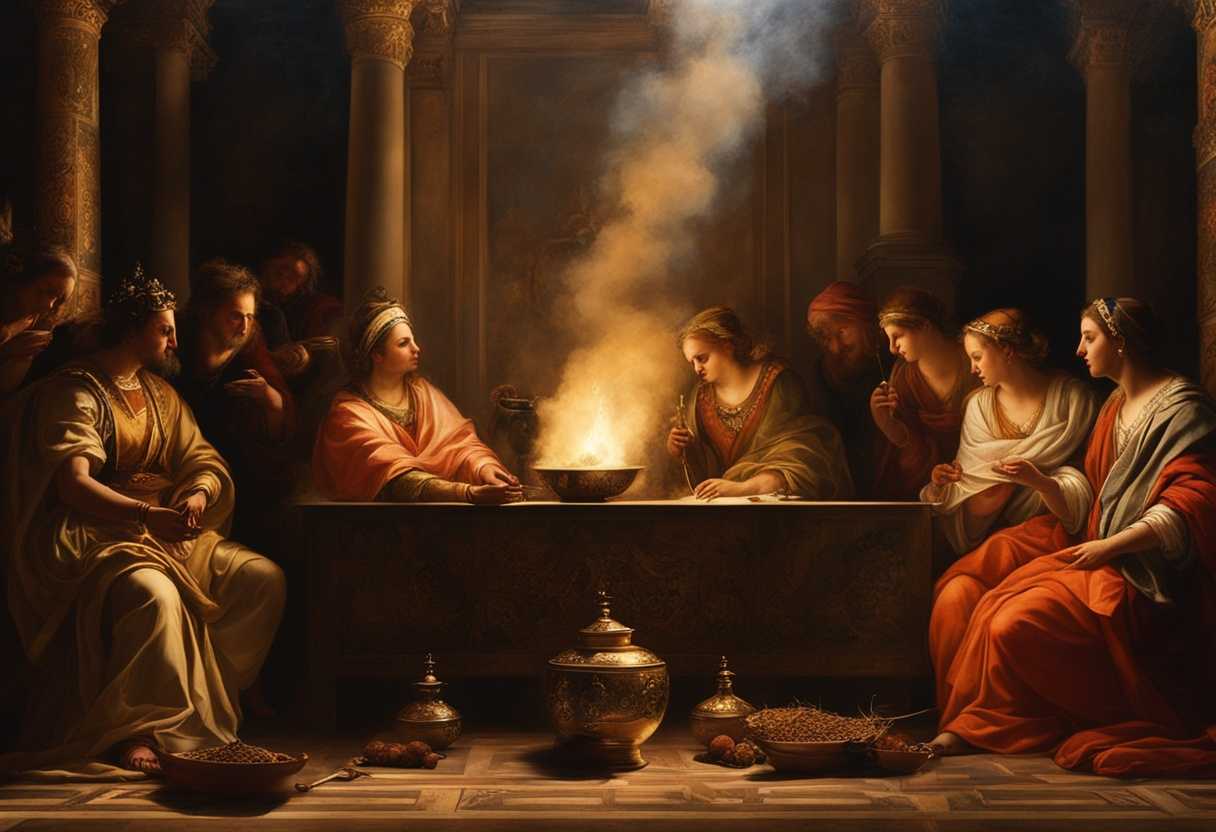
Frankincense is often associated with acts of worship and devotion in the Bible. Its use in religious rituals signifies the offering of one’s heart and soul to God. The fragrant smoke of frankincense rising during sacrifices symbolizes prayers ascending to heaven, representing the believer’s desire for communion with the divine. This highlights the importance of sincerity and reverence in worship.
Representation of Purity and Holiness
In biblical contexts, frankincense is also seen as a symbol of purity and holiness. Its use in sacred anointing oils and incense signifies the setting apart of people and objects for divine purposes. The purity of frankincense reflects the holiness of God and the call for His followers to pursue a life of righteousness and sanctity. This connection emphasizes the need for believers to strive for moral and spiritual purity in their lives.
Sign of Prosperity and Blessing
Frankincense, being a valuable and sought-after commodity in ancient times, also represents prosperity and blessing. Its inclusion in offerings and gifts signifies abundance and the favor of God. The presence of frankincense in a household or community can be seen as a sign of God’s blessings, prosperity, and the richness of spiritual life. This aspect encourages believers to recognize and appreciate the blessings they receive from God and to share those blessings with others.
How to Deepen Your Faith and Worship in Christ
Deepening your faith and worship in Christ is a beautiful journey that requires intentionality and openness. Start by carving out dedicated time for prayer and reflection each day; this quiet space allows you to connect with God on a personal level, sharing your thoughts, fears, and gratitude. Dive into the Scriptures, not just as a text to read, but as a living conversation with God—ask questions, seek understanding, and let His words resonate in your heart. Surround yourself with a community of believers who inspire and challenge you; fellowship can ignite your passion for Christ and provide support during tough times. Finally, consider incorporating worship into your daily life, whether through music, art, or acts of service, as these expressions can draw you closer to God and deepen your understanding of His love. Remember, faith is a journey, not a destination, so be patient with yourself and trust that each step brings you closer to Him.
Bible References to Frankincense Meaning:
Leviticus 2:1-2: 1 “When anyone brings a grain offering as an offering to the Lord, his offering shall be of fine flour. He shall pour oil on it and put frankincense on it
2 And he shall bring it to Aaron’s sons the priests, and shall take from it a handful of the fine flour and oil, with all of its frankincense, and the priest shall burn this as its memorial portion on the altar, a food offering with a pleasing aroma to the Lord.
Leviticus 2:14-16: 14 And if you offer a grain offering of firstfruits to the Lord, you shall offer for the grain offering of your firstfruits fresh ears, roasted with fire, crushed new grain.
15 You shall put oil on it and lay frankincense on it; it is a grain offering.
16 And the priest shall burn as its memorial portion some of the crushed grain and some of the oil with all of its frankincense; it is a food offering to the Lord.
Leviticus 6:14-18: 14 “And this is the law of the grain offering. The sons of Aaron shall offer it before the Lord in front of the altar.”
15 And one shall take from it a handful of the fine flour of the grain offering and its oil and all the frankincense that is on the grain offering and burn this as its memorial portion on the altar, a pleasing aroma to the Lord.
16 And the rest of it Aaron and his sons shall eat. It shall be eaten unleavened in a holy place. In the court of the tent of meeting they shall eat it.
17 It shall not be baked with leaven. I have given it as their portion of my food offerings. It is a thing most holy, like the sin offering and the guilt offering.
18 Every male among the children of Aaron may eat of it, as decreed forever throughout your generations, from the Lord’s food offerings. Whatever touches them shall become holy.
Leviticus 24:5-9: 5 “You shall take fine flour and bake twelve loaves from it; two tenths of an ephah shall be in each loaf.”
6 And you shall set them in two piles, six in a pile, on the table of pure gold before the Lord.
7 And you shall put pure frankincense on each row, that it may go with the bread as a memorial portion as a food offering to the Lord.
8 Every Sabbath day he shall set it in order before the Lord regularly; it is from the people of Israel as a covenant forever.
9 And it shall be for Aaron and his sons, and they shall eat it in a holy place, since it is for him a most holy portion out of the Lord’s food offerings, a perpetual due.”
Numbers 5:11-15: 11 And the Lord spoke to Moses, saying:
12 “Speak to the people of Israel, If any man’s wife goes astray and breaks faith with him,”
13 and a man lies with her carnally, and it is hidden from the eyes of her husband, and she is undetected though she has defiled herself, and there is no witness against her, since she was not taken in the act.
14 and if the spirit of jealousy comes over him and he is jealous of his wife who has defiled herself, or if the spirit of jealousy comes over him and he is jealous of his wife, though she has not defiled herself,
15 then the man shall bring his wife to the priest and bring the offering required of her, a tenth of an ephah of barley flour. He shall pour no oil on it and put no frankincense on it, for it is a grain offering of jealousy, a grain offering of remembrance, bringing iniquity to remembrance.
1 Chronicles 9:29-32: 29 Some of them had charge of the utensils of service, for they were required to count them when they were brought in and taken out.
30 Others of their brothers, of the sons of the Kohathites, were over the showbread, to prepare it every Sabbath.
31 And Mattithiah, one of the Levites, the firstborn of Shallum the Korahite, was entrusted with making the flat cakes.
32 And some of their kinsmen of the Kohathites had charge of the showbread, to prepare it every Sabbath.
Nehemiah 13:4-9: 4 Now before this, Eliashib the priest, who was appointed over the chambers of the house of our God, and who was related to Tobiah,
5 prepared for Tobiah a large chamber where they had previously put the grain offering, the frankincense, the vessels, and the tithes of grain, wine, and oil, which were given by commandment to the Levites, singers, and gatekeepers, and the contributions for the priests.
6 But during all this I was not in Jerusalem, for in the thirty-second year of Artaxerxes king of Babylon I went to the king. And after some time I asked leave of the king
7 and I came to Jerusalem, and I then discovered the evil that Eliashib had done for Tobiah, preparing for him a chamber in the courts of the house of God.
8 And I was very angry, and I threw all the household furniture of Tobiah out of the chamber.
9 Then I gave orders, and they cleansed the chambers, and I brought back there the vessels of the house of God, with the grain offering and the frankincense.
Isaiah 60:1-6: 1 Arise, shine, for your light has come, and the glory of the Lord has risen upon you.
2 For behold, darkness shall cover the earth,
and thick darkness the peoples;
but the Lord will arise upon you,
and his glory will be seen upon you.
3 And nations shall come to your light,
and kings to the brightness of your rising.
4 Lift up your eyes all around, and see; they all gather together, they come to you; your sons shall come from afar, and your daughters shall be carried on the hip.
5 Then you shall see and be radiant;
your heart shall thrill and exult,
because the abundance of the sea shall be turned to you,
the wealth of the nations shall come to you.
6 A multitude of camels shall cover you,
the young camels of Midian and Ephah;
all those from Sheba shall come.
They shall bring gold and frankincense,
and shall bring good news, the praises of the Lord.
Jeremiah 6:19-20: 19 Hear, O earth; behold, I am bringing disaster upon this people, the fruit of their devices, because they have not paid attention to my words; and as for my law, they have rejected it.
20 What use to me is frankincense that comes from Sheba, or sweet cane from a distant land? Your burnt offerings are not acceptable, nor your sacrifices pleasing to me.
Matthew 2:9-12: 9 After listening to the king, they went on their way. And behold, the star that they had seen when it rose went before them until it came to rest over the place where the child was.
10 When they saw the star, they rejoiced exceedingly with great joy.
11 And going into the house, they saw the child with Mary his mother, and they fell down and worshiped him. Then, opening their treasures, they offered him gifts, gold and frankincense and myrrh.
12 And being warned in a dream not to return to Herod, they departed to their own country by another way.
Revelation 18:11-13: 11 And the merchants of the earth weep and mourn for her, since no one buys their cargo anymore,
12 cargo of gold, silver, jewels, pearls, fine linen, purple cloth, silk, scarlet cloth, all kinds of scented wood, all kinds of articles of ivory, all kinds of articles of costly wood, bronze, iron and marble,
13 cinnamon, spice, incense, myrrh, frankincense, wine, oil, fine flour, wheat, cattle and sheep, horses and chariots, and slaves, that is, human souls.

Reverend Ogunlade is a seasoned Church Minister with over three decades of experience in guiding and nurturing congregations. With profound wisdom and a serene approach, Reverend Ogunlade has carried out various pastoral duties, including delivering uplifting sermons, conducting religious ceremonies, and offering sage counsel to individuals seeking spiritual guidance. Their commitment to fostering harmony and righteousness within their community is exemplified through their compassionate nature, making them a beloved and trusted figure among the congregation.