
In the Bible, grave clothes refer to the burial garments that are used to wrap a body after death, symbolizing the finality of death. They are notably mentioned in the context of Jesus’ resurrection when He left His grave clothes behind, signifying His victory over death (John 20:6-7).
Scripture
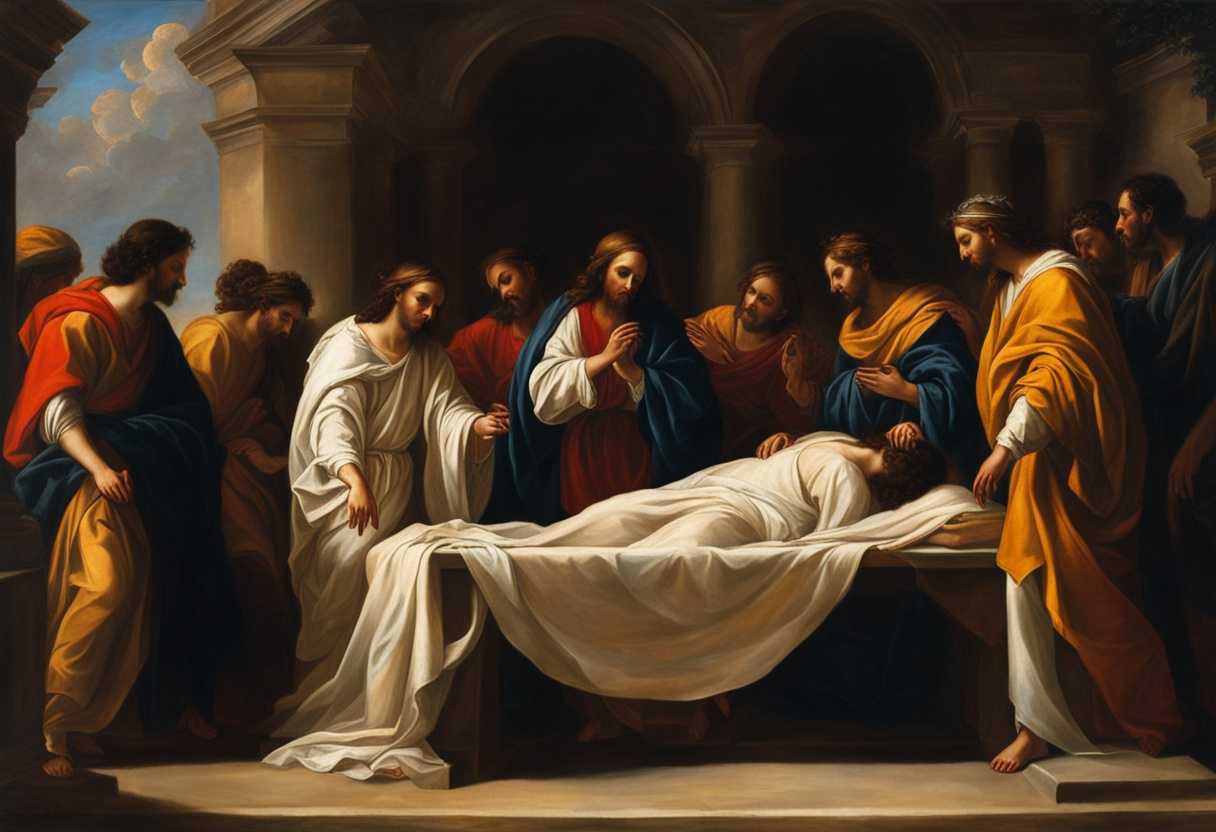
43 When he had said these things, he cried out with a loud voice, “Lazarus, come out.”
44 The man who had died came out, his hands and feet bound with linen strips, and his face wrapped with a cloth. Jesus said to them, “Unbind him, and let him go.”
Meaning of Grave Clothes in the Bible
In the Bible, grave clothes carry profound symbolism that transcends their literal use as burial garments. Their primary connection to death encapsulates the finality and separation that sin and mortality bring into the human experience. When referring to the raising of Lazarus, Jesus commands Him to “Come out” of the tomb, and then instructs those present to “Unbind him, and let him go” (John 11:43-44), highlighting the transformative power of Christ in overcoming the grave. Lazarus’ grave clothes serve as a tangible representation of the former state of death, underscoring the need for liberation from mortality that Jesus provides through resurrection.
Moreover, in the context of Jesus’ resurrection, the discarded grave clothes in John 20:6-7 signify the transformative nature of His triumph over death. By leaving the grave clothes behind, Jesus not only indicates that He has conquered death, but also implies a new mode of existence—a life freed from the constraints of sin and death that once bound humanity. The act suggests that believers, when they accept the message of the Gospel, are metaphorically called to “put off” the grave clothes of their former lives (Ephesians 4:22-24), embracing a new identity in Christ. This aligns with the Christian understanding of baptism, where one symbolically dies to sin and rises anew (Romans 6:4), emphasizing that the resurrection life is both a present reality and a future hope. Thus, grave clothes represent both the finality of death and the dawning of eternal life through Jesus Christ.
The symbolism of grave clothes extends into various biblical narratives, often reminding believers of the vital transition from death to life, both physically and spiritually. Throughout Scripture, these garments not only signify the end of an old life but also act as a reminder of the transformation that Christ initiates. In the story of Jairus’ daughter, for instance, the young girl is described as being “dead,” but upon Jesus’ words, she arises, suggesting that the grave clothes she wore were markers of her previous state. This connection reinforces the notion that those who encounter Christ are called out from spiritual death into vibrant life, shedding the vestiges of their former selves—a stark reminder that Jesus is the source of life itself.
Furthermore, the implications of grave clothes extend beyond mere physical resurrection, pointing towards the ongoing struggle between the old life of sin and the new life found in Christ. In Colossians 3:5-10, believers are encouraged to “put to death” the earthly things that belong to their former lives and to “put on the new self,” reflecting their new identity in Christ. This allegorical stripping away of old garments illustrates a deeper spiritual awakening, as each believer is invited to discard the grave clothes associated with their past sins and to embrace a transformed existence that reflects Christ’s righteousness. The act of removing these garments symbolizes not only the putting away of sin but also a commitment to living a resurrected life through the ongoing work of the Holy Spirit, thus emphasizing the power of Christ’s resurrection as a continuous source of renewal and hope.
Symbol of Death and Burial
Grave clothes serve as a powerful symbol of death and the finality of life. In biblical contexts, they represent the physical state of being dead, encapsulating the idea of separation from the living. The act of wrapping a body in grave clothes signifies the end of earthly existence and the transition into the afterlife. This imagery is often used to illustrate the concept of spiritual death, where individuals are bound by sin and the consequences of a fallen world.
Representation of Transformation and New Life
In a broader spiritual sense, grave clothes also symbolize the transformation that occurs when one experiences a new life in faith. The removal of grave clothes can be seen as shedding the old self, which is associated with sin and death, and embracing a new identity in Christ. This transformation signifies a rebirth, where believers are called to leave behind their former ways and live in the fullness of life that comes from a relationship with God. The act of discarding grave clothes reflects the journey from spiritual death to vibrant, renewed life.
Call to Spiritual Renewal
Grave clothes can also be interpreted as a call to spiritual renewal and growth. They remind believers of the need to continually shed the remnants of their old selves and the habits that bind them. This ongoing process of renewal encourages individuals to seek a deeper relationship with God, allowing for the transformation of character and behavior. The imagery of grave clothes serves as a reminder that while one may have been freed from the bondage of sin, there is an active role to play in pursuing holiness and living out the new life that has been granted.
How to Embrace Renewal Through Christ’s Resurrection
Embracing renewal through Christ’s resurrection is a transformative journey that invites us to shed our old selves and step into the abundant life He offers. As we reflect on the power of the resurrection, we are reminded that it symbolizes not just Christ’s victory over death, but also our own potential for rebirth and restoration. To truly embrace this renewal, we must first acknowledge our need for change and invite the Holy Spirit to work within us. This means letting go of past burdens, forgiving ourselves and others, and seeking a deeper relationship with God through prayer and scripture. As we immerse ourselves in His love and grace, we begin to see the world through a new lens—one filled with hope, purpose, and the promise of new beginnings. Remember, renewal is not a one-time event but a daily commitment to live in the light of Christ’s resurrection, allowing His life to flow through us and inspire our actions.
Bible References to Grave Clothes Meaning:
John 20:5-7: 5 And stooping to look in, he saw the linen cloths lying there, but he did not go in.
6 Then Simon Peter came, following him, and went into the tomb. He saw the linen cloths lying there,
7 and the face cloth, which had been on Jesus’ head, not lying with the linen cloths but folded up in a place by itself.
Luke 24:12: 12 But Peter rose and ran to the tomb; stooping and looking in, he saw the linen cloths by themselves; and he went home marveling at what had happened.
Mark 15:46: 46 And Joseph bought a linen shroud, and taking him down, wrapped him in the linen shroud and laid him in a tomb that had been cut out of the rock. And he rolled a stone against the entrance of the tomb.
Matthew 27:59-60: 59 And Joseph took the body and wrapped it in a clean linen shroud
60 and laid it in his own new tomb, which he had cut in the rock. And he rolled a great stone to the entrance of the tomb and went away.
Acts 5:6-10: 6 The young men rose and wrapped him up and carried him out and buried him.
7 After an interval of about three hours his wife came in, not knowing what had happened.
8 And Peter said to her, “Tell me whether you sold the land for so much.” And she said, “Yes, for so much.”
9 But Peter said to her, “How is it that you have agreed together to test the Spirit of the Lord? Behold, the feet of those who have buried your husband are at the door, and they will carry you out.”
10 Immediately she fell down at his feet and breathed her last. When the young men came in they found her dead, and they carried her out and buried her beside her husband.
Isaiah 53:9: 9 And they made his grave with the wicked and with a rich man in his death, although he had done no violence, and there was no deceit in his mouth.
Genesis 50:2-3: 2 And Joseph commanded his servants the physicians to embalm his father. So the physicians embalmed Israel.
3 Forty days were required for it, for that is how many are required for embalming. And the Egyptians wept for him seventy days.

Reverend Michael Johnson is an experienced Church Minister with a profound expertise in spirituality and guidance. With a serene presence and a compassionate heart, he has faithfully served his congregation for over 20 years, leading them on a spiritual journey towards inner peace and enlightenment. Reverend Johnson’s extensive knowledge of religious philosophies and profound understanding of human nature have made him a trusted confidant and mentor to many, as he seamlessly weaves his profound wisdom into life teachings. Reverend Johnson’s calming demeanor and empathetic nature continue to uplift and heal souls, nurturing a sense of unity and tranquility within his community.