
Achaia refers to a region in southern Greece, often mentioned in the New Testament as a significant area for early Christian missions. It was home to several important cities, including Corinth, and is noted for being a place where the Apostle Paul preached and established churches.
Scripture
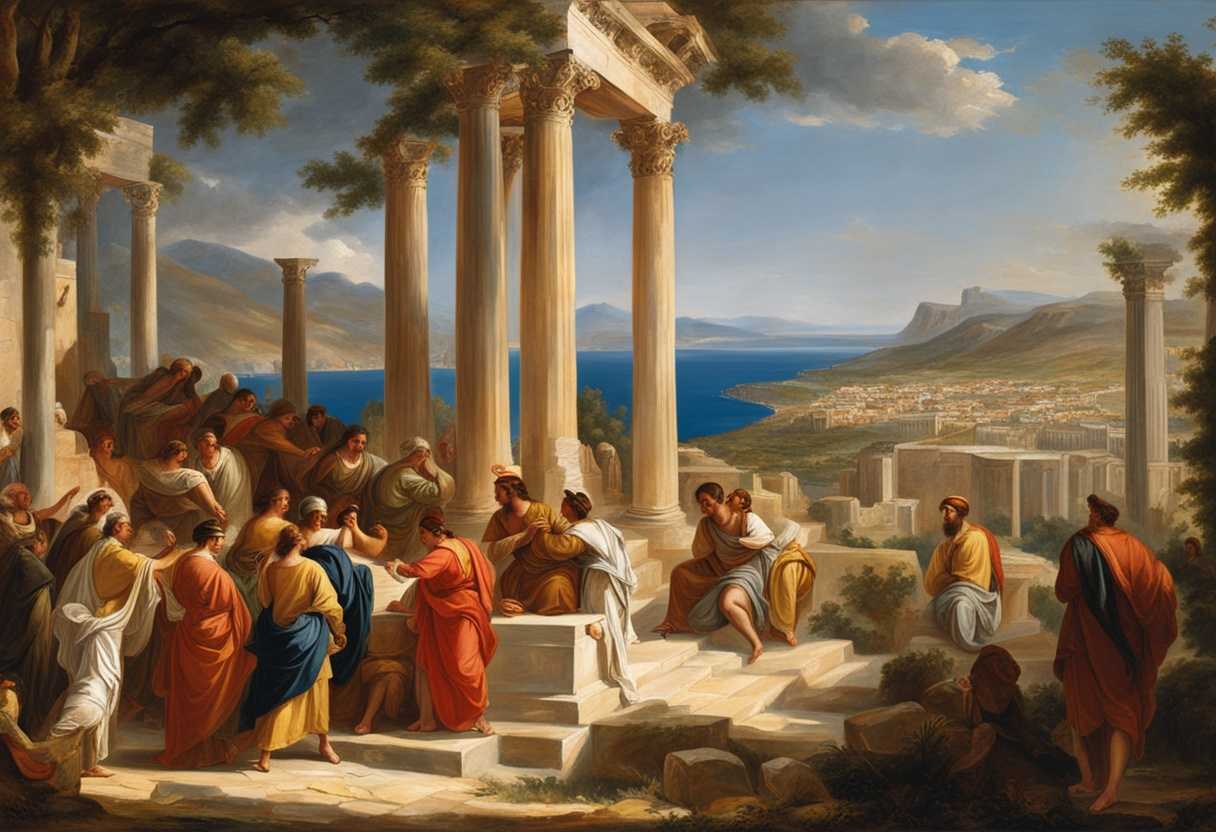
12 But when Gallio was proconsul of Achaia, the Jews made a united attack on Paul and brought him before the tribunal,
13 saying, “This man is persuading people to worship God contrary to the law.”
14 And when Paul was about to open his mouth, Gallio said to the Jews, “If it were a matter of wrongdoing or vicious crime, O Jews, I would have reason to accept your complaint.
15 But since it is a matter of questions about words and names and your own law, see to it yourselves. I refuse to be a judge of these things.”
16 And he drove them out of the tribunal.
17 And they all seized Sosthenes, the ruler of the synagogue, and beat him in front of the tribunal. But Gallio paid no attention to any of this.
Meaning of Achaia in the Bible
Achaia, a region in southern Greece, holds significant importance in the New Testament, particularly in the context of early Christian missions. It is prominently mentioned in Paul’s letters, notably in 2 Corinthians 1:1, where he addresses the church in Achaia, reflecting its status as a center for Christian activity and community. Corinth, the capital of Achaia, served as a strategic hub for spreading the Gospel, due to its bustling trade routes and diverse population. Paul’s missionary endeavors in Achaia underscore the transformative power of the Gospel message in urban centers, adapting it to various cultural contexts (1 Corinthians 9:19-22).
Furthermore, Achaia symbolizes the early church’s struggles and triumphs in preaching the message of Christ amidst a predominantly pagan society. In Romans 15:26, Paul speaks of the contributions from the churches of Macedonia and Achaia for the impoverished saints in Jerusalem, highlighting the sense of unity and interconnectedness among early Christians. This emphasis on generosity underscores the broader theme of the Gospel in calling individuals to support one another, reflecting the spirit of community and love that the early church sought to cultivate. The mention of Achaia, therefore, extends beyond a mere geographical reference, representing a pivotal region where faith took root and flourished, revealing the dynamic growth of Christianity during a crucial period in history.
Beyond its geographical significance, Achaia also represents a rich tapestry of cultural and spiritual dynamics in the formation of early Christianity. Its confluence of different societies, philosophies, and religions provided a fertile ground for Paul’s teachings. While Achaia is often recognized for its challenges—such as moral corruption and philosophical skepticism—these very elements fostered a unique environment for Christian debate and discourse. The presence of diverse audiences allowed for an expansive dialogue regarding faith and practice, illustrating how the early church navigated complex societal landscapes. As the message of Jesus permeated these urban settings, Achaia became emblematic of the larger mission to reach various peoples with the Gospel.
Moreover, references beyond the letters of Paul highlight the region’s role in the broader biblical narrative. In the Book of Acts, for instance, Achaia is included in the accounts of evangelistic efforts and the spread of Christianity. The congregation in Corinth, serving as a pivotal hub within Achaia, faced its own internal issues that mirrored wider church struggles, such as divisions and moral failures. Yet, these difficulties also offered opportunities for growth and reflection. The collective experiences of the believers in Achaia underscore the notion that faith must often be lived out in the context of real-world challenges, emphasizing perseverance and communal support. Thus, the mention of Achaia extends beyond its physical definition; it stands as a testament to the resilient spirit of early Christians as they sought to embody their faith amidst adversity.
Historical and Geographical Significance
Achaia refers to a region in ancient Greece that played a crucial role in the early Christian church. It encompassed significant cities such as Corinth and Athens, which were centers of commerce, culture, and philosophy. The mention of Achaia in the Bible highlights the geographical context of early Christian missions and the spread of the Gospel. Understanding Achaia’s historical backdrop provides insight into the challenges and opportunities faced by early Christians in a diverse and often hostile environment.
Symbol of Unity and Diversity
Achaia also symbolizes the unity and diversity within the early Christian community. The region was home to a mix of cultures, including Greeks, Romans, and Jews, each with their own traditions and beliefs. The Apostle Paul’s ministry in Achaia exemplifies the effort to bridge these cultural divides, emphasizing the message of inclusivity in Christ. This aspect of Achaia serves as a reminder of the universal nature of the Christian faith, calling believers to embrace diversity while fostering unity in their shared beliefs.
Economic and Social Context
The economic landscape of Achaia, marked by trade and commerce, provides a backdrop for understanding the social dynamics of the early church. The region’s wealth and bustling activity created both opportunities and challenges for the spread of Christianity. The interactions between wealthy patrons and the poorer members of the community reflect the social stratification of the time. This context underscores the importance of generosity and support within the Christian community, as believers were encouraged to assist one another regardless of their social standing.
How to Cultivate a Stronger Christian Faith Community
Cultivating a stronger Christian faith community begins with intentional relationships grounded in love and service. Start by engaging with those around you—whether it’s through small group gatherings, volunteering for church events, or simply sharing a meal with fellow believers. Make it a priority to listen and support one another, as this fosters trust and deepens connections. Remember, community is not just about being present; it’s about being vulnerable and sharing your own struggles and joys. Encourage open discussions about faith, allowing everyone to express their thoughts and questions without fear of judgment. Lastly, pray together, as prayer not only strengthens your individual faith but also unites the community in purpose and spirit. By nurturing these bonds, you’ll find that your faith community becomes a source of strength, encouragement, and growth for everyone involved.
Bible References to Achaia in Scripture:
Romans 15:25-27: 25 At present, however, I am going to Jerusalem bringing aid to the saints.
26 For Macedonia and Achaia have been pleased to make some contribution for the poor among the saints at Jerusalem.
27 For they were pleased to do it, and indeed they owe it to them. For if the Gentiles have come to share in their spiritual blessings, they ought also to be of service to them in material blessings.
1 Corinthians 16:15-18: 15 Now I urge you, brothers—you know that the household of Stephanas were the first converts in Achaia, and that they have devoted themselves to the service of the saints—
16 be subject to such as these, and to every fellow worker and laborer.
17 I rejoice at the coming of Stephanas and Fortunatus and Achaicus, because they have made up for your absence,
18 for they refreshed my spirit as well as yours. So give recognition to such men.
2 Corinthians 1:1-2: 1 Paul, an apostle of Christ Jesus by the will of God, and Timothy our brother,
2 Grace to you and peace from God our Father and the Lord Jesus Christ.
2 Corinthians 9:1-5: Now it is superfluous for me to write to you about the ministry for the saints,
2 for I know your readiness, of which I boast about you to the people of Macedonia, saying that Achaia has been ready since last year.
3 But I am sending the brothers so that our boasting about you may not prove empty in this matter, so that you may be ready, as I said you would be.
4 Otherwise, if some Macedonians come with me and find that you are not ready, we would be humiliated—to say nothing of you—for being so confident.
5 So I thought it necessary to urge the brothers to go on ahead to you and arrange in advance for the gift you have promised, so that it may be ready as a willing gift, not as an exaction.
2 Corinthians 11:9-10: 9 And when I was with you and was in need, I did not burden anyone, for the brothers who came from Macedonia supplied my need. So I refrained and will refrain from burdening you in any way.
10 As the truth of Christ is in me, this boasting of mine will not be silenced in the regions of Achaia.
1 Thessalonians 1:7-8: 7 so that you became an example to all the believers in Macedonia and in Achaia.
8 For not only has the word of the Lord sounded forth from you in Macedonia and Achaia, but your faith in God has gone forth everywhere, so that we need not say anything.
2 Thessalonians 1:3-4: 3 We ought always to give thanks to God for you, brothers, as is right, because your faith is growing abundantly, and the love of every one of you for one another is increasing.
4 Therefore we ourselves boast about you in the churches of God for your steadfastness and faith in all your persecutions and in the afflictions that you are enduring.

Rev. François Dupont is a dedicated church minister with a wealth of experience in serving spiritual communities. With a calm and serene demeanor, he has been devoted to sharing the message of love, compassion, and tolerance for over two decades. Through his thoughtful sermons, compassionate counseling, and unwavering support, Rev. Dupont has touched the lives of countless individuals, allowing them to find solace and strength during difficult times. His serene presence and deep understanding of the human condition make him a trusted guide for those seeking spiritual nourishment and guidance.