
Beersheba, in the Bible, means “well of the oath” or “well of seven,” reflecting both a covenant established by Abraham and the presence of seven lambs as a sign of the agreement with Abimelech (Genesis 21:31). It served as a significant location for the patriarchs, often marking the southern boundary of Israel.
Scripture
22 At that time Abimelech and Phicol the commander of his army said to Abraham, “God is with you in all that you do.
23 Now therefore swear to me here by God that you will not deal falsely with me or with my descendants or with my posterity, but as I have dealt kindly with you, so you will deal with me and with the land where you have sojourned.”
24 Abraham said, “I will swear.”
25 When Abraham reproved Abimelech about a well of water that Abimelech’s servants had seized.
26 And Abimelech said, “I do not know who has done this thing; you did not tell me, and I have not heard of it until today.”
27 So Abraham took sheep and oxen and gave them to Abimelech, and the two men made a covenant.
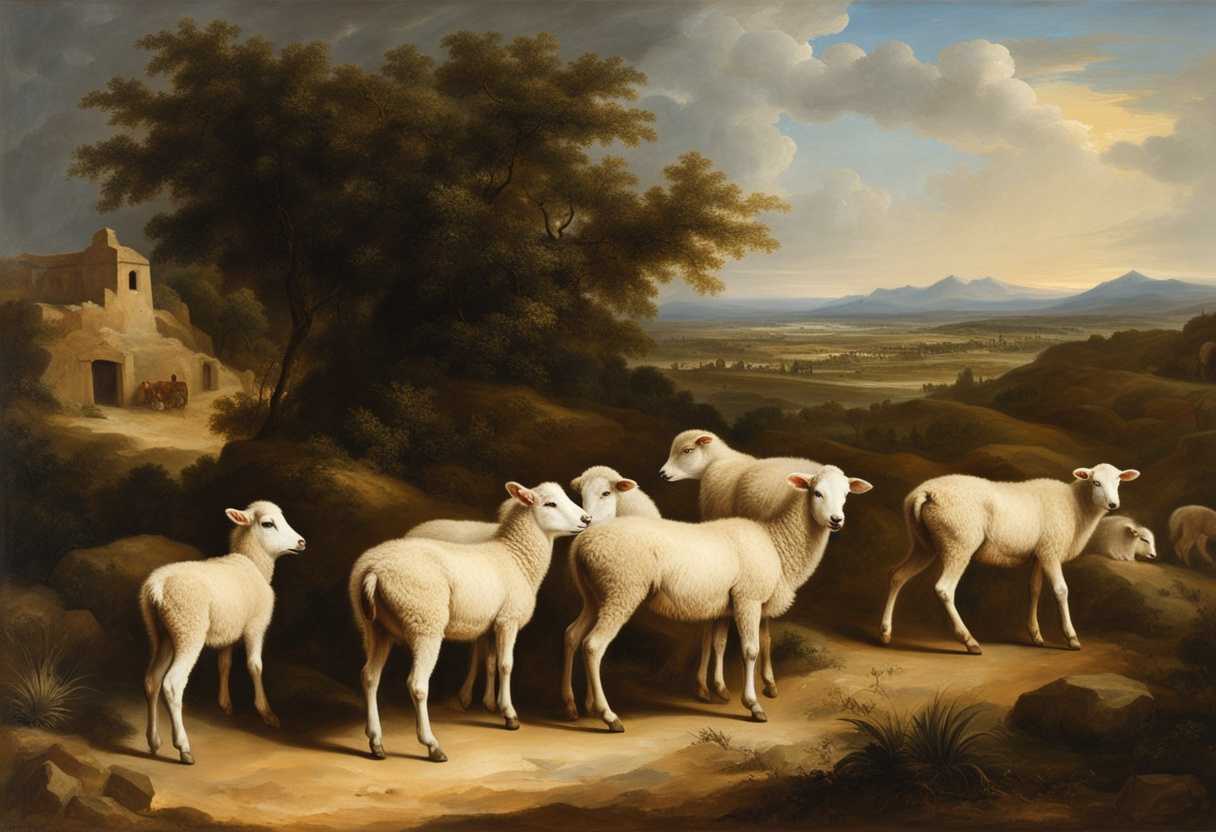
28 Then Abraham set seven ewe lambs of the flock apart.
29 And Abimelech said to Abraham, “What is the meaning of these seven ewe lambs that you have set apart?”
30 He said, “You shall take these seven ewe lambs from my hand, so that you may be a witness for me that I dug this well.”
31 Therefore that place was called Beersheba, because there both of them swore an oath.
32 Thus they made a covenant at Beersheba.
33 Abraham planted a tamarisk tree in Beersheba and called there on the name of the Lord, the Everlasting God.
34 So Abraham sojourned in the land of the Philistines for many days.
Meaning of Beersheba in the Bible
Beersheba holds great significance in the biblical narrative, emblematic of the covenantal relationships between God, Abraham, and the surrounding nations. As its name suggests, meaning “well of the oath” or “well of seven,” the site is intricately linked to the formal agreement made between Abraham and Abimelech, the king of Gerar, where they established a peace treaty following a dispute over water rights (Genesis 21:27-31). This event not only highlights the importance of water as a vital resource in arid regions but also emphasizes how covenants are central to the faith tradition. The act of Abraham giving seven lambs as a gift to affirm this covenant echoes themes of fidelity and divine promise, underscoring the transformative power of trust and relationships in the biblical context.
Furthermore, Beersheba serves as a geographical marker in the life of the patriarchs, representing a boundary between the Promised Land and the wilderness beyond. Its mention in various passages (e.g., Genesis 22:19, 1 Samuel 8:2) often indicates moments of transition, resourcefulness, and the pursuit of peace. This southernmost city of Israel thus embodies a crossroads where significant biblical figures, like Isaac and Jacob, would travel, reinforcing the idea that faith is often a journey. Beersheba, therefore, transcends its immediate geographical significance to symbolize divine promise, obedience, and the importance of establishing peace, illustrating key themes of the covenantal narrative throughout Scripture.
In addition to its pivotal role in the covenant between Abraham and Abimelech, Beersheba is notably recognized as a place of divine encounters and prophetic revelation. The narrative of Isaac, for instance, places him in Beersheba during a time of renewal and reaffirmation of God’s covenant promises. It is here that the Lord appears to Isaac and reassures him of his lineage and the blessings that will descend upon him, a key moment that illustrates the continuity of God’s covenant through generations. This divine interaction signifies that Beersheba is not merely a physical location, but a spiritual hub where faithful obedience and God’s faithfulness coalesce.
Moreover, Beersheba also represents a symbolic end point in the biblical framework, often used to denote the outskirts of Israelite territory. The phrase “from Dan to Beersheba” becomes a traditional expression signifying the full extent of Israel’s land, threading through the narratives of the kings and judges. It is indicative of the national identity and unity of Israel, framing Beersheba as an essential marker in collective memory. As a historical site visited by notable figures like the prophet Elijah and King David, its repeated mentions underscore themes of worship and divine guidance. In this context, Beersheba encapsulates the essence of the covenant between God and His people as it unfolds across time, serving as both a literal and metaphorical axis around which notions of faith, inheritance, and communal belonging revolve.
A Place of Covenant and Promise
Beersheba is often recognized as a significant location where covenants were established. The name itself translates to “well of the oath” or “well of seven,” symbolizing the agreements made between individuals and God. This underscores the importance of oaths and promises in biblical narratives, highlighting the theme of divine faithfulness and human commitment.
A Symbol of Transition and Journey
Beersheba serves as a geographical marker in the journeys of key biblical figures. It represents a boundary between the patriarchal narratives and the unfolding story of the Israelites. As a southernmost point in the land of Canaan, it signifies the transition from the nomadic lifestyle of the patriarchs to the establishment of a settled community, reflecting the broader theme of movement and change in the biblical narrative.
A Center of Worship and Community
Throughout the biblical text, Beersheba emerges as a place of worship and gathering. It is associated with significant religious activities and the establishment of altars, indicating its role as a spiritual center. This aspect emphasizes the importance of community and collective worship in the life of the Israelites, illustrating how places can become focal points for faith and communal identity.
How to Live a Life of Faith and Integrity
Living a life of faith and integrity is a beautiful journey that requires daily commitment and reflection. It starts with nurturing a personal relationship with God through prayer and scripture, allowing His word to guide your actions and decisions. Embrace honesty in all your dealings, even when it’s challenging, as integrity is the foundation of trust and respect in your relationships. Remember, your faith is not just a private matter; it should shine through in how you treat others, showing kindness, compassion, and forgiveness. Surround yourself with a community of believers who encourage you to grow and hold you accountable. As you strive to embody these principles, you’ll find that your life becomes a testament to the love and grace of Christ, inspiring others to seek Him as well.
Bible References to Beersheba’s Meaning:
Genesis 26:23-33: 23 From there he went up to Beersheba.
24 And the Lord appeared to him the same night and said, “I am the God of Abraham your father. Fear not, for I am with you and will bless you and multiply your offspring for my servant Abraham’s sake.”
25 So he built an altar there and called upon the name of the Lord and pitched his tent there. And there Isaac’s servants dug a well.
26 When Abimelech went to him from Gerar with Ahuzzath his adviser and Phicol the commander of his army.
27 Isaac said to them, “Why have you come to me, seeing that you hate me and have sent me away from you?”
28 They said, “We see plainly that the Lord has been with you. So we said, let there be a sworn pact between us, between you and us, and let us make a covenant with you,
29 that you will do us no harm, just as we have not touched you and have done to you nothing but good and have sent you away in peace. You are now the blessed of the Lord.”
30 So he made them a feast, and they ate and drank.
31 In the morning they rose early and exchanged oaths. And Isaac sent them on their way, and they departed from him in peace.
32 That same day Isaac’s servants came and told him about the well that they had dug and said to him, “We have found water.”
33 He called it Shibah; therefore the name of the city is Beersheba to this day.
Genesis 46:1-5: 1 So Israel took his journey with all that he had and came to Beersheba, and offered sacrifices to the God of his father Isaac.
2 And God spoke to Israel in visions of the night and said, “Jacob, Jacob.” And he said, “Here I am.”
3 Then he said, “I am God, the God of your father. Do not be afraid to go down to Egypt, for there I will make you into a great nation.
4 I myself will go down with you to Egypt, and I will also bring you up again, and Joseph’s hand shall close your eyes.”
5 Then Jacob set out from Beersheba. The sons of Israel carried Jacob their father, their little ones, and their wives, in the wagons that Pharaoh had sent to carry him.
1 Samuel 8:1-3: 3 Yet his sons did not walk in his ways but turned aside after gain. They took bribes and perverted justice.
2 The name of his firstborn son was Joel, and the name of his second, Abijah; they were judges in Beersheba.
3 Yet his sons did not walk in his ways but turned aside after gain. They took bribes and perverted justice.
1 Kings 19:1-8: 1 Ahab told Jezebel all that Elijah had done, and how he had killed all the prophets with the sword.
2 Then Jezebel sent a messenger to Elijah, saying, “So may the gods do to me and more also, if I do not make your life as the life of one of them by this time tomorrow.”
3 Then he was afraid, and he arose and ran for his life and came to Beersheba, which belongs to Judah, and left his servant there.
4 But he himself went a day’s journey into the wilderness and came and sat down under a broom tree. And he asked that he might die, saying, “It is enough; now, O Lord, take away my life, for I am no better than my fathers.”
5 Then he lay down under the broom tree and fell asleep.
6 And he looked, and behold, there at his head was a cake baked on hot stones and a jar of water. And he ate and drank and lay down again.
7 And the angel of the Lord came again a second time and touched him and said, “Arise and eat, for the journey is too great for you.”
8 And he arose and ate and drank, and went in the strength of that food forty days and forty nights to Horeb, the mount of God.
2 Kings 23:8-9: 8 And he brought all the priests out of the cities of Judah, and defiled the high places where the priests had made offerings, from Geba to Beersheba. And he broke down the high places of the gates that were at the entrance of the gate of Joshua the governor of the city, which were on one’s left at the gate of the city.
9 Yet the priests of the high places did not come up to the altar of the Lord in Jerusalem, but they ate unleavened bread among their brothers.
Amos 5:4-6: 4 For thus says the Lord to the house of Israel: “Seek me and live;
5 “Seek the Lord and live,
lest he break out like fire in the house of Joseph,
and it devour, with none to quench it for Bethel,”
6 Seek the Lord and live, lest he break out like fire in the house of Joseph, and it devour, with none to quench it for Bethel,
Amos 8:11-14: 11 “Behold, the days are coming,” declares the Lord God, “when I will send a famine on the land— not a famine of bread, nor a thirst for water, but of hearing the words of the Lord.”
12 They shall wander from sea to sea,
and from north to east;
they shall run to and fro, to seek the word of the Lord,
but they shall not find it.
13 “In that day the lovely virgins and the young men shall faint for thirst.”
14 Those who swear by the Guilt of Samaria, and say, ‘As your god lives, O Dan,’ and, ‘As the way of Beersheba lives,’ they shall fall, and never rise again.”

Reverend Ogunlade is a seasoned Church Minister with over three decades of experience in guiding and nurturing congregations. With profound wisdom and a serene approach, Reverend Ogunlade has carried out various pastoral duties, including delivering uplifting sermons, conducting religious ceremonies, and offering sage counsel to individuals seeking spiritual guidance. Their commitment to fostering harmony and righteousness within their community is exemplified through their compassionate nature, making them a beloved and trusted figure among the congregation.