
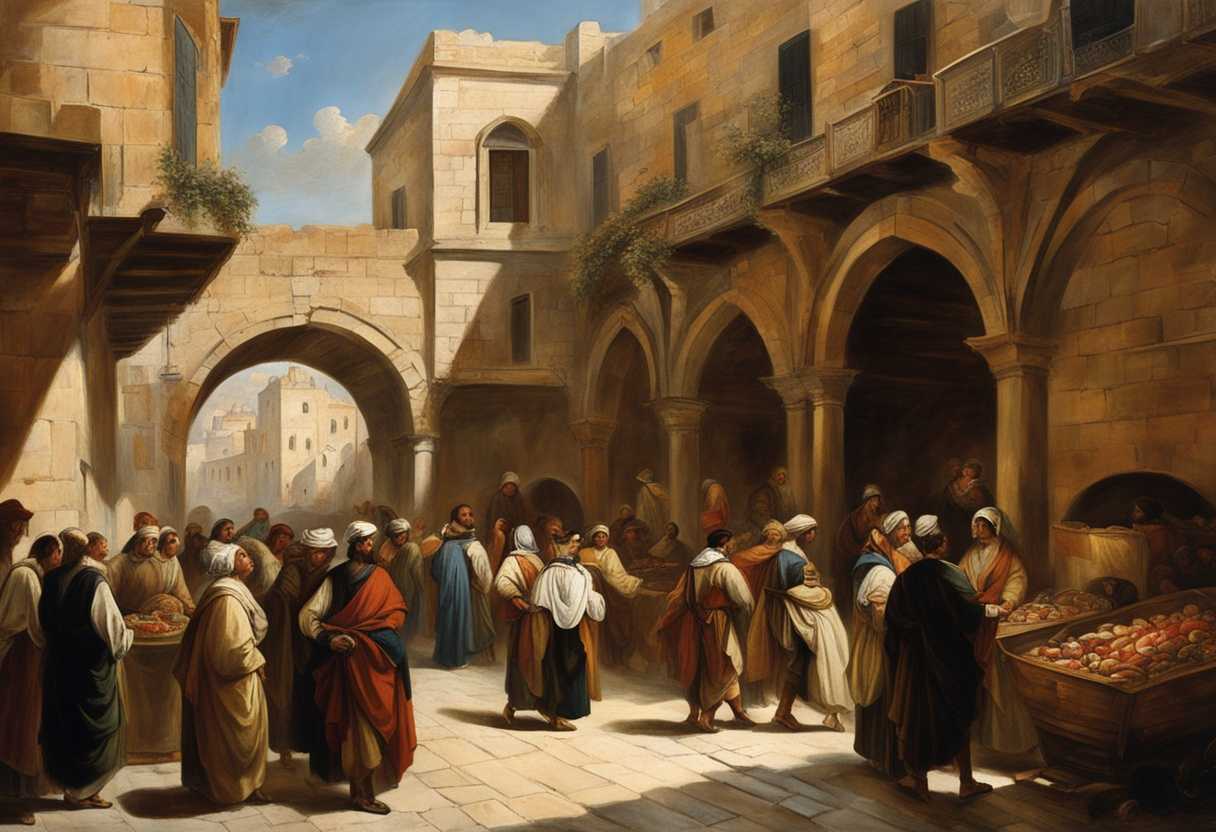
The Fish Gate, mentioned in Nehemiah 3:3, is one of the gates of Jerusalem, symbolizing commerce and trade, particularly in fish. It reflects the city’s economy and is part of the overall restoration of Jerusalem’s walls, signifying revival and renewal for the community.
Scripture
1 Then Eliashib the high priest rose up with his brothers the priests, and they built the Sheep Gate. They consecrated it and set its doors. They consecrated it as far as the Tower of the Hundred, as far as the Tower of Hananel.
2 And next to him the men of Jericho built. And next to them Zaccur the son of Imri built.
3 The sons of Hassenaah built the Fish Gate. They laid its beams and set its doors, its bolts, and its bars.
Meaning of the Fish Gate in Scripture
The Fish Gate, as referenced in Nehemiah 3:3, holds significant symbolic meaning within the broader context of Jerusalem’s restoration after the Babylonian exile. This gate, where fish were sold, represents not only the economic vitality of Jerusalem but also the communal identity tied to the city’s trade and sustenance. The act of rebuilding the Fish Gate not only restores a physical structure but also embodies the restoration of the people’s livelihood and their return to a life of purpose and community service. This aligns with the overarching theme in Nehemiah where rebuilding the walls of Jerusalem is intricately linked to restoring faith and strengthening the community’s relationship with God, as seen in Nehemiah 4:6, which underscores their resolve: “So we rebuilt the wall till all of it reached half its height, for the people worked with all their heart.”
Furthermore, the Fish Gate signifies a return to pre-exilic practices that engaged the community in productive work. From a spiritual perspective, it can be viewed as a metaphor for spiritual nourishment and outreach, similar to how Jesus calls his disciples to be “fishers of men” (Matthew 4:19). Thus, the Fish Gate does not merely serve as a physical entrance to the city, but stands as a testimony to the transformation and revitalization of the people, their economy, and, more importantly, their faith. The revival represented by the reconstruction of the Fish Gate invites a deeper contemplation of community identity, relational connections, and the sacredness of mundane activities like trade, suggesting that all aspects of life can be avenues for serving God and revitalizing one’s faith.
The significance of the Fish Gate extends beyond its immediate economic implications. It serves as a powerful reminder of the interconnectedness of daily life and spiritual growth within the community. Historically, gates in ancient cities were not mere entrances or exits but socio-political hubs where trade, ideas, and community governance intertwined. The Fish Gate, therefore, symbolizes the convergence of sustenance, fellowship, and commerce with the spiritual ethos of the people, reinforcing how daily interactions can reflect and support one’s spiritual journey. This intersection invites further reflection on the broader implications of communal spaces as places of worship and togetherness.
In examining other biblical contexts, gates often carry deep theological meanings, linking the physical and spiritual realms. For instance, the concept of gates can represent access to divine wisdom and protection, as highlighted in Proverbs 8:34-35, where wisdom is depicted as waiting at the gates to offer insight. Such imagery encourages believers to seek enlightenment and guidance from God through every aspect of their lives, including their work and community interactions. This perspective reinforces the idea that the Fish Gate, while strategically important for trade, also signifies the portal through which faith practices can enter the marketplace of daily living. Thus, the Fish Gate stands as a multifaceted symbol of community, emphasizing that every act of labor, no matter how ordinary, is infused with potential for divine purpose and communal well-being.
Symbol of Provision and Abundance
The Fish Gate represents the abundance of resources and provision that God offers to His people. In biblical times, fishing was a vital industry, symbolizing sustenance and livelihood. The presence of the Fish Gate in the city walls signifies a place where the community could access the bounty of the sea, reflecting God’s provision for their physical needs. This gate serves as a reminder of the blessings that come from God and the importance of recognizing and utilizing the resources He provides.
Call to Evangelism and Outreach
The Fish Gate can also be interpreted as a metaphor for evangelism and outreach. Just as fishermen cast their nets to gather fish, believers are called to reach out to others and share the message of the Gospel. The gate symbolizes the entry point for new believers and the expansion of the faith community. It encourages Christians to actively engage in their mission to bring others into the fold, highlighting the importance of outreach in the life of the church.
Restoration and Renewal
In the context of Nehemiah’s rebuilding efforts, the Fish Gate signifies restoration and renewal. The act of repairing and rebuilding the gate represents the restoration of the community and its relationship with God. It serves as a powerful symbol of hope and renewal, illustrating that even after periods of destruction or exile, there is always the possibility of rebuilding and returning to a place of spiritual and communal strength. This theme of restoration is central to the biblical narrative, emphasizing God’s faithfulness and the opportunity for redemption.
How to Embrace Renewal and Strengthen Your Faith
Embracing renewal in your faith journey is a beautiful and transformative process that invites you to reflect on your relationship with God and the world around you. Start by carving out quiet moments in your day for prayer and meditation, allowing space for God’s voice to guide you. Dive into Scripture with an open heart, seeking not just knowledge but a deeper understanding of His love and purpose for your life. Surround yourself with a community of believers who inspire and challenge you, as fellowship can be a powerful catalyst for growth. Remember, renewal often comes through trials; embrace these moments as opportunities to lean on God’s strength rather than your own. As you cultivate gratitude and practice forgiveness, you’ll find that your faith not only strengthens but also flourishes, leading you to a more profound sense of peace and purpose.
Bible References to the Fish Gate:
Nehemiah 12:39: 39 and above the Gate of Ephraim, and by the Gate of Yeshanah, and by the Fish Gate and the Tower of Hananel and the Tower of the Hundred, to the Sheep Gate; and they came to a halt at the Gate of the Guard.
2 Chronicles 33:14: 14 Afterward he built an outer wall for the city of David west of Gihon, in the valley, and for the entrance into the Fish Gate, and carried it around Ophel, and raised it to a very great height. And he put commanders of the army in all the fortified cities in Judah.
Zephaniah 1:10: 10 “On that day,” declares the Lord,
“a cry will be heard from the Fish Gate,
a wail from the Second Quarter,
a loud crash from the hills.

Reverend Michael Johnson is an experienced Church Minister with a profound expertise in spirituality and guidance. With a serene presence and a compassionate heart, he has faithfully served his congregation for over 20 years, leading them on a spiritual journey towards inner peace and enlightenment. Reverend Johnson’s extensive knowledge of religious philosophies and profound understanding of human nature have made him a trusted confidant and mentor to many, as he seamlessly weaves his profound wisdom into life teachings. Reverend Johnson’s calming demeanor and empathetic nature continue to uplift and heal souls, nurturing a sense of unity and tranquility within his community.