
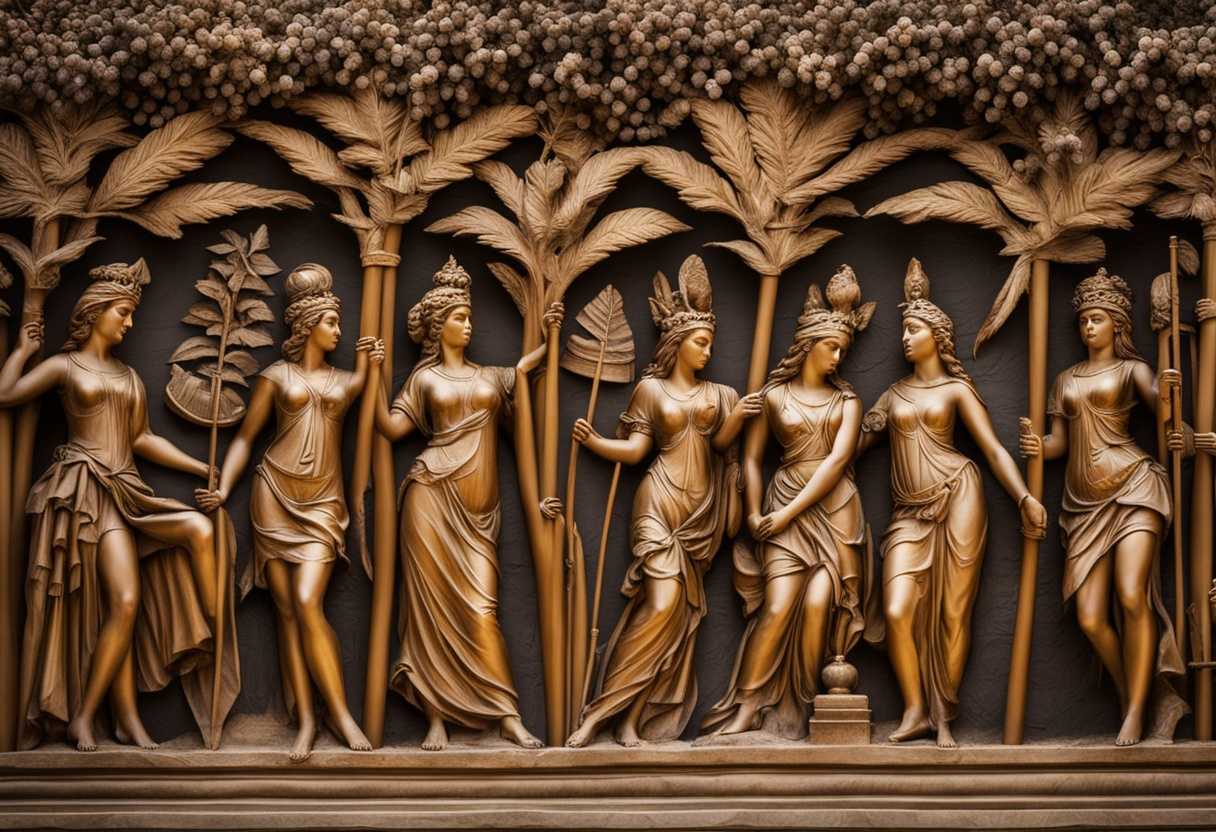
Asherah in the Bible refers to a Canaanite goddess associated with fertility, often represented by wooden poles or sacred trees used in pagan worship. The Israelites were repeatedly warned against worshiping Asherah and other idols, as this was seen as a violation of their covenant with God (Exodus 34:13-14).
Scripture
7 And the people of Israel did what was evil in the sight of the Lord. They forgot the Lord their God and served the Baals and the Asheroth.
8 Therefore the anger of the Lord was kindled against Israel, and he sold them into the hand of Cushan-rishathaim king of Mesopotamia. And the people of Israel served Cushan-rishathaim eight years.
9 But when the people of Israel cried out to the Lord, the Lord raised up a deliverer for the people of Israel, who saved them, Othniel the son of Kenaz, Caleb’s younger brother.
10 The Spirit of the Lord was upon him, and he judged Israel. He went out to war, and the Lord gave Cushan-rishathaim king of Mesopotamia into his hand. And his hand prevailed over Cushan-rishathaim.
11 So the land had rest forty years. Then Othniel the son of Kenaz died.
Asherah in the Bible: Meaning and Significance
Asherah represents a complex theological issue within the biblical narrative, symbolizing the challenges that the Israelites faced in maintaining fidelity to their covenant with Yahweh amidst the pervasive influence of surrounding cultures. The worship of Asherah, often manifesting through wooden poles or sacred groves, was a direct affront to the monotheistic principles commanded by God. This theme is reiterated throughout the Old Testament, particularly in passages like Deuteronomy 16:21-22, where the Israelites are expressly prohibited from setting up Asherah poles near the altar of the Lord. Such warnings emphasize the severity of idolatry in the biblical world, linking it to spiritual unfaithfulness and societal corruption.
Furthermore, the veneration of Asherah often intertwined with practices promoting fertility, sex, and agricultural abundance, which can be understood in the context of the Israelites’ struggle with material desire and cultural assimilation. The prophetic writings, such as those of Jeremiah (Jeremiah 44:17-19), reveal the deep entrenchment of Asherah worship among the people, illustrating their defiance against divine commands and their yearning for security and prosperity in ways that contradicted their covenant relationship. Ultimately, Asherah serves as a symbol of the broader spiritual struggle in the biblical text, highlighting the frequent tension between fidelity to God and the allure of the surrounding pagan practices that sought to draw the Israelites away from their covenantal identity.
In addition to the prohibitions and warnings against Asherah worship found in various biblical texts, references to this deity underscore the tension between the call for exclusive devotion to Yahweh and the enticements of polytheistic practices embraced by neighboring nations. The presence of Asherah worship is notably condemned during the reigns of several kings of Israel and Judah. For instance, King Solomon, despite his initial fidelity to Yahweh, famously turned towards the worship of Asherah alongside other foreign deities under the influence of his foreign wives, leading to significant spiritual decline within the nation (1 Kings 11:5-8). This reflects not only a personal failure but also a complicity in the wider societal erosion of faith and obedience to God’s commandments.
Moreover, the prophetic literature frequently addresses the consequences of such idolatrous practices. The book of Hosea poignantly captures this struggle, using the metaphor of a wayward wife to depict Israel’s infidelity to Yahweh, which includes the worship of Asherah as part of their unfaithfulness. Hosea implores the people to return to God, highlighting the peril that their devotion to Asherah and other false gods poses to their covenant relationship (Hosea 4:12-13). These narratives serve to illustrate how the allure of Asherah not only jeopardizes individual faith but also disrupts the communal identity of Israel, compelling them to confront the broader implications of idolatry on their national integrity and spiritual well-being. Thus, Asherah emerges as a crucial symbol in the biblical discourse on fidelity, identity, and the profound struggle against the temptation of cultural assimilation.
Symbol of Fertility and Motherhood
Asherah is often associated with fertility and motherhood in ancient Near Eastern cultures. In the biblical context, she represents the nurturing aspects of femininity and the earth’s fertility. This connection is evident in the worship practices surrounding her, which often included rituals aimed at ensuring agricultural abundance and the prosperity of families. Asherah’s role as a mother goddess highlights the importance of fertility in the lives of the people, reflecting their dependence on agricultural cycles and the continuation of lineage.
Representation of Idolatry and Apostasy
In the Bible, Asherah is frequently mentioned in the context of idolatry and the worship of foreign gods. The presence of Asherah poles and altars in Israelite worship practices signifies a departure from the worship of Yahweh, leading to condemnation by the prophets. This association with idolatry illustrates the broader theme of apostasy in the biblical narrative, where the Israelites are warned against turning to other deities and the consequences of such actions. Asherah thus serves as a symbol of the struggle between fidelity to Yahweh and the allure of surrounding pagan practices.
Duality of Divine Feminine
Asherah embodies the duality of the divine feminine in the biblical text, representing both nurturing and destructive forces. While she is celebrated as a goddess of fertility and life, her worship also leads to moral and spiritual decay among the Israelites. This duality reflects the complexities of femininity in the ancient world, where women were revered for their life-giving capabilities but also feared for their potential to lead individuals away from righteousness. Asherah’s presence in the biblical narrative invites deeper contemplation on the roles and perceptions of women in religious contexts.
How to Strengthen Faith Amidst Cultural Influences
Strengthening your faith amidst the myriad of cultural influences can feel like navigating a stormy sea, but remember, you are not alone in this journey. Start by immersing yourself in Scripture daily; let the Word of God be your anchor, guiding you through the noise of societal pressures. Surround yourself with a community of believers who uplift and challenge you to grow in your faith—this fellowship can provide the support and encouragement you need. Additionally, take time for prayer and reflection, asking God to reveal His truth amidst the clamor of the world. Engage with your faith actively; serve others, volunteer, and share your testimony, as these actions can deepen your understanding and commitment. Remember, faith is not a destination but a journey, and every step you take towards Christ strengthens your resolve to stand firm in your beliefs, no matter what cultural tides may come your way.
Bible References to Asherah’s Meaning:
1 Kings 14:15-18: 15 And the Lord will strike Israel as a reed is shaken in the water, and root up Israel out of this good land that he gave to their fathers and scatter them beyond the Euphrates, because they have made their Asherim, provoking the Lord to anger.
16 And he will give Israel up because of the sins of Jeroboam, which he sinned and made Israel to sin.
17 Then Jeroboam’s wife arose and departed and came to Tirzah. When she came to the threshold of the house, the child died.
18 And they buried him, and all Israel mourned for him, according to the word of the Lord, which he spoke by his servant Ahijah the prophet.
1 Kings 15:11-14: 11 And Asa did what was right in the eyes of the Lord, as David his father had done.
12 He put away the male cult prostitutes out of the land and removed all the idols that his fathers had made.
13 He also removed Maacah his mother from being queen mother because she had made an abominable image for Asherah. And Asa cut down her image and burned it at the brook Kidron.
14 But the high places were not taken away. Nevertheless, the heart of Asa was wholly true to the Lord all his days.
1 Kings 16:29-33: 29 In the thirty-eighth year of Asa king of Judah, Ahab the son of Omri began to reign over Israel, and Ahab the son of Omri reigned over Israel in Samaria twenty-two years.
31 And as if it had been a light thing for him to walk in the sins of Jeroboam the son of Nebat, he took for his wife Jezebel the daughter of Ethbaal king of the Sidonians, and went and served Baal and worshiped him.
31 And as if it had been a light thing for him to walk in the sins of Jeroboam the son of Nebat, he took for his wife Jezebel the daughter of Ethbaal king of the Sidonians, and went and served Baal and worshiped him.
32 And he erected an altar for Baal in the house of Baal, which he built in Samaria.
33 And Ahab made an Asherah. Ahab did more to provoke the Lord, the God of Israel, to anger than all the kings of Israel who were before him.
1 Kings 18:17-19: 17 When Ahab saw Elijah, Ahab said to him, “Is it you, you troubler of Israel?”
18 And he answered, “I have not troubled Israel, but you have, and your father’s house, because you have abandoned the commandments of the Lord and followed the Baals.
19 Now therefore send and gather all Israel to me at Mount Carmel, and the 450 prophets of Baal and the 400 prophets of Asherah, who eat at Jezebel’s table.”
2 Kings 13:1-6: 1 In the twenty-third year of Joash the son of Ahaziah, king of Judah, Jehoahaz the son of Jehu began to reign over Israel in Samaria, and he reigned seventeen years.
2 And he did what was evil in the sight of the Lord and followed the sins of Jeroboam the son of Nebat, which he made Israel to sin; he did not depart from them.
3 And the anger of the Lord was kindled against Israel, and he gave them continually into the hand of Hazael king of Syria and into the hand of Ben-hadad the son of Hazael.
4 Then Jehoahaz sought the favor of the Lord, and the Lord listened to him, for he saw the oppression of Israel, how the king of Syria oppressed them.
5 So the Lord gave Israel a savior, and they escaped from the hand of the Syrians. Then the people of Israel lived in their homes as formerly.
6 Nevertheless, they did not depart from the sins of the house of Jeroboam, which he made Israel to sin, but walked in them; and the Asherah also remained in Samaria.
2 Kings 17:9-12: 9 And the people of Israel did secretly against the Lord their God things that were not right. They built for themselves high places in all their towns, from watchtower to fortified city.
10 They set up for themselves pillars and Asherim on every high hill and under every green tree,
11 and there they made offerings on all the high places, as the nations did whom the Lord carried away before them. And they did wicked things, provoking the Lord to anger,
12 they served idols, of which the Lord had said to them, “You shall not do this.”
2 Kings 21:1-7: 1 Manasseh was twelve years old when he began to reign, and he reigned fifty-five years in Jerusalem. His mother’s name was Hephzibah.
2 And he did what was evil in the sight of the Lord, according to the despicable practices of the nations whom the Lord drove out before the people of Israel.
3 For he rebuilt the high places that his father Hezekiah had destroyed, and he erected altars for Baal and made an Asherah, as Ahab king of Israel had done, and worshiped all the host of heaven and served them.
4 And he built altars in the house of the Lord, of which the Lord had said, “In Jerusalem will I put my name.”
5 And he built altars for all the host of heaven in the two courts of the house of the Lord.
6 And he burned his son as an offering and used fortune-telling and omens and dealt with mediums and necromancers. He did much evil in the sight of the Lord, provoking him to anger.
7 And the carved image of Asherah that he had made he set in the house of which the Lord said to David and to Solomon his son, “In this house, and in Jerusalem, which I have chosen out of all the tribes of Israel, I will put my name forever.
2 Kings 23:4-7: 4 And the king commanded Hilkiah the high priest and the priests of the second order and the keepers of the threshold to bring out of the temple of the Lord all the vessels made for Baal, for Asherah, and for all the host of heaven. He burned them outside Jerusalem in the fields of the Kidron and carried their ashes to Bethel.
5 And he deposed the priests whom the kings of Judah had ordained to make offerings in the high places at the cities of Judah and around Jerusalem; those also who burned incense to Baal, to the sun and the moon and the constellations and all the host of the heavens.
6 And he brought out the Asherah from the house of the Lord, outside Jerusalem, to the brook Kidron, and burned it at the brook Kidron and beat it to dust and cast the dust of it upon the graves of the common people.
7 And he broke down the houses of the male cult prostitutes who were in the house of the Lord, where the women wove hangings for the Asherah.
2 Chronicles 14:2-5: 2 Asa did what was good and right in the eyes of the Lord his God.
3 He took away the foreign altars and the high places and broke down the pillars and cut down the Asherim.
4 He commanded Judah to seek the Lord, the God of their fathers, and to keep the law and the commandment.
5 He also took out of all the cities of Judah the high places and the incense altars. And the kingdom had rest under him.
2 Chronicles 15:16-18: 16 Even Maacah, his mother, King Asa removed from being queen mother because she had made a detestable image for Asherah. Asa cut down her image, crushed it, and burned it at the brook Kidron.
17 But the high places were not taken out of Israel. Nevertheless, the heart of Asa was wholly true all his days.
18 And he brought into the house of God the sacred gifts of his father and his own sacred gifts, silver, and gold, and vessels.
2 Chronicles 24:17-19: 17 Now after the death of Jehoiada the princes of Judah came and paid homage to the king. Then the king listened to them.
18 And they abandoned the house of the Lord, the God of their fathers, and served the Asherim and the idols. And wrath came upon Judah and Jerusalem for this guilt of theirs.
19 Yet he sent prophets among them to bring them back to the Lord. And they testified against them, but they would not pay attention.

Reverend Michael Johnson is an experienced Church Minister with a profound expertise in spirituality and guidance. With a serene presence and a compassionate heart, he has faithfully served his congregation for over 20 years, leading them on a spiritual journey towards inner peace and enlightenment. Reverend Johnson’s extensive knowledge of religious philosophies and profound understanding of human nature have made him a trusted confidant and mentor to many, as he seamlessly weaves his profound wisdom into life teachings. Reverend Johnson’s calming demeanor and empathetic nature continue to uplift and heal souls, nurturing a sense of unity and tranquility within his community.