
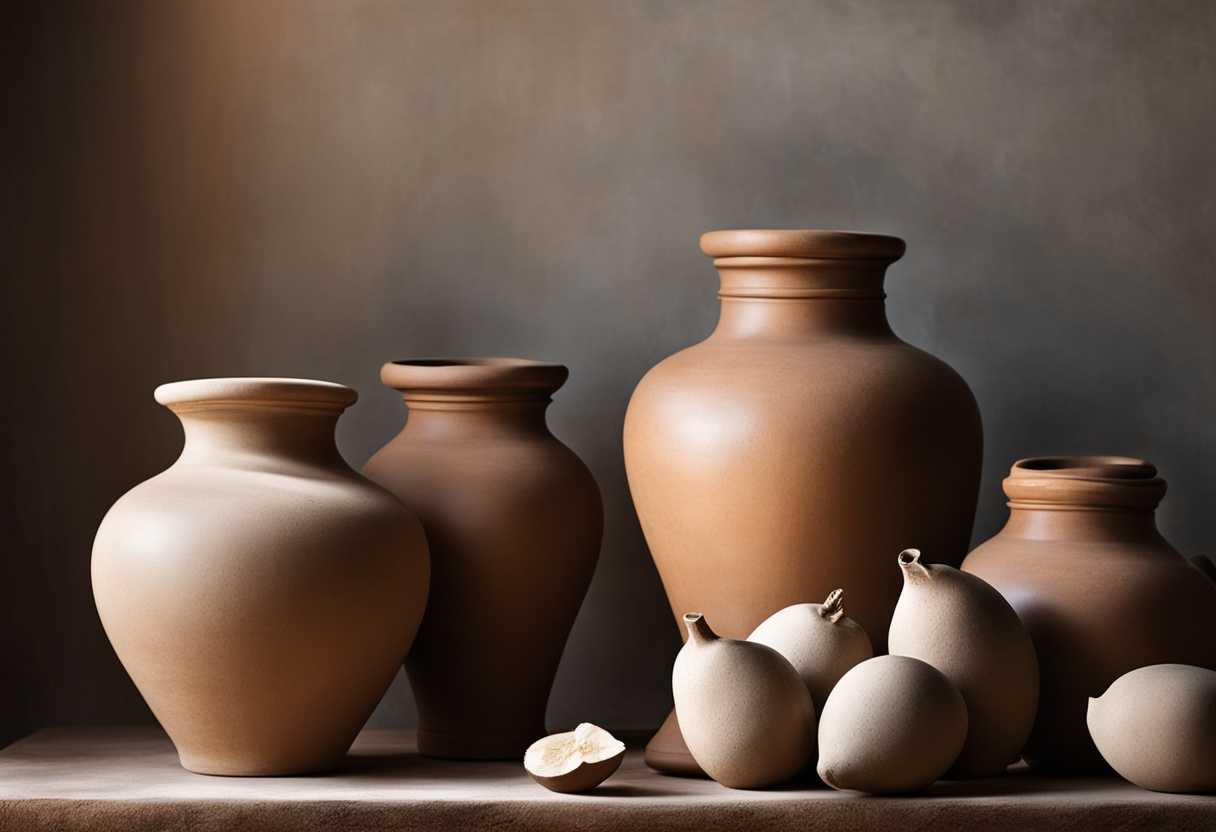
In the Bible, “jars of clay” is a metaphor used to describe human beings’ frailty and imperfection, emphasizing that while the body is fragile, it can hold the precious treasure of God’s sovereignty and message (2 Corinthians 4:7). This imagery underscores themes of humility and the divine power working through weak vessels.
Scripture
7 But we have this treasure in jars of clay, to show that the surpassing power belongs to God and not to us.
8 We are afflicted in every way, but not crushed; perplexed, but not driven to despair;
9 persecuted, but not forsaken; struck down, but not destroyed;
10 always carrying in the body the death of Jesus, so that the life of Jesus may also be manifested in our bodies.
11 For we who live are always being given over to death for Jesus’ sake, so that the life of Jesus also may be manifested in our mortal flesh.
12 So death is at work in us, but life in you.
Meaning of Jars of Clay in the Bible
The metaphor of “jars of clay” found in 2 Corinthians 4:7 serves as a profound reminder of human vulnerability and the divine purpose that transcends it. The Apostle Paul contrasts the inherent fragility of human existence with the extraordinary nature of the gospel, which he describes as a “treasure” entrusted to these earthen vessels. This delineation highlights the paradox of how God chooses to manifest His glory and truth through brokenness and weakness, thereby subverting worldly expectations of power and strength. In essence, this imagery reflects the notion that our limitations do not disqualify us from being instruments of God’s grace; rather, they are the very means by which His power is revealed (2 Corinthians 12:9-10).
Furthermore, the “jars of clay” metaphor calls believers to a deeper understanding of their identity and mission in Christ. It emphasizes the transformative work of the Holy Spirit, which can take what is fragile and seemingly insignificant and use it for His greater purposes (1 Corinthians 1:27-29). As jars of clay, Christians are reminded to embrace humility, acknowledging their dependence on God and the need for His strength in their lives. This humility fosters an environment where God’s light shines brightly through the cracks and imperfections of life, allowing others to witness His transformative work. Thus, the “jars of clay” serve as a powerful symbol of hope and reliance on God’s sufficiency amidst our human frailty, encouraging believers to reflect His glory in a world in dire need of His love and truth.
The imagery of “jars of clay” resonates throughout Scripture, reinforcing a theme of divine purpose within human frailty that is evident in various narratives and teachings. For instance, the creation account in Genesis highlights how God formed humanity from the dust of the ground, illustrating the initial vulnerability and humble origins of human beings. This foundational understanding underscores the theological premise that God delights in using what is weak to uphold His divine agenda. The stark contrast between God’s omnipotence and our mortal existence emphasizes that our clay-like nature is not a hindrance but rather a canvas upon which God can paint His majesty and grace.
Moreover, the call of the prophets further exemplifies this concept. Consider how God appointed figures like Moses and Jeremiah, who initially felt inadequate to fulfill their divine commissions. Their reluctance serves as a poignant reminder that it is often those who are most aware of their limitations who are chosen to convey God’s message. This perspective invites believers to recognize that God’s strength is made evident in our weaknesses and that His purposes can unfold through our seemingly inconsequential lives. The “jars of clay” metaphor ultimately encourages a posture of trust and obedience, assuring believers that their worth in God’s economy arises not from their abilities or achievements but from their willingness to be yielded vessels for His extraordinary work in the world.
Fragility and Human Limitation
The imagery of jars of clay serves as a powerful reminder of human fragility and limitations. Just as clay pots are easily breakable and can be marred, so too are humans susceptible to weakness and failure. This metaphor emphasizes the transient nature of human life and the inevitability of suffering and hardship. It encourages believers to recognize their vulnerabilities and to rely on a higher power for strength and resilience.
Divine Treasure Within
Another significant meaning of jars of clay is the concept of divine treasure residing within. The contrast between the humble, ordinary nature of clay jars and the precious contents they hold symbolizes the extraordinary presence of God’s grace, wisdom, and power within seemingly insignificant individuals. This notion highlights the idea that true value and strength come not from outward appearances or status, but from the divine essence that dwells within each person, empowering them to fulfill their purpose.
Transformation and Renewal
The metaphor of jars of clay also speaks to the themes of transformation and renewal. Just as clay can be reshaped and molded, individuals can undergo spiritual growth and transformation through their experiences and faith. This process of being refined and renewed reflects the journey of sanctification, where believers are continually shaped into the likeness of Christ. It underscores the hope that, despite their imperfections, individuals can be transformed into vessels of honor, capable of carrying out God’s work in the world.
How to Embrace Faith and Strengthen Your Christian Walk
Embracing faith and strengthening your Christian walk is a deeply personal journey that requires both intention and openness to God’s guidance. Start by immersing yourself in Scripture; the Bible is not just a book, but a living testament that speaks to our hearts and challenges us to grow. Make prayer a daily habit, not just a ritual, but a heartfelt conversation with God where you share your struggles, joys, and desires. Surround yourself with a community of believers who can encourage you, hold you accountable, and share in your spiritual growth. Remember, faith is not about perfection but about progress; it’s okay to have doubts and questions—what matters is how you seek answers and lean into God’s grace. As you cultivate these practices, you’ll find that your faith deepens, your understanding broadens, and your walk becomes a beautiful testament to the love and strength that comes from a relationship with Christ.
Bible References to Jars of Clay:
Jeremiah 18:1-6: 1 The word that came to Jeremiah from the Lord:
2 “Arise, and go down to the potter’s house, and there I will let you hear my words.”
3 Then I went down to the potter’s house, and behold, he was working at his wheel.
4 But the pot he was shaping from the clay was marred in his hands; so the potter formed it into another pot, shaping it as seemed best to him.
5 Then the word of the Lord came to me:
6 “O house of Israel, can I not do with you as this potter has done? declares the Lord. Behold, like the clay in the potter’s hand, so are you in my hand, O house of Israel.”
Isaiah 64:8: 8 But now, O Lord, you are our Father; we are the clay, and you are our potter; we are all the work of your hand.
Romans 9:20-21: 20 But who are you, O man, to answer back to God? Will what is molded say to its molder, “Why have you made me like this?”
21 Has the potter no right over the clay, to make out of the same lump one vessel for honorable use and another for dishonorable use?
Lamentations 4:2: 2 The precious sons of Zion, worth their weight in fine gold, how they are regarded as earthen pots, the work of a potter’s hands!
Judges 7:16-20: 16 And he divided the 300 men into three companies and put trumpets into the hands of all of them and empty jars, with torches inside the jars.
17 And he said to them, “Look at me, and do likewise. When I come to the outskirts of the camp, do as I do.
18 When I blow the trumpet, I and all who are with me, then blow the trumpets also on every side of all the camp and shout, ‘For the Lord and for Gideon.’”
19 So Gideon and the hundred men who were with him came to the outskirts of the camp at the beginning of the middle watch, when they had just set the watch.
20 Then the three companies blew the trumpets and broke the jars. They held in their left hands the torches, and in their right hands the trumpets to blow. And they cried out, “A sword for the Lord and for Gideon!”
Job 10:8-9: 8 Your hands fashioned and made me,
and now you have destroyed me altogether.
9 Remember that you have made me like clay; and will you return me to the dust?
Genesis 2:7: 7 then the Lord God formed the man of dust from the ground and breathed into his nostrils the breath of life, and the man became a living creature.

Rev. François Dupont is a dedicated church minister with a wealth of experience in serving spiritual communities. With a calm and serene demeanor, he has been devoted to sharing the message of love, compassion, and tolerance for over two decades. Through his thoughtful sermons, compassionate counseling, and unwavering support, Rev. Dupont has touched the lives of countless individuals, allowing them to find solace and strength during difficult times. His serene presence and deep understanding of the human condition make him a trusted guide for those seeking spiritual nourishment and guidance.