
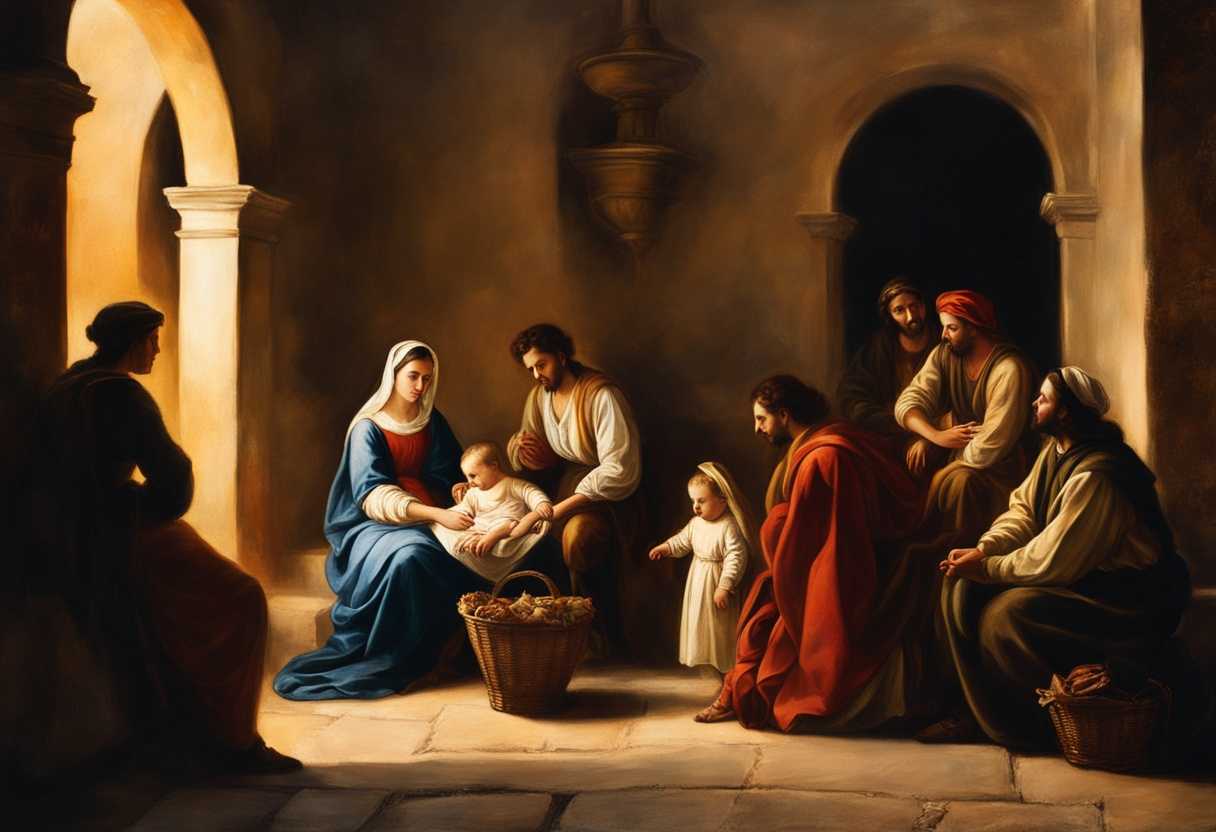
The Bible does not specifically highlight the significance of being born at home; however, it often emphasizes themes of family and community. For example, the significance of Jesus’ birth in Bethlehem (often depicted as a humble setting) underscores the value of humility and the familial bonds that are central to the faith narrative.
Scripture
15 Then the king of Egypt said to the Hebrew midwives, one of whom was named Shiphrah and the other Puah,
16 “When you serve as midwife to the Hebrew women and see them on the birthstool, if it is a son, you shall kill him, but if it is a daughter, she shall live.”
17 But the midwives feared God and did not do as the king of Egypt commanded them, but let the male children live.
18 But the king of Egypt called the midwives and said to them, “Why have you done this, and let the male children live?”
19 Then the midwives said to Pharaoh, “Because the Hebrew women are not like the Egyptian women, for they are vigorous and give birth before the midwife comes to them.”
20 So God dealt well with the midwives. And the people multiplied and grew very strong.
21 And because the midwives feared God, he gave them families.
Biblical Significance of Home Birth
While the Bible does not explicitly address the concept of being born at home, it does weave a rich tapestry of significance related to family, community, and belonging. The birth of Jesus, for example, takes place in Bethlehem, a city that holds deep historical significance for the Israelites as the birthplace of King David. This narrative is emblematic of God’s presence in humble origins, reflecting the value of humility and the divine choice to enter human history through lowly circumstances (Luke 2:7). In this way, the notion of being born at home can be interpreted as representing a grounding in familial roots and community, which are crucial to spiritual identity.
Moreover, the Bible emphasizes the importance of family and kinship in various contexts. For instance, the commandment to honor one’s parents (Exodus 20:12) underscores family relationships as foundational to societal and spiritual health. Familial bonds are often depicted as essential to one’s identity and the nurturing of faith, as seen in the stories of Abraham and Sarah, and in the genealogies that connect Old Testament figures to Jesus in the New Testament (Matthew 1:1-16). These examples suggest that being born within a community and family context serves as a nurturing ground for faith, values, and identity, highlighting the broader significance of being ‘born at home’ as a symbolic representation of spiritual growth and connectedness within the body of believers.
In addition to the familial dynamics already mentioned, the Bible frequently highlights the role of community in nurturing one’s identity and faith. For instance, the early church as depicted in the Book of Acts illustrates how the communal life of believers was centered on shared experiences, teachings, and the breaking of bread together. This collective nurturing reflects the idea that being integrated into a community, much like being born at home, offers a sense of belonging and support for spiritual development, which serves as a counterpoint to isolation. Such communal living emphasizes that one’s spiritual journey does not occur in a vacuum, but is deeply intertwined with the lives of others who provide encouragement, accountability, and instruction.
Furthermore, the biblical narrative often portrays significant life events occurring within the domestic sphere, which can be seen as a microcosm of the larger community. The stories of Ruth and Naomi emphasize loyalty and familial ties that extend beyond blood relationships, showcasing the strength of bonds formed through commitment. Additionally, the parable of the prodigal son highlights the theme of homecoming, portraying the concept of returning to one’s origins with humility and repentance. This parable illustrates how the comfort and acceptance found in a familial setting can reflect God’s grace and forgiveness. Consequently, the significance of being “born at home” resonates throughout Scripture, symbolizing the foundational role of family and community in shaping not only individual identity but also one’s relationship with God and others.
The Importance of Family and Community
Being born at home signifies the foundational role of family and community in biblical narratives. In many instances, the home is depicted as a sacred space where relationships are nurtured, and values are instilled. The act of being born at home emphasizes the importance of familial bonds and the support system that a family provides. This setting often serves as the first environment where individuals learn about faith, morality, and cultural identity, reflecting the biblical principle that families are central to God’s design for human relationships.
Symbolism of Stability and Security
The home is often associated with stability and security in biblical texts. Being born at home can symbolize a safe haven where one is welcomed and protected. This notion resonates with the idea of God as a refuge and a source of comfort. In a broader sense, the home represents a place where individuals can grow and develop in a nurturing environment, mirroring the spiritual growth that believers experience within their faith communities. The stability of being born at home can also reflect God’s promise of care and provision for His people.
Connection to Heritage and Legacy
Being born at home can also signify a deep connection to heritage and legacy. In biblical times, lineage and ancestry were of great importance, and being born in a familial setting often meant being rooted in a particular tribe or family line. This connection to heritage underscores the significance of passing down faith, traditions, and values from one generation to the next. It highlights the biblical theme of covenant, where God’s promises are often tied to familial lines, emphasizing the continuity of faith and the importance of remembering one’s roots.
How to Embrace Family Values for Spiritual Growth
Embracing family values is a beautiful way to nurture your spiritual growth as a Christian, and it starts with recognizing that our families are often our first communities of faith. By prioritizing love, respect, and open communication within your family, you create a nurturing environment where everyone can grow closer to God together. Make it a habit to share prayers, read scripture, and discuss its teachings as a family, allowing these moments to deepen your collective understanding of faith. Remember, it’s not just about the big gestures; small acts of kindness and support can reflect Christ’s love in powerful ways. As you cultivate these values, you’ll find that your family becomes a source of strength and encouragement, helping each member to flourish spiritually and embody the teachings of Jesus in everyday life.
Bible References to Being Born at Home:
1 Samuel 4:19-22: 19 Now his daughter-in-law, the wife of Phinehas, was pregnant, about to give birth. And when she heard the news that the ark of God was captured, and that her father-in-law and her husband were dead, she bowed and gave birth, for her pains came upon her.
20 As she was about to die, the women attending her said to her, “Do not be afraid, for you have borne a son.” But she did not answer or pay attention.
21 And she named the child Ichabod, saying, “The glory has departed from Israel!” because the ark of God had been captured and because of her father-in-law and her husband.
22 And she said, “The glory has departed from Israel, for the ark of God has been captured.”
2 Kings 4:32-37: 32 When Elisha came into the house, he saw the child lying dead on his bed.
33 So he went in and shut the door behind the two of them and prayed to the Lord.
34 Then he went up and lay on the child, putting his mouth on his mouth, his eyes on his eyes, and his hands on his hands. And as he stretched himself upon him, the flesh of the child became warm.
35 Then he got up again and walked once back and forth in the house, and went up and stretched himself upon him. The child sneezed seven times, and the child opened his eyes.
36 Then he summoned Gehazi and said, “Call this Shunammite.” So he called her. And when she came to him, he said, “Pick up your son.”
37 Then she went in and fell at his feet and bowed to the ground. Then she took up her son and went out.
Luke 2:6-7: 6 And while they were there, the time came for her to give birth.
7 And she gave birth to her firstborn son and wrapped him in swaddling cloths and laid him in a manger, because there was no place for them in the inn.
John 16:21: 21 When a woman is giving birth, she has sorrow because her hour has come, but when she has delivered the baby, she no longer remembers the anguish, for joy that a human being has been born into the world.
Acts 7:20-21: 20 At this time Moses was born; and he was beautiful in God’s sight. And he was brought up for three months in his father’s house.
21 and when he was exposed, Pharaoh’s daughter adopted him and brought him up as her own son.

Rev. François Dupont is a dedicated church minister with a wealth of experience in serving spiritual communities. With a calm and serene demeanor, he has been devoted to sharing the message of love, compassion, and tolerance for over two decades. Through his thoughtful sermons, compassionate counseling, and unwavering support, Rev. Dupont has touched the lives of countless individuals, allowing them to find solace and strength during difficult times. His serene presence and deep understanding of the human condition make him a trusted guide for those seeking spiritual nourishment and guidance.