
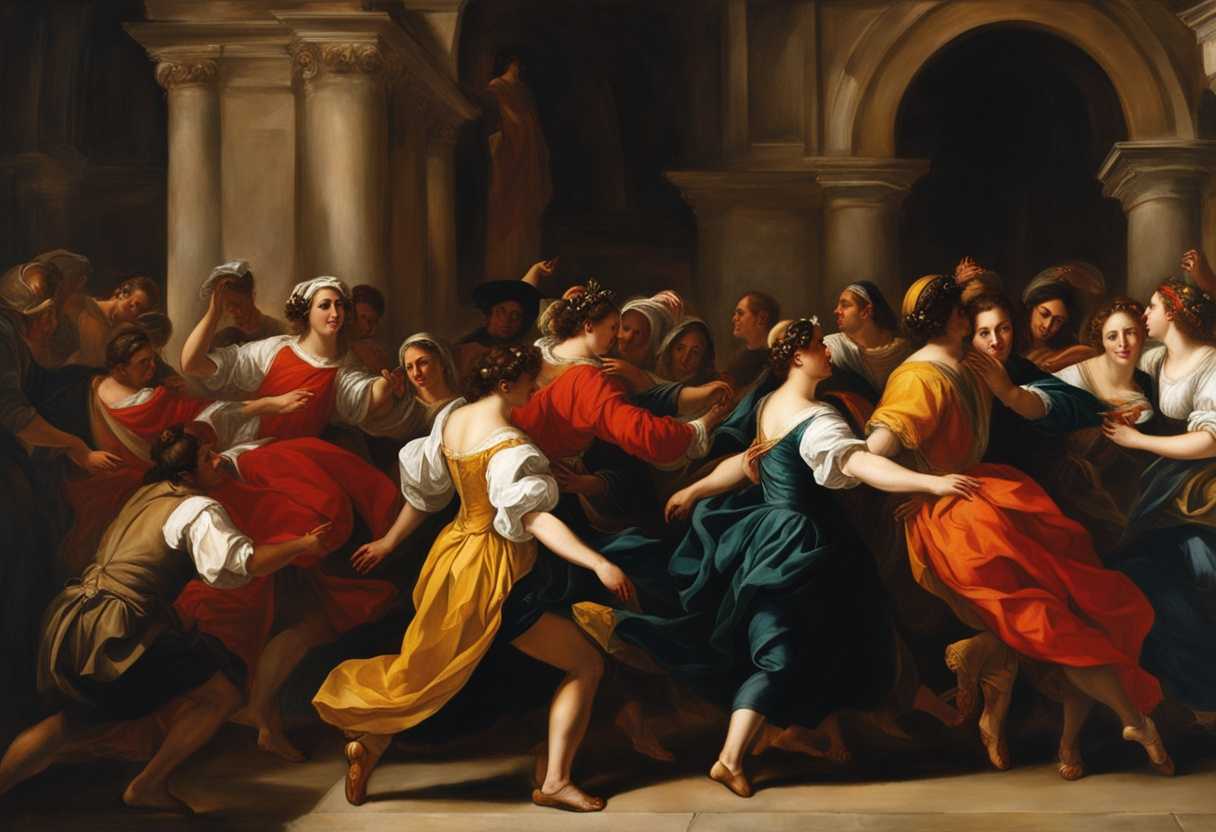
In the Bible, dancing often signifies joy, celebration, and worship, as seen in passages like Exodus 15:20, where Miriam leads the Israelites in dance after their escape from Egypt. It can also serve as an expression of reverence and community, reflecting both personal and communal expressions of faith.
Scripture
20 Then Miriam the prophetess, the sister of Aaron, took a tambourine in her hand, and all the women went out after her with tambourines and dancing.
21 And Miriam sang to them: “Sing to the Lord, for he has triumphed gloriously; the horse and his rider he has thrown into the sea.”
Biblical Significance of Dancing
Dancing in the Bible is a multifaceted expression of human emotion and communal faith, deeply intertwined with celebration, worship, and the acknowledgment of divine acts. For instance, Exodus 15:20 describes Miriam taking a tambourine and leading the Israelite women in dance to celebrate their miraculous deliverance from slavery in Egypt. This moment of joyful worship emphasizes how dance serves as a powerful tool for expressing gratitude and spiritual delight. Similarly, in Psalm 149:3 and Psalm 150:4, the act of dancing is connected to praise, as the psalmists invite the congregation to dance as an embodiment of worship and acknowledgment of God’s greatness.
Moreover, dancing often fosters a sense of community and unity among believers. In 2 Samuel 6:14, King David dances before the Lord with all his might during the transport of the Ark of the Covenant, illustrating that dance can be a vital part of communal worship, drawing the people together in shared reverence and joy. The act of dancing, therefore, transcends mere movement; it encapsulates a response to God’s actions, an expression of collective identity, and an invitation to engage in a spiritual experience that goes beyond words. By embracing dance, the faithful can connect more deeply with their heritage, their community, and the divine.
The biblical significance of dancing extends beyond mere celebrations and encompasses acts of devotion and personal expression of faith. The Song of Solomon, a poetic dialogue that explores love and desire, employs dance as a metaphor for intimacy and beauty. The bride is described as moving with grace and elegance, which not only reflects her physical prowess but also serves as an avenue for expressing the deep, spiritual connection between lovers that is also mirrored in one’s relationship with God. This metaphorical use of dance emphasizes how such movements can communicate profound feelings that words alone cannot capture.
In the prophetic literature, dancing can also symbolize deliverance and joy in the face of trials. In Jeremiah 31:4, God announces a time of restoration for Israel, promising that the people will once again dance and celebrate the return of joy to their lives. Such prophetic imagery showcases dance as not only a reflection of existing happiness but also as an anticipation of future blessings and redemption. In this context, dancing becomes a powerful act of faith, embodying hope and a commitment to the divine promise. Through these various narratives, dancing in the Bible emerges as a rich and dynamic expression of both personal and corporate faith, signifying an embodied response to God’s presence and promises.
Expression of Joy and Celebration
Dancing in the Bible often serves as a powerful expression of joy and celebration. It is frequently associated with moments of triumph, such as victories in battle or significant religious events. This form of physical expression allows individuals and communities to convey their happiness and gratitude to God, reinforcing the idea that joy is an essential aspect of worship and communal life.
Symbol of Spiritual Warfare
In various biblical contexts, dancing can also symbolize spiritual warfare. It represents a physical manifestation of faith and trust in God’s power to deliver and protect. Through dance, believers can express their reliance on divine intervention, showcasing a commitment to spiritual resilience in the face of adversity. This aspect highlights the connection between physical movement and spiritual engagement, emphasizing that worship can take many forms.
Community and Unity
Dancing often serves as a communal activity that fosters unity among participants. In biblical narratives, dance is depicted as a collective expression of faith, bringing people together in shared worship and celebration. This communal aspect underscores the importance of fellowship and collective identity within the faith community, illustrating how dance can strengthen bonds and create a sense of belonging among believers.
How to Cultivate a Joyful Heart in Worship
Cultivating a joyful heart in worship is a beautiful journey that begins with a genuine connection to God. Start by setting aside distractions and creating a sacred space where you can focus solely on Him—whether that’s in your home, a quiet park, or a church sanctuary. Engage your senses: listen to uplifting music, read Scripture aloud, or light a candle to symbolize His presence. Remember, joy in worship isn’t about perfection; it’s about authenticity. Approach God with an open heart, expressing gratitude for His blessings, even in challenging times. As you immerse yourself in prayer and praise, allow the Holy Spirit to fill you with a sense of peace and joy that transcends circumstances. Embrace the community of fellow believers, as shared worship can amplify joy and encourage you on your faith journey. Ultimately, let your worship be a reflection of your love for God, and watch as your heart overflows with joy that spills into every aspect of your life.
Bible References to the Significance of Dancing:
2 Samuel 6:14-16: 14 And David danced before the Lord with all his might. And David was wearing a linen ephod.
15 So David and all the house of Israel brought up the ark of the Lord with shouting and with the sound of the horn.
16 As the ark of the Lord came into the city of David, Michal the daughter of Saul looked out of the window and saw King David leaping and dancing before the Lord, and she despised him in her heart.
Psalm 149:3-4: 3 Let them praise his name with dancing, making melody to him with tambourine and lyre!
4 For the Lord takes pleasure in his people; he adorns the humble with salvation.
Psalm 150:4-5: 4 Praise him with the sound of the trumpet; praise him with the lute and harp!
5 Praise him with sounding cymbals; praise him with loud clashing cymbals!
Ecclesiastes 3:1-4: 1 For everything there is a season, and a time for every matter under heaven:
2 a time to be born, and a time to die; a time to plant, and a time to pluck up what is planted;
3 a time to kill, and a time to heal;
a time to break down, and a time to build up;
4 a time to weep, and a time to laugh;
a time to mourn, and a time to dance;
Jeremiah 31:12-13: 12 They shall come and sing aloud on the height of Zion,
and they shall be radiant over the goodness of the Lord,
over the grain, the wine, and the oil,
and over the young of the flock and the herd;
their life shall be like a watered garden,
and they shall languish no more.
13 Then shall the young women rejoice in the dance, and the young men and the old shall be merry. I will turn their mourning into joy; I will comfort them, and give them gladness for sorrow.
Lamentations 5:14-15: 14 The old men have left the city gate,
the young men their music.
15 The joy of our hearts has ceased; our dancing has been turned to mourning.
Matthew 11:16-17: 16 “But to what shall I compare this generation? It is like children sitting in the marketplaces and calling to their playmates,”
17 “‘We played the flute for you, and you did not dance; we sang a dirge, and you did not mourn.’
Luke 15:25-27: 25 “Now his older son was in the field, and as he came and drew near to the house, he heard music and dancing.”
26 And he called one of the servants and asked what these things meant.
27 And he said to him, ‘Your brother has come, and your father has killed the fattened calf, because he has received him back safe and sound.’

Reverend Ogunlade is a seasoned Church Minister with over three decades of experience in guiding and nurturing congregations. With profound wisdom and a serene approach, Reverend Ogunlade has carried out various pastoral duties, including delivering uplifting sermons, conducting religious ceremonies, and offering sage counsel to individuals seeking spiritual guidance. Their commitment to fostering harmony and righteousness within their community is exemplified through their compassionate nature, making them a beloved and trusted figure among the congregation.