
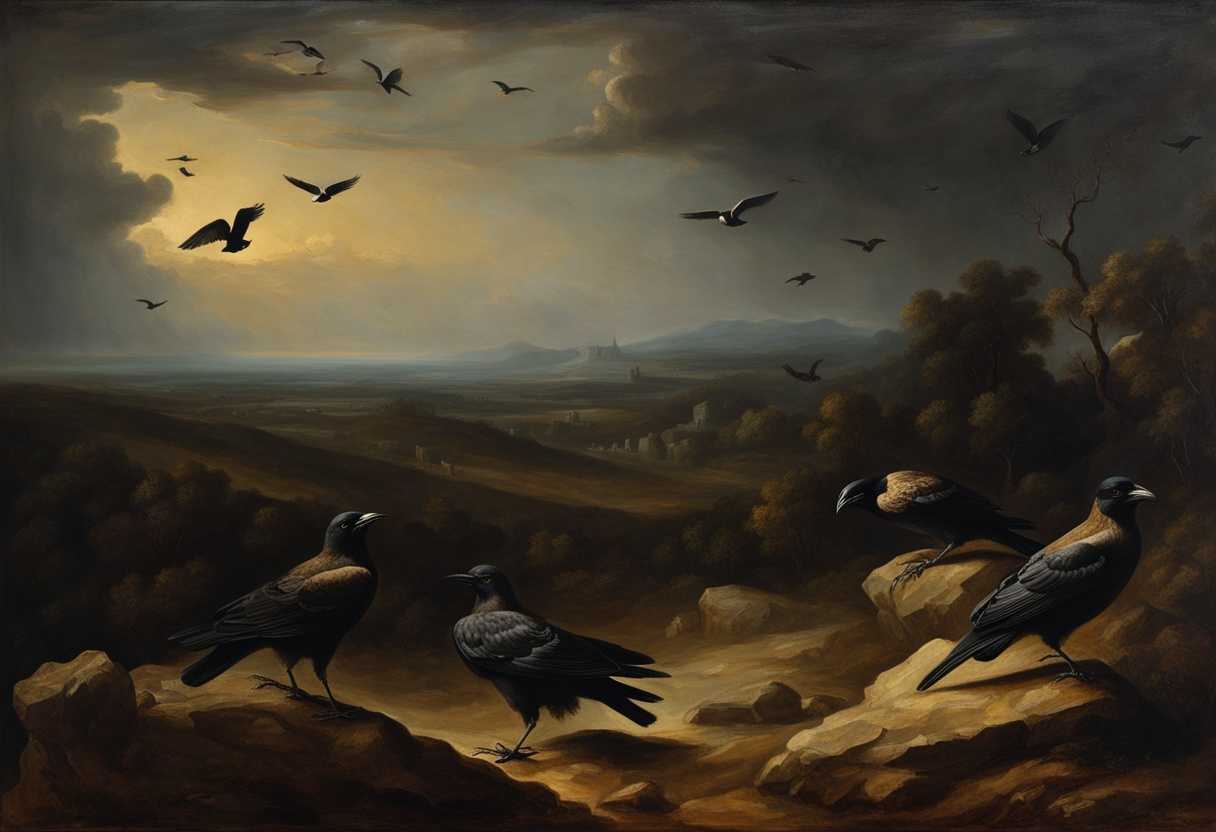
In the Bible, crows are often associated with scavenging and uncleanliness, as found in texts like Leviticus 11:15 where they are listed among unclean birds. The presence of dead crows may symbolically represent judgment or desolation, reflecting a larger theme of mortality and the fate of the wicked.
Scripture
13 “And these you shall detest among the birds; they shall not be eaten; they are detestable: the eagle, the bearded vulture, the black vulture,
14 the kite, the falcon of any kind;
15 Every swarming thing that swarms on the ground is detestable; it shall not be eaten.
16 the ostrich, the nighthawk, the sea gull, the hawk according to its kind,
17 And the little owl and the cormorant and the short-eared owl,
18 the stork, the heron of any kind, the hoopoe, and the bat.
19 the stork, the heron of any kind, the hoopoe, and the bat.
Biblical Significance of Dead Crows
The Biblical significance of dead crows transcends mere uncleanliness; they serve as potent symbols of judgment and desolation, reflecting the consequences of sin and the fate awaiting the wicked. In Leviticus 11:15, crows are categorized among unclean birds, establishing their connection to themes of impurity and moral decay. The presence of deceased crows may thus signify a divine pronouncement of judgment, reminiscent of passages such as Jeremiah 34:20, where God delivers the fate of those who reject His covenant. This portrayal invites reflection on the broader implications of mortality and the inevitable consequences of one’s actions.
Moreover, dead crows may evoke the sense of spiritual barrenness, aligning with broader Biblical themes of accountability and divine retribution. In Ezekiel 39:4, the imagery of carrion birds feasting on the remains of the defeated underscores a stark reality of divine judgment manifesting in desolation. Consequently, the symbolism of dead crows may serve as a reminder of God’s sovereignty over life and death, the ephemeral nature of existence, and the moral imperatives emphasized throughout scripture. The decay of these creatures ultimately invites believers to cultivate a lifestyle of righteousness and obedience, lest they find themselves facing similar desolation—both physically and spiritually—at the day of reckoning.
The depiction of dead crows in the Biblical narrative extends beyond mere symbols of judgment; they can be seen as reflections of a broken creation yearning for God’s restoration. The imagery of death and decay represented by these birds highlights the pervasive impact of sin on the world, illustrating how it disrupts the divine order established at creation. Such images encourage reflection on the fallen nature of humanity, evoking themes of repentance and the hope for renewal through divine intervention. The fate of the crows serves as a reminder that death is an ultimate consequence of separation from God, a cyclic pattern echoed throughout scripture where the unclean and the wicked face the repercussions of their choices.
Furthermore, dead crows can also represent the lurking presence of spiritual malaise within communities or nations. In Biblical contexts, the sight of carrion may signify a spiritual famine, a lack of prophetic voice, or the absence of God’s guidance. This deadness could be interpreted as a call to collective introspection, urging communities to seek restoration and alignment with divine principles. Embedded in the narrative of Israel, the fate of the disobedient can serve as a cautionary tale for believers, who are reminded of the covenant relationship established with God. Therefore, the image of dead crows resonates deeply within the theme of covenant fidelity, inviting a profound examination of individual and communal faithfulness amidst the pervasive reality of sin.
Symbol of Impurity and Uncleanliness
In biblical texts, certain animals are often associated with impurity and uncleanliness. Crows, being scavengers, are seen as symbols of decay and death. Their presence, especially in a dead state, can represent spiritual and moral corruption. This association serves as a reminder of the need for purity and holiness in the lives of believers, emphasizing the importance of avoiding sin and maintaining a righteous path.
Representation of Judgment and Desolation
Dead crows can also symbolize divine judgment and desolation. In various biblical narratives, the death of animals, particularly those considered unclean, can signify the consequences of sin and the resulting desolation that follows. This imagery can serve as a warning to communities about the repercussions of turning away from God and the inevitable decline that comes from disobedience.
Metaphor for Spiritual Death
The presence of dead crows may also be interpreted as a metaphor for spiritual death. Just as a dead crow signifies the end of life, it can represent the state of a soul that is disconnected from God. This imagery encourages reflection on one’s spiritual condition and the necessity of seeking renewal and life through faith, highlighting the importance of spiritual vitality in the life of a believer.
How to Embrace Faith Amidst Death and Loss
Embracing faith amidst death and loss can feel like an insurmountable challenge, but it is often in these moments of profound grief that our faith can deepen and transform us. When we face the heartache of losing a loved one, it’s essential to remember that God is close to the brokenhearted (Psalm 34:18). Allow yourself to grieve, but also seek solace in prayer and scripture, which can provide comfort and perspective. Surround yourself with a supportive community—friends, family, or your church—who can walk alongside you in your sorrow. Share your feelings openly with God; He can handle your doubts and fears. In time, you may find that your faith becomes a source of strength, reminding you of the hope we have in Christ, who conquered death and promises eternal life. Embrace the memories of those you’ve lost, and let their love inspire you to live fully, knowing that they are held in God’s embrace.
Bible References to Dead Crows’ Significance:
Deuteronomy 14:11-18: 11 You may eat all clean birds.
12 But these are the ones that you shall not eat: the eagle, the bearded vulture, the black vulture,
13 and the glede, the kite, the falcon, all kinds of hawks,
14 And every raven according to its kind,
15 the pig, because it parts the hoof and is cloven-footed but does not chew the cud, is unclean to you.
16 You shall not eat any abomination.
17 the little owl, the cormorant, the short-eared owl,
18 the stork, the heron of any kind, the hoopoe, and the bat.
Isaiah 34:11-15: 11 But the hawk and the porcupine shall possess it,
the owl and the raven shall dwell in it.
He shall stretch the line of confusion over it,
and the plumb line of emptiness.
12 Her nobles shall be no more,
nor shall kings be proclaimed there;
all her princes are gone.
13 Thorns shall grow over its strongholds, nettles and thistles in its fortresses. It shall be a haunt of jackals, an abode for ostriches.
14 And wild animals shall meet with hyenas; the wild goat shall cry to his fellow; indeed, there the night bird settles and finds for herself a resting place.
15 There the owl nests and lays and hatches and gathers her young in her shadow; indeed, there the hawks are gathered, each one with her mate.
Jeremiah 19:7-9: 7 And in this place I will make void the plans of Judah and Jerusalem, and will cause their people to fall by the sword before their enemies, and by the hand of those who seek their life. I will give their dead bodies for food to the birds of the air and to the beasts of the earth.
8 And I will make this city a horror, a thing to be hissed at. Everyone who passes by it will be horrified and will hiss because of all its wounds.
9 And I will make them eat the flesh of their sons and their daughters, and everyone shall eat the flesh of his neighbor in the siege and in the distress, with which their enemies and those who seek their life afflict them.’
Ezekiel 39:17-20: 17 “As for you, son of man, thus says the Lord God: Speak to the birds of every sort and to all beasts of the field: ‘Assemble and come, gather from all around to the sacrificial feast that I am preparing for you, a great sacrificial feast on the mountains of Israel, and you shall eat flesh and drink blood.
18 You shall eat the flesh of the mighty, and drink the blood of the princes of the earth—of rams, of lambs, and of he-goats, of bulls, all of them fat beasts of Bashan.
19 And you shall eat fat till you are filled, and drink blood till you are drunk, at the sacrificial feast that I am preparing for you.
20 And they shall be satisfied, for I have poured out my Spirit upon the house of Israel, declares the Lord God.
Revelation 19:17-18: 17 Then I saw an angel standing in the sun, and with a loud voice he called to all the birds that fly directly overhead, “Come, gather for the great supper of God,
18 to eat the flesh of kings, the flesh of captains, the flesh of mighty men, the flesh of horses and their riders, and the flesh of all men, both free and slave, both small and great.”

Reverend Ogunlade is a seasoned Church Minister with over three decades of experience in guiding and nurturing congregations. With profound wisdom and a serene approach, Reverend Ogunlade has carried out various pastoral duties, including delivering uplifting sermons, conducting religious ceremonies, and offering sage counsel to individuals seeking spiritual guidance. Their commitment to fostering harmony and righteousness within their community is exemplified through their compassionate nature, making them a beloved and trusted figure among the congregation.