
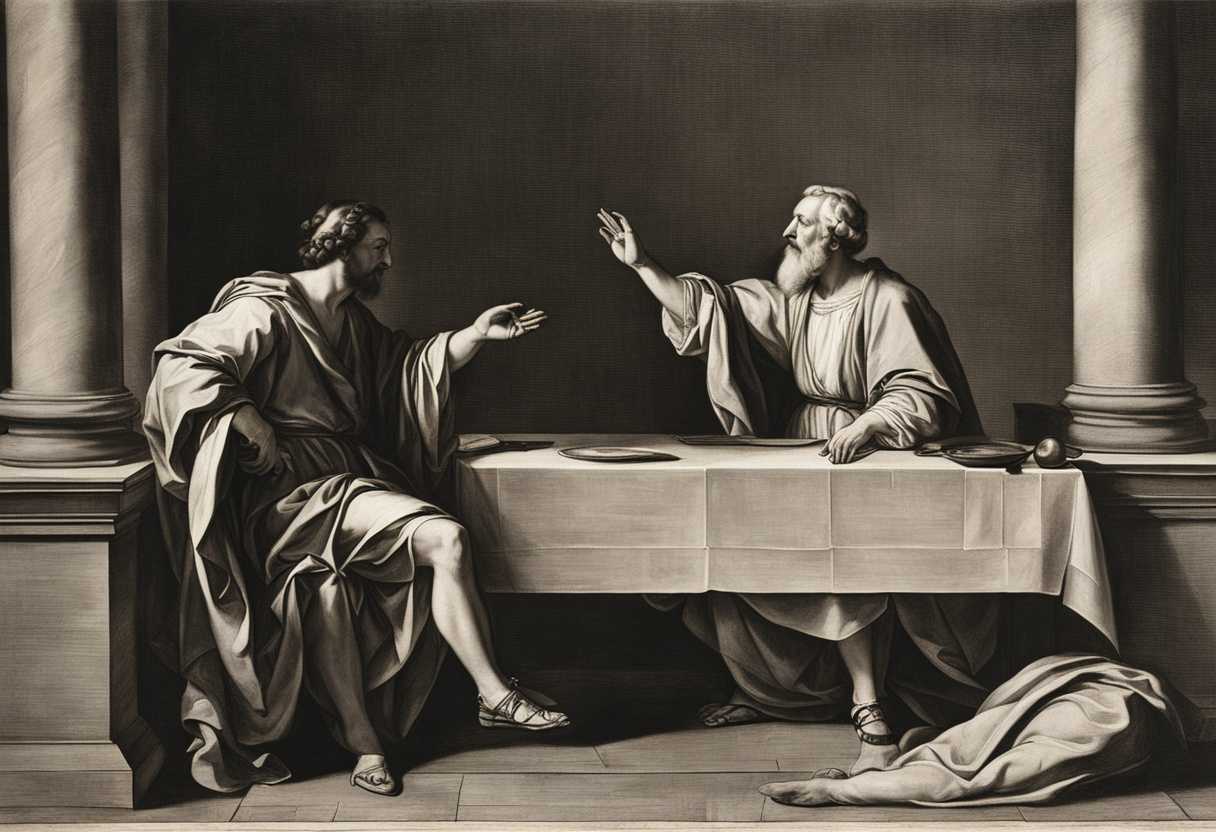
In the Bible, placing a hand under the thigh is a gesture of solemn oath-taking and deep commitment, as seen in Genesis 24:2-3, where Abraham instructs his servant to make a promise regarding finding a wife for Isaac. This act symbolizes familial loyalty and the sacredness of the agreement.
Scripture
1 Now Abraham was old, well advanced in years. And the Lord had blessed Abraham in all things.
2 And Abraham said to his servant, the oldest of his household, who had charge of all that he had, “Put your hand under my thigh,
3 that I may make you swear by the Lord, the God of heaven and God of the earth, that you will not take a wife for my son from the daughters of the Canaanites, among whom I dwell,
4 but will go to my country and to my kindred, and take a wife for my son Isaac.”
5 The servant said to him, “Perhaps the woman may not be willing to follow me to this land. Must I then take your son back to the land from which you came?”
6 And Abraham said to him, “See to it that you do not take my son back there.
7 The Lord, the God of heaven, who took me from my father’s house and from the land of my kindred, and who spoke to me and swore to me, ‘To your offspring I will give this land,’ he will send his angel before you, and you shall take a wife for my son from there.
8 If the woman is not willing to follow you, then you will be free from this oath of mine; only you must not take my son back there.”
9 So the servant put his hand under the thigh of Abraham his master and swore to him concerning this matter.
Biblical Significance of Hand Under Thigh
The gesture of placing a hand under the thigh serves as a profound symbol of loyalty, commitment, and the seriousness of an oath in the biblical tradition. In Genesis 24:2-3, when Abraham instructs his servant to place his hand under his thigh, he emphasizes the weight of the promise being made—finding a suitable wife for Isaac among his own kin rather than among the Canaanites. This act is not merely a cultural formality; it represents an invocation of familial bonds and ancestral lineage, signaling that the promise is both personal and sacred. The thigh, being a significant part of the body, symbolizes strength and the continuation of the family line, reinforcing that this oath touches upon life’s most vital aspects—family and future generations.
Furthermore, this practice reflects broader biblical themes of covenant and fidelity. In Genesis 47:29, Jacob similarly requests his son Joseph to swear by placing his hand under Jacob’s thigh before he dies, indicating the seriousness of the vow concerning his burial wishes. Such gestures underscore the gravity with which promises are treated in biblical narratives, emphasizing that they are not simply verbal agreements but are rooted in deep spiritual significance that binds individuals to honor their commitments. These acts collectively highlight the importance of integrity and trust within both personal relationships and communal ties in the biblical context, mirroring the relationship between God and His people, where oaths and covenants carry eternal weight and consequence.
The act of placing a hand under the thigh is more than a mere gesture; it embodies a rich tapestry of themes surrounding inheritance, legacy, and the sacred responsibilities of kinship. This practice highlights the intimate connections within families and the responsibilities they entail, especially concerning spiritual and moral legacies. Throughout biblical narratives, such oaths often tie individuals to their familial duties, reinforcing the idea that one’s actions have implications that extend beyond the immediate moment, into the broader scope of God’s covenantal promises to His people. The physicality of the gesture serves as a poignant reminder of the weight of one’s commitments, both to family and to God, marking the oath as a solemn and binding act.
Additionally, this ritual reflects a deeper spiritual resonance within the covenant relationship that exists between God and humanity. Just as individuals place their hands under the thigh to affirm an oath, God extends His promises to His people, signifying divine assurance that His covenants are steadfast and enduring. In the larger biblical narrative, such acts of commitment echo the themes of faithfulness, trust, and divine purpose that run throughout scripture. The significance of oath-taking, particularly through a gesture so steeped in personal and communal meaning, emerges as a testament to the sacred trust placed in relationships—both divine and human—and serves to reinforce the importance of upholding one’s word as an expression of faith and responsibility.
Symbol of Oath and Commitment
The act of placing a hand under the thigh in biblical contexts often signifies a deep commitment to an oath or promise. This gesture is not merely a physical act but represents a solemn vow, emphasizing the seriousness and gravity of the commitment being made. It reflects the cultural understanding of the body as a sacred vessel, where the thigh, being a strong and vital part, symbolizes strength and integrity in the promises exchanged.
Connection to Ancestral Heritage
In biblical narratives, the act of placing a hand under the thigh can also be seen as a connection to one’s lineage and heritage. This gesture often occurs in contexts where familial ties and responsibilities are highlighted, reinforcing the importance of honoring one’s ancestors and the legacy they leave behind. It serves as a reminder of the continuity of faith and values passed down through generations, linking the present to the past.
Representation of Authority and Power
Additionally, this gesture can signify the transfer of authority or power within familial or tribal structures. By placing a hand under the thigh, individuals acknowledge the authority of the one making the oath, often a patriarch or leader. This act symbolizes submission to that authority and the recognition of the responsibilities that come with it, highlighting the dynamics of power and governance within the biblical community.
How to Strengthen Your Faith Through Covenant and Commitment
Strengthening your faith through covenant and commitment is a deeply personal journey that invites you to reflect on the promises you make to God and to others. A covenant, much like the ones we see in Scripture, is a sacred agreement that binds you to God’s will and purpose for your life. Start by dedicating time each day to prayer and Scripture reading, allowing these moments to deepen your understanding of God’s promises. As you commit to living out these teachings, consider how your actions reflect your faith—whether it’s through acts of service, kindness, or simply being present for those in need. Remember, faith is not just a feeling but a choice to trust in God’s plan, even when the path seems uncertain. Surround yourself with a community of believers who can support and encourage you in your journey, and don’t hesitate to share your struggles and victories. By nurturing these covenants and commitments, you’ll find that your faith not only strengthens but also transforms your life and the lives of those around you.
Bible References to Hand Under Thigh Significance:
Genesis 47:27-31: 27 Thus Israel settled in the land of Egypt, in the land of Goshen. And they gained possessions in it, and were fruitful and multiplied greatly.
28 And Jacob lived in the land of Egypt seventeen years. So the days of Jacob, the years of his life, were 147 years.
29 And when the time drew near that Israel must die, he called his son Joseph and said to him, “If now I have found favor in your sight, put your hand under my thigh and promise to deal kindly and truly with me. Do not bury me in Egypt,
30 but let me lie with my fathers. Carry me out of Egypt and bury me in their burying place.” He answered, “I will do as you have said.”
31 Then he said, “Swear to me”; and he swore to him. So Israel bowed himself upon the head of his bed.

Rev. François Dupont is a dedicated church minister with a wealth of experience in serving spiritual communities. With a calm and serene demeanor, he has been devoted to sharing the message of love, compassion, and tolerance for over two decades. Through his thoughtful sermons, compassionate counseling, and unwavering support, Rev. Dupont has touched the lives of countless individuals, allowing them to find solace and strength during difficult times. His serene presence and deep understanding of the human condition make him a trusted guide for those seeking spiritual nourishment and guidance.