
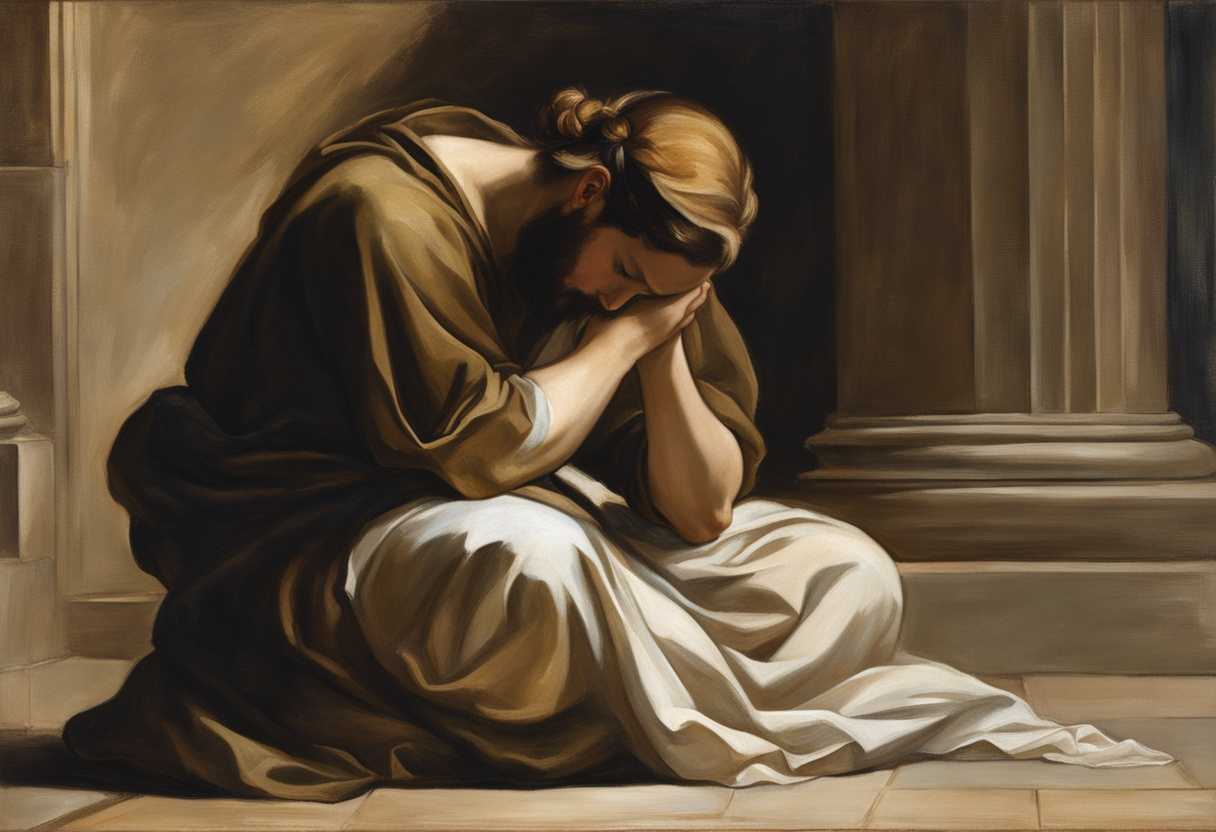
In the Bible, “contrite” refers to a sincere feeling of remorse and humility, especially in the context of repentance for one’s sins. It often indicates a broken spirit and a desire for reconciliation with God, as seen in Psalm 51:17, which states that God values a contrite heart.
Scripture
16 For you will not delight in sacrifice, or I would give it; you will not be pleased with a burnt offering.
17 The sacrifices of God are a broken spirit; a broken and contrite heart, O God, you will not despise.
Biblical Meaning of Contrite Heart
The concept of being “contrite” is deeply rooted in the biblical theme of repentance and the recognition of one’s sinful nature. A contrite heart signifies an earnest acknowledgment of wrongdoing and a genuine sorrow for actions that have distanced one from God. Psalm 51:17 emphasizes this by stating, “The sacrifices of God are a broken spirit; a broken and contrite heart, O God, you will not despise.” This illustrates that God cherishes a repentant spirit more than any external offerings or rituals. It reflects a profound humility and a willingness to submit to God’s will, recognizing our human fragility and dependence on divine grace for forgiveness.
Moreover, the broader implications of contrition extend to the transformational aspect of repentance in a believer’s life. In Isaiah 57:15, it is written, “For thus says the One who is high and lifted up, who inhabits eternity, whose name is Holy: ‘I dwell in the high and holy place, and also with him who is of a contrite and lowly spirit, to revive the spirit of the lowly, and to revive the heart of the contrite.’” Here, the connection between a contrite heart and divine presence is emphasized—God not only offers forgiveness but also restoration and revival to those who humbly seek Him. Therefore, contrition is not merely a feeling of regret but is foundational in fostering a reconciled relationship with God and a life transformed by His grace.
The theme of contrition in the Bible further emphasizes its significance in the path of redemption and spiritual renewal. Throughout the scriptures, a contrite heart is portrayed as one that is ready to receive God’s mercy and grace. In the context of communal worship and personal devotion, individuals expressing heartfelt contrition demonstrate an understanding that true repentance leads to a closer fellowship with God. For instance, in the minor prophetic books, there are instances where God calls on His people to return to Him with sincere hearts, highlighting that recognition of sin and a contrite spirit are essential for genuine restoration.
Additionally, the teachings of Jesus draw attention to the inward transformation associated with a contrite spirit. He spoke of the blessedness of the poor in spirit in the Sermon on the Mount, suggesting that those who are spiritually aware of their need for God, who exhibit humility and remorse for their shortcomings, are inherently favored in His kingdom. This illustrates that contrition goes beyond mere regret; it is a spiritual posture that opens the door to God’s grace, inviting healing not only for the individual but also for the community at large. In embracing a posture of contrition, believers embark on a journey toward righteousness, allowing God to work in their hearts and minds, fostering both personal and collective holiness.
The Nature of Humility
In the Bible, being contrite is closely associated with humility. A contrite heart recognizes one’s own limitations and failures, leading to a deep sense of dependence on God’s mercy and grace. This humility is not merely an acknowledgment of wrongdoing but a profound understanding of one’s need for divine forgiveness and restoration. It reflects a posture of surrender, where individuals come before God with a willingness to change and seek His guidance.
The Path to Repentance
Contrition is a vital step in the process of repentance. It involves a genuine sorrow for sin and a desire to turn away from it. This heartfelt remorse is essential for true repentance, as it signifies an internal transformation rather than mere external compliance. In biblical teachings, a contrite spirit is seen as a prerequisite for receiving forgiveness and experiencing spiritual renewal, emphasizing the importance of a sincere heart in the journey of faith.
The Assurance of Divine Comfort
The Bible conveys that a contrite heart is met with God’s compassion and comfort. Those who approach God with a contrite spirit are often reassured of His love and willingness to forgive. This theme underscores the idea that God is close to the brokenhearted and offers solace to those who are genuinely remorseful. The promise of divine comfort serves as a reminder that, despite human failings, there is always hope for restoration and healing through God’s grace.
How to Embrace Repentance and Humility in Faith
Embracing repentance and humility in your faith journey is a transformative process that invites you to reflect deeply on your actions and attitudes. Start by acknowledging that we all fall short of the glory of God, as Romans 3:23 reminds us, and that this recognition is not a source of shame but a pathway to grace. When you approach God with a humble heart, ready to confess your shortcomings, you open yourself to His forgiveness and love. Make it a daily practice to examine your thoughts and behaviors, asking the Holy Spirit to guide you in areas where you need to change. Remember, humility is not thinking less of yourself, but thinking of yourself less; it’s about placing God and others before your own desires. As you cultivate this attitude, you’ll find that true repentance leads to a deeper relationship with Christ, allowing His light to shine through you in ways that bless both your life and the lives of those around you.
Bible References to Contriteness in Scripture:
Isaiah 57:14-15: 14 And it shall be said, “Build up, build up, prepare the way, remove every obstruction from my people’s way.”
15 For thus says the One who is high and lifted up, who inhabits eternity, whose name is Holy: “I dwell in the high and holy place, and also with him who is of a contrite and lowly spirit, to revive the spirit of the lowly, and to revive the heart of the contrite.
Isaiah 66:1-2: 1 Thus says the Lord: “Heaven is my throne, and the earth is my footstool; what is the house that you would build for me, and what is the place of my rest?
2 But this is the one to whom I will look: he who is humble and contrite in spirit and trembles at my word.
Psalm 34:17-18: 17 When the righteous cry for help, the Lord hears and delivers them out of all their troubles.
18 The Lord is near to the brokenhearted
and saves the crushed in spirit.
2 Corinthians 7:9-10: 9 As it is, I rejoice, not because you were grieved, but because you were grieved into repenting. For you felt a godly grief, so that you suffered no loss through us.
10 For godly grief produces a repentance that leads to salvation without regret, whereas worldly grief produces death.
Joel 2:12-13: 12 “Yet even now,” declares the Lord, “return to me with all your heart, with fasting, with weeping, and with mourning;”
13 and rend your hearts and not your garments.” Return to the Lord your God, for he is gracious and merciful, slow to anger, and abounding in steadfast love; and he relents over disaster.
James 4:8-10: 8 Draw near to God, and he will draw near to you. Cleanse your hands, you sinners, and purify your hearts, you double-minded.
9 Be wretched and mourn and weep. Let your laughter be turned to mourning and your joy to gloom.
10 Humble yourselves before the Lord, and he will exalt you.
Matthew 5:3-4: 3 “Blessed are the poor in spirit, for theirs is the kingdom of heaven.
4 “Blessed are those who mourn, for they shall be comforted.
Luke 18:9-14: 9 He also told this parable to some who trusted in themselves that they were righteous, and treated others with contempt:
10 “Two men went up into the temple to pray, one a Pharisee and the other a tax collector.”
11 The Pharisee, standing by himself, prayed thus: ‘God, I thank you that I am not like other men, extortioners, unjust, adulterers, or even like this tax collector.
12 I fast twice a week; I give tithes of all that I get.’
13 But the tax collector, standing far off, would not even lift up his eyes to heaven, but beat his breast, saying, ‘God, be merciful to me, a sinner!’
14 I tell you, this man went down to his house justified, rather than the other. For everyone who exalts himself will be humbled, but the one who humbles himself will be exalted.”
Hebrews 12:10-11: 10 For they disciplined us for a short time as it seemed best to them, but he disciplines us for our good, that we may share his holiness.
11 For the moment all discipline seems painful rather than pleasant, but later it yields the peaceful fruit of righteousness to those who have been trained by it.

Reverend Ogunlade is a seasoned Church Minister with over three decades of experience in guiding and nurturing congregations. With profound wisdom and a serene approach, Reverend Ogunlade has carried out various pastoral duties, including delivering uplifting sermons, conducting religious ceremonies, and offering sage counsel to individuals seeking spiritual guidance. Their commitment to fostering harmony and righteousness within their community is exemplified through their compassionate nature, making them a beloved and trusted figure among the congregation.