
In the Bible, figs often symbolize prosperity, peace, and divine blessing, as seen in passages like Jeremiah 24, where good figs represent those who will be restored by God. Conversely, the withering of the fig tree, as in Mark 11:12-14, can signify judgment and the barrenness of unfruitful lives.
Scripture
7 Then the eyes of both were opened, and they knew that they were naked. And they sewed fig leaves together and made themselves loincloths.
Biblical Significance of Figs
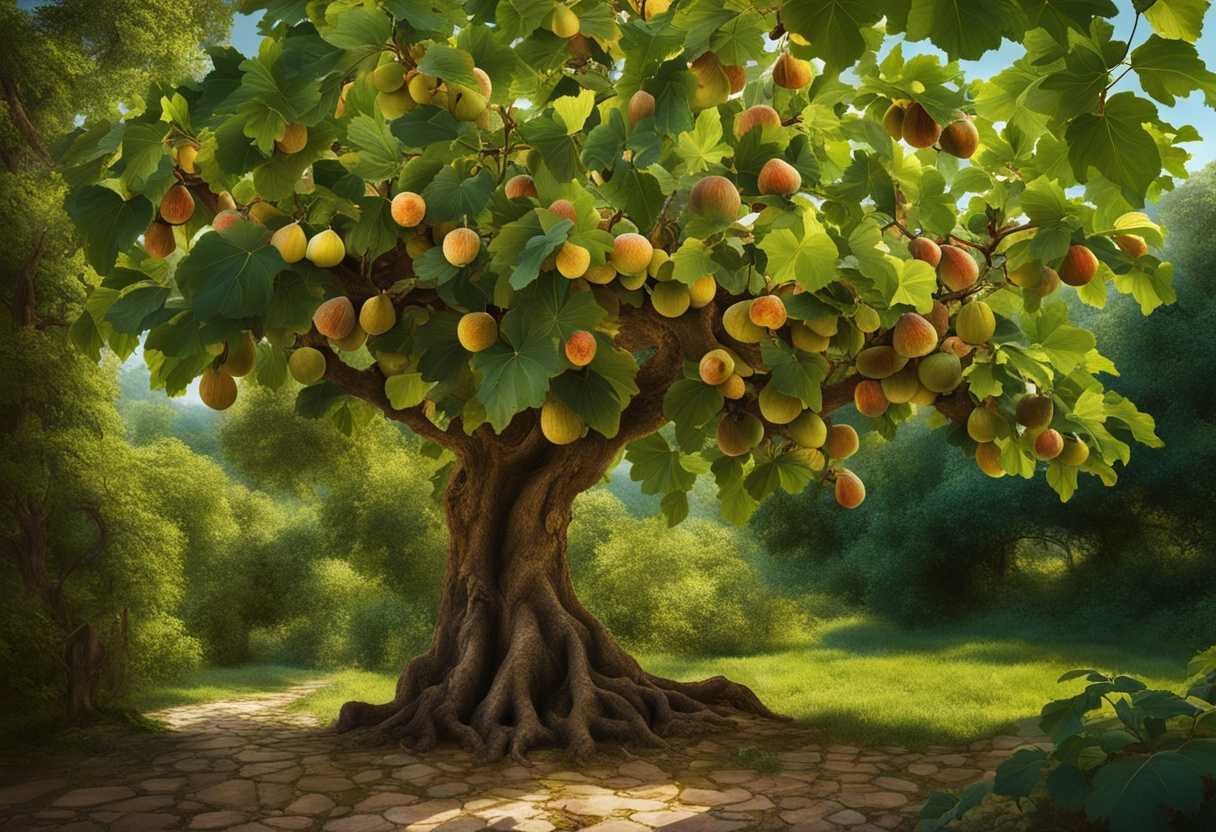
In the Bible, figs serve as a multifaceted symbol that encompasses themes of prosperity, restoration, and divine judgment. For instance, in Jeremiah 24, God presents a vision of two baskets of figs set before His temple, where the good figs symbolize the exiles from Judah whom He will preserve and restore. These good figs represent hope and the promise of future blessings, illustrating God’s mercy towards those who remain faithful. This association of figs with prosperity is further evidenced in the imagery of a fig tree representing abundance and stability, as seen in Micah 4:4, where people sit under their own vines and fig trees in peace, signifying a time of security and well-being under God’s favor.
Conversely, figs also convey warnings of judgment and the consequences of unfruitfulness. In Mark 11:12-14, the narrative of Jesus cursing the barren fig tree metaphorically highlights the expectation of fruitfulness among those who are called to be His followers. The tree, despite its lush appearance, offers no figs, symbolizing hypocrisy and spiritual barrenness. Here, the fig tree stands as a solemn reminder of the accountability believers have to bear spiritual fruit in their lives. Thus, the dual representation of figs in the biblical text underscores the complexity of divine interaction with humanity, embodying both the blessings promised to the faithful and the serious repercussions of spiritual negligence.
In addition to representing blessings and judgment, figs in the Bible also illustrate themes of wisdom and human vulnerability. In Genesis 3:7, after Adam and Eve eat the forbidden fruit, they realize their nakedness and sew fig leaves together to cover themselves, symbolizing both their newfound awareness and their attempt to mask their shame. This use of figs highlights the fragility of human nature and the lengths to which individuals go to shield themselves from truth and accountability. The fig leaves, crafted to provide cover, represent the fleeting attempts at self-salvation and the inherent need for divine grace that lies at the heart of humanity’s relationship with God.
Moreover, figs often serve as a potent metaphor for the state of the people of Israel. In Hosea 9:10, God compares Israel’s unfaithfulness to the early figs on a fig tree, which are often consumed quickly before they have a chance to mature. This imagery portrays the nation as one that has betrayed its covenant relationship with God, yielding unripe and unsatisfactory fruit. The emphasis on figs in both their fruitful and unfruitful states reflects the expectation of responsiveness and fidelity to God’s calling. Thus, the fig serves as a poignant reminder of how one’s actions, whether fruitful or barren, resonate within the overarching narrative of redemption and divine purpose in the biblical text.
Symbol of Prosperity and Abundance
Figs in the Bible often symbolize prosperity and abundance. The fig tree is frequently associated with a time of peace and plenty, where people can sit under its shade and enjoy its fruit. This imagery reflects a state of well-being and divine blessing, indicating that when the land is fruitful, it is a sign of God’s favor upon His people.
Representation of Spiritual Condition
Figs also serve as a metaphor for the spiritual condition of individuals and nations. The presence or absence of figs can illustrate the health of one’s faith or the moral state of a community. In this context, figs can signify the fruitfulness of a person’s life in relation to their obedience to God and adherence to His teachings, highlighting the importance of spiritual vitality.
Sign of Judgment and Warning
In certain biblical narratives, figs are used as a sign of judgment or warning. The withering of a fig tree can symbolize the consequences of unfaithfulness or disobedience to God. This serves as a reminder of the need for repentance and the urgency of returning to a right relationship with God, emphasizing that spiritual barrenness can lead to divine judgment.
How to Embrace Prosperity and Peace in Faith
Embracing prosperity and peace in faith is a beautiful journey that begins with a heart open to God’s abundant blessings. It’s essential to remember that true prosperity isn’t just about material wealth; it encompasses spiritual richness, emotional well-being, and strong relationships. Start by cultivating gratitude in your daily life—take a moment each day to reflect on the blessings you have, no matter how small. This practice shifts your focus from what you lack to the abundance that surrounds you. Additionally, immerse yourself in Scripture, allowing God’s promises of peace and provision to fill your heart and mind. Philippians 4:19 reminds us that “God will meet all your needs according to the riches of his glory in Christ Jesus.” As you deepen your relationship with Him through prayer and community, you’ll find that peace flows naturally from a faith grounded in trust. Remember, prosperity in faith is about aligning your desires with God’s will, and in doing so, you’ll discover a profound sense of peace that transcends circumstances.
Bible References to the Meaning of Figs:
Numbers 13:23-23: 23 And they came to the Valley of Eshcol and cut down from there a branch with a single cluster of grapes, and they carried it on a pole between two of them; they also brought some pomegranates and figs.
Deuteronomy 8:7-8: 7 For the Lord your God is bringing you into a good land, a land of brooks of water, of fountains and springs, flowing out in the valleys and hills,
8 a land of wheat and barley, of vines and fig trees and pomegranates, a land of olive trees and honey,
1 Kings 4:25-25: 25 And Judah and Israel lived in safety, from Dan even to Beersheba, every man under his vine and under his fig tree, all the days of Solomon.
2 Kings 18:31-31: 31 Do not listen to Hezekiah, for thus says the king of Assyria: ‘Make your peace with me and come out to me. Then each one of you will eat of his own vine, and each one of his own fig tree, and each one of you will drink the water of his own cistern,
Isaiah 34:4-4: 4 All the host of heaven shall rot away, and the skies roll up like a scroll. All their host shall fall, as leaves fall from the vine, like leaves falling from the fig tree.
Jeremiah 24:1-10: 1 After Nebuchadnezzar king of Babylon had taken into exile from Jerusalem Jeconiah the son of Jehoiakim, king of Judah, together with the officials of Judah, the craftsmen, and the metal workers, and had brought them to Babylon, the Lord showed me this vision: behold, two baskets of figs placed before the temple of the Lord.
2 One basket had very good figs, like first-ripe figs, but the other basket had very bad figs, so bad that they could not be eaten.
3 Then the Lord said to me, “What do you see, Jeremiah?” I said, “Figs, the good figs very good, and the bad figs very bad, that cannot be eaten due to their badness.”
4 Then the word of the Lord came to me:
5 “Thus says the Lord, the God of Israel: Like these good figs, so I will regard as good the exiles from Judah, whom I have sent away from this place to the land of the Chaldeans.”
6 I will set my eyes on them for good, and I will bring them back to this land. I will build them up, and not tear them down; I will plant them, and not uproot them.
7 I will give them a heart to know that I am the Lord, and they shall be my people and I will be their God, for they shall return to me with their whole heart.
8 “But thus says the Lord: Like the bad figs that are so bad they cannot be eaten, so will I treat Zedekiah the king of Judah, his officials, the remnant of Jerusalem who remain in this land, and those who dwell in the land of Egypt.
9 I will make them a horror to all the kingdoms of the earth, to be a reproach, a byword, a taunt, and a curse in all the places where I shall drive them.
10 And I will send sword, famine, and pestilence upon them, until they shall be utterly destroyed from the land that I gave to them and their fathers.
Hosea 9:10-10: 10 Like grapes in the wilderness, I found Israel. Like the first fruit on the fig tree in its first season, I saw your fathers. But they came to Baal-peor and consecrated themselves to the thing of shame, and became detestable like the thing they loved.
Joel 1:7-7: 7 He has laid waste my vine and splintered my fig tree; he has stripped it bare and cast it away; its branches are made white.
Amos 4:9-9: 9 “I struck you with blight and mildew;
your many gardens and your vineyards,
your fig trees and your olive trees the locust devoured;
yet you did not return to me,”
declares the Lord.
Micah 4:4-4: 4 But they shall sit every man under his vine and under his fig tree, and no one shall make them afraid, for the mouth of the Lord of hosts has spoken.
Nahum 3:12-12: 12 All your fortresses are like fig trees
with first-ripe figs—
if shaken they fall
into the mouth of the eater.
Matthew 21:18-22: 18 In the morning, as he was returning to the city, he became hungry.
19 And seeing a fig tree by the wayside, he went to it and found nothing on it but only leaves. And he said to it, “May no fruit ever come from you again!” And the fig tree withered at once.
20 When the disciples saw it, they marveled, saying, “How did the fig tree wither at once?”
21 And Jesus answered them, “Truly, I say to you, if you have faith and do not doubt, you will not only do what has been done to the fig tree, but even if you say to this mountain, ‘Be taken up and thrown into the sea,’ it will happen.
22 And whatever you ask in prayer, you will receive, if you have faith.
Mark 11:12-14: 12 On the following day, when they came from Bethany, he was hungry.
13 And seeing in the distance a fig tree in leaf, he went to see if he could find anything on it. When he came to it, he found nothing but leaves, for it was not the season for figs.
14 And he said to it, “May no one ever eat fruit from you again.” And his disciples heard it.
Luke 13:6-9: 6 And he told this parable: “A man had a fig tree planted in his vineyard, and he came seeking fruit on it and found none.
7 And he said to the vinedresser, ‘Look, for three years now I have come seeking fruit on this fig tree, and I find none. Cut it down. Why should it use up the ground?’
6 And he told this parable: “A man had a fig tree planted in his vineyard, and he came seeking fruit on it and found none.
9 Then if it should bear fruit next year, well and good; but if not, you can cut it down.’”
James 3:12-12: 12 Can a fig tree, my brothers, bear olives, or a grapevine produce figs? Neither can a salt pond yield fresh water.
Revelation 6:13-13: 13 and the stars of the sky fell to the earth as the fig tree sheds its winter fruit when shaken by a gale.

Reverend Michael Johnson is an experienced Church Minister with a profound expertise in spirituality and guidance. With a serene presence and a compassionate heart, he has faithfully served his congregation for over 20 years, leading them on a spiritual journey towards inner peace and enlightenment. Reverend Johnson’s extensive knowledge of religious philosophies and profound understanding of human nature have made him a trusted confidant and mentor to many, as he seamlessly weaves his profound wisdom into life teachings. Reverend Johnson’s calming demeanor and empathetic nature continue to uplift and heal souls, nurturing a sense of unity and tranquility within his community.