
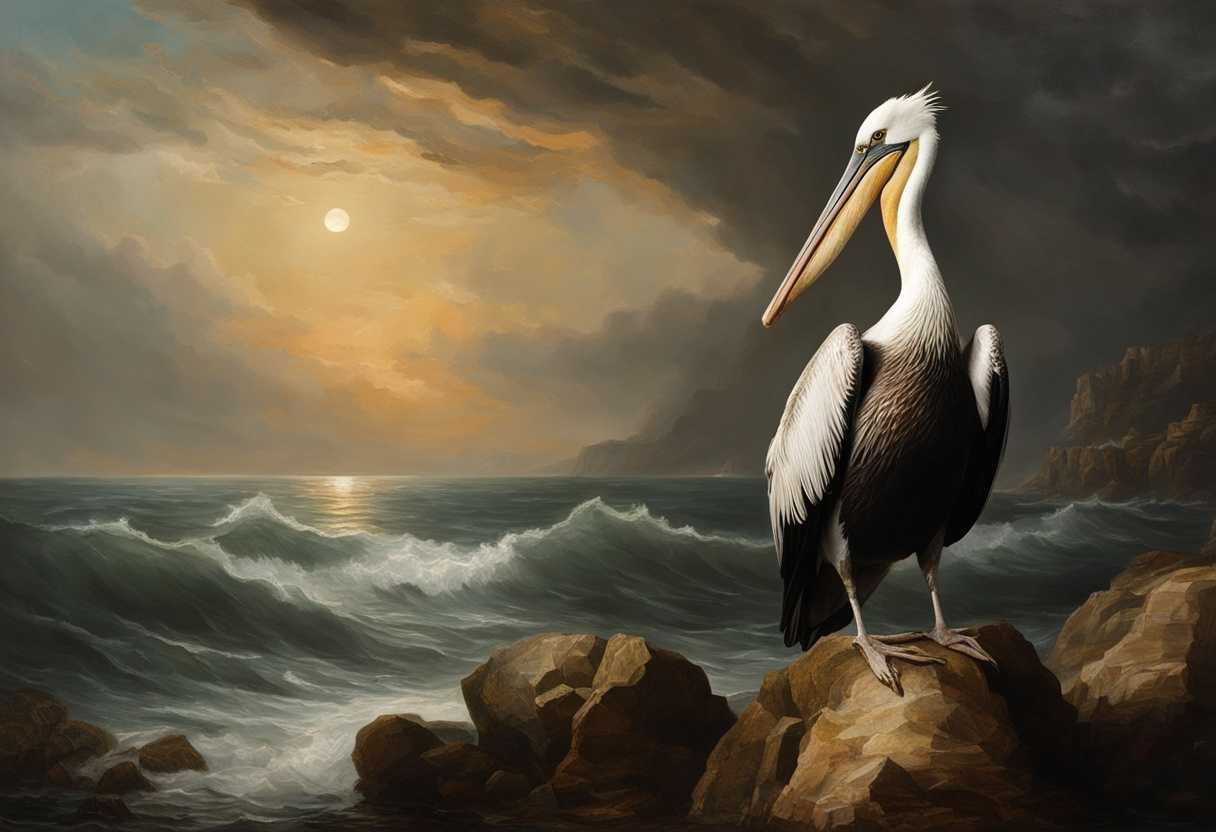
In the Bible, the pelican is mentioned in Psalm 102:6, where it symbolizes desolation and loneliness. The reference reflects the deep sorrow and emptiness felt by the psalmist, associating the pelican with a state of mourning and isolation.
Scripture
13 “And these you shall detest among the birds; they shall not be eaten; they are detestable: the eagle, the bearded vulture, the black vulture,
14 the kite, the falcon of any kind;
15 Every swarming thing that swarms on the ground is detestable; it shall not be eaten.
16 the ostrich, the nighthawk, the sea gull, the hawk according to its kind,
17 And the little owl and the cormorant and the short-eared owl,
18 the stork, the heron of any kind, the hoopoe, and the bat.
19 the stork, the heron of any kind, the hoopoe, and the bat.
Biblical Significance of the Pelican
The imagery of the pelican in Psalm 102:6 serves as a poignant symbol of desolation and solitude. The verse states, “I am like a pelican of the wilderness; I am like an owl of the desert,” encapsulating the profound loneliness and sorrow experienced by the psalmist. This bird, often associated with arid and lifeless landscapes, represents not only personal grief but also the broader themes of abandonment and spiritual desolation within the human experience. This symbolic association encourages readers to reflect on their own periods of despair and reminds them that such feelings are acknowledged and articulated within sacred texts.
Furthermore, the pelican’s association with mourning extends beyond mere isolation; it evokes a sense of yearning for restoration and hope amid despondency. In ancient context, birds like the pelican, which were either scavengers or symbolic of the emptiness found in barren landscapes, can be interpreted as a call to acknowledge the reality of suffering while also seeking solace and redemption in faith. The depiction of the pelican, paralleling the sense of mourning, mirrors other biblical references where desolation leads to reflection and ultimately to a deeper reliance on God. For instance, the Book of Lamentations similarly explores themes of sorrow and the longing for divine intervention, suggesting that through acknowledgment of one’s desolation, one may find the pathway back to hope and spiritual renewal.
The pelican also carries significant symbolic weight in biblical literature beyond its mention in Psalm 102. This bird, often linked with themes of sacrifice and mourning, can be seen as a metaphor for loss and the restoration of the soul. In various texts, the concept of animals, particularly those associated with harsh environments, encapsulates the struggle between life and death, despair and hope. The pelican, in its capacity as a scavenger, evokes images of the cycle of existence, where death ultimately leads to regeneration, thus prompting believers to contemplate the necessity of suffering as a precursor to spiritual resilience.
Additionally, the pelican’s rarity in lush settings draws attention to the stark contrasts within the human condition—between life in abundance and life in barrenness. This dichotomy echoes themes woven throughout scriptures where nature reflects the emotional and spiritual states of humanity. For example, the imagery of desolate birds can be related to prophetic literature, wherein prophets express anguish over the state of the people and the land. These elements remind readers that desolation is often an invitation to reconsider one’s relationship with God, encouraging a yearning for connection and healing. The pelican, with its stark associations, ultimately serves as a reminder of the depths of both despair and the potential for renewal through divine grace.
Symbol of Desolation and Mourning
In biblical literature, the pelican often represents desolation and mourning. Its solitary nature and association with barren places evoke feelings of loneliness and abandonment. This imagery can be interpreted as a reflection of the human condition, particularly in times of suffering or spiritual desolation. The pelican serves as a reminder of the emotional and spiritual struggles that individuals may face, highlighting the need for divine comfort and restoration.
Representation of Sacrifice and Nourishment
The pelican is also seen as a symbol of sacrifice and nourishment. In some interpretations, the bird is thought to feed its young with its own blood, which can be viewed as a metaphor for selflessness and the ultimate act of love. This imagery resonates with the themes of sacrifice found throughout the Bible, particularly in relation to Christ’s sacrifice for humanity. The pelican thus embodies the idea of nurturing and providing for others, reflecting the broader biblical principles of love, care, and self-giving.
Connection to Spiritual Renewal
Additionally, the pelican can symbolize spiritual renewal and hope. In the context of its habitat, often found in desolate areas, the pelican’s presence can signify the possibility of new life and rejuvenation even in the most barren circumstances. This aspect of the pelican serves as a reminder that, despite feelings of despair, there is always the potential for spiritual growth and renewal through faith and divine intervention. The pelican’s ability to thrive in harsh environments can inspire believers to seek hope and restoration in their own lives.
How to Embrace Hope Through Faith and Fellowship
Embracing hope through faith and fellowship is a transformative journey that can deeply enrich your Christian walk. Start by nurturing your personal relationship with God through prayer and scripture, allowing His promises to fill your heart with assurance and peace. Remember, faith is not just a solitary endeavor; it flourishes in community. Surround yourself with fellow believers who uplift and encourage you, sharing in both joys and struggles. Engage in small groups or church activities where you can openly discuss your challenges and victories, fostering a sense of belonging and support. As you share your experiences and listen to others, you’ll find that hope becomes a collective strength, reminding you that you are never alone in your journey. Together, through faith and fellowship, you can cultivate a resilient hope that shines brightly, even in the darkest of times.
Bible References to Pelican Symbolism:
Deuteronomy 14:11-18: 11 You may eat all clean birds.
12 But these are the ones that you shall not eat: the eagle, the bearded vulture, the black vulture,
13 and the glede, the kite, the falcon, all kinds of hawks,
14 And every raven according to its kind,
15 the pig, because it parts the hoof and is cloven-footed but does not chew the cud, is unclean to you.
16 You shall not eat any abomination.
17 the little owl, the cormorant, the short-eared owl,
18 the stork, the heron of any kind, the hoopoe, and the bat.
Psalm 102:1-11: 1 Hear my prayer, O Lord; let my cry come to you!
2 Do not hide your face from me in the day of my distress! Incline your ear to me; answer me speedily in the day when I call!
3 For my days pass away like smoke, and my bones burn like a furnace.
4 My heart is struck down like grass and has withered; I forget to eat my bread.
5 Because of my groaning I am like a desert owl, like an owl of the waste places.
6 I am like a desert owl of the wilderness, like an owl of the waste places.
7 I lie awake; I am like a lonely sparrow on the housetop.
8 My enemies taunt me all the day; those who deride me use my name for a curse.
9 For I eat ashes like bread and mingle tears with my drink.
10 Because of your indignation and your anger; for you have lifted me up and thrown me down.
11 My days are like an evening shadow; I wither away like grass.
Isaiah 34:8-15: 8 For the Lord has a day of vengeance,
a year of recompense for the cause of Zion.
9 And the streams of Edom shall be turned into pitch,
and her soil into sulfur;
her land shall become burning pitch.
10 Night and day it shall not be quenched; its smoke shall go up forever. From generation to generation it shall lie waste; none shall pass through it forever and ever.
11 But the hawk and the porcupine shall possess it,
the owl and the raven shall dwell in it.
He shall stretch the line of confusion over it,
and the plumb line of emptiness.
12 Her nobles shall be no more,
nor shall kings be proclaimed there;
all her princes are gone.
13 Thorns shall grow over its strongholds, nettles and thistles in its fortresses. It shall be a haunt of jackals, an abode for ostriches.
14 And wild animals shall meet with hyenas; the wild goat shall cry to his fellow; indeed, there the night bird settles and finds for herself a resting place.
15 There the owl nests and lays and hatches and gathers her young in her shadow; indeed, there the hawks are gathered, each one with her mate.
Zephaniah 2:13-15: 13 And he will stretch out his hand against the north and destroy Assyria,
and he will make Nineveh a desolation,
a dry waste like the desert.
14 Herds shall lie down in her midst,
all kinds of beasts;
even the owl and the hedgehog
shall lodge in her capitals;
a voice shall hoot in the window;
devastation will be on the threshold;
for her cedar work will be laid bare.
15 This is the exultant city that lived securely, that said in her heart, “I am, and there is no one else.” What a desolation she has become, a lair for wild beasts! Everyone who passes by her hisses and shakes his fist.

Reverend Michael Johnson is an experienced Church Minister with a profound expertise in spirituality and guidance. With a serene presence and a compassionate heart, he has faithfully served his congregation for over 20 years, leading them on a spiritual journey towards inner peace and enlightenment. Reverend Johnson’s extensive knowledge of religious philosophies and profound understanding of human nature have made him a trusted confidant and mentor to many, as he seamlessly weaves his profound wisdom into life teachings. Reverend Johnson’s calming demeanor and empathetic nature continue to uplift and heal souls, nurturing a sense of unity and tranquility within his community.