
In the Bible, a talent is a unit of weight and measure, often associated with a significant sum of money. It is notably mentioned in the Parable of the Talents (Matthew 25:14-30), symbolizing the gifts and abilities given by God to individuals, which they are expected to use and multiply for His glory.
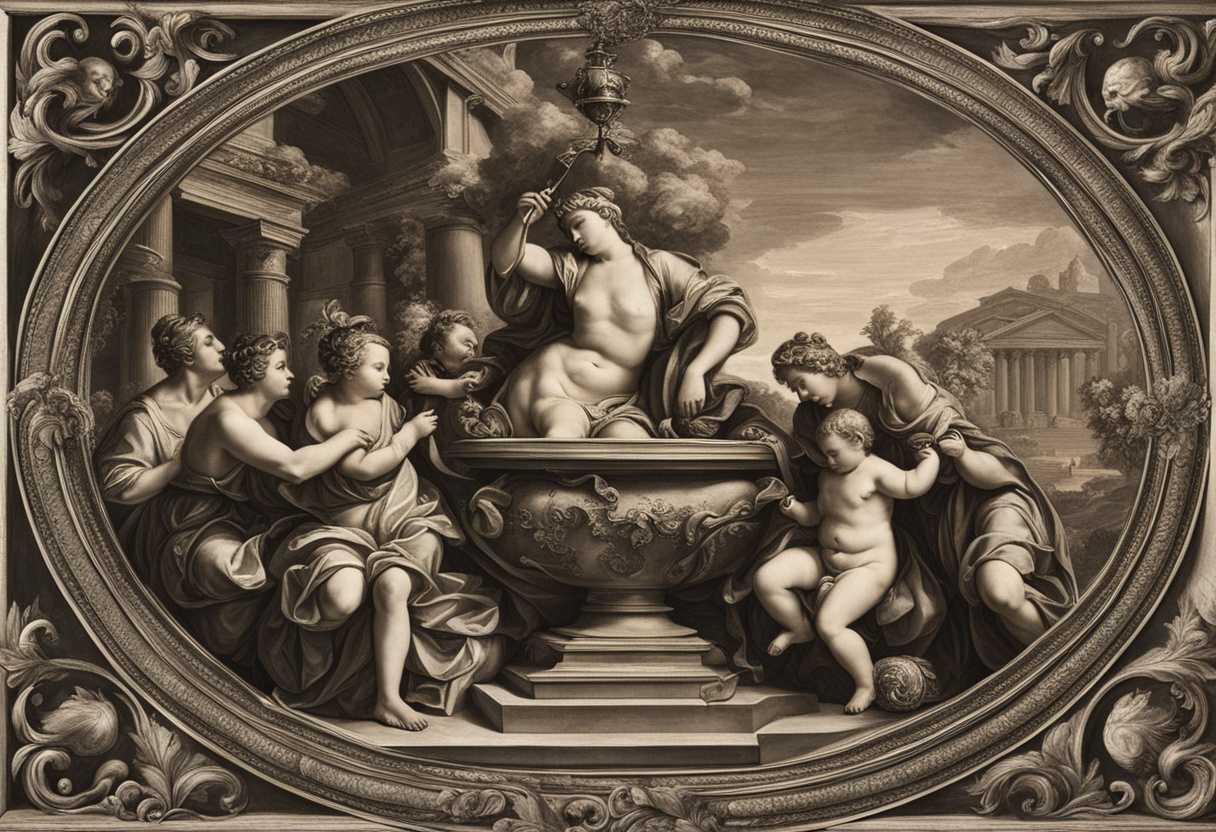
Scripture
14 “For it will be like a man going on a journey, who called his servants and entrusted to them his property.
15 To one he gave five talents, to another two, to another one, to each according to his ability. Then he went away.
16 He who had received the five talents went at once and traded with them, and he made five talents more.
17 So also he who had received the two talents made two talents more.
18 But he who had received the one talent went and dug in the ground and hid his master’s money.
19 Now after a long time the master of those servants came and settled accounts with them.
20 And he who had received the five talents came forward, bringing five talents more, saying, ‘Master, you delivered to me five talents; here, I have made five talents more.’
21 His master said to him, ‘Well done, good and faithful servant. You have been faithful over a little; I will set you over much. Enter into the joy of your master.’
22 And he also who had received the one talent came forward, saying, ‘Master, I knew you to be a hard man, reaping where you did not sow, and gathering where you scattered no seed,
23 His master said to him, ‘Well done, good and faithful servant. You have been faithful over a little; I will set you over much. Enter into the joy of your master.’
24 He also who had received the one talent came forward, saying, ‘Master, I knew you to be a hard man, reaping where you did not sow, and gathering where you scattered no seed,
25 so I was afraid, and I went and hid your talent in the ground. Here, you have what is yours.’
26 But his master answered him, ‘You wicked and slothful servant! You knew that I reap where I have not sown and gather where I scattered no seed?
27 Then you ought to have invested my money with the bankers, and at my coming I should have received what was my own with interest.
28 So take the talent from him and give it to him who has the ten talents.
29 For to everyone who has will more be given, and he will have an abundance. But from the one who has not, even what he has will be taken away.
30 And cast the worthless servant into the outer darkness. In that place there will be weeping and gnashing of teeth.
Biblical Meaning of Talent Explained
In the Bible, the concept of a talent extends beyond its literal meaning as a unit of weight or money to embody the gifts, skills, and opportunities bestowed upon individuals by God. In the Parable of the Talents found in Matthew 25:14-30, Jesus illustrates the importance of stewardship and accountability in the use of these gifts. The servants in the parable are entrusted with different amounts of talents, and their responses to this responsibility reflect their faithfulness and diligence. The servants who invest and multiply their talents are rewarded, while the one who buries his talent out of fear faces condemnation. This narrative highlights that God expects His followers not only to recognize their abilities but also to actively cultivate and expand them for the benefit of the Kingdom.
Moreover, the broader meaning of talents in the biblical context encourages believers to acknowledge that every gift—whether spiritual, intellectual, or practical—serves a purpose in glorifying God and benefiting others. In Romans 12:6-8, Paul emphasizes that different members of the body of Christ have varying gifts, urging them to use these gifts in alignment with their faith. The idea of talents, therefore, prompts introspection on how Christians utilize their unique abilities and resources, encouraging them to engage in service, ministry, and acts of love. Ultimately, the biblical message underscores that the rightful use of one’s talents not only reflects personal responsibility but also contributes to communal growth and the fulfillment of God’s purposes on Earth.
Throughout Scripture, the theme of utilizing one’s talents is woven into the broader narrative of stewardship and service to God and others. The parable of the Good Samaritan, for example, exemplifies how gifts and talents manifest in acts of compassion and kindness. This sentiment echoes the call for believers to exert their unique abilities in aiding those in need, demonstrating that talents are not merely for personal gain but should be employed for the benefit of others. The actions of the Samaritan act as a model for Christians, illustrating that possessing certain talents—like mercy, nurturing, or the ability to provide—should lead to tangible expressions of love and support to the marginalized and suffering.
Additionally, the metaphorical notion of talents finds resonance in various biblical figures whose stories reflect the utilization of their God-given abilities to fulfill divine purposes. For instance, Joseph’s interpretative skills enabled him to rise from prison to prominence in Egypt, ultimately using his wisdom to save many from famine. Similarly, Esther’s strategic influence brought about the deliverance of her people during a critical moment, highlighting that embracing and applying one’s talents can result in significant impacts within a community or even a nation. Ultimately, these narratives serve as reminders that recognizing and engaging one’s talents is pivotal not only for personal spiritual growth but also for fulfilling the calling to serve God’s plan and uplift those around us.
The Concept of Stewardship
In the Bible, the term “talent” often symbolizes the idea of stewardship, which emphasizes the responsibility individuals have to manage and utilize the gifts and resources entrusted to them by God. This broader meaning encourages believers to recognize their abilities, time, and possessions as divine gifts that should be used wisely and for the benefit of others. The call to stewardship reflects a deeper understanding of one’s role in the community and the importance of contributing to the greater good.
The Value of Individual Gifts
Another significant meaning of talent in the biblical context is the recognition of individual gifts and abilities. Each person is uniquely created with specific skills, talents, and spiritual gifts that serve a purpose within the body of Christ. This understanding fosters a sense of belonging and encourages believers to embrace their uniqueness, using their talents to fulfill their God-given potential and to support the mission of the church and the community.
The Call to Action
The biblical concept of talent also conveys a call to action, urging individuals to actively engage in their faith and to put their abilities to work. This meaning emphasizes that faith is not merely a passive belief but requires active participation and effort. Believers are encouraged to step out in faith, take risks, and use their talents to serve others, spread the Gospel, and make a positive impact in the world. This call to action reinforces the idea that faith and works are intertwined, and that using one’s talents is a vital expression of one’s faith.
How to Embrace Stewardship for Better Christian Living
Embracing stewardship is a transformative journey that invites us to recognize that everything we have—our time, talents, and treasures—ultimately belongs to God. As you seek to live a better Christian life, consider how you can actively manage these gifts in a way that honors Him. Start by reflecting on your daily choices: Are you using your time to serve others, perhaps through volunteering or simply being present for a friend in need? Are you sharing your talents, whether it’s through teaching, music, or acts of kindness, to uplift your community? And when it comes to your resources, think about how you can give generously, not just to your church but also to causes that align with your values. Remember, stewardship isn’t just about giving; it’s about cultivating a heart of gratitude and responsibility, recognizing that in caring for what God has entrusted to you, you are participating in His greater plan. As you embrace this mindset, you’ll find that your faith deepens, your relationships flourish, and your life becomes a beautiful reflection of Christ’s love.
Bible References to Meaning of Talent:
Luke 19:11-27: 11 As they heard these things, he proceeded to tell a parable, because he was near to Jerusalem, and because they supposed that the kingdom of God was to appear immediately.
He said therefore, “A nobleman went into a far country to receive for himself a kingdom and then return.
13 Calling ten of his servants, he gave them ten minas, and said to them, ‘Engage in business until I come.’
14 But his citizens hated him and sent a delegation after him, saying, ‘We do not want this man to reign over us.’
15 When he returned, having received the kingdom, he ordered these servants to whom he had given the money to be called to him, that he might know what they had gained by doing business.
19 He said therefore, “A nobleman went into a far country to receive for himself a kingdom and then return.
17 And he said to him, ‘Well done, good servant! Because you have been faithful in a very little, you shall have authority over ten cities.’
18 And the second came, saying, ‘Lord, your mina has made five minas.’
19 He said to him, ‘And you are to be over five cities.’
20 Then another came, saying, ‘Lord, here is your mina, which I kept laid away in a handkerchief;
21 for I was afraid of you, because you are a severe man. You take what you did not deposit, and reap what you did not sow.’
22 He said to him, ‘I will condemn you with your own words, you wicked servant! You knew that I was a severe man, taking what I did not deposit and reaping what I did not sow.
23 Why then did you not put my money in the bank, and at my coming I might have collected it with interest?’
24 And he said to those who stood by, ‘Take the mina from him, and give it to the one who has the ten minas.’
25 ‘And they said to him, “Lord, he has ten minas!”‘
26 ‘I tell you that to everyone who has, more will be given, but from the one who has not, even what he has will be taken away.’
27 But as for these enemies of mine, who did not want me to reign over them, bring them here and slaughter them before me.’”
Exodus 31:1-11: 1 The Lord said to Moses,
2 “See, I have called by name Bezalel the son of Uri, son of Hur, of the tribe of Judah,”
3 and I have filled him with the Spirit of God, with ability and intelligence, with knowledge and all craftsmanship,
4 to devise artistic designs, to work in gold, silver, and bronze,
5 to cut stones for setting, and to carve wood, to work in every craft.
6 And behold, I have appointed with him Oholiab, the son of Ahisamach, of the tribe of Dan. And I have given to all able men ability, that they may make all that I have commanded you:
7 the tent of meeting, the ark of the testimony, and the mercy seat that is on it, and all the furnishings of the tent,
8 the table with its poles and all its utensils, and the bread of the Presence;
9 It shall be a statute forever throughout your generations, in all your dwelling places, that you eat neither fat nor blood.”
10 the finely worked garments, the holy garments for Aaron the priest, and the garments of his sons, for their service as priests,
11 to be skilled, in working stones for setting, and in carving wood, for work in every skilled craft.
1 Kings 7:13-51: 13 And King Solomon sent and brought Hiram from Tyre.
14 He was the son of a widow of the tribe of Naphtali, and his father was a man of Tyre, a worker in bronze. And he was full of wisdom, understanding, and skill for making any work in bronze. He came to King Solomon and did all his work.
15 He cast two pillars of bronze. Eighteen cubits was the height of one pillar, and a line of twelve cubits measured its circumference. It was hollow, and its thickness was four fingers. The second pillar was the same.
16 He also made two capitals of cast bronze to set on the tops of the pillars. The height of the one capital was five cubits, and the height of the other capital was five cubits.
17 There were lattices of checker work with wreaths of chain work for the capitals on the tops of the pillars, a lattice for the one capital and a lattice for the other capital.
18 So he made the pillars, and two rows around on the one network to cover the capitals that were on the top of the pomegranates. And so he did for the other capital.
19 So he set the pillars at the entrance of the temple, one on the south, the other on the north.
20 There were capitals on the two pillars, above the rounded projection next to the latticework.
21 And he set up the pillars at the vestibule of the temple. He set up the pillar on the south and called its name Jachin, and he set up the pillar on the north and called its name Boaz.
22 And on the tops of the pillars was lily-work. Thus the work of the pillars was finished.
23 Then he made the sea of cast metal. It was round, ten cubits from brim to brim, and five cubits high, and a line of thirty cubits measured its circumference.
24 And under the brim of it round about there were knops, compassing it, ten in a cubit, compassing the sea all around. The knops were cast in two rows when it was cast.
25 It stood on twelve oxen, three facing north, three facing west, three facing south, and three facing east. The sea was set on them, and all their rear parts were inward.
26 It was a handbreadth thick, and its brim was made like the brim of a cup, like the flower of a lily. It held two thousand baths.
27 He made ten stands of bronze. Each stand was four cubits long, four cubits wide, and three cubits high.
28 And the four wheels were underneath the panels. The axles of the wheels were of one piece with the panels, and the height of a wheel was a cubit and a half.
29 And on the panels that were set in the frames were lions, oxen, and cherubim. Upon the frames, both above and below the lions and oxen, there were wreaths of beveled work.
30 And each stand had four bronze wheels and axles of bronze, and at the four corners were supports for a basin. The supports were cast with wreaths at the side of each.
31 Its opening was within a crown that projected upward one cubit from it. Its opening was round, as a pedestal is made, a cubit and a half deep. And also on its opening there were engravings, and their panels were square, not round.
32 And the four wheels were underneath the panels. The axles of the wheels were of one piece with the stands, and the height of a wheel was a cubit and a half.
33 The wheels were made like a chariot wheel; their axles, their rims, their spokes, and their hubs were all cast.
34 And there were four supports at the four corners of each stand. The supports were of one piece with the stands.
35 He set up the stands on the right side of the house, and when he had set up the sea on the right side of the house, the south side of the house was finished.
36 For on the plates of its stays and on its panels, he carved cherubim, lions, and palm trees, according to the space of each, with wreaths all around.
37 He made the ten stands of bronze. Each stand was four cubits long, four cubits wide, and three cubits high.
38 He made ten basins of bronze. Each basin held forty baths, each basin measured four cubits, and there was a basin for each of the ten stands.
39 He set the basin between the sea and the landings; at the southeast corner.
40 Hiram also made the pots, the shovels, and the basins. So Hiram finished all the work that he did for King Solomon on the house of the Lord:
41 The two pillars, the two bowls of the capitals that were on the tops of the pillars, and the two latticeworks to cover the two bowls of the capitals that were on the tops of the pillars;
42 the four hundred pomegranates for the two networks, two rows of pomegranates for each network to cover the two bowls of the capitals that were on the tops of the pillars;
43 And the ten stands, and the ten basins on the stands;
44 and the one sea, twelve oxen underneath it.
45 and the pots, the shovels, and the basins. All these vessels that Hiram made for King Solomon for the house of the Lord were of burnished bronze.
46 In the plain of the Jordan the king cast them, in the clay ground between Succoth and Zarethan.
47 Solomon left all the vessels unweighed, because there were so many of them; the weight of the bronze was not ascertained.
48 Solomon also made all the vessels that were in the house of the Lord: the golden altar, the golden table for the bread of the Presence,
49 the lampstands of pure gold with their lamps, to burn before the inner sanctuary according to the rule;
50 the cups, snuffers, basins, dishes for incense, and fire pans, of pure gold; and the sockets of gold, for the doors of the innermost part of the house, the Most Holy Place, and for the doors of the nave of the temple.
51 Thus all the work that King Solomon did on the house of the Lord was finished. And Solomon brought in the things that David his father had dedicated, the silver, the gold, and the vessels, and stored them in the treasuries of the house of the Lord.
2 Chronicles 2:1-18: 1 Now Solomon purposed to build a temple for the name of the Lord, and a royal palace for himself.
2 And Solomon assigned 70,000 men to bear burdens and 80,000 to quarry in the hill country, and 3,600 to oversee them.
3 And Solomon sent word to Hiram the king of Tyre: “As you dealt with David my father and sent him cedar to build himself a house to dwell in, so deal with me.
4 Behold, I am about to build a house for the name of the Lord my God and dedicate it to him for the burning of incense of sweet spices before him, and for the regular arrangement of the showbread, and for burnt offerings morning and evening, on the Sabbaths and the new moons and the appointed feasts of the Lord our God, as ordained forever for Israel.
5 The house that I am to build will be great, for our God is greater than all gods.
6 But who is able to build him a house, since heaven, even highest heaven, cannot contain him? Who am I to build a house for him, except as a place to make offerings before him?
7 Send me also cedar, cypress, and algum timber from Lebanon, for I know that your servants know how to cut timber in Lebanon. And my servants will be with your servants,
8 Send me also cedar, cypress, and algum timber from Lebanon, for I know that your servants know how to cut timber in Lebanon. And my servants will be with your servants,
9 And who among the wise men of Solomon’s time can interpret the meaning of the king’s words?
10 And see that you have with you the skilled men, whom I have assigned to work with you in building the house for my name.
11 Then Hiram the king of Tyre answered in a letter that he sent to Solomon, “Because the Lord loves his people, he has made you king over them.”
12 Hiram also said, “Blessed be the Lord God of Israel, who made heaven and earth, who has given King David a wise son, who has discretion and understanding, who will build a temple for the Lord and a royal palace for himself.
13 And now I have sent a skilled man, who has understanding, Huram-abi,
14 the son of a woman of the daughters of Dan, and his father was a man of Tyre. He is trained to work in gold, silver, bronze, iron, stone, and wood, and in purple, blue, and crimson fabrics and fine linen, and to do all sorts of engraving and execute any design that may be assigned him, with your craftsmen, the craftsmen of my lord, David your father.
15 Now therefore the wheat and barley, oil and wine, of which my lord has spoken, let him send to his servants.
16 And we will cut whatever timber you need from Lebanon and bring it to you in rafts by sea to Joppa, so that you may take it up to Jerusalem.”
17 Then Solomon counted all the resident aliens who were in the land of Israel, after the census of them that David his father had taken, and there were found 153,600.
18 And he set seventy thousand of them to bear burdens and eighty thousand to quarry in the hill country, and three thousand six hundred to oversee them.
Romans 12:3-8: 3 For by the grace given to me I say to everyone among you not to think of himself more highly than he ought to think, but to think with sober judgment, each according to the measure of faith that God has assigned.
4 For as in one body we have many members, and the members do not all have the same function,
5 so we, though many, are one body in Christ, and individually members one of another.
6 Having gifts that differ according to the grace given to us, let us use them: if prophecy, in proportion to our faith;
7 if service, in our serving; the one who teaches, in his teaching;
8 the one who exhorts, in his exhortation; the one who contributes, in generosity; the one who leads, with zeal; the one who does acts of mercy, with cheerfulness.
1 Corinthians 12:4-11: 4 Now there are varieties of gifts, but the same Spirit;
5 and there are varieties of service, but the same Lord;
6 and there are varieties of activities, but it is the same God who empowers them all in everyone.
7 To each is given the manifestation of the Spirit for the common good.
8 For to one is given through the Spirit the utterance of wisdom, and to another the utterance of knowledge according to the same Spirit,
9 to another faith by the same Spirit, to another gifts of healing by the one Spirit,
10 to another the working of miracles, to another prophecy, to another the ability to distinguish between spirits, to another various kinds of tongues, to another the interpretation of tongues.
11 All these are empowered by one and the same Spirit, who apportions to each one individually as he wills.
1 Peter 4:10-11: 10 As each has received a gift, use it to serve one another, as good stewards of God’s varied grace:
11 whoever speaks, as one who speaks oracles of God; whoever serves, as one who serves by the strength that God supplies—in order that in everything God may be glorified through Jesus Christ. To him belong glory and dominion forever and ever. Amen.

Reverend Ogunlade is a seasoned Church Minister with over three decades of experience in guiding and nurturing congregations. With profound wisdom and a serene approach, Reverend Ogunlade has carried out various pastoral duties, including delivering uplifting sermons, conducting religious ceremonies, and offering sage counsel to individuals seeking spiritual guidance. Their commitment to fostering harmony and righteousness within their community is exemplified through their compassionate nature, making them a beloved and trusted figure among the congregation.