
Biblical archaeology is significant as it provides empirical evidence that can corroborate historical narratives and events described in the Bible, enhancing our understanding of the cultural and historical context of ancient Israel and surrounding regions. It also aids in the interpretation of scripture by illuminating the social, political, and religious practices of the time.
Scripture
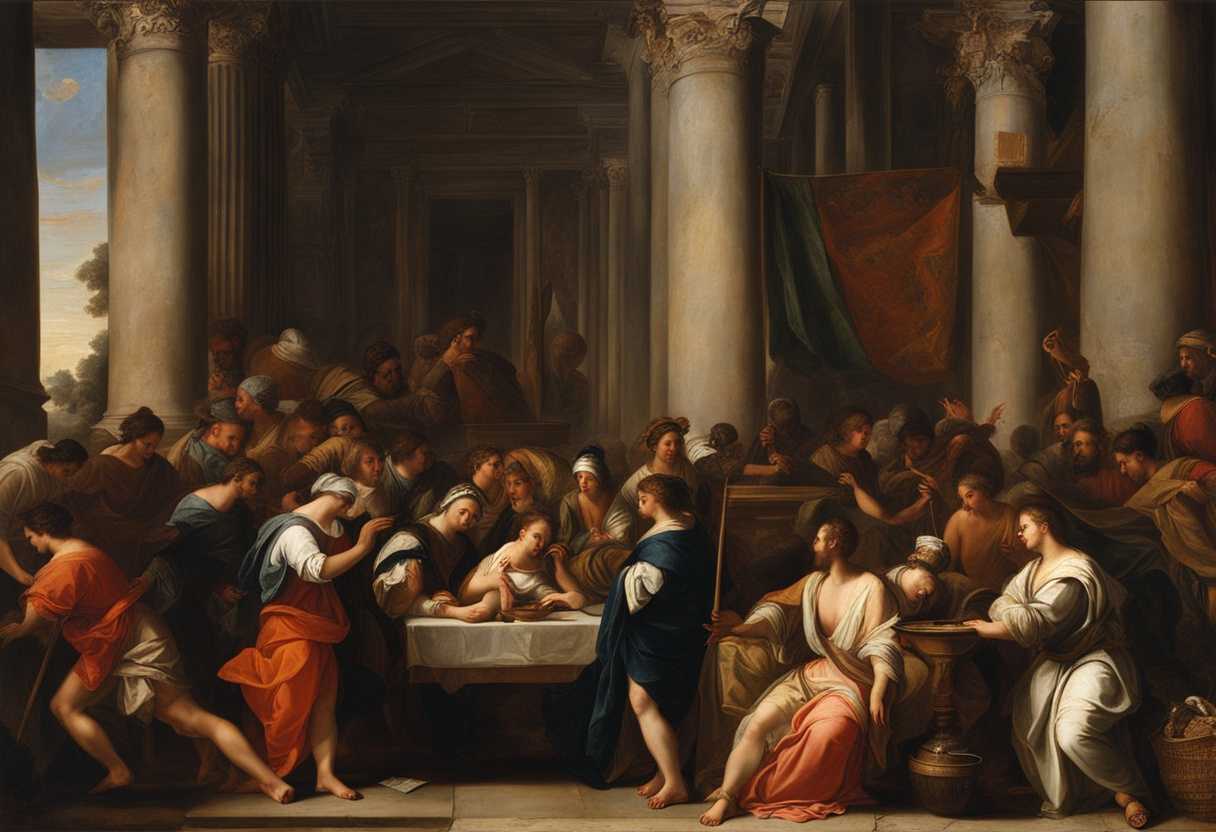
1 Sarah lived 127 years; these were the years of the life of Sarah.
2 And Sarah died at Kiriath-arba (that is, Hebron) in the land of Canaan, and Abraham went in to mourn for Sarah and to weep for her.
3 And Abraham rose up from before his dead and said to the Hittites,
4 “I am a sojourner and foreigner among you; give me property among you for a burying place, that I may bury my dead out of my sight.”
5 “And the Hittites answered Abraham,”
6 “Hear us, my lord; you are a prince of God among us. Bury your dead in the choicest of our tombs. None of us will withhold from you his tomb to hinder you from burying your dead.”
7 Abraham rose and bowed to the Hittites, the people of the land.
8 “He said to them, ‘If you are willing that I should bury my dead out of my sight, hear me and entreat for me Ephron the son of Zohar,’”
9 that he may give me the cave of Machpelah, which he owns; it is at the end of his field. For the full price let him give it to me in your presence as property for a burying place.”
10 Now Ephron was sitting among the Hittites, and Ephron the Hittite answered Abraham in the hearing of the Hittites, of all who went in at the gate of his city.
11 “No, my lord, hear me: I give you the field, and I give you the cave that is in it. In the sight of the sons of my people I give it to you. Bury your dead.”
12 And Abraham bowed before the people of the land.
13 and he said to Ephron in the hearing of the people of the land, “But if you will, hear me: I give the price of the field. Accept it from me, that I may bury my dead there.”
14 Ephron answered Abraham, “My lord, listen to me: a piece of land worth four hundred shekels of silver, what is that between you and me? Bury your dead.”
15 “My lord, listen to me; a piece of land worth four hundred shekels of silver, what is that between you and me? Bury your dead.”
16 Abraham listened to Ephron, and Abraham weighed out for Ephron the silver that he had named in the hearing of the Hittites, four hundred shekels of silver, according to the weights current among the merchants.
17 So the field of Ephron in Machpelah, which was to the east of Mamre, the field with the cave that was in it and all the trees that were in the field, throughout its whole area, was made over
18 to Abraham as a possession in the presence of the Hittites, before all who went in at the gate of his city.
19 After this, Abraham buried Sarah his wife in the cave of the field of Machpelah east of Mamre (that is, Hebron) in the land of Canaan.
20 the field and the cave that is in it were made over to Abraham as property for a burying place by the Hittites.
Significance of Biblical Archaeology in Scripture
Biblical archaeology serves as an invaluable tool for understanding the significance of the scripture through the historical and cultural contexts in which it was written. By uncovering artifacts, inscriptions, and ancient settlement patterns, archaeologists provide a concrete backdrop to the narratives found in the Bible, thus giving weight to events described in texts such as Exodus and the conquests in the Book of Joshua. For instance, the discovery of the Merneptah Stele, which references Israel in a 13th-century Egyptian context (see Exodus 3:10), offers evidence that bolsters the historical existence of the Israelite people as described in the biblical narrative. Furthermore, artifacts from archaeological digs, like those at Jericho, help to understand the significance and reality of sites mentioned in scripture, enabling a deeper grasp of their spiritual relevance.
Moreover, biblical archaeology encourages a more nuanced interpretation of scripture by shedding light on the customs, political structures, and religious practices of ancient civilizations. For example, the insights gained from the study of the ancient Near Eastern cultures can enhance our interpretation of passages in the Bible, such as those concerning the covenantal practices outlined in Deuteronomy (Deuteronomy 29:12) or the significance of sacrifices in Leviticus (Leviticus 1:5). The archaeological evidence contextualizes these practices within the broader spectrum of human history and cultural expression. Thus, biblical archaeology not only confirms historical events but also enriches our theological understanding and appreciation for the complexities of faith as lived in antiquity, emphasizing that the stories and teachings of the Bible resonate beyond mere words, rooted in real-world experiences and historical realities.
The term “archaeology” in Greek is derived from the word “ἀρχαιολογία” (archaiologia), which is a compound of “ἀρχαῖος” (archaios), meaning “ancient,” and “λόγος” (logos), meaning “study” or “discourse.” Thus, “archaiologia” can be translated as “the study of ancient things.” This etymological foundation highlights the discipline’s focus on uncovering and interpreting the material remains of past civilizations, particularly those that are significant to biblical history.
Scholars such as William G. Dever and Israel Finkelstein have emphasized the importance of archaeology in understanding the historical context of biblical texts. Dever, in his works, argues that archaeological findings can provide critical insights into the social, political, and religious practices of ancient peoples, thereby enriching our comprehension of the biblical narrative. Finkelstein, on the other hand, has focused on the archaeological evidence that challenges traditional interpretations of biblical history, advocating for a more nuanced understanding of the relationship between archaeology and the biblical account. Together, these scholars illustrate how the study of ancient artifacts and sites can illuminate the complexities of biblical history and its cultural backdrop.
The Intersection of Faith and History
Biblical archaeology serves as a bridge between faith and historical context, allowing believers to see the tangible evidence of biblical narratives. This intersection enhances the understanding of scripture by providing a backdrop against which the events of the Bible unfolded. Discoveries such as ancient artifacts, inscriptions, and architectural remains can affirm the historical accuracy of biblical accounts, thereby strengthening the faith of believers and offering a deeper appreciation of the text.
Cultural Context and Interpretation
Archaeological findings illuminate the cultural, social, and political environments of the biblical world. By examining the customs, practices, and daily life of ancient peoples, scholars can better interpret the messages and teachings found in scripture. This cultural context enriches the understanding of biblical laws, parables, and prophecies, allowing readers to grasp the intended meanings and implications for both the original audience and contemporary believers.
The Evolution of Biblical Understanding
The field of biblical archaeology has evolved over time, leading to new insights and interpretations of scripture. As archaeological methods and technologies advance, previously held assumptions about biblical texts may be challenged or refined. This ongoing dialogue between archaeology and biblical studies encourages a dynamic understanding of scripture, prompting believers and scholars alike to reconsider traditional interpretations and engage with the text in fresh and meaningful ways.
How to deepen faith through understanding biblical history
Deepening your faith through understanding biblical history is a transformative journey that invites you to see the Scriptures not just as ancient texts, but as a living narrative that reveals God’s character and His relationship with humanity. Start by immersing yourself in the historical context of the Bible—understanding the cultures, customs, and events that shaped the lives of its characters can illuminate the profound truths within the stories. For instance, learning about the struggles of the Israelites in Egypt or the early church’s challenges can help you relate to their faith in times of adversity. As you explore these historical layers, allow yourself to reflect on how God’s faithfulness in the past can inspire your own trust in Him today. Engage with commentaries, attend Bible studies, or even visit historical sites if possible; each step you take will not only enrich your knowledge but also deepen your relationship with God, reminding you that His story is still unfolding in your life.
Bible References to Archaeology’s Importance:
Joshua 6:1-27: 1 Now Jericho was shut up inside and outside because of the people of Israel.
2 And the Lord said to Joshua, “See, I have given Jericho into your hand, with its king and mighty men of valor.
3 You shall march around the city, all the men of war going around the city once. Thus shall you do for six days.
4 Seven priests shall bear seven trumpets of rams’ horns before the ark. And on the seventh day you shall march around the city seven times, and the priests shall blow the trumpets.
5 And when they make a long blast with the ram’s horn, when you hear the sound of the trumpet, then all the people shall shout with a great shout, and the wall of the city will fall down flat, and the people shall go up, everyone straight before him.”
6 So Joshua the son of Nun called the priests and said to them, “Take up the ark of the covenant and let seven priests bear seven trumpets of rams’ horns before the ark of the Lord.”
7 And he said to the people, “Proceed, and march around the city, and let the armed men pass on before the ark of the Lord.”
8 And just as Joshua had commanded the people, the seven priests bearing the seven trumpets of rams’ horns before the Lord went forward, blowing the trumpets, with the ark of the covenant of the Lord following them.
9 And the armed men were walking before the priests who were blowing the trumpets, and the rear guard was walking after the ark, while the trumpets blew continually.
10 But Joshua commanded the people, “You shall not shout or make your voice heard, neither shall any word go out of your mouth, until the day I tell you to shout. Then you shall shout.”
11 So he caused the ark of the Lord to circle the city, going about it once. And they came into the camp and spent the night in the camp.
12 And Joshua rose early in the morning, and the priests took up the ark of the Lord.
13 And seven priests bearing seven trumpets of rams’ horns before the ark of the Lord walked on, and they blew the trumpets continually.
14 So the people shouted, and the trumpets were blown. As soon as the people heard the sound of the trumpet, the people shouted a great shout, and the wall fell down flat, so that the people went up into the city, every man straight before him, and they captured the city.
15 On the seventh day they rose early, at the dawn of day, and marched around the city in the same manner seven times. It was only on that day that they marched around the city seven times.
16 And at the seventh time, when the priests had blown the trumpets, Joshua said to the people, “Shout, for the Lord has given you the city.
17 And the city and all that is within it shall be devoted to the Lord for destruction. Only Rahab the prostitute and all who are with her in her house shall live, because she hid the messengers whom we sent.
18 But you, keep yourselves from the things devoted to destruction, lest when you have devoted them you take any of the devoted things and make the camp of Israel a thing for destruction and bring trouble upon it.
19 But all the silver and gold, and every vessel of bronze and iron, are holy to the Lord; they shall go into the treasury of the Lord.”
20 So the people shouted, and the trumpets were blown. As soon as the people heard the sound of the trumpet, the people shouted a great shout, and the wall fell down flat, so that the people went up into the city, every man straight before him, and they captured the city.
21 Then they devoted all in the city to destruction, both men and women, young and old, oxen, sheep, and donkeys, with the edge of the sword.
22 But to the two men who had spied out the land, Joshua said, “Go into the prostitute’s house and bring out from there the woman and all who belong to her, as you swore to her.”
23 So the young men who had been spies went in and brought out Rahab and her father and mother and brothers and all who belonged to her. And they brought all her relatives and put them outside the camp of Israel.
24 And they burned the city with fire, and everything in it. Only the silver and gold, and the vessels of bronze and iron, they put into the treasury of the house of the Lord.
25 But Rahab the prostitute and her father’s household and all who belonged to her, Joshua saved alive. And she has lived in Israel to this day, because she hid the messengers whom Joshua sent to spy out Jericho.
26 Joshua laid an oath on them at that time, saying, “Cursed before the Lord be the man who rises up and rebuilds this city, Jericho. “At the cost of his firstborn shall he lay its foundation, and at the cost of his youngest son shall he set up its gates.”
27 So the Lord was with Joshua, and his fame was in all the land.
1 Kings 9:15-19: 15 And this is the account of the forced labor that King Solomon drafted to build the house of the Lord and his own house and the Millo and the wall of Jerusalem and Hazor and Megiddo and Gezer.
16 (Pharaoh king of Egypt had gone up and captured Gezer and burned it with fire, and had killed the Canaanites who lived in the city, and had given it as dowry to his daughter, Solomon’s wife.)
17 And Solomon rebuilt Gezer and Lower Beth-horon,
18 as well as Baalath and Tamar in the wilderness, in the land of Judah,
19 All the storage cities that Solomon had, cities for his chariots and cities for his horsemen, and whatever Solomon desired to build in Jerusalem, in Lebanon, and in all the land of his dominion.
2 Kings 18:13-16: 13 In the fourteenth year of King Hezekiah, Sennacherib king of Assyria came up against all the fortified cities of Judah and took them.
14 And Hezekiah king of Judah sent to the king of Assyria at Lachish, saying, “I have done wrong; withdraw from me. Whatever you impose on me I will bear.” And the king of Assyria required of Hezekiah king of Judah three hundred talents of silver and thirty talents of gold.
15 And Hezekiah gave him all the silver that was found in the house of the Lord and in the treasuries of the king’s house.
16 At that time Hezekiah stripped the gold from the doors of the temple of the Lord and from the doorposts that he had overlaid and gave it to the king of Assyria.
Ezra 1:1-11: 1 In the first year of Cyrus king of Persia, that the word of the Lord by the mouth of Jeremiah might be fulfilled, the Lord stirred up the spirit of Cyrus king of Persia, so that he made a proclamation throughout all his kingdom and also put it in writing:
2 “Thus says Cyrus king of Persia: The Lord, the God of heaven, has given me all the kingdoms of the earth, and he has charged me to build him a house at Jerusalem, which is in Judah.”
3 Whoever is among you of all his people, may his God be with him, and let him go up to Jerusalem, which is in Judah, and rebuild the house of the Lord, the God of Israel—he is the God who is in Jerusalem.
4 And let each survivor, in whatever place he sojourns, be assisted by the men of his place with silver and gold, with goods and with beasts, besides freewill offerings for the house of God that is in Jerusalem.”
5 Then rose up the heads of the fathers’ houses of Judah and Benjamin, and the priests and the Levites, everyone whose spirit God had stirred to go up to rebuild the house of the Lord that is in Jerusalem.
6 And all who were about them aided them with vessels of silver, with gold, with goods, with beasts, and with costly wares, besides all that was freely offered.
7 Cyrus the king also brought out the vessels of the house of the Lord that Nebuchadnezzar had carried away from Jerusalem and placed in the house of his gods.
8 Cyrus the king also brought out the vessels of the house of the Lord that Nebuchadnezzar had carried away from Jerusalem and placed in the house of his gods.
9 And this was the inventory: 30 basins of gold, 1,000 basins of silver, 29 censers,
10 thirty basins of gold, 1,000 basins of silver, 29 censers,
11 All the vessels of gold and of silver were five thousand four hundred. All these did Sheshbazzar bring up, when the exiles were brought up from Babylonia to Jerusalem.
Nehemiah 2:11-20: 11 So I went to Jerusalem and was there three days.
12 Then I arose in the night, I and a few men with me. And I told no one what my God had put into my heart to do for Jerusalem. There was no animal with me but the one on which I rode.
13 I went out by night by the Valley Gate to the Dragon Spring and to the Dung Gate, and I inspected the walls of Jerusalem that were broken down and its gates that had been destroyed by fire.
14 Then I went on to the Fountain Gate and to the King’s Pool, but there was no room for the animal that was under me to pass.
15 Then I went up in the night by the valley and inspected the wall, and I turned back and entered by the Valley Gate, and so returned.
16 And the officials did not know where I had gone or what I was doing, and I had not yet told the Jews, the priests, the nobles, the officials, and the rest who were to do the work.
17 Then I said to them, “You see the trouble we are in, how Jerusalem lies in ruins with its gates burned. Come, let us build the wall of Jerusalem, that we may no longer suffer derision.”
18 And I told them of the hand of my God that had been upon me for good, and also of the words that the king had spoken to me. And they said, “Let us rise up and build.” So they strengthened their hands for the good work.
19 But when Sanballat the Horonite and Tobiah the Ammonite servant and Geshem the Arab heard of it, they jeered at us and despised us and said, “What is this thing that you are doing? Are you rebelling against the king?”
20 Then I replied to them, “The God of heaven will make us prosper, and we his servants will arise and build, but you have no portion or right or claim in Jerusalem.”
Jeremiah 39:1-10: 1 In the ninth year of Zedekiah king of Judah, in the tenth month, Nebuchadnezzar king of Babylon and all his army came against Jerusalem and besieged it.
2 In the eleventh year of Zedekiah, in the fourth month, on the ninth day of the month, a breach was made in the city.
3 Then all the officials of the king of Babylon came and sat in the middle gate: Nergal-sar-ezer of Samgar, Nebu-sar-sekim the Rab-saris, Nergal-sar-ezer the Rab-mag, with all the rest of the officers of the king of Babylon.
4 When Zedekiah king of Judah and all the soldiers saw them, they fled, going out of the city at night by way of the king’s garden through the gate between the two walls, and they went toward the Arabah.
5 But the army of the Chaldeans pursued them and overtook Zedekiah in the plains of Jericho. And when they had taken him, they brought him up to Nebuchadnezzar king of Babylon, at Riblah, in the land of Hamath, and he passed sentence on him.
6 Then the king of Babylon slaughtered the sons of Zedekiah at Riblah before his eyes, and the king of Babylon slaughtered all the nobles of Judah.
7 The Chaldeans seized the king and brought him up to the king of Babylon at Riblah in the land of Hamath, and he passed sentence on him.
8 The Chaldeans burned the king’s house and the house of the people, and broke down the walls of Jerusalem.
9 Then Nebuzaradan, the captain of the guard, carried into exile to Babylon the rest of the people who were left in the city, those who had deserted to him, and the people who remained.
10 But some of the poor people who had nothing, Nebuzaradan the captain of the guard left behind in the land of Judah, and gave them vineyards and fields at the same time.
Daniel 5:1-31: 1 King Belshazzar made a great feast for a thousand of his lords and drank wine in front of the thousand.
2 Belshazzar, when he tasted the wine, commanded that the vessels of gold and of silver that Nebuchadnezzar his father had taken out of the temple in Jerusalem be brought, that the king and his lords, his wives, and his concubines might drink from them.
3 Then they brought in the golden vessels that had been taken out of the temple, the house of God in Jerusalem, and the king and his lords, his wives, and his concubines drank from them.
4 They drank wine and praised the gods of gold and silver, bronze, iron, wood, and stone.
5 Immediately the fingers of a human hand appeared and wrote on the plaster of the wall of the king’s palace, opposite the lampstand. And the king saw the hand as it wrote.
6 Then the king’s color changed, and his thoughts alarmed him; his limbs gave way, and his knees knocked together.
7 The king called loudly to bring in the enchanters, the Chaldeans, and the astrologers. The king declared to the wise men of Babylon, “Whoever reads this writing, and shows me its interpretation, shall be clothed with purple and have a chain of gold around his neck and shall be the third ruler in the kingdom.”
8 Then all the king’s wise men came in, but they could not read the writing or make known to the king the interpretation.
9 Then King Belshazzar was greatly alarmed, and his color changed, and his lords were perplexed.
10 The queen, because of the words of the king and his lords, came into the banqueting hall, and the queen declared, “O king, live forever! Let not your thoughts alarm you or your color change.
11 There is a man in your kingdom in whom is the spirit of the holy gods. In the days of your father, light and understanding and wisdom like the wisdom of the gods were found in him, and King Nebuchadnezzar, your father—your father the king—made him chief of the magicians, enchanters, Chaldeans, and astrologers,
12 because an excellent spirit, knowledge, and understanding to interpret dreams, explain riddles, and solve problems were found in this Daniel, whom the king named Belteshazzar. Now let Daniel be called, and he will show the interpretation.”
13 Then Daniel was brought in before the king. The king answered and said to Daniel, “You are that Daniel, one of the exiles of Judah, whom the king my father brought from Judah.
14 I have heard of you that the spirit of the gods is in you, and that light and understanding and excellent wisdom are found in you.
15 And now the wise men, the enchanters, have been brought in before me to read this writing and make known to me its interpretation, but they could not show the interpretation of the matter.
16 And I have heard of you, that you can give interpretations and solve problems. Now if you can read the writing and make known to me its interpretation, you shall be clothed in purple and have a chain of gold around your neck and shall be the third ruler in the kingdom.
17 Then Daniel answered and said before the king, “Let your gifts be for yourself, and give your rewards to another. Nevertheless, I will read the writing to the king and make known to him the interpretation.
18 O king, the Most High God gave Nebuchadnezzar your father kingship and greatness and glory and majesty.
19 And because of the greatness that he gave him, all peoples, nations, and languages trembled and feared before him. Whom he would, he killed, and whom he would, he kept alive; whom he would, he raised up, and whom he would, he humbled.
20 But when his heart was lifted up and his spirit was hardened so that he dealt proudly, he was brought down from his kingly throne, and his glory was taken from him.
21 And he was driven from among the children of mankind, and his mind was made like that of a beast, and his dwelling was with the wild donkeys. He was fed grass like an ox, and his body was wet with the dew of heaven, until he knew that the Most High God rules the kingdom of mankind and sets over it whom he will.
22 And you his son, Belshazzar, have not humbled your heart, though you knew all this,
23 but you have lifted up yourself against the Lord of heaven. And the vessels of his house have been brought in before you, and you and your lords, your wives, and your concubines have drunk wine from them. And you have praised the gods of silver and gold, of bronze, iron, wood, and stone, which do not see or hear or know, but the God in whose hand is your breath, and whose are all your ways, you have not honored.
24 “Then from his presence the hand was sent, and this writing was inscribed.”
25 “And this is the writing that was inscribed: Mene, Mene, Tekel, and Parsin.
26 This is the interpretation of the matter: Mene, God has numbered the days of your kingdom and brought it to an end;
27 Tekel, you have been weighed in the balances and found wanting.
28 Peres, your kingdom is divided and given to the Medes and Persians.”
29 Then Belshazzar gave the command, and Daniel was clothed with purple, a chain of gold was put around his neck, and a proclamation was made about him, that he should be the third ruler in the kingdom.
30 That very night Belshazzar the Chaldean king was killed.
31 And Darius the Mede received the kingdom, being about sixty-two years old.
Acts 18:12-17: 12 But when Gallio was proconsul of Achaia, the Jews made a united attack on Paul and brought him before the tribunal,
13 saying, “This man is persuading people to worship God contrary to the law.”
14 And when Paul was about to open his mouth, Gallio said to the Jews, “If it were a matter of wrongdoing or vicious crime, O Jews, I would have reason to accept your complaint.
15 But since it is a matter of questions about words and names and your own law, see to it yourselves. I refuse to be a judge of these things.”
16 And he drove them out of the tribunal.
17 And they all seized Sosthenes, the ruler of the synagogue, and beat him in front of the tribunal. But Gallio paid no attention to any of this.
Acts 19:23-41: 23 About that time there arose no little disturbance concerning the Way.
24 For a man named Demetrius, a silversmith, who made silver shrines of Artemis, brought no little business to the craftsmen.
25 These he gathered together, with the workmen in similar trades, and said, “Men, you know that from this business we have our wealth.
26 And you see and hear that not only in Ephesus but in almost all of Asia this Paul has persuaded and turned away a great many people, saying that gods made with hands are not gods.
27 And there is danger not only that this trade of ours may come into disrepute but also that the temple of the great goddess Artemis may be counted as nothing, and that she may even be deposed from her magnificence, she whom all Asia and the world worship.”
28 When they heard this they were enraged and were crying out, “Great is Artemis of the Ephesians!”
And the city was filled with the confusion, and they rushed together into the theater, dragging with them Gaius and Aristarchus, Macedonians who were Paul’s companions in travel.
30 But when Paul wished to go in among the crowd, the disciples would not let him.
31 Now some cried out one thing, some another, for the assembly was in confusion, and most of them did not know why they had come together.
And when the town clerk had quieted the crowd, he said, “Men of Ephesus, who is there who does not know that the city of the Ephesians is temple keeper of the great Artemis, and of the sacred stone that fell from the sky?”
33 Some of the crowd prompted Alexander, whom the Jews had put forward. And Alexander, motioning with his hand, wanted to make a defense to the crowd.
34 But when they recognized that he was a Jew, for about two hours they all cried out with one voice, “Great is Artemis of the Ephesians!”
35 And when the town clerk had quieted the crowd, he said, “Men of Ephesus, who is there who does not know that the city of the Ephesians is temple keeper of the great Artemis, and of the sacred stone that fell from the sky?
36 So, since these things cannot be denied, you ought to be quiet and do nothing rash.
37 For you have brought these men here who are neither sacrilegious nor blasphemers of our goddess.
38 If therefore Demetrius and the craftsmen with him have a complaint against anyone, the courts are open, and there are proconsuls. Let them bring charges against one another.
39 But if you seek anything further, it shall be settled in the regular assembly.
40 For we really are in danger of being charged with rioting today, since there is no cause that we can give to justify this commotion.”
And when he had said these things, he dismissed the assembly.

Reverend Michael Johnson is an experienced Church Minister with a profound expertise in spirituality and guidance. With a serene presence and a compassionate heart, he has faithfully served his congregation for over 20 years, leading them on a spiritual journey towards inner peace and enlightenment. Reverend Johnson’s extensive knowledge of religious philosophies and profound understanding of human nature have made him a trusted confidant and mentor to many, as he seamlessly weaves his profound wisdom into life teachings. Reverend Johnson’s calming demeanor and empathetic nature continue to uplift and heal souls, nurturing a sense of unity and tranquility within his community.