
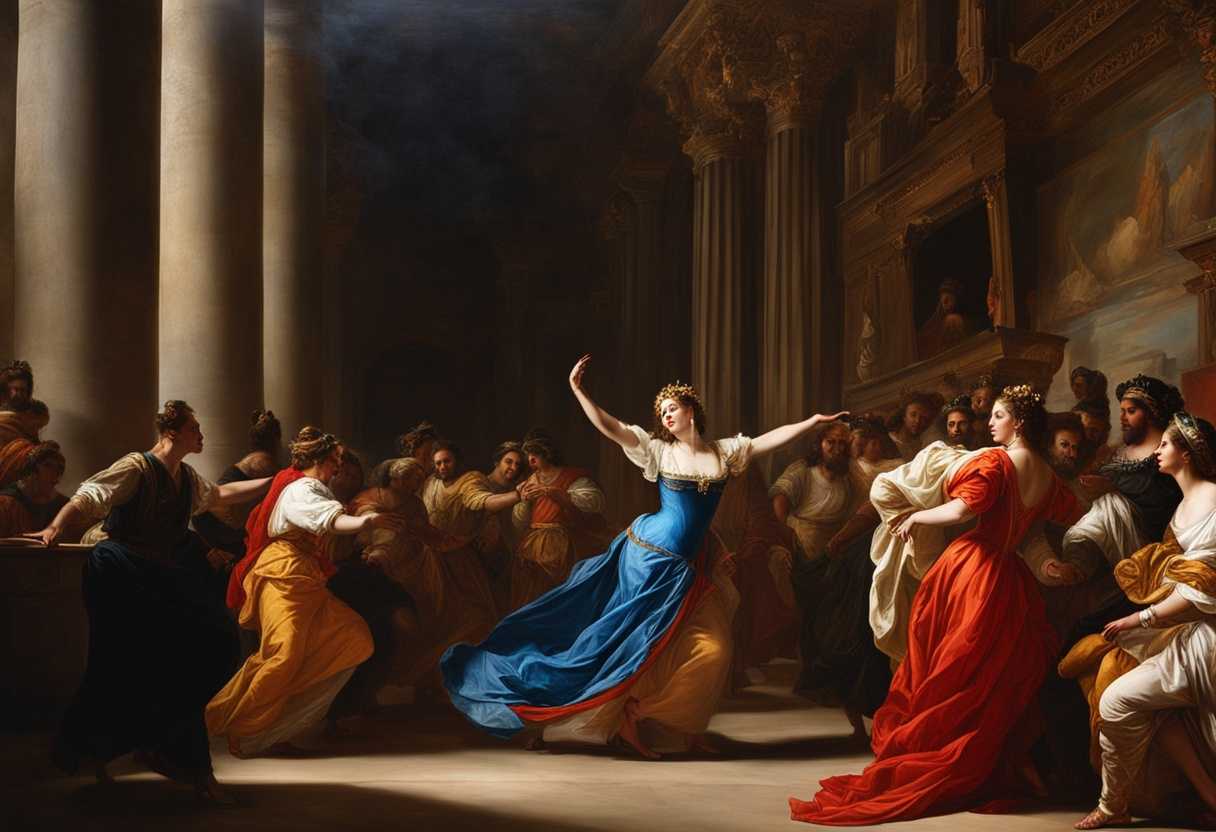
In the Bible, Salome traditionally refers to the daughter of Herodias, who danced before King Herod and requested the beheading of John the Baptist (Mark 6:14-29). The name Salome is often associated with peace and is derived from the Hebrew word “shalom.”
Scripture
40 There were also women looking on from a distance, among whom were Mary Magdalene, and Mary the mother of James the younger and of Joses, and Salome.
41 When he was in Galilee, they followed him and ministered to him, and there were also many other women who came up with him to Jerusalem.
Meaning of Salome in the Bible
The figure of Salome in the Bible is emblematic of the complex interplay between power, manipulation, and the consequences of desire. Her role in the narrative found in Mark 6:14-29 highlights how personal ambition can lead to profound moral and ethical dilemmas. Following her captivating dance, which pleased King Herod, Salome requests the head of John the Baptist, showcasing her influence over the king and the precariousness of her position. This moment serves as a cautionary tale about the perils of using one’s allure for vengeful ends, revealing how personal desires can lead to tragic outcomes. The juxtaposition of her dance, often seen as an expression of joy or celebration, against the stark result of her request—John’s execution—accentuates the irony of her influence.
Moreover, the derivation of Salome’s name from the Hebrew “shalom,” meaning peace, adds an intriguing layer to her narrative. While she is often remembered for her role in a grievous act, her name invites a contemplation of the broader theme of peace in the context of conflict and violence. Salome’s actions ultimately contribute to a cycle of injustice, challenging readers to consider the true meaning of peace in the face of cruelty and the impact of individual choices on the greater community. Thus, Salome’s story invites reflection not only on the historical events surrounding her but also on the moral complexities of human relationships and the pursuit of peace amidst chaos.
Salome’s presence in the biblical traditions extends beyond the isolated account involving King Herod and John the Baptist, prompting further examination of her cultural and symbolic significance. Often depicted in art and literature, Salome has become a representation of seduction and manipulation, embodying the hazards of unchecked ambition and desire. Her story resonates through theological discussions regarding the ethical implications of power dynamics, particularly the ways in which individuals can wield influence, often to their detriment. This narrative serves as a lens through which one can critically analyze the societal implications of beauty and persuasion, reinforcing notions about the superficiality that sometimes underpins authority and its exercise.
In broader interpretations of biblical feminism, Salome can also be viewed as a symbol of female agency, albeit a complicated one. While her actions may be perceived as destructive, they can also reflect a woman’s struggle for autonomy in a patriarchal society. In choosing to enact vengeance through her request, Salome asserts her voice in a realm where women’s identities were often defined by the men around them. This aspect of her narrative forces readers to confront deeply ingrained perceptions of femininity and power, compelling a reevaluation of historical texts that often diminish women’s roles to mere operatives of male will. Thus, Salome’s story is not just one of moral failure; it is a reflection of the challenges faced by women navigating a morally ambiguous world, inviting an exploration of the complexities within the human psyche and society’s expectations of women.
The Complexity of Female Influence
Salome represents the multifaceted nature of female influence in biblical narratives. Her story illustrates how women can wield power and agency, often in unexpected ways. While her actions lead to significant consequences, they also highlight the complexities of female roles in a patriarchal society. Salome’s dance and the subsequent request for John the Baptist’s head serve as a reminder that women can be both catalysts for change and subjects of manipulation within their cultural contexts.
The Intersection of Desire and Consequence
Salome’s character embodies the theme of desire intertwined with consequence. Her dance, often interpreted as seductive, reflects the power of allure and the impact of personal desires on broader events. This theme resonates throughout the Bible, where individual choices can lead to profound outcomes, both positive and negative. Salome’s story serves as a cautionary tale about the repercussions of desires that may lead to moral dilemmas and tragic results.
The Symbol of Political Intrigue
In the biblical narrative, Salome also symbolizes the intersection of personal ambition and political intrigue. Her actions are not merely personal but are deeply embedded in the political machinations of her time. This aspect of her story highlights how personal relationships and familial ties can influence political decisions, illustrating the often-blurred lines between personal motives and public actions in the biblical world. Salome’s role in the execution of John the Baptist underscores the interplay between power, politics, and personal vendettas.
How to Embrace Female Leadership in Faith Communities
Embracing female leadership in faith communities is not just a progressive step; it’s a reflection of the diverse body of Christ that we are called to celebrate. As you seek to be a better Christian, consider the powerful examples of women in the Bible—like Deborah, who led Israel with wisdom and courage, or Priscilla, who taught and mentored alongside her husband. Recognizing and uplifting the gifts and voices of women in your community can enrich your faith experience and foster a more inclusive environment. Engage in conversations about the roles women can play in leadership, support their initiatives, and be open to learning from their unique perspectives. Remember, the Spirit empowers all believers, regardless of gender, and by embracing female leadership, you not only honor God’s creation but also strengthen the entire body of Christ.
Bible References to the Meaning of Salome:
Mark 16:1-2: 1 When the Sabbath was past, Mary Magdalene, Mary the mother of James, and Salome bought spices, so that they might go and anoint him.
2 And very early on the first day of the week, when the sun had risen, they went to the tomb.
Matthew 27:55-56: 55 There were also many women there, looking on from a distance, who had followed Jesus from Galilee, ministering to him,
56 among whom were Mary Magdalene and Mary the mother of James and Joseph, and the mother of the sons of Zebedee.
Matthew 20:20-23: 20 Then the mother of the sons of Zebedee came up to him with her sons, and kneeling before him she asked him for something.
21 And he said to her, “What do you want?” She said to him, “Say that these two sons of mine are to sit, one at your right hand and one at your left, in your kingdom.”
22 Jesus answered, “You do not know what you are asking. Are you able to drink the cup that I am to drink?” They said to him, “We are able.”
23 He said to them, “You will drink my cup, but to sit at my right hand and at my left is not mine to grant, but it is for those for whom it has been prepared by my Father.”
Luke 8:1-3: 1 Soon afterward he went on through cities and villages, proclaiming and bringing the good news of the kingdom of God.
2 and also some women who had been healed of evil spirits and infirmities: Mary, called Magdalene, from whom seven demons had gone out,
3 Joanna, the wife of Chuza, Herod’s household manager, and Susanna, and many others, who provided for them out of their means.
John 19:25-27: 25 but standing by the cross of Jesus were his mother and his mother’s sister, Mary the wife of Clopas, and Mary Magdalene.
26 When Jesus saw his mother and the disciple whom he loved standing nearby, he said to his mother, “Woman, behold, your son!”
27 Then he said to the disciple, “Behold, your mother!” And from that hour the disciple took her to his own home.

Reverend Ogunlade is a seasoned Church Minister with over three decades of experience in guiding and nurturing congregations. With profound wisdom and a serene approach, Reverend Ogunlade has carried out various pastoral duties, including delivering uplifting sermons, conducting religious ceremonies, and offering sage counsel to individuals seeking spiritual guidance. Their commitment to fostering harmony and righteousness within their community is exemplified through their compassionate nature, making them a beloved and trusted figure among the congregation.