
In the Bible, Barabbas is a prisoner mentioned in the Gospels who was released by Pontius Pilate instead of Jesus during the Passover feast, symbolizing the choice of the people to free a criminal rather than the innocent Christ. His name, which means “son of the father” in Aramaic, contrasts with Jesus, who is often referred to as the Son of God.
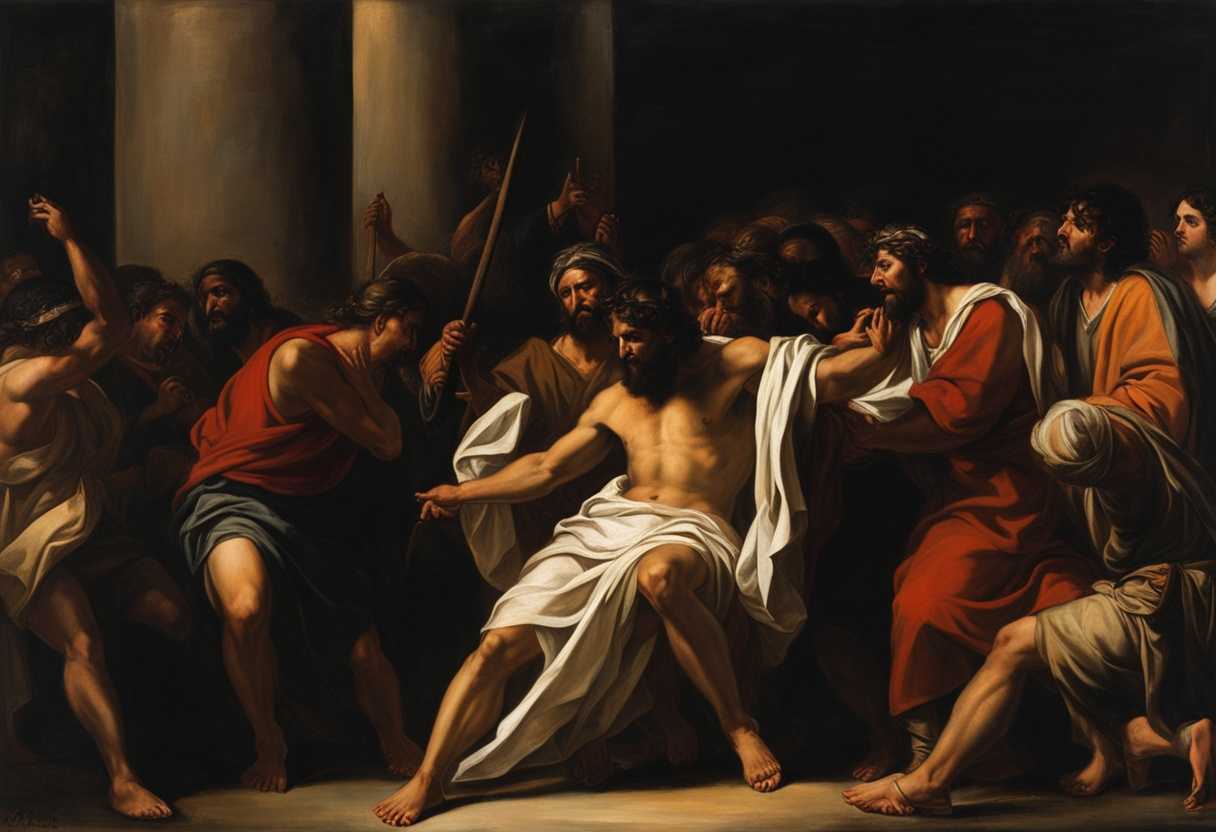
Scripture
15 Now at the feast the governor was accustomed to release for the crowd any one prisoner whom they wanted.
16 And they had then a notorious prisoner called Barabbas.
17 So when they had gathered, Pilate said to them, “Whom do you want me to release for you: Barabbas, or Jesus who is called Christ?”
18 For he knew that it was out of envy that they had delivered him up.
19 Besides, while he was sitting on the judgment seat, his wife sent word to him, “Have nothing to do with that righteous man, for I have suffered much because of him today in a dream.”
20 Now the chief priests and the elders persuaded the crowd to ask for Barabbas and destroy Jesus.
21 The governor again said to them, “Which of the two do you want me to release for you?” And they said, “Barabbas.”
22 Pilate said to them, “Then what shall I do with Jesus who is called Christ?” They all said, “Let him be crucified!”
23 And he said, “Why? What evil has he done?” But they shouted all the more, “Let him be crucified!”
24 So when Pilate saw that he was gaining nothing, but rather that a riot was beginning, he took water and washed his hands before the crowd, saying, “I am innocent of this man’s blood; see to it yourselves.”
25 And all the people answered, “His blood be on us and on our children!”
26 Then he released for them Barabbas, and having scourged Jesus, delivered him to be crucified.
Meaning of Barabbas in the Bible
The figure of Barabbas in the Gospels serves as a profound symbol of choice, grace, and the world’s moral dilemmas. His name, meaning “son of the father” in Aramaic, presents a stark contrast to Jesus, who is called the Son of God. This juxtaposition highlights a critical moment during the Passover feast when the crowd was given an option between releasing Barabbas, a convicted criminal, or Jesus, who had committed no sin (Matthew 27:17). In their choice to free Barabbas, the people ultimately reject the innocent Christ, illustrating humanity’s propensity to choose sin over righteousness, thereby embodying the fallen state of man and the consequences of free will.
From a theological perspective, Barabbas represents all of humanity, symbolizing the burden of sin that Christ bore on the cross. This act of choosing Barabbas over Jesus poignantly reflects the great exchange of salvation: Jesus, the innocent “Son of the Father,” willingly takes the place of a guilty sinner. As stated in Isaiah 53:5, “But he was pierced for our transgressions; he was crushed for our iniquities.” In this light, Barabbas’s release becomes emblematic of the grace received through faith—humanity is freed from the penalties of sin, akin to Barabbas’s own physical liberation. Thus, through this act, the narrative serves as a foreshadowing of Christ’s purpose: to bear sin and death, offering redemption to those who deserve it.
In addition to his role as a symbol of choices made among humanity, Barabbas embodies the themes of societal justice and the complexities of evil within the biblical narrative. The release of a prisoner during Passover was a tradition intended to demonstrate mercy and reprieve, yet under the conditions of that moment—where Barabbas, labeled as a notorious insurrectionist and murderer, was set free—it raises unsettling questions about the nature of justice. The chant for Barabbas’s release, juxtaposed with the silence surrounding Jesus, reveals a community grappling with fear, manipulation, and misjudgment. This incident serves as a cautionary account that reflects broader biblical themes, echoing the struggle between divine intention and human agency.
Furthermore, Barabbas’s name and identity compel readers to consider the multiplicity of identities within the narrative of salvation. With “bar” meaning “son” and “Abbas” suggesting a paternal figure, Barabbas stands as an exemplar of all who are estranged from the true Father, reflecting a foundational biblical concept of redemption. This highlights God’s mercy that extends even to those who seem irredeemable. The choice of Barabbas underscores the dramatic irony present throughout the Gospels; the very act of rejecting the Messiah opens a pathway for grace, ultimately revealing the endless love and compassion available through Christ, who came to seek and save the lost. In this dynamic, Barabbas’s identity becomes interwoven with a more extensive narrative of hope that transcends the immediate historical context, speaking to the broader human experience of seeking reconciliation with God.
The Symbol of Choice and Redemption
Barabbas represents the profound choice between good and evil, freedom and bondage. His release in place of Jesus highlights the theme of substitutionary sacrifice, where the innocent (Jesus) takes the place of the guilty (Barabbas). This act serves as a powerful metaphor for the Christian belief in redemption, illustrating how grace can be extended to those who are undeserving. The choice made by the crowd to free Barabbas over Jesus emphasizes the human tendency to choose worldly desires over spiritual truth.
The Reflection of Humanity’s Condition
Barabbas embodies the fallen nature of humanity, illustrating the struggle between sin and salvation. His character serves as a reminder of the consequences of sin, as he was imprisoned for his crimes. Yet, his unexpected release signifies the hope of forgiveness and the possibility of transformation. This duality reflects the broader biblical narrative of humanity’s need for a savior, as well as the grace that is offered to all, regardless of their past actions.
The Foreshadowing of Christ’s Sacrifice
The figure of Barabbas foreshadows the ultimate sacrifice of Christ, who willingly takes on the sins of humanity. In the context of the Passion narrative, Barabbas’s release can be seen as a precursor to the greater act of salvation that Jesus would accomplish through his crucifixion. This connection deepens the understanding of Jesus’s role as the Lamb of God, who bears the sins of the world, and highlights the divine plan of salvation that unfolds throughout the biblical text.
How to Embrace Freedom Through Substitution in Christ
Embracing freedom through substitution in Christ is a transformative journey that invites us to reflect deeply on the incredible gift of grace we’ve received. When we understand that Jesus took our place on the cross, bearing the weight of our sins and the consequences we deserved, we begin to grasp the profound depth of His love for us. This realization should inspire us to let go of the guilt and shame that often bind us, recognizing that we are no longer defined by our past mistakes but by our identity as beloved children of God. As we cultivate a relationship with Christ, we learn to live in the freedom He offers—freedom from sin, fear, and the pressures of this world. It’s a daily practice of surrendering our burdens to Him, trusting that His sacrifice has paved the way for our new life. So, let’s embrace this freedom wholeheartedly, allowing it to shape our thoughts, actions, and relationships, and in doing so, reflect the love and grace of Christ to those around us.
Bible References to Barabbas’ Meaning:
Mark 15:6-15: 6 Now at the feast he used to release for them one prisoner for whom they asked.
7 And among the rebels in prison, who had committed murder in the insurrection, there was a man called Barabbas.
8 And the crowd came up and began to ask Pilate to do as he usually did for them.
9 And Pilate answered them, saying, “Do you want me to release for you the King of the Jews?”
10 For he perceived that it was out of envy that the chief priests had delivered him up.
11 But the chief priests stirred up the crowd to have him release for them Barabbas instead.
12 And Pilate again said to them, “Then what shall I do with the man you call the King of the Jews?”
13 And they cried out again, “Crucify him.”
14 And Pilate said to them, “Why? What evil has he done?” But they shouted all the more, “Crucify him.”
15 So Pilate, wishing to satisfy the crowd, released for them Barabbas, and having scourged Jesus, he delivered him to be crucified.
Luke 23:13-25: 13 Pilate then called together the chief priests and the rulers and the people,
14 and said to them, “You brought me this man as one who was misleading the people. And after examining him before you, behold, I did not find this man guilty of any of your charges against him.
15 Neither did Herod, for he sent him back to us. Look, nothing deserving death has been done by him.
16 I will therefore punish and release him.”
17 Now he was obliged to release one man to them at the festival.
18 But they all cried out together, “Away with this man, and release to us Barabbas”—
19 (He had been thrown into prison for an insurrection started in the city and for murder.)
20 Pilate addressed them once more, desiring to release Jesus,
21 but they kept shouting, “Crucify, crucify him!”
22 He said to them the third time, “Why, what evil has he done? I have found in him no guilt deserving death. I will therefore punish and release him.”
23 But they were urgent, demanding with loud cries that he should be crucified. And their voices prevailed.
24 So Pilate decided that their demand should be granted.
25 He released the man who had been thrown into prison for insurrection and murder, for whom they asked, but he delivered Jesus over to their will.
John 18:38-40: 38 Pilate said to him, “What is truth?”
39 But you have a custom that I should release one man for you at the Passover. So do you want me to release to you the King of the Jews?”
40 They cried out again, “Not this man, but Barabbas!” Now Barabbas was a robber.
Acts 3:13-15: 13 The God of Abraham, the God of Isaac, and the God of Jacob, the God of our fathers, glorified his servant Jesus, whom you delivered over and denied in the presence of Pilate, when he had decided to release him.
14 But you denied the Holy and Righteous One, and asked for a murderer to be granted to you,
15 and you killed the Author of life, whom God raised from the dead. To this we are witnesses.

Reverend Ogunlade is a seasoned Church Minister with over three decades of experience in guiding and nurturing congregations. With profound wisdom and a serene approach, Reverend Ogunlade has carried out various pastoral duties, including delivering uplifting sermons, conducting religious ceremonies, and offering sage counsel to individuals seeking spiritual guidance. Their commitment to fostering harmony and righteousness within their community is exemplified through their compassionate nature, making them a beloved and trusted figure among the congregation.