
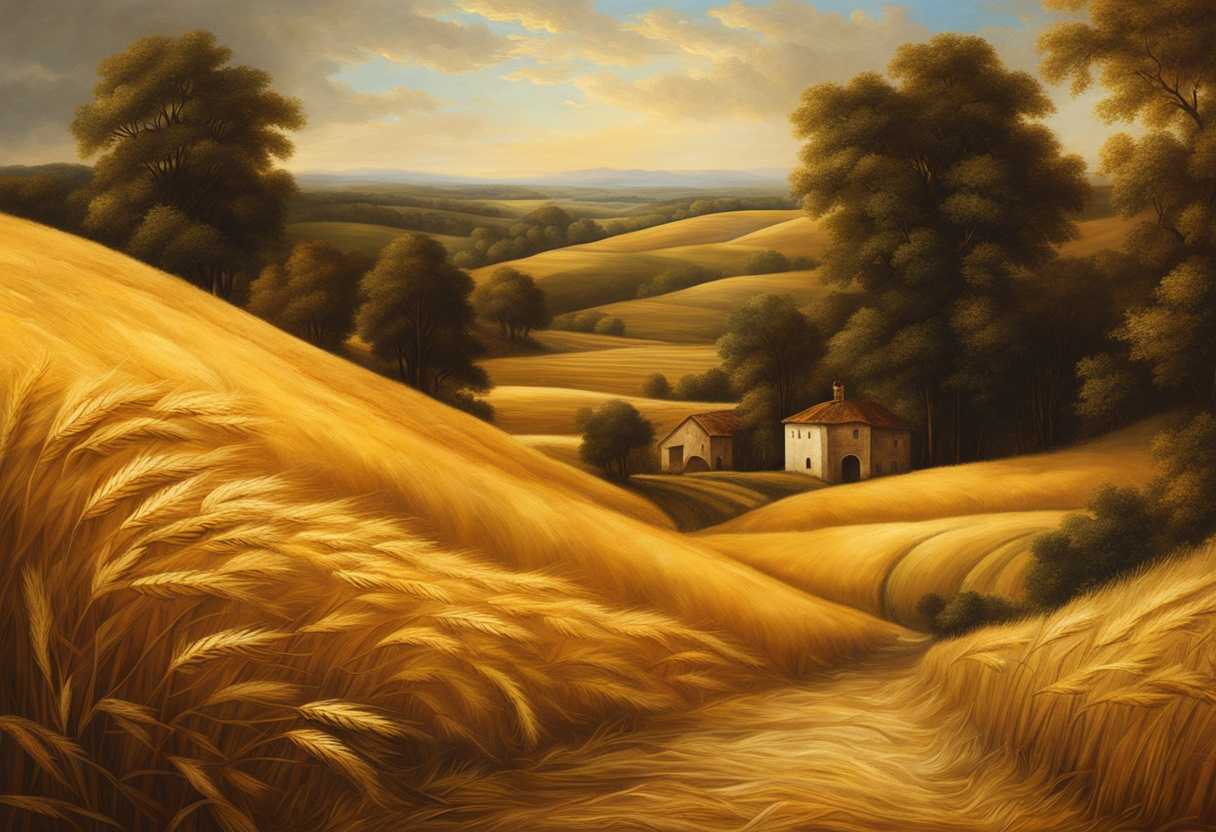
In the Bible, “Homer” refers to a measure of barley or grain equivalent to about 6 bushels or 220 liters (Leviticus 27:16). It is used in the context of agriculture and offerings, indicating quantities related to food production and sacrifice.
Scripture
16 “If a man dedicates to the Lord part of the land that is his possession, then the valuation shall be in proportion to its seed. A homer of barley seed shall be valued at fifty shekels of silver.”
17 If he dedicates his field from the year of jubilee, the valuation shall stand.
Meaning of Homer in the Bible
The mention of “Homer” in the Bible, particularly in Leviticus 27:16, serves not only as a reference to a specific measure of barley but also symbolizes the agricultural abundance that God bestows upon His people. This measurement of grain reflects the agricultural practices of ancient Israel and highlights the importance of farming as a foundational aspect of Israelite life. The use of the Homer in the context of offerings emphasizes the relationship between the land’s productivity and the people’s gratitude to God for His provision. This notion aligns with other biblical passages, such as Psalm 104:14-15, which speaks to the Lord’s provision of food from the earth and the joy that it brings to both people and creatures alike.
Moreover, the concept of measured abundance serves a deeper theological purpose, illustrating the principle of stewardship in the Christian faith. Just as the Israelites were tasked with offering a portion of their harvest back to God, believers today are called to recognize that all blessings stem from God and should be utilized for His glory and the benefit of others. This can be seen in 2 Corinthians 9:10-11, where Paul encourages the faithful to be generous in their giving, promising that God will supply and increase their resources. Thus, while the Homer is a practical measurement of grain, it also underlines broader themes of gratitude, stewardship, and communal responsibility within God’s creation.
In addition to its reference in Leviticus, the idea of “Homer” can resonate with the broader biblical themes of abundance and divine provision throughout scripture. For instance, the practice of tithing, where a portion of one’s harvest is set aside for the Lord, encapsulates the same sentiment reflected in the Homer; it reminds the faithful that their sustenance ultimately comes from God’s generous hand. Such practices serve not only to honor God but also to build a sense of community and interdependence among the people, reinforcing the notion that blessings are meant to be shared.
Furthermore, the concept of abundance, as represented by the Homer, finds echoes in parables told by Jesus. For example, the Parable of the Good Samaritan illustrates the profound impact of generosity and support among individuals in need, emphasizing that true wealth lies not in possession, but in the willingness to share one’s resources with others. This correlates with the larger biblical narrative where material blessings are intricately linked to spiritual responsibilities. Ultimately, whether through the measurement of grain or acts of kindness, the biblical discourse implies a divinely ordained structure within which believers are invited to engage in a reciprocal relationship with God and one another, fostering both gratitude and communal flourishing.
Symbol of Measurement and Value
In biblical contexts, the term “homer” often represents a unit of measurement, particularly for grain and other agricultural products. This signifies the importance of agricultural abundance and the value of resources in ancient societies. The use of homers in the Bible reflects the economic and social structures of the time, emphasizing the significance of sustenance and the blessings of the land.
Representation of Abundance and Provision
The homer can also be interpreted as a symbol of God’s provision and abundance. In the biblical narrative, the measurement of grain often correlates with God’s blessings upon His people. The concept of a homer serves as a reminder of the divine generosity that sustains life and the importance of gratitude for the resources provided by God.
Connection to Community and Sharing
Furthermore, the homer can be seen as a representation of community and the sharing of resources. In ancient Israel, the distribution of grain measured in homers would have implications for communal living and support. This aspect highlights the biblical principle of caring for one another and the collective responsibility to ensure that all members of the community have their needs met.
How to Embrace Your Biblical Heritage for Spiritual Growth
Embracing your biblical heritage is a beautiful journey that can profoundly enrich your spiritual growth. Start by immersing yourself in the Scriptures, allowing the stories and teachings to resonate within you; they are not just ancient texts but living words that speak to our hearts today. Reflect on the lives of biblical figures—like David’s courage, Ruth’s loyalty, or Paul’s transformation—and consider how their experiences can inspire your own faith journey. Engage in community worship and study, where you can share insights and learn from others, fostering a sense of belonging and accountability. Remember, your heritage is not just about the past; it’s a foundation for your present and future. As you delve deeper into your faith, let the lessons of love, grace, and redemption guide your actions, helping you to embody the teachings of Christ in your daily life. Embrace this heritage with an open heart, and watch how it transforms you into a more compassionate and faithful follower of Jesus.
Bible References to Meaning of Homer:
Ezekiel 45:11-14: 11 The ephah and the bath shall be of the same measure, the bath containing one tenth of a homer, and the ephah one tenth of a homer; the homer shall be the standard measure.
12 The shekel shall be twenty gerahs; twenty shekels plus twenty-five shekels plus fifteen shekels shall be your mina.
13 “This is the offering that you shall make: one sixth of an ephah from each homer of wheat, and one sixth of an ephah from each homer of barley,”
14 And the prescribed portion of oil, of the bath of oil, shall be a tenth of a bath from each cor (the cor, like the homer, contains ten baths).
Isaiah 5:10: 10 For ten acres of vineyard shall yield but one bath, and a homer of seed shall yield but an ephah.”

Rev. François Dupont is a dedicated church minister with a wealth of experience in serving spiritual communities. With a calm and serene demeanor, he has been devoted to sharing the message of love, compassion, and tolerance for over two decades. Through his thoughtful sermons, compassionate counseling, and unwavering support, Rev. Dupont has touched the lives of countless individuals, allowing them to find solace and strength during difficult times. His serene presence and deep understanding of the human condition make him a trusted guide for those seeking spiritual nourishment and guidance.