
The name Nathan in the Bible means “he has given” or “gift from God.” Nathan is prominently known as a prophet during the reign of King David, serving as an adviser and messenger of God’s will.
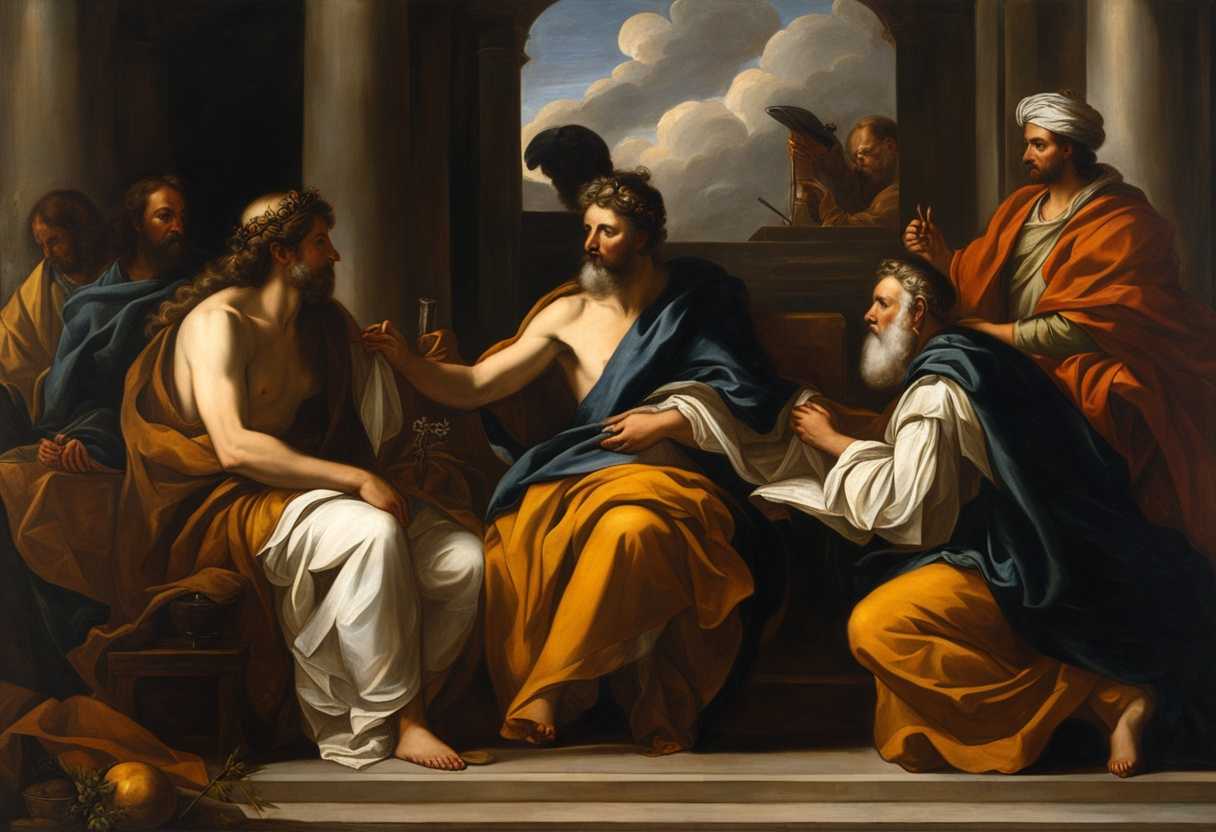
Scripture
1 Now when the king lived in his house and the Lord had given him rest from all his surrounding enemies,
2 that the king said to Nathan the prophet, “See now, I dwell in a house of cedar, but the ark of God dwells in a tent.”
3 And Nathan said to the king, “Go, do all that is in your heart, for the Lord is with you.”
4 But that same night the word of the Lord came to Nathan,
5 “Go and tell my servant David, ‘Thus says the Lord: Would you build me a house to dwell in?
6 I have not lived in a house since the day I brought up the people of Israel from Egypt to this day, but I have been moving about in a tent for my dwelling.
7 In all the places where I have moved with all the people of Israel, did I speak a word with any of the judges of Israel, whom I commanded to shepherd my people Israel, saying, “Why have you not built me a house of cedar?”
8 Now, therefore, thus you shall say to my servant David, ‘Thus says the Lord of hosts, I took you from the pasture, from following the sheep, that you should be prince over my people Israel.
9 And I have been with you wherever you went and have cut off all your enemies from before you. And I will make for you a great name, like the name of the great ones of the earth.
10 And I will appoint a place for my people Israel and will plant them, so that they may dwell in their own place and be disturbed no more. And violent men shall afflict them no more, as formerly,
11 from the time that I appointed judges over my people Israel. And I will give you rest from all your enemies. Moreover, the Lord declares to you that the Lord will make you a house.
12 When your days are fulfilled and you lie down with your fathers, I will raise up your offspring after you, who shall come from your body, and I will establish his kingdom.
13 He shall build a house for my name, and I will establish the throne of his kingdom forever.
14 I will be to him a father, and he shall be to me a son. When he commits iniquity, I will discipline him with the rod of men, with the stripes of the sons of men,
15 but my steadfast love will not depart from him, as I took it from Saul, whom I put away from before you.
16 And your house and your kingdom shall be made sure forever before me. Your throne shall be established forever.
17 In accordance with all these words, and in accordance with all this vision, Nathan spoke to David.
Meaning of Nathan in the Bible
The name Nathan, which translates to “he has given” or “gift from God,” carries profound theological significance within the Biblical narrative, particularly in relation to the themes of divine revelation and stewardship of God’s will. Nathan is introduced in 2 Samuel 7, where he delivers God’s promise to David concerning the establishment of a dynasty that would ultimately lead to the Messiah (2 Samuel 7:12-13). This demonstrates how Nathan, as a prophet, is a conduit for God’s gifts to His people—both in the form of promises and moral guidance. The gift of Nathan’s prophecy not only reassured David of God’s favor but also underscored the importance of obedience and submission to divine authority.
Moreover, Nathan’s role extends beyond merely delivering good news; he also played a critical part in confronting David after his sin with Bathsheba, which is recounted in 2 Samuel 12. Through the parable of the rich man and the poor man, Nathan effectively reveals the gravity of David’s actions, thus showcasing the prophet’s role as a bearer of truth and accountability. This encounter emphasizes that being a gift from God entails responsibilities, and that true gifts often come with the duty to uphold righteousness and justice. In this way, Nathan embodies the dual aspects of prophecy: the encouragement of faith through God’s promises and the challenge of maintaining moral integrity within the covenant community. Nathan’s legacy as a messenger of God highlights the overarching biblical theme that divine gifts are intended not just for personal comfort or advantage, but for the transformation and betterment of others within God’s kingdom.
Beyond his pivotal moments involving David, Nathan’s identity as a prophet illustrates his integral role in the unfolding plan of Israel’s history. His name, “gift from God,” encapsulates a broader theological truth about God’s ongoing relationship with His people. In recalling Nathan’s lineage, we see the intertwining of prophetic authority and familial ties, as he is described as the son of David’s counselor, providing insight into the continuity of divine guidance through appointed individuals. The prevalence of the name Nathan in biblical texts reflects a recurring theme of God bestowing gifts in various forms, echoing the idea that divine favor can manifest through human agents who fulfill God’s purposes.
Furthermore, Nathan’s involvement isn’t limited to just personal interactions with David but extends into the realm of the broader prophetic tradition. The legacy of Nathan encompasses the necessity of accountability within leadership, surviving through generations as a model for subsequent prophets. His example reminds later leaders and believers alike of the importance of reverent response to God’s directives. In the chronicles of prophetic activity, Nathan serves as a reminder that those endowed with divine messages are tasked with both blessing and correction, emphasizing that the ultimate objective of being a “gift from God” is to foster faithfulness and guide the community toward righteousness. Through Nathan, the name resonates deeply as a symbol of God’s ongoing grace and the ever-present call to stewardship among His people.
Divine Gift and Favor
The name Nathan is derived from the Hebrew word “natan,” which means “to give.” This etymology suggests a broader meaning of divine gift or favor. In the biblical context, individuals named Nathan often embody the idea of being a gift from God, reflecting the belief that their presence or actions serve a greater purpose in the divine plan. This theme resonates throughout the narratives involving Nathans in the Bible, emphasizing the significance of their roles as messengers or servants of God.
Prophetic Insight and Guidance
Another important aspect of the name Nathan is its association with prophecy and guidance. Nathan the prophet, for instance, played a crucial role in advising King David and delivering God’s messages. This connection highlights the broader meaning of the name as one who provides insight, wisdom, and direction. In this sense, Nathan symbolizes the importance of divine communication and the role of individuals who serve as conduits for God’s will, guiding others in their spiritual journeys.
Legacy of Leadership and Integrity
The name Nathan also carries connotations of leadership and integrity. Those who bear this name in the biblical narrative often demonstrate qualities of moral strength and commitment to God’s covenant. This broader meaning reflects the idea that individuals named Nathan are called to uphold righteousness and lead by example, influencing others positively through their actions and decisions. Their legacy serves as a reminder of the importance of integrity in leadership roles within the community of faith.
How to Embrace the Gift of God in Your Life
Embracing the gift of God in your life is a beautiful journey that begins with gratitude and openness to His presence. Start by recognizing the blessings that surround you, no matter how small they may seem—each moment is a testament to His love and grace. Spend time in prayer and reflection, allowing yourself to connect deeply with God’s word; the Bible is filled with promises that remind us of His unwavering support. Engage in acts of kindness and service, as sharing God’s love with others not only enriches their lives but also deepens your own faith. Remember, embracing God’s gift is not just about receiving; it’s about living out that gift through love, compassion, and a commitment to grow in your relationship with Him. As you cultivate this mindset, you’ll find that the more you give of yourself, the more you’ll experience the fullness of His blessings in your life.
Bible References to the Name Nathan:
1 Kings 1:8-10: 8 But Zadok the priest and Benaiah the son of Jehoiada and Nathan the prophet and Shimei and Rei and David’s mighty men were not with Adonijah.
9 Adonijah sacrificed sheep, oxen, and fattened cattle by the Serpent’s Stone, which is beside En-rogel, and he invited all his brothers, the king’s sons, and all the royal officials of Judah.
10 But he did not invite Nathan the prophet or Benaiah or the mighty men or Solomon his brother.
1 Kings 1:32-40: 32 King David said, “Call to me Zadok the priest, Nathan the prophet, and Benaiah the son of Jehoiada.” So they came before the king.
33 The king also said to them, “Take with you the servants of your lord and have Solomon my son ride on my own mule, and bring him down to Gihon.
34 There let Zadok the priest and Nathan the prophet anoint him king over Israel. Then blow the trumpet and say, ‘Long live King Solomon!’
35 Then you shall come up after him, and he shall come and sit on my throne, for he shall be king in my place.
36 Benaiah the son of Jehoiada answered the king, “Amen! May the Lord, the God of my lord the king, say so.
37 As the Lord has been with my lord the king, even so may he be with Solomon, and make his throne greater than the throne of my lord King David.”
38 So Zadok the priest, Nathan the prophet, and Benaiah the son of Jehoiada, and the Cherethites and the Pelethites went down and had Solomon ride on King David’s mule and brought him to Gihon.
39 Zadok the priest took the horn of oil from the tent and anointed Solomon. Then they blew the trumpet, and all the people said, “Long live King Solomon!”
40 And all the people went up after him, playing on pipes, and rejoicing with great joy, so that the earth was split by their noise.
1 Kings 1:44-48: 44 The king has sent with him Zadok the priest, Nathan the prophet, and Benaiah the son of Jehoiada, and the Cherethites and the Pelethites, and they had him ride on the king’s mule.
45 Zadok the priest and Nathan the prophet have anointed him king at Gihon, and they have gone up from there rejoicing, so that the city is in an uproar. This is the noise that you have heard.
46 And besides, Solomon has taken his seat on the royal throne.
47 Moreover, the king’s servants came to congratulate our lord King David, saying, ‘May your God make the name of Solomon more famous than yours, and make his throne greater than your throne.’ And the king bowed himself on the bed.
48 And the king also said, ‘Blessed be the Lord, the God of Israel, who has granted someone to sit on my throne this day in my own eyes.’
1 Kings 4:1-6: 1 Kings 4:1
“King Solomon was king over all Israel,”
2 Solomon’s provision for one day was thirty cors of fine flour and sixty cors of meal,
3 Elihoreph and Ahijah, the sons of Shisha, were secretaries; Jehoshaphat the son of Ahilud was recorder;
4 Benaiah the son of Jehoiada was in command of the army; Zadok and Abiathar were priests;
5 Azariah the son of Nathan was over the officers; Zabud the son of Nathan was priest and king’s friend;
6 Ahishar was in charge of the palace; and Adoniram the son of Abda was in charge of the forced labor.
1 Chronicles 17:1-15: 1 Now when David lived in his house, David said to Nathan the prophet, “Behold, I dwell in a house of cedar, but the ark of the covenant of the Lord is under a tent.”
2 Nathan said to David, “Do all that is in your heart, for God is with you.”
3 But that same night the word of the Lord came to Nathan,
4 “Go and tell my servant David, ‘Thus says the Lord: It is not you who will build me a house to dwell in.’”
5 For I have not lived in a house since the day I brought up Israel to this day, but I have gone from tent to tent and from dwelling to dwelling.
6 In all places where I have moved with all the people of Israel, did I speak a word with any of the judges of Israel, whom I commanded to shepherd my people, saying, “Why have you not built me a house of cedar?”
7 Now, therefore, thus shall you say to my servant David, ‘Thus says the Lord of hosts, I took you from the pasture, from following the sheep, to be prince over my people Israel.
8 and I have been with you wherever you have gone and have cut off all your enemies from before you. And I will make for you a name, like the name of the great ones of the earth.
9 And I will appoint a place for my people Israel and will plant them, that they may dwell in their own place and be disturbed no more. And violent men shall waste them no more, as formerly,
10 from the time that I appointed judges over my people Israel. And I will subdue all your enemies. Moreover, I declare to you that the Lord will build you a house.
11 When your days are fulfilled to walk with your fathers, I will raise up your offspring after you, one of your own sons, and I will establish his kingdom.
12 He shall build a house for me, and I will establish his throne forever.
13 I will be to him a father, and he shall be to me a son. I will not take my steadfast love from him, as I took it from him who was before you,
14 but I will settle him in my house and in my kingdom forever, and his throne shall be established forever.”
15 According to all these words and according to all this vision, Nathan spoke to David.
1 Chronicles 29:29-30: Now the acts of King David, from first to last, are written in the Chronicles of Samuel the seer, and in the Chronicles of Nathan the prophet, and in the Chronicles of Gad the seer, (1 Chronicles 29:29)
29 And he died in a good old age, full of days, riches, and honor. And Solomon his son reigned in his place.
2 Chronicles 9:29: 29 Now the rest of the acts of Solomon, from first to last, are they not written in the history of Nathan the prophet, and in the prophecy of Ahijah the Shilonite, and in the visions of Iddo the seer concerning Jeroboam the son of Nebat?
2 Chronicles 29:25-30: 25 And he stationed the Levites in the house of the Lord with cymbals, harps, and lyres, according to the commandment of David and of Gad the king’s seer and of Nathan the prophet, for the commandment was from the Lord through his prophets.
26 The Levites stood with the instruments of David, and the priests with the trumpets.
27 And Hezekiah commanded to offer the burnt offering on the altar. And when the burnt offering began, the song to the Lord began also, and the trumpets, accompanied by the instruments of David king of Israel.
28 The whole assembly worshiped, and the singers sang, and the trumpeters sounded. All this continued until the burnt offering was finished.
29 When the offering was finished, the king and all who were present with him bowed themselves and worshiped.
30 And Hezekiah the king and the officials commanded the Levites to sing praises to the Lord with the words of David and of Asaph the seer. And they sang praises with gladness, and they bowed down and worshiped.
Psalms 51:1-19: 1 Have mercy on me, O God, according to your steadfast love; according to your abundant mercy blot out my transgressions.
2 Wash me thoroughly from my iniquity,
and cleanse me from my sin!
3 For I know my transgressions,
and my sin is ever before me.
4 Against you, you only, have I sinned
and done what is evil in your sight,
so that you may be justified in your words
and blameless in your judgment.
5 Behold, I was brought forth in iniquity,
and in sin did my mother conceive me.
6 Behold, you delight in truth in the inward being,
and you teach me wisdom in the secret heart.
7 Purge me with hyssop, and I shall be clean;
wash me, and I shall be whiter than snow.
8 Let me hear joy and gladness; let the bones that you have broken rejoice.
9 Hide your face from my sins,
and blot out all my iniquities.
10 Create in me a clean heart, O God,
and renew a right spirit within me.
11 Cast me not away from your presence,
and take not your Holy Spirit from me.
12 Restore to me the joy of your salvation,
and uphold me with a willing spirit.
13 Then I will teach transgressors your ways,
and sinners will return to you.
14 Deliver me from bloodguiltiness, O God, O God of my salvation, and my tongue will sing aloud of your righteousness.
15 O Lord, open my lips,
and my mouth will declare your praise.
16 For you will not delight in sacrifice, or I would give it; you will not be pleased with a burnt offering.
17 The sacrifices of God are a broken spirit; a broken and contrite heart, O God, you will not despise.
18 Do good to Zion in your good pleasure;
build up the walls of Jerusalem;
19 then will you delight in right sacrifices,
in burnt offerings and whole burnt offerings;
then bulls will be offered on your altar.
Luke 3:23-31: 23 Jesus, when he began his ministry, was about thirty years of age, being the son (as was supposed) of Joseph, the son of Heli,
24 the son of Matthat, the son of Levi, the son of Melchi, the son of Jannai, the son of Joseph,
25 the son of Mattathias, the son of Amos, the son of Nahum, the son of Esli, the son of Naggai,
26 the son of Maath, the son of Mattathias, the son of Semein, the son of Josech, the son of Joda, the son of Joanan, the son of Rhesa, the son of Zerubbabel, the son of Shealtiel, the son of Neri,
27 …the son of Joanan, the son of Rhesa, the son of Zerubbabel, the son of Shealtiel, the son of Neri,
28 the son of Melchi, the son of Addi, the son of Cosam, the son of Elmadam, the son of Er
29 the son of Joshua, the son of Eliezer, the son of Jorim, the son of Matthat, the son of Levi,
30 the son of Simeon, the son of Judah, the son of Joseph, the son of Jonan, the son of Eliakim,
31 the son of Melea, the son of Menna, the son of Mattatha, the son of Nathan, the son of David,

Rev. François Dupont is a dedicated church minister with a wealth of experience in serving spiritual communities. With a calm and serene demeanor, he has been devoted to sharing the message of love, compassion, and tolerance for over two decades. Through his thoughtful sermons, compassionate counseling, and unwavering support, Rev. Dupont has touched the lives of countless individuals, allowing them to find solace and strength during difficult times. His serene presence and deep understanding of the human condition make him a trusted guide for those seeking spiritual nourishment and guidance.