
1 After this there was a feast of the Jews, and Jesus went up to Jerusalem.
2 Now there is in Jerusalem by the Sheep Gate a pool, in Aramaic called Bethesda, which has five roofed colonnades.
3 In these lay a multitude of invalids—blind, lame, and paralyzed.
4 for an angel of the Lord went down at certain seasons into the pool, and stirred the water: whoever stepped in first after the stirring of the water was healed of whatever disease he had.
5 One man was there who had been an invalid for thirty-eight years.
6 When Jesus saw him lying there and knew that he had already been there a long time, he said to him, “Do you want to be healed?”
7 The sick man answered him, “Sir, I have no one to put me into the pool when the water is stirred up, and while I am going another steps down before me.”
8 Jesus said to him, “Get up, take up your bed, and walk.”
9 And at once the man was healed, and he took up his bed and walked.
10 So the Jews said to the man who had been healed, “It is the Sabbath, and it is not lawful for you to take up your bed.”
11 But he answered them, “The man who healed me, that man said to me, ‘Take up your bed, and walk.’”
12 They asked him, “Who is the man who said to you, ‘Take up your bed and walk’?”
13 Now the man who had been healed did not know who it was, for Jesus had withdrawn, as there was a crowd in the place.
14 Afterward Jesus found him in the temple and said to him, “See, you are well! Sin no more, that nothing worse may happen to you.”
15 The man went away and told the Jews that it was Jesus who had healed him.
16 And this was why the Jews were persecuting Jesus, because he was doing these things on the Sabbath.
17 But Jesus answered them, “My Father is working until now, and I am working.”
18 This was why the Jews were seeking all the more to kill him, because not only was he breaking the Sabbath, but he was even calling God his own Father, making himself equal with God.
19 So Jesus said to them, “Truly, truly, I say to you, the Son can do nothing of his own accord, but only what he sees the Father doing. For whatever the Father does, that the Son does likewise.
20 For the Father loves the Son and shows him all that he himself is doing. And greater works than these will he show him, so that you may marvel.
21 For as the Father raises the dead and gives them life, so also the Son gives life to whom he will.
22 The Father judges no one, but has given all judgment to the Son,
23 that all may honor the Son, just as they honor the Father. Whoever does not honor the Son does not honor the Father who sent him.
24 Truly, truly, I say to you, whoever hears my word and believes him who sent me has eternal life. He does not come into judgment, but has passed from death to life.
25 “Truly, truly, I say to you, an hour is coming, and is now here, when the dead will hear the voice of the Son of God, and those who hear will live.
26 For as the Father has life in himself, so he has granted the Son also to have life in himself.
27 And he has given him authority to execute judgment, because he is the Son of Man.
28 Do not marvel at this, for an hour is coming when all who are in the tombs will hear his voice
29 and come out, those who have done good to the resurrection of life, and those who have done evil to the resurrection of judgment.
30 “I can do nothing on my own. As I hear, I judge, and my judgment is just, because I seek not my own will but the will of him who sent me.”
31 If I alone bear witness about myself, my testimony is not true.
32 There is another who bears witness about me, and I know that the testimony that he bears about me is true.
33 You sent to John, and he has borne witness to the truth.
34 Not that the testimony that I receive is from man, but I say these things so that you may be saved.
35 He was a burning and shining lamp, and you were willing to rejoice for a while in his light.
36 But the testimony that I have is greater than that of John. For the works that the Father has given me to accomplish, the very works that I am doing, bear witness about me that the Father has sent me.
37 And the Father who sent me has himself borne witness about me. His voice you have never heard, his form you have never seen,
38 and you do not have his word abiding in you, for you do not believe the one whom he has sent.
39 You search the Scriptures because you think that in them you have eternal life; and it is they that bear witness about me,
40 yet you refuse to come to me that you may have life.
41 I do not receive glory from people.
42 But I know that you do not have the love of God within you.
43 I have come in my Father’s name, and you do not receive me. If another comes in his own name, you will receive him.
44 How can you believe, when you receive glory from one another and do not seek the glory that comes from the only God?
45 Do not think that I will accuse you to the Father. There is one who accuses you: Moses, on whom you have set your hope.
46 For if you believed Moses, you would believe me; for he wrote of me.
47 But if you do not believe his writings, how will you believe my words?”
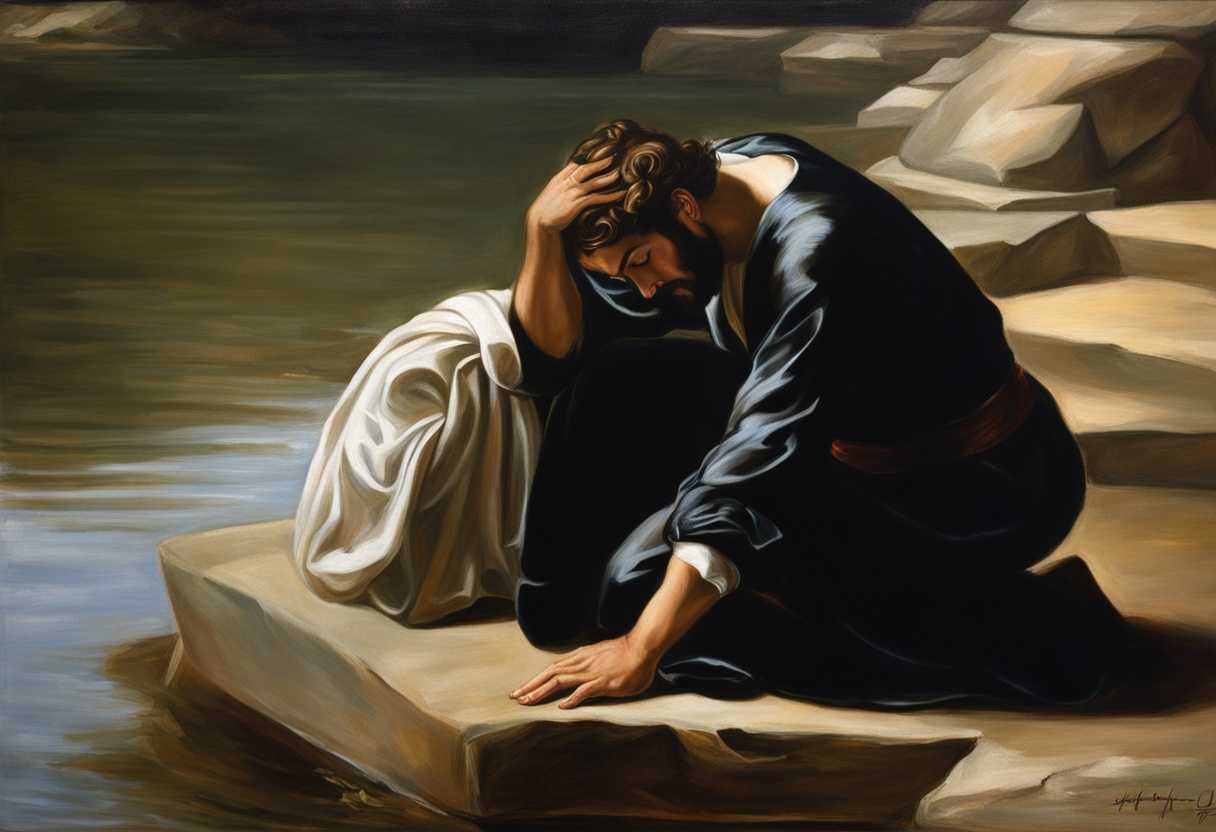
The True Meaning of John 5
The Gospel of John, written by the apostle John, provides a unique perspective on the life and ministry of Jesus Christ. Jesus performs a miraculous healing on the Sabbath, sparking a confrontation with the religious authorities, as we witness a pivotal moment in his public ministry where he encounters a man who has been paralyzed for 38 years.
This passage not only showcases Jesus’ divine power but also highlights the tension between his teachings and the rigid interpretations of the law held by the Pharisees. As we delve into this chapter, Jesus challenges the status quo and redefines the understanding of the Sabbath, ultimately leading to a deeper understanding of his identity as the Son of God.
The events described in John 5 echo the themes found in other biblical accounts, such as the healing of the paralytic in Mark 2 and the emphasis on the Sabbath in the Ten Commandments (Exodus 20:8-11). These connections help us to appreciate the broader context of Jesus’ ministry and the significance of his actions in the eyes of both his followers and his critics.
John 5:1-9
Jesus went up to Jerusalem for one of the Jewish festivals in John 5:1-9, setting the stage.” This introduction immediately places us in a significant cultural and religious context – the city of Jerusalem, a central location for Jewish religious practices, and a time of celebration and pilgrimage for the Jewish people. Jesus, as a devout Jew, participated in these festivals, underscoring his adherence to Jewish customs and traditions.
The verse goes on to describe how Jesus encountered a man who had been an invalid for thirty-eight years, lying by the pool of Bethesda, which was believed to have healing properties. This man’s long-standing affliction symbolizes a life of suffering and hopelessness, emphasizing the desperation of his situation. The Bible does not commonly mention the number thirty-eight, but it often uses the number forty to symbolize a period of testing, trial, or probation. This man’s struggle and endurance for almost forty years draw parallels to the Israelites’ forty years of wandering in the wilderness as a form of spiritual testing and refinement.
When Jesus saw the man lying there and learned how long he had been in this condition, He asked him a crucial question: “Do you want to get well?” This inquiry may seem obvious, but it is essential in highlighting the man’s own will and desire for healing. Jesus often required faith or an expression of need from those seeking His help, as seen in other instances of healing throughout the Gospels. This question challenges the man to examine his own heart and intentions, emphasizing the importance of personal agency and faith in the healing process.
The man, instead of answering directly, responds by explaining his inability to reach the healing waters of the pool in time when they are stirred. His focus remains on the physical means of healing he believes he requires, demonstrating a limited perspective on where true healing can come from. This interaction reflects a common human tendency to seek solutions in familiar or conventional methods, overlooking the transformative power of faith and divine intervention. Jesus, however, shifts the man’s focus from the pool to himself, declaring, “Get up! Pick up your mat and walk.” This command reveals Jesus’ authority over illness and disability, showcasing His ability to bring about miraculous healing through a simple yet powerful directive. The man obeys Jesus and is instantly healed, mirroring a deeper spiritual healing and transformation. This dramatic healing not only manifests Jesus’ divine power but also underscores the importance of faith and obedience in responding to His commands. The man’s immediate recovery symbolizes the instantaneous and complete deliverance that can come through faith in Jesus Christ, transcending physical limitations and renewing one’s life in ways far beyond mere physical healing. John 5:1-9 offers profound insights into the themes of faith, healing, and personal transformation. It showcases Jesus’ compassion for the suffering, His miraculous power over physical afflictions, and His call for individuals to respond in faith and obedience. This narrative serves as a powerful reminder of the transformative impact of encountering Jesus, both in physical ailments and in spiritual brokenness, inviting us to trust in His healing grace and submit to His sovereign will for our lives.
John 5:10-18
The passage in John 5:10-18 begins by recounting the response of the Jewish leaders towards the man who had been healed on the Sabbath day. The man had been an invalid for thirty-eight years, and Jesus had commanded him to pick up his mat and walk, which he did, instantly being made whole. The Jewish leaders had a strict interpretation of the Sabbath law which prohibited any work, including carrying one’s mat, on that day. So, when they saw the man carrying his mat, they questioned him. Instead of rejoicing over the miraculous healing, they focused on the legalistic observance of the Sabbath.
This incident reveals the rigid legalism and lack of compassion of the Jewish leaders. Instead of recognizing the power and authority of Jesus in healing the man, they were more concerned with enforcing their rules and regulations. It is a stark reminder of how legalism can blind us from recognizing the work of God in our midst and can lead us to misplaced priorities.
Jesus’ response to the Jewish leaders is profound. He not only defends his actions but also proclaims His divinity. He asserts that He is the Son of God, equal with God the Father in authority and power. This assertion further infuriates the Jewish leaders as they considered it blasphemy for Jesus to claim equality with God. This claim by Jesus sets the stage for the escalating tension between Him and the Jewish religious authorities.
This passage in John 5 echoes themes found throughout the Bible, particularly the tension between legalism and grace. Jesus consistently challenged the legalistic interpretations of the Pharisees and the teachers of the law, emphasizing the greater importance of mercy, compassion, and faith. Jesus also confronts the Pharisees on the issue of Sabbath observance in Matthew 12:1-14, highlighting the principle that mercy is above sacrifice.
Furthermore, Jesus’ claim to be the Son of God in John 5:10-18 is significant in the context of the entire Gospel of John. Throughout the Gospel, Jesus performs miracles and makes divine claims that point to His identity as the Son of God. Jesus declares in John 8:58, “Before Abraham was born, I am,” using the divine name “I am” which God revealed to Moses in Exodus 3:14. This affirmation of His deity angers the Jewish leaders and ultimately leads to Jesus’ crucifixion. The passage in John 5:10-18 serves as a powerful reminder of the clash between legalism and grace, the divinity of Christ, and the ongoing conflict between Jesus and the religious authorities. It challenges us to examine our own hearts and priorities, prompting us to seek a deeper understanding of God’s mercy and the true meaning of faith.
John 5:19-29
Several important sections in John 5:19-29 shed light on the relationship between Jesus and God, the authority of Jesus, the concept of resurrection and judgment, and the eternal implications of belief in Jesus.
Starting with John 5:19, Jesus responds to the Jews who were persecuting him for healing on the Sabbath by saying, “Truly, truly, I say to you, the Son can do nothing of his own accord, but only what he sees the Father doing. For whatever the Father does, that the Son does likewise.” This verse demonstrates the close relationship between Jesus and God the Father. It emphasizes that Jesus does not act independently of God; rather, He is always in unity with the Father and carries out His will. This shows the divine nature of Jesus and reinforces the concept of the Trinity – the Father, the Son, and the Holy Spirit working in perfect harmony.
Moving on to John 5:24, Jesus states, “Truly, truly, I say to you, whoever hears my word and believes him who sent me has eternal life. He does not come into judgment, but has passed from death to life.” This verse speaks to the profound importance of faith in Jesus Christ for salvation and eternal life. It underscores the concept of justification by faith, as those who believe in Jesus are not condemned but are granted eternal life. This aligns with other verses in the Bible, such as Ephesians 2:8-9, which emphasizes that salvation is a gift from God through faith, not by our own works.
Further on in the passage, John 5:28-29 addresses the topic of resurrection and judgment: “Do not marvel at this, for an hour is coming when all who are in the tombs will hear his voice and come out, those who have done good to the resurrection of life, and those who have done evil to the resurrection of judgment.” Here, Jesus speaks about the future resurrection of all individuals and the subsequent judgment. This highlights the accountability we have for our actions and emphasizes the importance of living a life in accordance with God’s will. It also echoes verses like Romans 14:12, which states that each of us will give an account of ourselves to God. John 5:19-29 offers profound insights into the relationship between Jesus and God, the necessity of faith for eternal life, and the future resurrection and judgment that all will face. It reinforces key theological concepts such as the Trinity, justification by faith, and accountability for our actions. This passage serves as a potent reminder of the centrality of Christ in the Christian faith and the eternal significance of our beliefs and actions.
John 5:30-38
Jesus is speaking to the Jews in John 5:30-38, explaining the authority given to him by the Father. Let’s break down this passage into important sections for deeper interpretation:
-
Verse 30: “I can do nothing on my own. I judge as I hear, and my judgment is just because I seek not my own will but the will of him who sent me. Jesus underscores his complete dependence on the Father in this verse. He is emphasizing his perfect unity with the Father, stating that he does not act independently but only in alignment with the will of God. This submission to the Divine will showcases Jesus as the obedient and committed Son, setting an example of humility and obedience for all believers. It also reiterates the concept of the Trinity, where Jesus, the Son, operates in perfect unity with the Father. This highlights the importance of seeking God’s will in our lives, prioritizing His plans over our own desires.
-
Verse 31-32: “If I alone bear witness about myself, my testimony is not true. There is another who bears witness about me, and I know that the testimony that he bears about me is true.”
Here, Jesus acknowledges the legal requirement for multiple witnesses to establish truth. He states that his own testimony alone is not sufficient, but there is another who testifies on his behalf. Jesus is referring to John the Baptist, whom he mentions later in the passage, and also to the works that the Father has given him to accomplish. This emphasizes the credibility of Jesus’ claims through the witness of others, fulfilling the requirements of the law. It also points to the importance of corroborating evidence and multiple sources of validation, a concept echoed throughout the Bible in verses like Deuteronomy 19:15 and Matthew 18:16.
-
Verse 33: “You sent to John, and he has borne witness to the truth. Jesus reminds the Jews of the testimony of John the Baptist regarding Jesus in this verse. John the Baptist had a crucial role as the forerunner and herald of Christ, preparing the way for his ministry. John’s testimony about Jesus being the Lamb of God and the fulfillment of the Scriptures added weight to Jesus’ own claims. Jesus is highlighting the continuity and consistency in the messages of the prophets and messengers of God by referencing John, reinforcing the divine plan throughout history.
-
Verses 34-38: “But the testimony that I have is greater than that of John. For the works that the Father has given me to accomplish, the very works that I am doing, bear witness about me that the Father has sent me. And the Father who sent me has himself borne witness about me. Jesus elevates the testimony of his works above that of John’s verbal testimony in these verses. The miracles and acts of compassion that Jesus performed were visible demonstrations of his divine authority and power. These works were not just random displays of supernatural ability but were intentional signs pointing to his identity as the Son of God. Jesus emphasizes that the Father himself has borne witness about him through these works, reinforcing his unique relationship with and commissioning by God. This underscores the importance of not just hearing or speaking about the truth, but also living it out through actions and deeds, echoing the sentiments of James 2:17, “faith by itself, if it does not have works, is dead. The passage in John 5:30-38 provides profound insights into the relationship between Jesus and the Father, the importance of bearing witness, the role of John the Baptist, and the significance of Jesus’ works in validating his divine mission. It challenges believers to align their will with God’s, seek corroborating evidence for truth, appreciate the testimonies of faithful predecessors, and live out the truth they profess through actions that reflect God’s character. The timeless message of this passage continues to inspire believers to walk in obedience, humility, and faith, following the example set by Jesus Christ.
John 5:39-47
Several key sections can be identified for in-depth commentary in the passage John 5:39-47. Firstly, Jesus addresses the Jewish leaders, emphasizing the importance of searching the Scriptures. He states, “You study the Scriptures diligently because you think that in them you have eternal life. These are the very Scriptures that testify about me” (John 5:39). Jesus is pointing out that the Jewish leaders were so focused on studying the Scriptures, yet they failed to recognize that the Scriptures pointed to Him as the fulfillment of the law and the prophets. This highlights a fundamental truth throughout the Bible – that all scriptures ultimately point to Jesus Christ. This verse serves as a reminder for us today not to miss the central message of the scriptures, which is the redemptive work of Christ.
Jesus proceeds to explain further, saying, “Yet you refuse to come to me to have life” (John 5:40). Here, Jesus is emphasizing that studying the Scriptures alone is not enough for salvation. True life is found in a personal relationship with Him. This echoes throughout the Bible where salvation is consistently portrayed as being found in Jesus Christ alone. Acts 4:12 supports this, stating, “Salvation is found in no one else, for there is no other name under heaven given to mankind by which we must be saved.”
Furthermore, Jesus points out how the Jewish leaders seek glory from one another and do not seek the glory that comes from the only God (John 5:44). This exposes a common trap that people fall into – seeking validation and approval from others rather than from God. This message is timeless, reminding us to seek God’s approval above all else. Galatians 1:10 reinforces this, “Am I now trying to win the approval of human beings, or of God? Or am I trying to please people? If I were still trying to please people, I would not be a servant of Christ.”
Finally, Jesus confronts the leaders, stating, “But do not think I will accuse you before the Father. Your accuser is Moses, on whom your hopes are set. If you believed Moses, you would believe me, for he wrote about me. But since you do not believe what he wrote, how are you going to believe what I say?” (John 5:45-47). Jesus makes a strong connection between Himself and the writings of Moses in this closing statement, revealing that all of scripture points to Him. Moses, as a prominent figure in the Old Testament, wrote about the coming of the Messiah and the fulfillment of the law in Christ. This challenges the Jewish leaders to re-evaluate their understanding of the Scriptures in light of Jesus’ teachings. Jesus is essentially emphasizing the importance of having faith in Him as the culmination of all that was written in the Old Testament. This remains a crucial message for all believers today, to have faith in Jesus and to view the Scriptures through the lens of His redemptive work. John 5:39-47 serves as a profound reminder of the central message of Scripture – that it all points to Jesus Christ as the fulfillment of God’s plan for salvation. It challenges readers to not only study the Scriptures diligently but to also recognize and believe in Jesus as the source of eternal life. This passage highlights the importance of having a personal relationship with Christ, seeking God’s approval above all else, and understanding that Jesus is the ultimate fulfillment of the law and the prophets.
After John 5
Jesus cured a man who had been paralyzed for 38 years, demonstrating his healing power in this chapter. Despite facing criticism for performing miracles on the Sabbath, Jesus continued to show compassion and mercy to those in need. Through this miraculous act, he revealed his divine authority and the depth of his love for all people. Let us reflect on the profound impact of Jesus’ miracles and teachings as we remember the events of this chapter. His example of selfless service and unwavering faith should inspire us. We should carry the lessons learned as we turn the page to the next chapter and continue to seek the presence of Jesus in our lives.

Reverend Michael Johnson is an experienced Church Minister with a profound expertise in spirituality and guidance. With a serene presence and a compassionate heart, he has faithfully served his congregation for over 20 years, leading them on a spiritual journey towards inner peace and enlightenment. Reverend Johnson’s extensive knowledge of religious philosophies and profound understanding of human nature have made him a trusted confidant and mentor to many, as he seamlessly weaves his profound wisdom into life teachings. Reverend Johnson’s calming demeanor and empathetic nature continue to uplift and heal souls, nurturing a sense of unity and tranquility within his community.