
Author: Reverend Michael Johnson
-
What does Leviticus 25:47-55 really mean?
Leviticus 25:47-55 is about the laws and regulations regarding the redemption of Israelite slaves, emphasizing the importance of treating them with fairness and humanity as fellow brothers in the covenant community. 47 “If a stranger or sojourner with you becomes rich, and your brother beside him becomes poor and sells himself to the stranger or…
-

What does Leviticus 26:1-13 really mean?
Leviticus 26:1-13 is about the blessings the Israelites will receive if they obey God’s commandments, illustrating the importance of adhering to divine teachings and the promise of prosperity that comes with faithful obedience. 1 “You shall not make idols for yourselves or erect an image or pillar, and you shall not set up a figured…
-
What does Isaiah 1:11-15 really mean?
Isaiah 1:11-15 is about God rejecting empty displays of religion and calling for genuine repentance and righteous living instead of merely going through religious motions without sincere hearts. 11 “What to me is the multitude of your sacrifices? says the Lord; I have had enough of burnt offerings of rams and the fat of well-fed…
-

What does Leviticus 26:21-26 really mean?
Leviticus 26:21-26 is about the consequences of disobedience to God’s commandments, including plagues, wild animals, and the sword that will come upon those who reject God’s covenant. 21 “Then if you walk contrary to me and will not listen to me, I will continue striking you, sevenfold for your sins.” 22 And I will let…
-

What does Hosea 6:4-6 really mean?
Hosea 6:4-6 is about God’s desire for genuine love and knowledge of Him rather than ritualistic sacrifices or offerings. 4 What shall I do with you, O Ephraim? What shall I do with you, O Judah? Your love is like a morning cloud, like the dew that goes early away. 5 Therefore I have hewn…
-
What does Exodus 21:2-11 really mean?
Exodus 21:2-11 is about outlining the laws and regulations regarding the treatment of Hebrew slaves, emphasizing the importance of humane and just treatment of all individuals regardless of their social status. 2 When you buy a Hebrew slave, he shall serve six years, and in the seventh he shall go out free, for nothing. 3…
-
What does Jeremiah 9:3-6 really mean?
Jeremiah 9:3-6 is about the deceitful and treacherous nature of humanity, warning against living a life of dishonesty and wickedness that ultimately leads to destruction and downfall. 3 They bend their tongue like a bow; falsehood and not truth has grown strong in the land; for they proceed from evil to evil, and they do…
-

What does Leviticus 8:36 really mean?
Leviticus 8:36 is about the careful obedience and following of God’s commands by Aaron and his sons as they carry out the duties of the priesthood, symbolizing the importance of faithfulness and reverence in serving God. 36 Thus Aaron and his sons did all the things that the Lord commanded by Moses. Setting the Scene…
-

What does Numbers 25:6-9 really mean?
Numbers 25:6-9 is about the consequences of immorality and idolatry, where the Israelites’ sin led to a deadly plague that was only stopped by the zealous action of Phinehas, illustrating the importance of staying faithful to God’s commandments and standing against wickedness. 6 And behold, one of the people of Israel came and brought a…
-
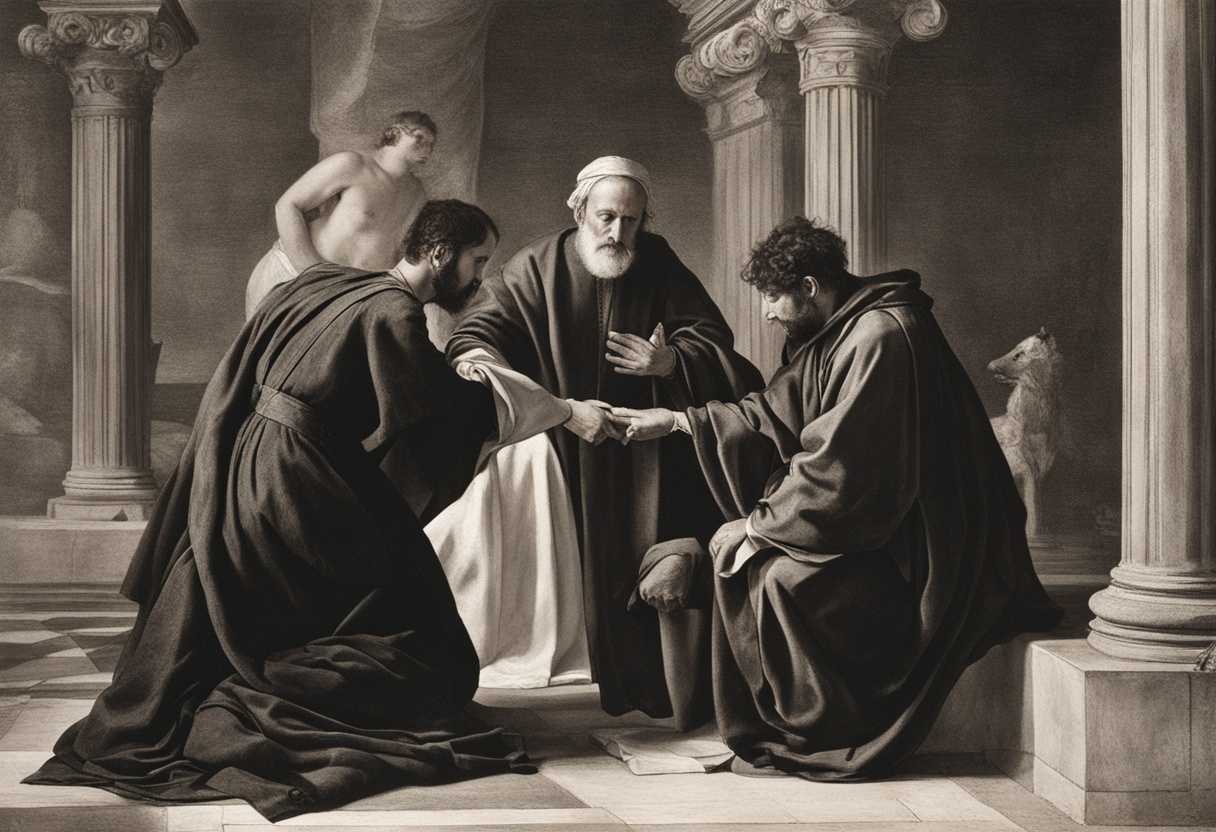
What does Leviticus 14:1-32 really mean?
Leviticus 14:1-32 is about the cleansing rituals for those who have recovered from skin diseases serving as symbolic acts of purification and restoration into the community, reflecting God’s desire for physical, spiritual, and social wholeness. 1 The Lord spoke to Moses, saying, 2 “This shall be the law of the leprous person for the day…