
2 Kings 18:4 is about King Hezekiah removing pagan idols and restoring worship to the One true God in Judah.
4 He removed the high places and broke the pillars and cut down the Asherah. And he broke in pieces the bronze serpent that Moses had made, for until those days the people of Israel had made offerings to it (it was called Nehushtan).
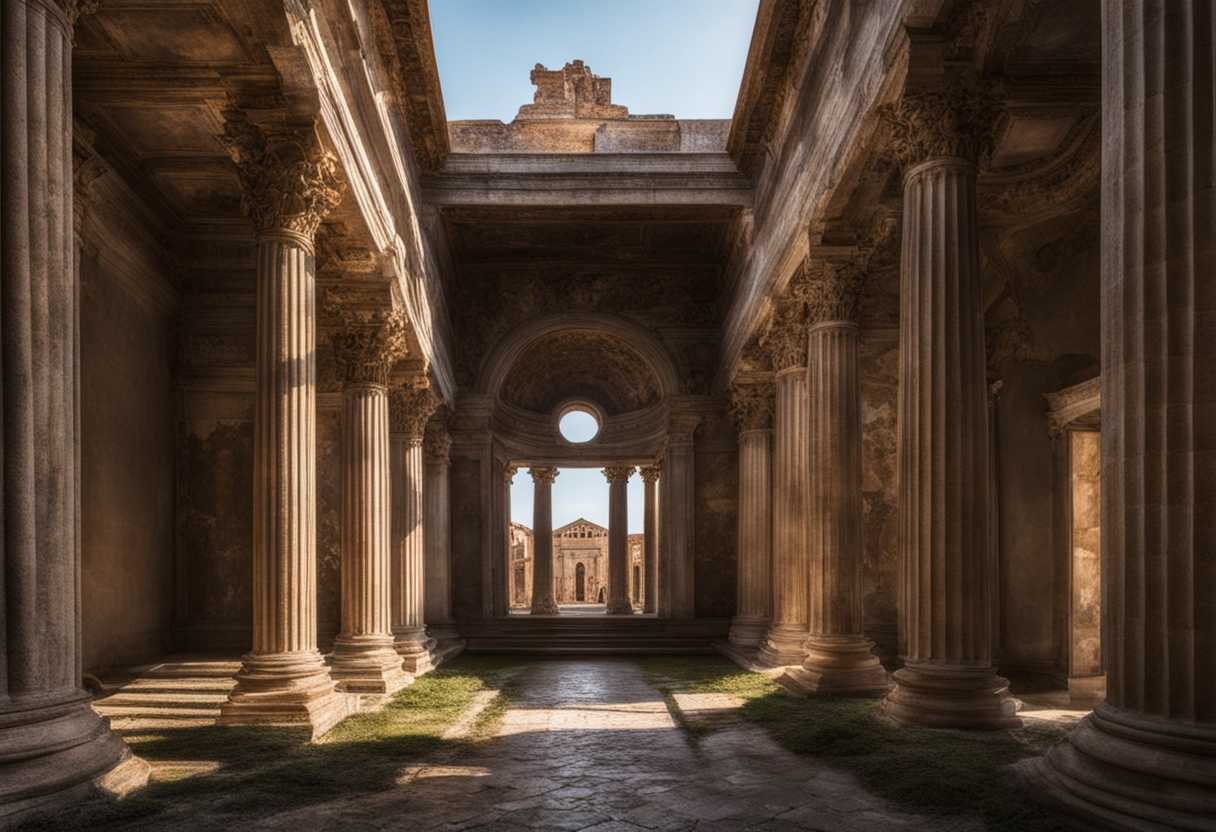
Setting the Scene for 2 Kings 18:4
In 2 Kings chapter 18, we find King Hezekiah of Judah taking a bold and decisive stand for the Lord. He ascends to the throne after his father Ahaz, who had led the kingdom into idolatry and disobedience. Hezekiah wastes no time in initiating sweeping religious reforms, tearing down the high places, smashing the sacred stones, and cutting down the Asherah poles. He restores the worship of the one true God, Yahweh, in the land.
The scene unfolds in the temple of Jerusalem, where King Hezekiah, accompanied by a group of priests and Levites, is fervently leading the people in the purification of the temple. The air is thick with the scent of incense and the sound of prayers and praises reverberates off the stone walls. The golden menorah casts a warm glow over the proceedings as the priests cleanse the sanctuary and consecrate it once more to the worship of the Almighty. The people, inspired by their king’s zeal and devotion, join in wholeheartedly, eager to rid themselves of the defilement that had plagued the land for so long. It is a moment of spiritual renewal and revival, a turning point in the history of Judah as they recommit themselves to following God wholeheartedly.
What is 2 Kings 18:4 about?
This verse illustrates the powerful act of rejecting idolatry and prioritizing worship of God alone. It showcases a profound declaration of faith and commitment to monotheism. A person who removes idolatry from their life chooses to focus their devotion and allegiance solely on God, setting a powerful example for others to follow. Consider how this verse is significant in the context of personal faith and leadership. What kind of impact can one individual’s decision to worship God alone have on their community or society? How does this act of removing idolatry reflect a deep and unwavering commitment to one’s beliefs? We reflect on these questions, reminding us of the importance of staying true to our faith and being a shining example for others to emulate. Let this verse inspire you to prioritize your relationship with God above all else and to lead by example in your commitment to worshiping Him alone.
Understanding what 2 Kings 18:4 really means
During the reign of King Hezekiah of Judah, a period marked by his faithfulness to God, significant religious reforms were initiated to eradicate idolatry and restore proper worship practices. One pivotal verse, 2 Kings 18:4, encapsulates Hezekiah’s resolute commitment to purging the land of idol worship. The phrase “He removed the high places” signifies the eradication of sites dedicated to idol worship, symbolizing a return to the exclusive worship of Yahweh. Additionally, the actions of “smashing the sacred stones and cutting down the Asherah poles” underscore Hezekiah’s bold stance against pagan rituals and objects associated with false deities.
Moreover, the act of “breaking into pieces the bronze snake Moses had made” highlights Hezekiah’s determination to prevent even objects with a holy origin from becoming idols of worship. This deliberate destruction of the Nehushtan serves as a poignant reminder that reverence should be reserved solely for God. The verse’s mention that “the Israelites had been burning incense to it” emphasizes the people’s propensity to elevate even well-intentioned symbols to objects of adoration, thereby diverting their focus from true worship.
Drawing parallels from related biblical passages such as Exodus 20:3-5, which condemns idolatry in the Ten Commandments, and Numbers 21:8-9, which narrates the origin of the bronze snake as a means of God’s deliverance, reinforces the enduring significance of Hezekiah’s actions. Furthermore, the reference to John 3:14-15, where Jesus alludes to the bronze snake as a symbol of His crucifixion, underscores the intended purpose of such symbols as pointers to God’s salvation.
The relevance of 2 Kings 18:4 extends beyond its historical context, serving as a poignant reminder to contemporary audiences about the dangers of idolatry. Today, idolatry manifests not only in physical forms but also in the elevation of material possessions, power, or relationships above God. Hezekiah’s resolute actions prompt introspection, urging individuals to regularly assess their lives and eliminate any distractions that hinder genuine worship.
An illustrative anecdote underscores the importance of prioritizing values over material objects. Just as a family heirloom, once a symbol of unity, can become an idol if revered above familial bonds, Hezekiah’s destruction of the bronze snake underscores the need to refocus on God rather than on symbols or objects of worship.
In conclusion, Hezekiah’s reforms, as depicted in 2 Kings 18:4, serve as a compelling call to contemporary believers to identify and remove modern-day idols that threaten to usurp God’s rightful place in their lives. By emulating Hezekiah’s resolute commitment to authentic worship, individuals can ensure that their devotion remains steadfastly fixed on God, the ultimate source of blessings and salvation.
What idols or distractions do we need to remove?
We must identify and remove any idols or distractions in our lives that hinder our relationship with God in order to follow the example set in this verse. Just like Hezekiah removed the high places and broke down the sacred stones and Asherah poles, we must also take decisive action to eliminate anything that takes precedence over our devotion to God. This can include material possessions, habits, relationships, or even personal ambitions that draw our focus away from Him. We create space for a deeper and more meaningful relationship with God by prioritizing Him above all else and removing idols or distractions from our lives. This verse reminds us of the importance of wholehearted commitment and devotion to God, and by clearing away anything that competes for our attention or affection, we can fully align ourselves with His will and purpose for our lives. Our obedience in removing idols and distractions can open the door to experiencing God’s presence and power in a profound way, just as Hezekiah’s actions brought about spiritual renewal and blessing for the people of Judah.
Application
Embark on your journey of faith like King Hezekiah demolishing false idols. Let this story ignite a flame in your heart to focus on true worship and devotion to God. Take a moment to assess your priorities and put your relationship with the Almighty above all else. Will you courageously eliminate any distractions or idols blocking your path to a deeper connection with God?

Reverend Michael Johnson is an experienced Church Minister with a profound expertise in spirituality and guidance. With a serene presence and a compassionate heart, he has faithfully served his congregation for over 20 years, leading them on a spiritual journey towards inner peace and enlightenment. Reverend Johnson’s extensive knowledge of religious philosophies and profound understanding of human nature have made him a trusted confidant and mentor to many, as he seamlessly weaves his profound wisdom into life teachings. Reverend Johnson’s calming demeanor and empathetic nature continue to uplift and heal souls, nurturing a sense of unity and tranquility within his community.