
Deuteronomy 34:5-7 is about the death of Moses, signifying the completion of his earthly journey and the passing of leadership to Joshua, illustrating the themes of transition, faithfulness, and the appointed timing of God’s plans.
5 So Moses the servant of the Lord died there in the land of Moab, according to the word of the Lord.
6 And he buried him in the valley in the land of Moab, opposite Beth-peor; but no one knows the place of his burial to this day.
7 Moses was 120 years old when he died. His eye was undimmed, and his vigor unabated.
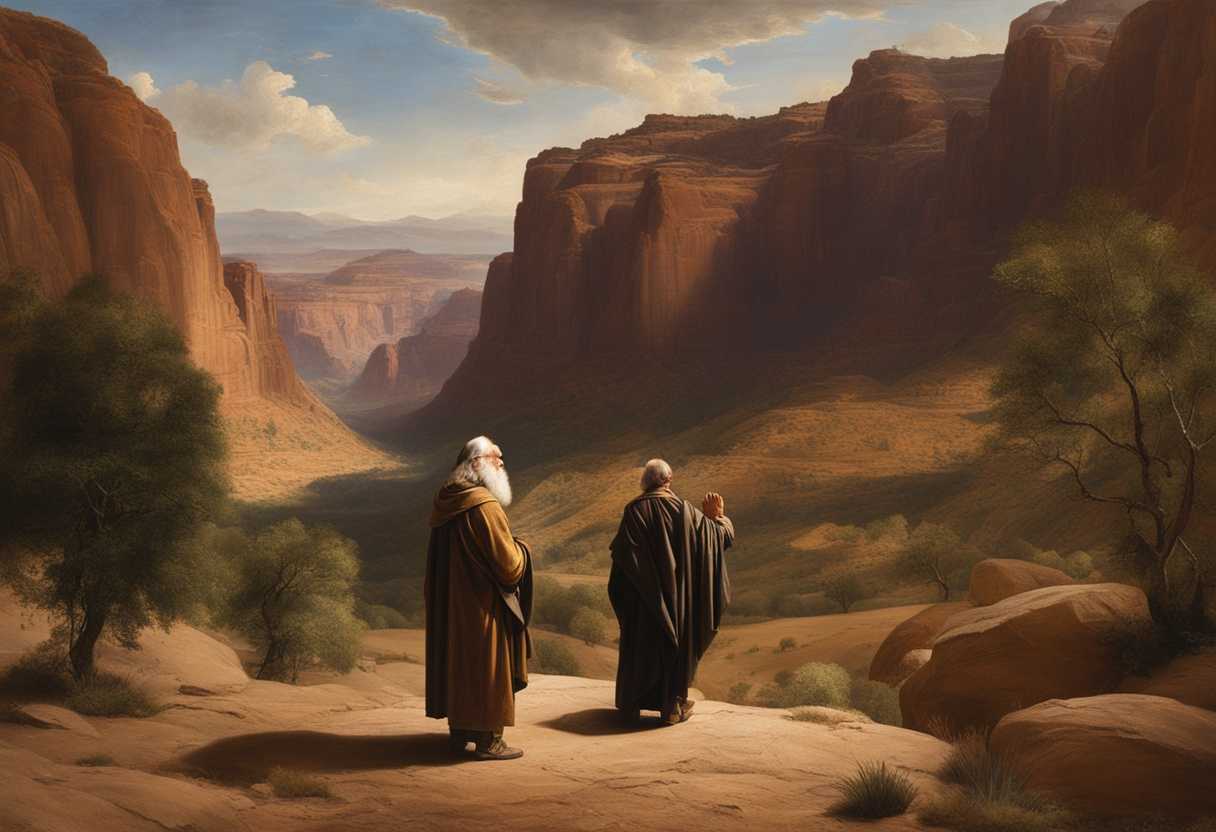
Setting the Scene for Deuteronomy 34:5-7
The scene described in Deuteronomy 34:5-7 takes place on Mount Nebo, overlooking the land of Canaan. Moses, the great leader of the Israelites, stands on the mountain with Joshua, his faithful assistant and successor. The two men have journeyed to this significant location after God showed Moses the Promised Land from a distance but informed him that he would not enter it due to his disobedience at the waters of Meribah.
As Moses and Joshua stand on the mountain, the atmosphere is heavy with a mix of emotions. Moses, who has led the Israelites through the wilderness for forty years, is now facing the end of his journey. His time of leadership is coming to a close, and he knows that he will soon pass away. Joshua, on the other hand, is preparing to step into the role of leading the Israelites into the land that God had promised to their ancestors.
The surroundings are awe-inspiring, with the vast expanse of Canaan stretching out before them. The sun sets in a blaze of colors, casting a warm glow over the land that the Israelites will soon call home. As Moses reflects on his life and the faithfulness of God, he knows that he has fulfilled his purpose in leading the Israelites to this point. And as he prepares to pass the mantle of leadership to Joshua, he does so with a sense of peace and trust in God’s plan for his people.
What is Deuteronomy 34:5-7 about?
Moses, the great leader who guided the Israelites out of slavery in Egypt and received the Ten Commandments from God, comes to the end of his life’s journey in this verse. Despite his incredible leadership and unwavering faith, he is not able to enter the Promised Land. Instead, it is God Himself who buries Moses, highlighting the special relationship Moses had with the Divine. This passing of the torch from Moses to Joshua symbolizes a new chapter for the Israelites, as Joshua steps into the role of leader to bring the people into the land God had promised them.
The verse reminds us of the inevitability of death and the cyclical nature of life. Even the greatest leaders and individuals eventually must come to an end, making room for new beginnings and new leaders to carry on the legacy. It also serves as a lesson in humility and acceptance – showing that even someone as significant as Moses must eventually yield to the will of God. We reflect on this verse and are encouraged to consider how we can leave a positive legacy behind, just as Moses did, and how we can embrace change and new leadership when the time comes.
Understanding what Deuteronomy 34:5-7 really means
In Deuteronomy 34:5-7, we witness the poignant moment of Moses’ passing in the land of Moab. This revered leader, known as the servant of the Lord, had shepherded the Israelites through the wilderness for four decades. Despite his pivotal role, Moses faced the consequence of not being permitted to enter the Promised Land due to a past transgression. The phrase “Servant of the Lord” underscores Moses’ unwavering commitment to God’s mission, a testament to his faithfulness and dedication.
As Moses breathed his last in Moab, it marked the culmination of his earthly journey, a journey filled with trials, triumphs, and divine encounters. The mention of his burial in the valley by the Lord Himself signifies a special honor bestowed upon this faithful servant. Even in death, Moses’ vigor remained undiminished, symbolizing the strength and vitality that God had sustained within him throughout his life.
The account of Moses’ passing resonates with themes of faith, obedience, and the sovereignty of God. Hebrews 11:24-26 sheds light on Moses’ unwavering faith and his choice to align himself with God’s people, prioritizing eternal values over temporary pleasures. Joshua 1:1-2 marks the seamless transition of leadership to Joshua, illustrating the continuity of God’s divine plan unfolding through successive generations.
In our contemporary context, Moses’ life offers profound lessons for believers today. His unwavering commitment to God’s call serves as a model for faithfulness in our own service to the Lord. The narrative underscores the sovereignty of God, reminding us that He orchestrates our lives and destinies according to His perfect will. Moses’ legacy and the transfer of leadership to Joshua underscore the importance of leaving behind a heritage of faith and preparing the next generation for their roles in God’s kingdom.
Consider a dedicated teacher whose impact extends far beyond their years of service, shaping the lives of countless students. Similarly, Moses’ influence endured through Joshua and the Israelites, illustrating the lasting significance of a life dedicated to God’s purposes. This anecdote underscores the enduring impact of faithful service and the ripple effect it can have on future generations.
In conclusion, Deuteronomy 34:5-7 encapsulates the profound truths of faithfulness, divine sovereignty, and the enduring legacy of a life lived in service to God. It prompts us to trust in God’s timing, to embrace His perfect plans, and to labor in His vineyard with the assurance that our efforts are never in vain. Just as Moses’ story continues to inspire and instruct, may we too leave behind a legacy of faith that echoes through the corridors of time.
What does it mean to finish well in life?
To finish well in life means to live a life that is complete and fulfilling, having accomplished the purposes and plans that God has for us. It involves walking in obedience to God’s will and following His commands, even in the face of challenges and obstacles. Finishing well means staying faithful to God until the very end of our lives, just as Moses completed his journey under the guidance and blessing of God.
Finishing well also means leaving a legacy of faith and obedience for future generations to follow. It is about passing on the wisdom and lessons learned from our own experiences to encourage and inspire others in their own journey of faith. Just like how Moses passed the mantle of leadership to Joshua, finishing well involves preparing and equipping others to continue the work God has started in us. God will say “well done, good and faithful servant” to us when we stand before Him at the end of our lives, ultimately signifying finishing well. It is about living a life that brings honor and glory to God, allowing His purposes to be fulfilled through our lives. Just like Moses, who went up to the mountain and died in the presence of God, finishing well means being in a place of peace and rest, knowing that we have run the race set before us with endurance and faithfulness.
Application
Let’s take a moment to think about Moses, a true leader chosen by God, who stayed faithful till the end of his journey. As we ponder Deuteronomy 34:5-7, it’s a call for us to mirror this steadfast commitment in following God’s path, regardless of the uncertainties ahead. Can we match Moses’s unwavering trust in God, accepting all challenges with faith?

Reverend Michael Johnson is an experienced Church Minister with a profound expertise in spirituality and guidance. With a serene presence and a compassionate heart, he has faithfully served his congregation for over 20 years, leading them on a spiritual journey towards inner peace and enlightenment. Reverend Johnson’s extensive knowledge of religious philosophies and profound understanding of human nature have made him a trusted confidant and mentor to many, as he seamlessly weaves his profound wisdom into life teachings. Reverend Johnson’s calming demeanor and empathetic nature continue to uplift and heal souls, nurturing a sense of unity and tranquility within his community.