
10 Then he said to them, “The Lord be with you, if ever I let you and your little ones go! Look, you have some evil purpose in mind.
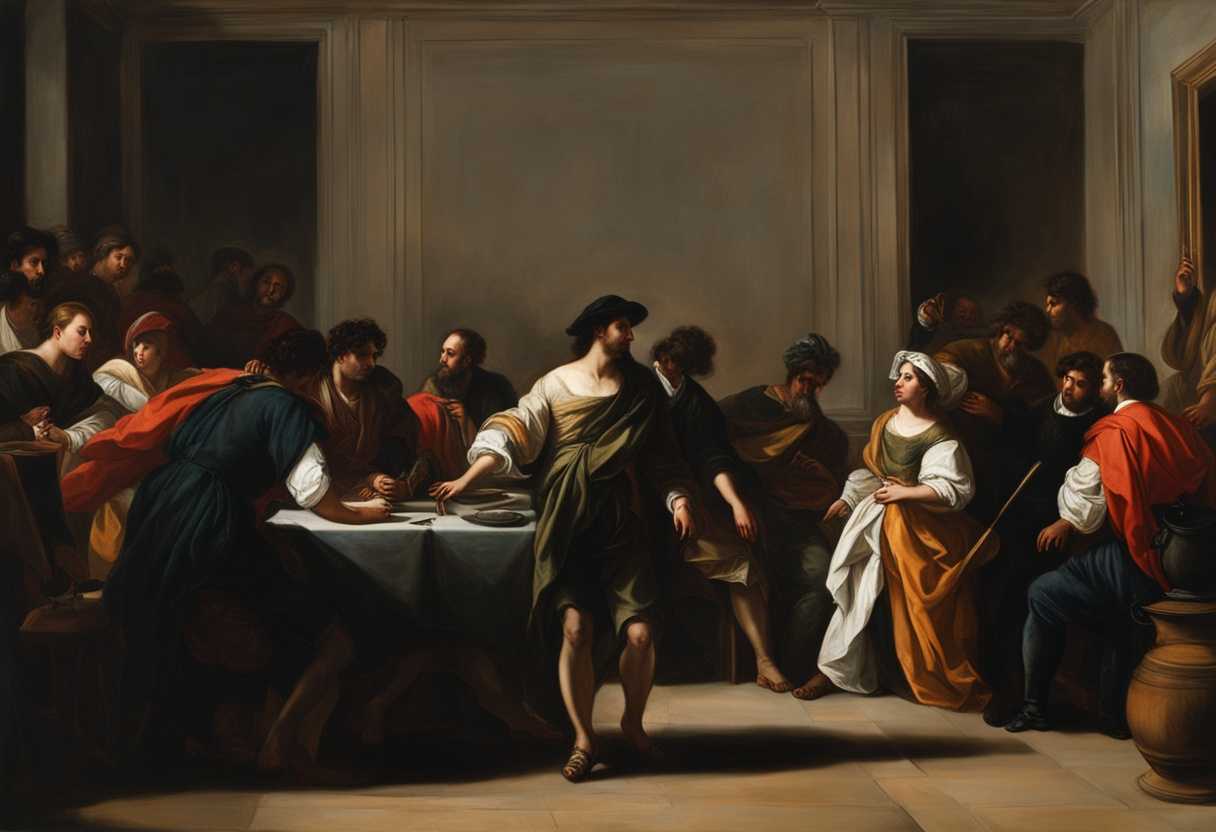
Setting the Scene for Exodus 10:10
In Exodus chapter 10, we find Moses and Aaron standing before Pharaoh in the grand throne room of the Egyptian palace. The room is adorned with intricate hieroglyphics and golden decorations, reflecting the wealth and power of the Pharaoh. Pharaoh, seated on his ornate throne, is surrounded by his advisors and court officials, all dressed in luxurious garments.
Moses and Aaron, representing the God of the Israelites, have come before Pharaoh once again to demand the release of the Israelite slaves. The air is tense as Pharaoh stubbornly refuses their request, his face a mask of defiance and arrogance. The room is filled with an air of anticipation, as everyone present knows that the power of the gods is about to be put to the test.
As the scene unfolds, Moses and Aaron stand firm in their conviction, ready to demonstrate the might of their God through a series of miraculous plagues that will ultimately lead to the liberation of the Israelites from their bondage in Egypt. The clash of wills between Pharaoh and the messengers of God sets the stage for a dramatic showdown that will ultimately shape the course of history.
What is Exodus 10:10 about?
Moses and Aaron confront the powerful Pharaoh, demanding freedom for their people, the Israelites, in this verse, showing a powerful moment of defiance and courage. This pivotal moment in the story of the Israelites’ exodus from Egypt encompasses themes of justice, liberation, and the struggle against oppressive regimes. It showcases the bravery and determination of Moses and Aaron as they stand up for their people’s rights in the face of a tyrant.
Imagine the tension in the air as Moses and Aaron stand before Pharaoh, risking their own safety to advocate for the freedom of their enslaved community. Their actions inspire us to reflect on our own roles in advocating for justice and standing up against oppression. How can we follow in their footsteps and challenge unjust systems in our own lives? This verse serves as a powerful reminder of the importance of speaking truth to power and fighting for freedom and equality for all.
Understanding what Exodus 10:10 really means
Structure for the Commentary:
- Introduction and Context
- Key Phrases and Their Meanings
- Cross-Referencing Other Passages
- Relevance to Modern Readers
- Anecdote for Practical Application
- Conclusion and Call to Reflection
Commentary:
Introduction and Context
Exodus 10:10 situates itself at a pivotal moment in the Exodus narrative, involving the exchange between Pharaoh and Moses during the plagues. Pharaoh’s hard heart is on full display and this verse crystallizes his resistance against God’s command to let His people go. Understanding the gravity of this verse requires recognizing the cumulative weight of the preceding plagues and the stubbornness of Pharaoh.
Key Phrases and Their Meanings
One important phrase is “The LORD be with you. Pharaoh uses it sarcastically in this instance, doubting that God could truly be with Moses and the Israelites if they were to leave. Another critical element is Pharaoh’s mention of evil plans, revealing his skepticism and fear about losing his slave labor. This juxtaposition of divine promise against human skepticism serves to illustrate a broader theological tension.
Cross-Referencing Other Passages
To deepen our understanding, we can cross-reference with Romans 9:17, which speaks about God raising Pharaoh to display His power through Pharaoh’s resistance. Also, consider 1 Samuel 15:23, which narrates Saul’s rebellion and offers insight into the nature of defiance against God’s will. These passages collectively underscore the theme of resistance versus submission to divine authority.
Relevance to Modern Readers
Why does this ancient exchange matter today? Many people in our contemporary context face their own “Pharaohs”—situations that challenge their faith and obedience. The verse calls us to trust in God’s presence, even when the world doubts. It speaks to the skepticism we might face when we choose to follow God’s commandments against societal pressures. John, a modern businessman, felt called to leave his high-paying job to work for a nonprofit. Friends and colleagues, much like Pharaoh, doubted his decision. They questioned whether God was truly with him. But John found strength in his faith, reminiscent of Moses’ confidence, eventually becoming a vessel through which many experienced God’s love and provision. Let’s reflect on the “Pharaohs” in our lives and how we might be called to stand firm in our faith as we ponder Exodus 10:10. Are we willing to trust in God’s presence despite worldly skepticism? This verse beckons us to recognize God’s sovereignty and stay obedient to His call, confident that His purpose will prevail. We can draw deeper spiritual insights and find encouragement for our daily walk with God by engaging critically and thoughtfully with this text.
How can we humble ourselves before God?
To humble ourselves before God means to acknowledge His greatness, authority, and sovereignty over our lives. It involves coming before Him with a heart of reverence, submission, and contrition. We can humble ourselves before God by recognizing our own limitations, weaknesses, and need for His grace and mercy. This involves setting aside our pride, self-reliance, and self-centeredness, and instead, exalting God above all else.
One way to humble ourselves before God is through prayer and seeking His guidance. When we come before Him in prayer, we acknowledge our dependence on Him and show our willingness to submit to His will. Additionally, we can humble ourselves by cultivating a spirit of gratitude and thankfulness for all that God has done for us. We demonstrate our humility before Him by acknowledging His blessings and faithfulness in our lives.
Another way to humble ourselves before God is through acts of service and obedience. When we willingly obey His commands and serve others in His name, we show our desire to follow His ways and honor Him above ourselves. Humility involves putting God and others before our own desires and ambitions, and seeking to live a life that glorifies Him in all that we do.
Application
Reflect on how work and family demand teamwork and listening to others. Just like you respect your boss or trust your family, see humility as crucial in your relationship with God. Recognize you’re not the ultimate boss; God is. Today, focus on letting go of pride—be humble in your thoughts, words, and deeds. How will you show humility and trust in God’s direction today?

Reverend Michael Johnson is an experienced Church Minister with a profound expertise in spirituality and guidance. With a serene presence and a compassionate heart, he has faithfully served his congregation for over 20 years, leading them on a spiritual journey towards inner peace and enlightenment. Reverend Johnson’s extensive knowledge of religious philosophies and profound understanding of human nature have made him a trusted confidant and mentor to many, as he seamlessly weaves his profound wisdom into life teachings. Reverend Johnson’s calming demeanor and empathetic nature continue to uplift and heal souls, nurturing a sense of unity and tranquility within his community.