
Exodus 26:33-34 is about the veil in the tabernacle representing the separation between the holiness of God’s presence and the imperfection of humanity, serving as a reminder of the need for sanctification and redemption to approach God.
33 And you shall hang the veil from the clasps, and bring the ark of the testimony in there within the veil. And the veil shall separate for you the Holy Place from the Most Holy.
34 You shall put the mercy seat on the ark of the testimony in the Most Holy Place.
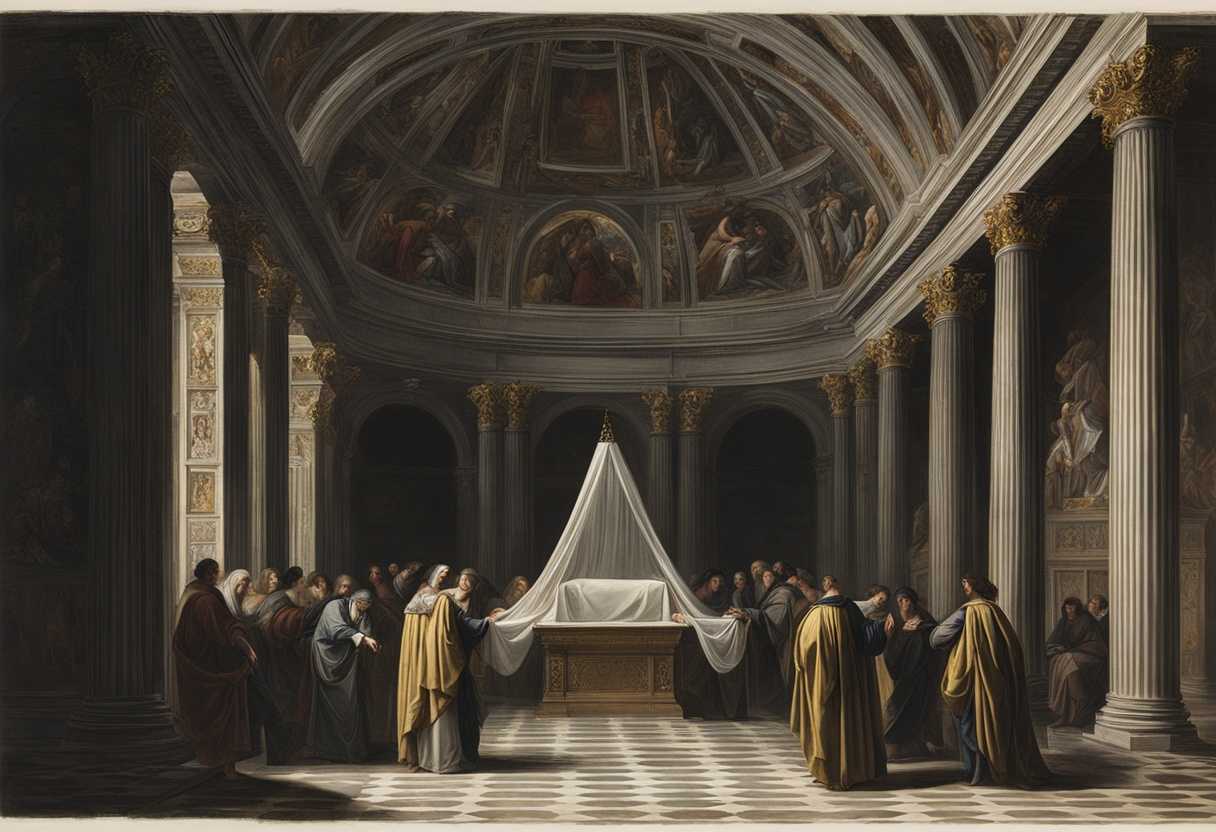
Setting the Scene for Exodus 26:33-34
The scene described in Exodus 26:33-34 takes place in the Tabernacle, a sacred tent constructed by the Israelites in the wilderness under the guidance of Moses. The Tabernacle was a place of worship and sacrifice, where the presence of God dwelt among His people. The verse specifically mentions the innermost part of the Tabernacle, the Most Holy Place, where the Ark of the Covenant was kept.
In this scene, Moses, the leader of the Israelites, is present along with Bezalel and Oholiab, the skilled craftsmen appointed by God to oversee the construction of the Tabernacle. The atmosphere is one of reverence and awe as the final touches are being made to the Tabernacle. The Most Holy Place is illuminated by the light of the golden lampstand, casting a warm glow over the intricately woven curtains and the Ark of the Covenant.
As Moses and the craftsmen stand in the presence of the Most Holy Place, they witness the completion of the Tabernacle according to the precise instructions given to them by God. The cloud of God’s glory descends upon the Tabernacle, filling the space and signifying His presence among His people. It is a moment of great significance and holiness, as the Israelites prepare to embark on their journey with God leading them every step of the way.
What is Exodus 26:33-34 about?
Ah, the curtain in the temple, a powerful symbol with profound meaning. Imagine standing in the Holy Place, feeling the weight of the world outside with its distractions and chaos. Then, there is this curtain, separating you from the Most Holy Place, the dwelling of God’s presence. It represents the separation between humanity and the divine, the sacred and the profane. As you gaze at the tearing of this curtain during Jesus’s crucifixion, consider its significance. The tearing of the curtain symbolizes the breaking down of barriers between God and humanity. It signifies access to God’s presence for all, not just a select few. It speaks of reconciliation, grace, and the unification of all believers with their Creator.
Let this image of the curtain remind you of the power of Christ’s sacrifice and the invitation for each of us to enter boldly into God’s presence. Reflect on the freedom and intimacy we have with God because of Jesus’ sacrifice. Embrace the truth that you are welcomed into the Most Holy Place with open arms, no longer separated by a mere curtain.
Understanding what Exodus 26:33-34 really means
In Exodus 26:33-34, we delve into the intricate details of the construction of the Tabernacle, a sacred space where God would dwell among the Israelites. This Tabernacle held immense significance in the Old Testament as a tangible symbol of God’s presence and holiness among His people. The verse specifically mentions the veil that separates the Holy Place from the Most Holy, highlighting the importance of this physical and symbolic barrier in maintaining the sanctity of God’s dwelling place. This separation underscores the inherent holiness of God and the need for a barrier due to the sinfulness of humanity, emphasizing the reverence and awe with which the Israelites approached the presence of the Almighty.
Furthermore, the instruction to place the mercy seat on the Ark of the Covenant in the Most Holy Place holds profound meaning. The mercy seat served as the cover of the Ark, signifying the place where God’s presence would manifest. It symbolized atonement and reconciliation between God and His people, offering a glimpse of the grace and forgiveness that God extends to those who seek Him. The mercy seat stood as a powerful reminder of God’s willingness to forgive sins and restore the broken relationship between Creator and creation.
In Hebrews 9:3-5, the New Testament reflects on the significance of the Most Holy Place and the mercy seat, drawing parallels between the Old Testament practices and the ultimate sacrifice of Jesus Christ. The tearing of the temple veil at Jesus’ crucifixion, as depicted in Matthew 27:51, symbolizes the removal of the barrier between God and humanity, signifying the direct access believers now have to the Father through Christ’s sacrifice. Leviticus 16:2 further emphasizes the need for atonement and purification, pointing to the continuous theme of reconciliation and forgiveness throughout Scripture.
The relevance of these concepts to people today is profound. The idea of separation and atonement underscores the universal need for reconciliation with God, highlighting the brokenness that sin causes in our relationship with Him. Through Jesus’ sacrifice, believers now have direct access to God, eliminating the need for a physical veil or intermediary. This accessibility to the mercy seat through faith in Christ exemplifies the unmerited grace and love that God extends to all who seek Him.
Consider a story of someone who felt distant from God due to their mistakes but found reconciliation and peace through faith in Jesus. This narrative mirrors the tearing of the veil and the accessibility of the mercy seat, illustrating how God’s grace is available to everyone, regardless of past transgressions. It serves as a poignant reminder of the transformative power of God’s forgiveness and the restoration that comes through a relationship with Him.
In conclusion, understanding the symbolism of the Tabernacle and its fulfillment in Christ is crucial for believers today. Reflecting on our own relationship with God and the access we have to His presence through Jesus is paramount in deepening our faith and experiencing the fullness of His grace. Let us embrace the profound truth that through Christ, we have been reconciled to God, and His mercy seat is open to all who seek forgiveness and restoration.
How can we ensure God’s presence in our lives?
To ensure God’s presence in our lives, we can create a sacred space within ourselves where we invite Him to dwell. We can dedicate a space in our hearts and minds for Him to reside, just as in the verse you referenced where God instructs the Israelites to set up a tabernacle for His presence. We can do this by setting aside time for prayer, meditation, and reflection, allowing God to enter and fill us with His presence.
Furthermore, staying connected to God through regular spiritual practices such as reading scripture, attending worship services, and participating in community gatherings can help us maintain a strong bond with Him. We can ensure that His presence remains with us and guides us in all that we do by actively seeking His guidance and wisdom in our daily lives.
Lastly, cultivating a spirit of humility, gratitude, and openness to God’s will can also invite His presence into our lives. We make space for God’s presence to work within us and lead us on the path He has chosen for us by surrendering our own desires and ego. It is through these intentional actions and attitudes that we can ensure God’s presence remains a constant force in our lives.
Application
Step into the sanctuary of your soul, where God’s presence eagerly awaits your pure heart and devotion. Embrace the sacred connection and approach with reverence, honoring the divine with every step you take. Let this scripture ignite a fire within you to deepen your faith and draw closer to the light of your spiritual path. Will you respond to this divine call for intimacy and reverence with unwavering dedication and love?

Reverend Michael Johnson is an experienced Church Minister with a profound expertise in spirituality and guidance. With a serene presence and a compassionate heart, he has faithfully served his congregation for over 20 years, leading them on a spiritual journey towards inner peace and enlightenment. Reverend Johnson’s extensive knowledge of religious philosophies and profound understanding of human nature have made him a trusted confidant and mentor to many, as he seamlessly weaves his profound wisdom into life teachings. Reverend Johnson’s calming demeanor and empathetic nature continue to uplift and heal souls, nurturing a sense of unity and tranquility within his community.