
1 Now after this, in the reign of Artaxerxes king of Persia, Ezra the son of Seraiah, son of Azariah, son of Hilkiah,
2 He went up from Babylonia, and he was a scribe skilled in the Law of Moses that the Lord, the God of Israel, had given, and the king granted him all that he asked, for the hand of the Lord his God was on him.
3 who was of the sons of Aaron, the chief priest—this Ezra went up from Babylonia. He was a scribe skilled in the Law of Moses that the Lord, the God of Israel, had given, and the king granted him all that he asked, for the hand of the Lord his God was on him.
4 the son of Zerahiah, son of Uzzi, son of Bukki,
5 the son of Abishua, son of Phinehas, son of Eleazar, son of Aaron the chief priest—
6 this Ezra went up from Babylonia. He was a scribe skilled in the Law of Moses that the Lord, the God of Israel, had given, and the king granted him all that he asked, for the hand of the Lord his God was on him.
7 And there went up also to Jerusalem, in the seventh year of Artaxerxes the king, some of the people of Israel, and some of the priests and Levites, the singers and gatekeepers, and the temple servants.
8 And Ezra came to Jerusalem in the fifth month, which was in the seventh year of the king.
9 For on the first day of the first month he began to go up from Babylonia, and on the first day of the fifth month he came to Jerusalem, for the good hand of his God was on him.
10 For Ezra had set his heart to study the Law of the Lord, and to do it and to teach his statutes and rules in Israel.
11 This is a copy of the letter that King Artaxerxes gave to Ezra the priest, the scribe, a man learned in matters of the commandments of the Lord and his statutes for Israel:
12 Artaxerxes, king of kings, to Ezra the priest, the scribe of the Law of the God of heaven. Peace. And now
13 I make a decree that all those of the people of Israel and their priests and the Levites in my realm who freely offer to go to Jerusalem may go with you.
14 For you are sent by the king and his seven counselors to make inquiries about Judah and Jerusalem according to the Law of your God, which is in your hand,
15 and to carry the silver and gold that the king and his counselors have freely offered to the God of Israel, whose dwelling is in Jerusalem,
16 and all the silver and gold that you find in all the province of Babylonia, with the freewill offerings of the people and the priests, vowed willingly for the house of their God that is in Jerusalem.
17 with this money, then, you shall with all diligence buy bulls, rams, and lambs, with their grain offerings and their drink offerings, and you shall offer them on the altar of the temple of your God that is in Jerusalem.
18 And whatever else is required for the house of your God, which it falls to you to provide, you may provide it out of the king’s treasury.
19 The vessels that have been given you for the service of the house of your God, you shall deliver before the God of Jerusalem.
20 And whatever else is required for the house of your God, which it falls to you to provide, you may provide it out of the king’s treasury.
21 “And I, Artaxerxes the king, make a decree to all the treasurers in the province Beyond the River: Whatever Ezra the priest, the scribe of the Law of the God of heaven, requires of you, let it be done with all diligence,
22 up to 100 talents of silver, 100 cors of wheat, 100 baths of wine, 100 baths of oil, and salt without prescribing how much.
23 Whatever is decreed by the God of heaven, let it be done in full for the house of the God of heaven, lest his wrath be against the realm of the king and his sons.
24 We also notify you that it shall not be lawful to impose tribute, custom, or toll on anyone of the priests, the Levites, the singers, the doorkeepers, the temple servants, or other servants of this house of God.
25 And you, Ezra, according to the wisdom of your God that is in your hand, appoint magistrates and judges who may judge all the people in the province Beyond the River, all such as know the laws of your God. And those who do not know them, you shall teach.
26 Whoever will not obey the law of your God and the law of the king, let judgment be strictly executed on him, whether for death or for banishment or for confiscation of his goods or for imprisonment.”
27 Blessed be the Lord, the God of our fathers, who put such a thing as this into the heart of the king, to beautify the house of the Lord that is in Jerusalem,
28 I took courage, for the hand of the Lord my God was on me, and I gathered leading men from Israel to go up with me.
The True Meaning of Ezra 7
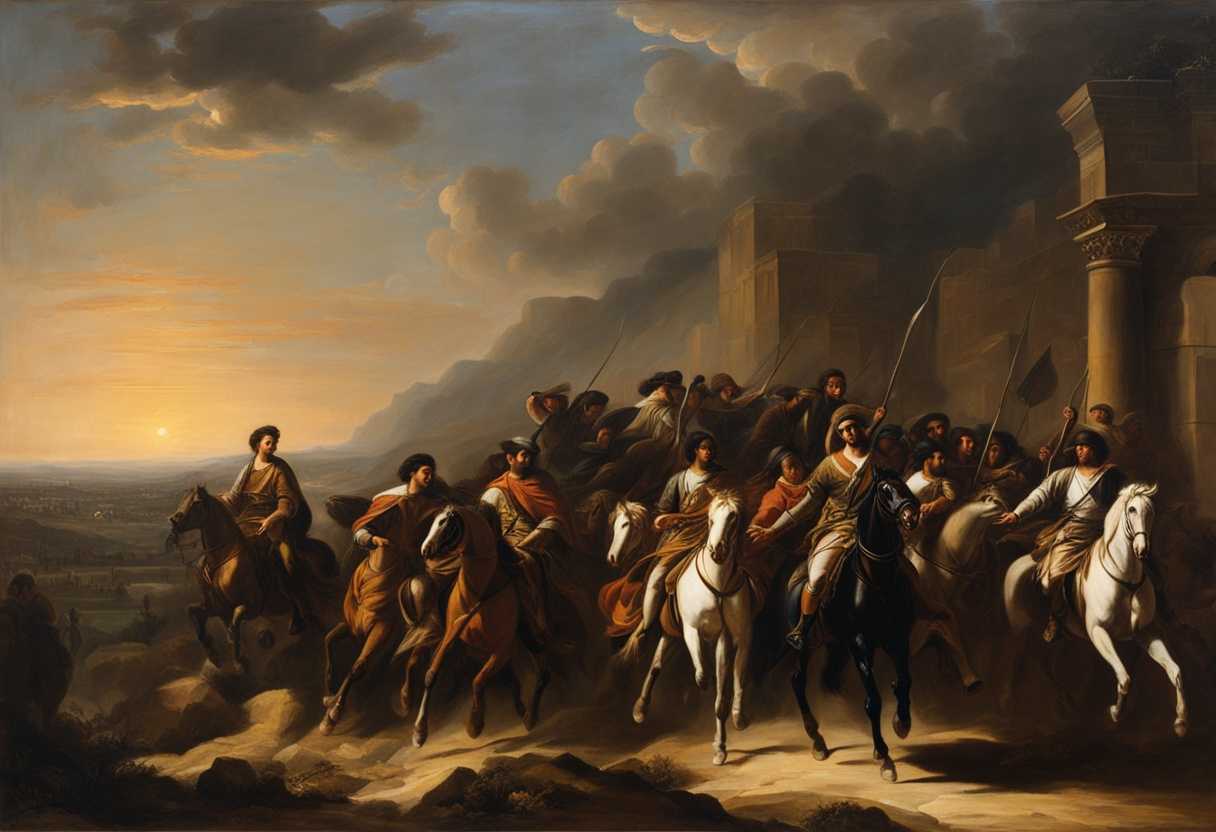
The book of Ezra was written by the prophet Ezra, a scribe and priest who played a crucial role in the restoration of the Jewish people after their exile in Babylon. Ezra will face the daunting task of leading the people back to their ancestral homeland and rebuilding their spiritual and social foundations in this chapter.
Ezra’s arrival in Jerusalem marks a significant turning point, as he must confront the challenges of a community struggling to reestablish its identity and relationship with God. The chapter foreshadows the difficult decisions Ezra will have to make, as he navigates the complexities of religious and political tensions within the community. We will see how Ezra’s unwavering faith and commitment to the law of Moses will guide him through these turbulent times, echoing the words of the psalmist who declared, “Your word is a lamp to my feet and a light to my path” (Psalm 119:105). As we delve into this chapter, we will gain insights into the importance of spiritual leadership, the power of prayer, and the resilience of a people determined to rebuild their lives and their relationship with the Almighty. The events unfolding in Ezra 7 will remind us of the enduring nature of God’s promises and the transformative power of obedience to His commands.
Ezra 7:1-6
Ezra 7:1-6 reads, “Now after these things, in the reign of Artaxerxes king of Persia, Ezra the son of Seraiah, the son of Azariah, the son of Hilkiah, the son of Shallum, the son of Zadok, the son of Ahitub, the son of Amariah, the son of Azariah, the son of Meraioth, the son of Zerahiah, the son of Uzzi, the son of Bukki, the son of Abishua, the son of Phinehas, the son of Eleazar, the son of Aaron the chief priest— this Ezra came up from Babylon; and he was a skilled scribe in the Law of Moses, which the Lord God of Israel had given. The king granted him all his request, according to the hand of the Lord his God upon him. The introduction of Ezra takes place in this section. Ezra is listed along with his lineage going back to Aaron, the chief priest. This genealogy establishes Ezra’s priestly and Levitical credentials, showing his descent from the line of Aaron, Israel’s first high priest. This was significant, as it highlights the importance of his religious authority and legitimacy for what he is about to undertake in Jerusalem, particularly in matters pertaining to the temple and worship.
Furthermore, the mention of King Artaxerxes granting Ezra all his requests, attributing it to the hand of the Lord his God upon him, is significant. This illustrates how God can work through secular rulers to accomplish His purposes. It also reveals God’s faithfulness in fulfilling His promises to His people, as He had stirred the heart of the king to favor Ezra and the Jewish people. This verse reminds us of God’s sovereignty over all things, including the hearts of kings, and serves as a testimony to the power of faith and prayer in aligning with God’s will.
Ezra being described as a skilled scribe in the Law of Moses is noteworthy. It emphasizes Ezra’s deep knowledge and understanding of the Torah, which would be crucial for his role in teaching and upholding the law among the returned exiles in Judah. Being well-versed in the Law of Moses enabled Ezra to lead the people in matters of faith, obedience, and proper worship, ensuring that they followed God’s commands and stayed faithful to their covenant with Him. This highlights the importance of studying and knowing God’s Word for effective leadership and spiritual guidance.
The narrative of Ezra’s journey from Babylon to Jerusalem also echoes the theme of return and restoration, mirroring the earlier return of the exiles under the leadership of Zerubbabel. This return symbolizes a spiritual and national revival, as the people were being reestablished in their homeland and reconnected to their faith and heritage. It signifies a new beginning for the community as they seek to rebuild their lives and renew their commitment to God. The mention of Ezra’s genealogy linking him back to Aaron, the brother of Moses, in connection to other verses in the Bible is significant as it reaffirms the priestly lineage established by God in the Old Testament. This lineage would continue until the ultimate High Priest, Jesus Christ, who would fulfill and surpass all the roles and duties of the priesthood. The priesthood of Jesus Christ is often compared to the order of Melchizedek in the book of Hebrews, emphasizing His eternal and perfect priesthood that supersedes the Levitical priesthood represented by Ezra.
Ezra 7:7-10
Several crucial sections in this passage from Ezra 7:7-10 reveal significant insights into the character of Ezra and the exemplary qualities he possessed as a leader and teacher of the law.
Firstly, the verse mentions that Ezra was a teacher well versed in the law of Moses, which the Lord, the God of Israel, had given. This highlights Ezra’s deep knowledge and understanding of the scriptures, particularly the teachings and commandments of God as given to Moses. It emphasizes the importance of not only knowing the scriptures but also living by them faithfully. This serves as a reminder for all believers to prioritize studying and following the word of God diligently in their lives.
Furthermore, it states that the king granted Ezra everything he asked for because the hand of the Lord his God was on him, indicating God’s favor and blessing upon Ezra. This demonstrates the significance of seeking God’s guidance and favor in all endeavors, as well as the importance of faithfulness and obedience in God’s eyes. It is a powerful reminder that when we align our hearts with God’s will and seek Him first, He will provide for our needs and grant us success.
Additionally, Ezra had set his heart on studying and practicing the law of the Lord, as well as teaching its decrees and laws in Israel. This shows Ezra’s dedication and commitment to God’s word, not only in his personal life but also in his mission to teach and guide others in following God’s commandments. It underscores the vital role of teaching and sharing the truth of God’s word with others, inspiring believers to be steadfast in their faith and to actively participate in spreading God’s message of love and redemption. Ezra’s lineage is traced back to Aaron, the chief priest, highlighting his priestly heritage and his position as a spiritual leader among the people of Israel. This lineage gave Ezra credibility and authority in matters of faith and religious practice, reinforcing his role as a respected teacher and interpreter of God’s law. It underscores the significance of honoring and upholding the traditions and teachings passed down from generation to generation, recognizing the importance of continuity and faithfulness in preserving the faith. Ezra’s character as a faithful servant of God, a knowledgeable teacher of the law, and a devoted leader of Israel is powerfully demonstrated in this passage from Ezra 7:7-10. It offers timeless lessons on the importance of studying, practicing, and teaching God’s word, seeking His favor and guidance in all endeavors, and upholding the traditions of faith with integrity and reverence. Believers are encouraged to emulate Ezra’s steadfast devotion to God and his unwavering commitment to living out the truth of Scripture in their own lives by reflecting on his story and the values he embodied.
Ezra 7:11-20
King Artaxerxes of Persia gave a detailed account of the commission to Ezra the priest and scribe in Ezra 7:11-20. This portion of the text begins by stating that King Artaxerxes granted Ezra everything he requested because the gracious hand of his God was on him. This shows divine favor and intervention at work, emphasizing the providence of God in the lives of His people, even in the midst of foreign rulers and lands.
Ezra is described as a scribe skilled in the Law of Moses, which is significant as it highlights his deep knowledge and understanding of God’s Word. This expertise would be essential as Ezra was tasked with instructing the people in Judah according to the law of their God that was in his hand. The emphasis on the importance of the law reflects the significance of God’s Word in guiding His people and ensuring their faithfulness and obedience. King Artaxerxes instructs Ezra to appoint magistrates and judges who would judge the people according to the law of God and to teach those who do not know it. This directive underscores the importance of wise leadership and the role of the spiritual leaders in guiding the community in alignment with God’s laws. It highlights the idea that individuals are accountable to God’s laws and that there is a responsibility to educate others in the ways of the Lord. Ezra is granted resources for the temple worship and sacrifices in the later part of this passage, including gold and silver, as well as the donations of the Israelites in Babylon. This support from the Persian king and the Jewish community in Babylon displayed God’s provision and how He can move the hearts of even foreign rulers to support His people and His work.
The provisions given to Ezra by King Artaxerxes can be compared to the story of King Solomon, who also received blessings of wisdom, wealth, and favor from foreign kings like the Queen of Sheba (1 Kings 10:1-13). This parallel emphasizes the idea that God is sovereign over all rulers and nations, and He can use even those outside the faith to fulfill His plans and purposes. God’s faithfulness and provision for His people, His emphasis on the importance of His law, and how He can use even foreign rulers to accomplish His will are reminders in this passage in Ezra 7. It encourages believers to trust in God’s sovereignty, follow His commands, and be diligent in teaching and obeying His Word.
Ezra 7:21-26
The verses in Ezra 7:21-26 can be broken down into several important sections. Firstly, Ezra, a devoted scribe and priest, is empowered by King Artaxerxes of Persia to lead a group of returning exiles to Jerusalem, along with their resources for the temple. The king gives Ezra significant authority over the region, including the power to enforce the law of God and administer justice. Secondly, Ezra is commanded by the king to ensure the proper worship of God in Jerusalem, using the resources provided like silver and gold, to purchase bulls, rams, and lambs, along with their grain offerings and drink offerings. These are to be offered on the altar of the temple in Jerusalem. Authority, obedience, and worship are seen as important in this passage. Firstly, the authority given to Ezra by King Artaxerxes symbolizes the way that God can work through earthly leaders to achieve His purposes. Despite being in a foreign land under foreign rulers, Ezra is given authority not just to rebuild the temple physically, but also to establish the spiritual and moral foundation of the returning community. This reflects the broader biblical theme of God using unlikely individuals in unexpected ways to accomplish His plans. It also highlights the importance of respect for authority and the value of seeking the welfare of the place where God has planted His people, even if it is not their homeland.
The command for proper worship in Jerusalem is another key aspect of these verses. The offerings of animals and grain symbolize the need for both atonement for sin and gratitude towards God. The meticulous instructions on how these offerings are to be made reflects the importance of obedience to God’s specific commands. It reminds us of the concept of worship not just in outward rituals but in our daily lives; worship that is sincere, sacrificial, and prescribed by God Himself. This is in line with verses such as Micah 6:6-8 which speaks about what the Lord requires of His people: to act justly, to love mercy, and to walk humbly with their God.
Ezra’s journey and the restoration of worship in Jerusalem are part of the larger narrative of the Jewish people’s return from exile. This period was not only about physical restoration but more importantly, spiritual renewal and obedience to God’s law. The return from exile was a time of rebuilding not just the temple but also the community’s relationship with God. It was about restoring their identity as God’s chosen people and shaping their lives according to His will. This section in Ezra is a testament to God’s faithfulness in preserving a remnant and in keeping His promises to His people, even in the midst of exile and hardship. It underscores the importance of staying connected to God and His commandments, regardless of the circumstances. The story of Ezra highlights that God’s plans and purposes always prevail, and His people are called to submit to His authority, worship Him in spirit and truth, and participate in His redemptive work in the world.
Ezra 7:27-28
The passage in Ezra 7:27-28 can be broken down into a few important sections.
-
“Blessed be the Lord, the God of our ancestors, who put such a thing as this into the heart of the king to glorify the house of the Lord in Jerusalem, and who extended to me steadfast love before the king and his counsellors, and before all the king’s mighty officers. I took courage, for the hand of the Lord my God was upon me, and I gathered leaders from Israel to go up with me. Ezra expresses his gratitude and praise to God for influencing the heart of King Artaxerxes to support the rebuilding of the temple in Jerusalem in this section. Ezra acknowledges that it was God who stirred the king’s heart and granted him favor in the eyes of the king and his officials. This passage highlights the importance of God’s sovereignty and His ability to work through earthly rulers to accomplish His purposes. It also emphasizes the theme of divine providence, where God orchestrates events to fulfill His plans.
-
“Now, my God, I am ashamed and blush to lift my face to you, my God, for our iniquities have risen higher than our heads, and our guilt has mounted up to the heavens. From the days of our ancestors to this day we have been deep in guilt, and for our iniquities we, our kings, and our priests have been handed over to the kings of the lands, to the sword, to captivity, to plundering, and to utter shame, as is now the case. Ezra acknowledges the sins of the Israelites throughout their history in this section and recognizes that their current state of exile and shame is a result of their disobedience and transgressions against God. He humbly confesses the sins of the people, including their leaders, and recognizes that they have been disciplined by God for their wrongdoing. This passage underscores the importance of repentance and humility before God, as well as the consequences of disobedience. It also serves as a reminder of God’s faithfulness in disciplining His people in order to bring about repentance and restoration.
-
“But now, for a brief moment, favor has been shown by the Lord our God, who has left us a remnant, and given us a stake in his holy place, in order that he may brighten our eyes and grant us a little sustenance in our slavery. For we are slaves; yet our God has not forsaken us in our slavery, but has extended to us his steadfast love before the kings of Persia, to give us new life to set up the house of our God, to repair its ruins, and to give us a wall in Judea and Jerusalem. Ezra acknowledges God’s mercy and favor in allowing a remnant to return to Jerusalem to rebuild the temple in this final section. Despite their enslaved state, God has not abandoned them but has shown them love and given them hope for a future. This passage highlights God’s faithfulness to His promises and His ability to bring restoration out of brokenness. It also emphasizes the importance of trusting in God’s provision and sovereignty, even in the midst of challenging circumstances. Ezra 7 conveys themes of divine providence, repentance, restoration, humility, and God’s faithfulness. They remind readers of the importance of acknowledging sin, seeking forgiveness, and trusting in God’s plan even in times of adversity. The story of Ezra exemplifies faithfulness, obedience, and reliance on God’s guidance, serving as a model for believers to follow in their own journeys of faith.
After Ezra 7
The reverend solemnly closed the book, his eyes reflecting the weight of the words he had just read. He knew the journey ahead would not be an easy one as he stood. Yet, the Lord’s hand was upon them, guiding their steps. With a deep breath, the reverend turned to the congregation, his voice steady as he spoke the final words that would lead them into the next chapter of their story.
“My brothers and sisters, we have seen the faithfulness of our God in the life of Ezra. Though the road ahead may be long and the challenges great, we must not lose heart. For the Lord has promised to be with us, to strengthen and protect us. His ways are higher than our own, so let us take courage and follow where He leads.”
The reverend paused, his gaze sweeping across the faces of the faithful. “And so, we now turn our eyes to the next chapter, where we shall see the hand of God at work, shaping the future of His people. We will go forth, with faith and determination, to fulfill the calling He has placed upon our lives.”

Reverend Michael Johnson is an experienced Church Minister with a profound expertise in spirituality and guidance. With a serene presence and a compassionate heart, he has faithfully served his congregation for over 20 years, leading them on a spiritual journey towards inner peace and enlightenment. Reverend Johnson’s extensive knowledge of religious philosophies and profound understanding of human nature have made him a trusted confidant and mentor to many, as he seamlessly weaves his profound wisdom into life teachings. Reverend Johnson’s calming demeanor and empathetic nature continue to uplift and heal souls, nurturing a sense of unity and tranquility within his community.