
13 In the six hundred and first year, in the first month, the first day of the month, the waters were dried from off the earth. And Noah removed the covering of the ark and looked, and behold, the face of the ground was dry.
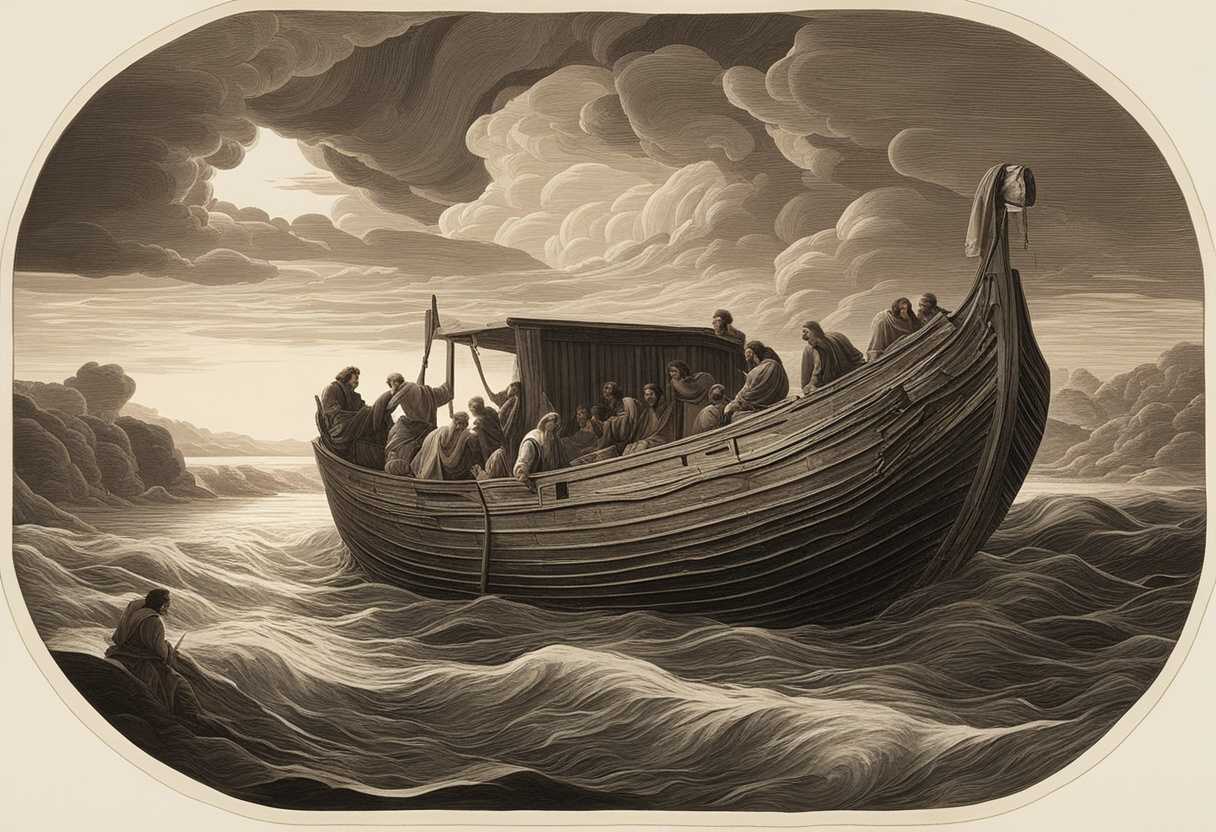
Setting the Scene for Genesis 8:13
After the great flood described in Genesis chapter 7, the waters began to recede, and Noah, his family, and all the animals on the ark waited for the land to dry. As the days passed, the ark came to rest on the mountains of Ararat. It was a moment of both relief and anticipation as they had been on the ark for many days.
Noah, his wife, his three sons (Shem, Ham, and Japheth), and their wives cautiously opened the door of the ark to survey the new world before them. The scene was one of desolation and yet promise, with the earth still bearing the scars of the flood but also showing signs of new life beginning to emerge. The air was fresh, the sun was shining, and the sound of birds could be heard in the distance.
As they stepped out onto the dry ground, a sense of gratitude and awe filled their hearts. They knew that they had been spared from the destruction that had befallen the earth, and they were filled with hope for the future. It was a moment of new beginnings, as they prepared to fulfill God’s command to be fruitful and multiply and repopulate the earth.
What is Genesis 8:13 about?
This verse from the story of Noah’s Ark in the Bible carries significant meaning. It signifies a moment of hope and new beginnings after a period of waiting and uncertainty. Imagine the relief and joy Noah must have felt after seeing that the floodwaters had receded, and the dry land signaled a fresh start. It symbolizes the end of a challenging chapter and the beginning of a new phase filled with promise and opportunities.
When reflecting on this verse, it begs the question: What coverings do we need to remove in our own lives to see the dry ground ahead of us? Are there obstacles or fears that we need to let go of to move forward towards positivity and renewal? Just as Noah uncovered the ark to reveal the dry land, we too must be willing to uncover and confront our challenges to find clarity and a path towards our own new beginnings. Let this verse serve as a reminder that even after the storms of life, there is always the possibility of a fresh start if we have faith and persevere.
Understanding what Genesis 8:13 really means
Themes that resonate deeply not only in the scriptural context but also in our everyday lives are observed in Genesis 8:13, marking a profound moment of transition and renewal. We will first delve into its immediate significance in the narrative of Noah, then expand upon the symbolic interpretations, and finally, connect these themes to contemporary relevance and personal application.
The verse marks the end of Noah’s ordeal as he sees that the earth has dried. This physical observation carries a deep spiritual weight, signifying a moment of rebirth and the opportunity to start anew. This is not merely about the subsiding of floodwaters, but also about the cleansing of the earth, which parallels other biblical stories of purification and renewal. For instance, in 2 Peter 3:10-13, the world is described as being purified by fire, paving the way for a new heaven and new earth. The echo of renewal in Genesis 8:13 serves as a reminder of God’s ongoing work in rejuvenating the fallen world.
The imagery of the dry earth also speaks volumes about the promise and steadfastness of God’s word. We see a metaphor for God’s word being fulfilled in tangible and transformative ways as rain and snow descend from the heavens to make the earth fruitful before returning, as seen in Isaiah 55:10-11. Noah stepping onto the dry ground is symbolic of stepping into a new promise, a physical affirmation of divine fidelity.
Why is this relevant today? The concept of renewal is ever-present in our lives, whether it’s the start of a new year, overcoming a personal challenge, or beginning a new chapter in life. Each of these moments can be seen as modern-day parallels to Noah’s experience—times when we can step out in faith into new promises, guided by the lessons learned from the past.
An anecdote that brings this home could involve a community that, after experiencing devastating losses due to unforeseen circumstances—perhaps a natural disaster or economic collapse—came together to rebuild stronger communal bonds and infrastructures. Here, the ‘dry ground’ symbolizes the new foundations laid down by a community determined to renew itself, mirroring Noah’s experience of stepping into a new world post-deluge. Genesis 8:13 challenges us to reflect on our own moments of transition and renewal, despite its simplicity. Reflect on this passage and consider what floodwaters in your life need to subside. And what new beginnings might dry ground herald for you? Engage with these questions to find personal meaning and direction, as inspired by this pivotal biblical event.
How can we honor God’s timing in our lives?
We can honor God’s timing in our lives by being patient and trusting in His perfect plan. Just as Noah patiently waited for God’s timing after the flood, we too must trust that God knows what is best for us and will bring about his plans in his perfect timing. Sometimes, we may experience delays or setbacks that we do not understand, but we can rest assured that God’s timing is always perfect. We can honor His timing and allow Him to work in our lives by letting go of our own timelines and surrendering control to God. This requires faith, patience, and a willingness to trust that God’s timing is always right. Instead of rushing ahead or trying to force things to happen on our own schedule, we can honor God by seeking His will and waiting for Him to guide us. When we align our hearts with God’s timing, we can experience peace and fulfillment knowing that His plans are always for our good.
Application
Picture your life as a bustling cityscape, where every day brings a new challenge in the never-ending rush of work and family commitments. Now, imagine finding solace in a serene park amidst this chaos, where you can pause, breathe, and reconnect with your spiritual core. Just as Noah trusted in the process, weathering the storm until the floodwaters receded, we too should embrace patience and trust in the divine timing that shapes our lives. Make a conscious decision to trust this pace, even when every instinct urges you to hurry. Will you choose to step into this tranquil park and let patience and faith guide your steps in life’s relentless hustle?

Reverend Michael Johnson is an experienced Church Minister with a profound expertise in spirituality and guidance. With a serene presence and a compassionate heart, he has faithfully served his congregation for over 20 years, leading them on a spiritual journey towards inner peace and enlightenment. Reverend Johnson’s extensive knowledge of religious philosophies and profound understanding of human nature have made him a trusted confidant and mentor to many, as he seamlessly weaves his profound wisdom into life teachings. Reverend Johnson’s calming demeanor and empathetic nature continue to uplift and heal souls, nurturing a sense of unity and tranquility within his community.