
8 Then he sent forth a dove from him, to see if the waters had subsided from the face of the ground.
9 But the dove found no place to set her foot, and she returned to him to the ark, for the waters were still on the face of the whole earth. So he put out his hand and took her and brought her into the ark with him.
10 He waited another seven days, and again he sent forth the dove out of the ark.
11 And the dove came back to him in the evening, and behold, in her mouth was a freshly plucked olive leaf. So Noah knew that the waters had subsided from the earth.
12 And he waited yet another seven days and again he sent forth the dove out of the ark.
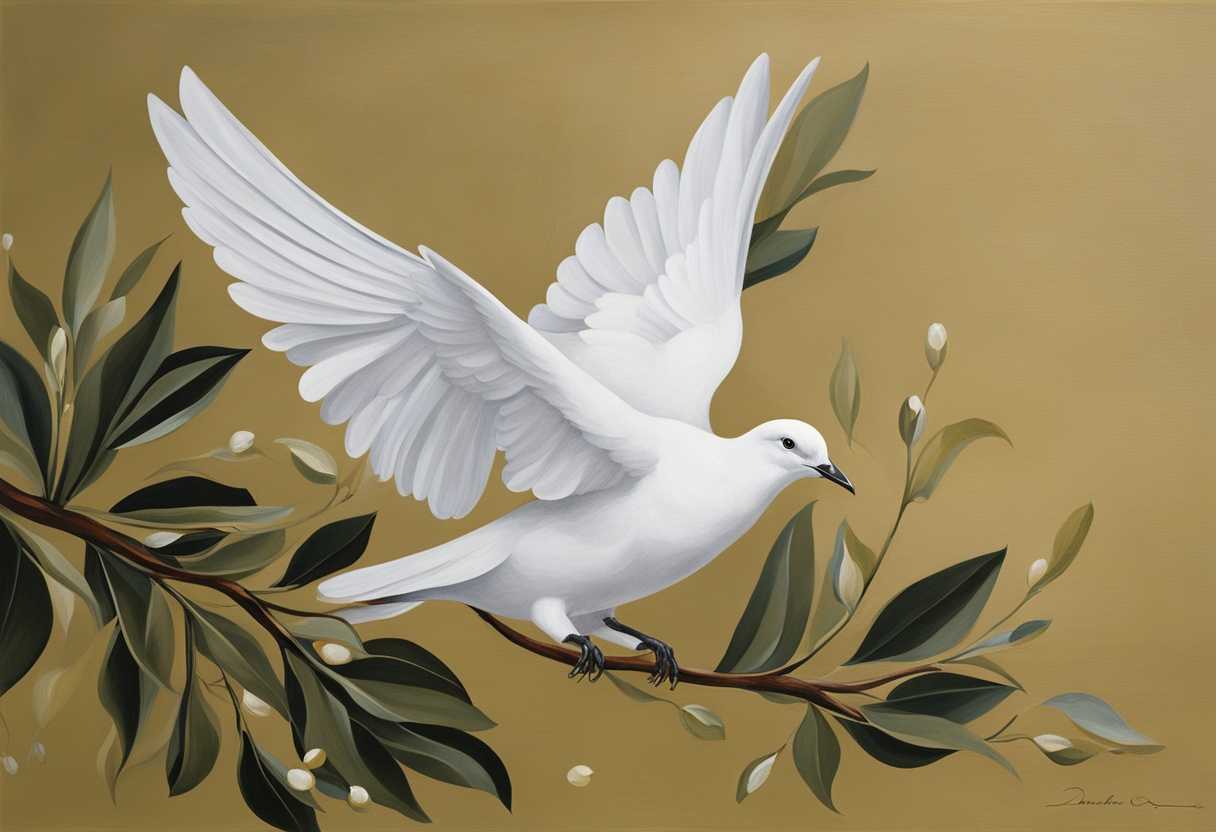
Setting the Scene for Genesis 8:8-12
In Genesis chapter 8, we find Noah and his family aboard the ark after the great flood that covered the earth. The scene is one of anticipation and hope as they wait for the waters to recede. The ark is a massive wooden vessel, filled with pairs of animals that were saved from the flood. The air is filled with the sounds of animals, the creaking of the ship, and the gentle lapping of water against the hull.
Noah, his wife, their three sons – Shem, Ham, and Japheth – along with their wives, are all on board. They have been living on the ark for many days, patiently waiting for a sign that it is safe to leave. As the days pass, Noah sends out a dove to see if it can find dry land. The tension is palpable as they eagerly await the return of the bird, hoping for a sign that the floodwaters have receded and that they can finally leave the ark.
The scene is one of both relief and trepidation as the dove returns with an olive leaf in its beak, signaling that the waters have indeed receded. Noah and his family are filled with gratitude and awe at God’s provision and protection throughout the flood. It is a moment of faith and trust in God’s promises as they prepare to disembark from the ark and begin a new chapter in the history of humanity.
What is Genesis 8:8-12 about?
Imagine the scene after the devastating flood, where the world had been completely covered in water. Now, as the water begins to recede, Noah sends out a dove to find out if there is any dry land where they can finally settle. The dove, a symbol of peace and hope, flies out in search of land, seeking a sign that the floodwaters have subsided and that life can begin anew.
This act of sending out the dove represents Noah’s faith and patience in waiting for God’s divine plan to unfold. It shows his trust in God’s promise to bring them safely through the flood and give them a new beginning. The dove’s return with an olive branch in its beak symbolizes the hope and renewal of life, as it signifies the presence of land and vegetation starting to reemerge. This moment is a powerful reminder of the resilience and faith that can sustain us through the most challenging times, knowing that there is always hope and a new beginning waiting on the horizon.
Understanding what Genesis 8:8-12 really means
The passage Genesis 8:8-12 reveals a deeply symbolic moment in the narrative of Noah’s Ark. Here, Noah sends out a dove to see if the floodwaters have receded. This sequence, which unfolds over several verses, holds profound insights for us even today.
Firstly, the dove itself serves as a rich symbol of peace and the Holy Spirit. The act of sending the dove represents a step of faith and a test of the conditions outside the ark — conditions unknown to Noah at the time. This mirrors our own spiritual journeys where often, we must send forth our “doves” — prayers, hopes, and trust — into uncertain situations, relying on God’s guidance and the signs He provides.
When the dove returns with an olive leaf, the narrative reaches its emotional and spiritual climax. The olive leaf is a sign of new life and new beginnings, showing that the waters have receded enough for trees to be exposed and for life to begin anew. This is profoundly symbolic of the renewing work of God in the world and in our personal lives. The olive leaf echoes through scriptures, reminiscent of the olive branch in the story of Jesus’ entry into Jerusalem, symbolizing peace and victory.
Why is this relevant today? The story resonates with anyone who has experienced a ‘flood’ — a personal, professional, or spiritual upheaval — and is searching for a sign of restoration or new beginning. It’s about holding onto hope and faith in the face of adversity, knowing that renewal is just around the horizon.
An anecdote to illustrate: consider a community that experienced a devastating flood. A family plants a new tree in their front yard during the rebuilding process. This tree, much like the olive leaf in Noah’s story, becomes a symbol of their resilience and hope for the future, reminding them that with faith and time, new beginnings are possible.
This passage invites us to reflect: what are the ‘doves’ we need to send out in faith today? What signs of renewal are we seeking from God in our current ‘floods’? The story of Noah and his dove challenges us to maintain hope and watch for the evidences of God’s continuing care and restoration in our lives as we ponder these questions.
What does it mean to wait on God’s timing?
Waiting on God’s timing means trusting that God’s plan will unfold at the perfect moment, even if it may not align with our own expectations or desires. Just as Noah waited patiently for the waters to recede before opening the ark’s door, we are reminded to be patient and have faith that God’s timing is always best. This verse shows the importance of waiting for God’s signal to move forward, even when we may be eager or anxious for a change. Noah sent out a dove to see if the waters had receded, but it returned. He waited seven days before sending the dove out again, and this time it returned with an olive leaf, indicating that the waters had subsided. This illustrates how God’s timing is precise and purposeful. We show obedience, trust, and faith that God will reveal His plans to us in His perfect timing by waiting on Him. Surrendering our own desires and plans to God’s timing ultimately requires believing that He knows what is best for us. It involves being patient, faithful, and obedient, even when we may not fully understand the reasons behind the wait. Just as Noah waited for the right moment to leave the ark, we are called to trust in God’s divine timing in all aspects of our lives.
Application
Imagine your life as a bustling office, where each day comes with its own flood of emails, meetings, and challenges. Just like Noah, who watched and waited for a sign, think of the olive branch as that ping of an important notification amidst the chaos—the signal of a fresh start and new possibilities. Let this ancient symbol inspire you to clear the clutter, rebalance your priorities, and innovate your personal and family life. How will you leverage this divine pause to reboot your spiritual and personal growth? What new chapters are waiting to be written in the storybook of your life? Will you seize this moment of hope and turn a new leaf?

Reverend Michael Johnson is an experienced Church Minister with a profound expertise in spirituality and guidance. With a serene presence and a compassionate heart, he has faithfully served his congregation for over 20 years, leading them on a spiritual journey towards inner peace and enlightenment. Reverend Johnson’s extensive knowledge of religious philosophies and profound understanding of human nature have made him a trusted confidant and mentor to many, as he seamlessly weaves his profound wisdom into life teachings. Reverend Johnson’s calming demeanor and empathetic nature continue to uplift and heal souls, nurturing a sense of unity and tranquility within his community.