
John 2:12-25 is about Jesus cleansing the temple in Jerusalem, symbolizing his authority over religious practices and the need for purity in worship.
12 After this he went down to Capernaum, with his mother and his brothers and his disciples, and they stayed there for a few days.
13 The Passover of the Jews was at hand, and Jesus went up to Jerusalem.
14 In the temple he found those who were selling oxen and sheep and pigeons, and the money-changers sitting there.
15 And making a whip of cords, he drove them all out of the temple, with the sheep and oxen. And he poured out the coins of the money-changers and overturned their tables.
16 And he told those who sold the pigeons, “Take these things away; do not make my Father’s house a house of trade.”
17 His disciples remembered that it was written, “Zeal for your house will consume me.”
18 So the Jews said to him, “What sign do you show us for doing these things?”
19 Jesus answered them, “Destroy this temple, and in three days I will raise it up.”
20 The Jews then said, “It has taken forty-six years to build this temple, and will you raise it up in three days?”
21 But he was speaking about the temple of his body.
22 When therefore he was raised from the dead, his disciples remembered that he had said this, and they believed the Scripture and the word that Jesus had spoken.
23 Now when he was in Jerusalem at the Passover Feast, many believed in his name when they saw the signs that he was doing.
24 But Jesus on his part did not entrust himself to them, because he knew all people
25 and needed no one to bear witness about man, for he himself knew what was in man.
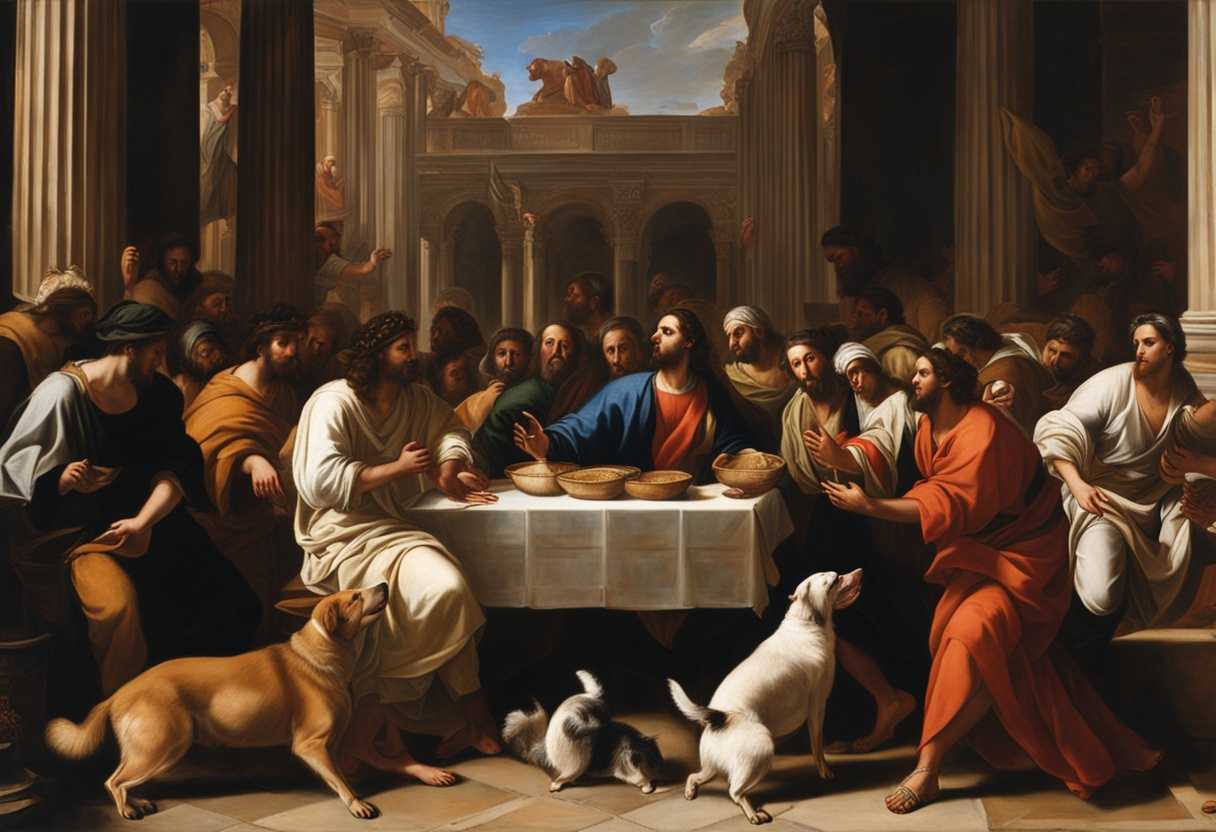
Setting the Scene for John 2:12-25
In John chapter 2, we find Jesus in Jerusalem during the time of the Passover festival. The scene is set in the temple, a grand and bustling place filled with people from all walks of life. Jesus arrives at the temple and is met with the sight of merchants selling animals for sacrifice and money changers exchanging currency. The atmosphere is charged with the sounds of animals, the clinking of coins, and the chatter of the crowd.
Jesus is accompanied by his disciples, who have been following him and witnessing his miracles. They are in awe of him and eager to see what he will do next. As Jesus observes the chaos in the temple, he is filled with righteous anger at the desecration of his Father’s house. He takes decisive action, overturning the tables of the money changers and driving out the merchants with a whip.
The religious leaders present are shocked and demand to know by what authority Jesus is acting. Jesus responds cryptically, foreshadowing his own death and resurrection. The scene is tense as Jesus challenges the status quo and asserts his authority as the Son of God. The disciples watch in amazement, realizing that they are witnessing the power and passion of their beloved teacher.
What is John 2:12-25 about?
Jesus demonstrates a powerful combination of authority, wisdom, and insight in this verse. He showcases his authority over the physical world and his unwillingness to tolerate injustice or disrespect in places dedicated to worship by clearing the temple. This act also symbolizes his desire for true reverence and purity in our hearts. Jesus reveals his ultimate mission of redemption and salvation for all mankind by foretelling his death and resurrection. He shows obedient submission to God’s plan, even in the face of immense suffering and sacrifice. This displays his unwavering faith and trust in the divine purpose behind his mission.
Furthermore, Jesus knowing people’s hearts is a profound reminder of his omniscience and compassion. He sees beyond outward appearances and into the depths of our souls, knowing our thoughts, intentions, and struggles. This challenges us to be honest and genuine in our relationship with him, as he already knows us completely. Jesus’ actions in this verse urge us to reflect on the purity of our worship, the depth of our faith, and the sincerity of our hearts in our journey with God.
Understanding what John 2:12-25 really means
The passage in John 2:12-25 recounts a significant event where Jesus visits the temple in Jerusalem during Passover. Upon seeing merchants and money changers conducting business within the temple grounds, Jesus displays righteous anger by overturning their tables and declaring that they have defiled His Father’s house by turning it into a marketplace. This action underscores the sacredness of the temple as a place of worship and prayer, emphasizing Jesus’ divine authority and His zeal for maintaining the sanctity of the temple.
In His conversation with the Jewish leaders, Jesus cryptically speaks of destroying the temple and raising it in three days, alluding to His impending death and resurrection. The phrase “Destroy this temple, and I will raise it again in three days” serves as a profound prophecy of Jesus’ sacrificial death and triumphant resurrection. By likening the temple to His own body, Jesus foreshadows the new foundation of faith that His resurrection will establish.
The passage resonates with Old Testament prophecies and teachings, such as Isaiah 56:7, which reinforces the temple’s purpose as a house of prayer for all nations. Similarly, Jeremiah 7:11 condemns the misuse of the temple, echoing Jesus’ actions in cleansing the temple. The parallel account in Matthew 21:12-13 further emphasizes the significance of upholding the sanctity of places of worship.
Today, this passage challenges believers to uphold respect for sacred spaces, ensuring that places of worship remain dedicated to their intended purpose. It prompts introspection regarding the integrity of our worship practices, urging us to ensure that our devotion is genuine and free from worldly influences. Understanding the depth of Jesus’ sacrifice and the authority He demonstrated through His actions in the temple encourages us to appreciate the foundational aspects of our faith.
To illustrate the significance of reclaiming sacred spaces, consider a community center initially designed for communal support and solace but later overrun by commercial interests. A respected leader steps in, clears out the vendors, and restores the center to its original purpose, reminding everyone of its true value. Similarly, Jesus’ cleansing of the temple serves as a poignant reminder of the sacredness of worship and the need to realign ourselves with God’s intended purposes.
In conclusion, John 2:12-25 prompts believers to reflect on the sanctity of worship spaces and the authenticity of their faith practices. It urges us to align our actions with God’s sacred intentions, ensuring that our worship remains pure and dedicated to Him.
Are we more concerned with earthly or heavenly things?
Jesus emphasizes the importance of focusing on heavenly things rather than earthly concerns in this passage. He points out that while many were impressed by the miracles He performed, He did not entrust Himself to them because He knew their hearts. Instead of being swayed by the worldly admiration and temporary validation that miracles brought, Jesus maintained a focus on fulfilling His divine purpose and on the deeper spiritual truths He came to impart. Jesus shows us the importance of aligning our thoughts and actions with the will of God by highlighting the significance of heavenly matters over earthly pursuits. This serves as a reminder for us to prioritize spiritual growth, faith, and the eternal Kingdom of God above fleeting material success or validation from others. Jesus’s example encourages us to seek a deeper understanding of God’s will and to prioritize our relationship with Him above all else, trusting that He will guide us in all aspects of our lives. Earthly concerns such as wealth, success, and recognition can easily consume us in our daily lives. However, the passage reminds us that true fulfillment and purpose come from focusing on heavenly things. We can navigate the challenges of life with clarity, purpose, and an eternal perspective by following Jesus’s example and prioritizing our spiritual well-being and relationship with God.
Application
Take a moment to reflect on your inner self. Are there parts clouded by selfish desires or distracted by the chaos of everyday life? Like keeping your home clean for your family, purify your heart for inner peace. Seek to fill yourself with love and respect for what truly matters. Will you pledge to let your actions and thoughts honor this newfound clarity and purpose? Are you ready to turn yourself into a sanctuary where peace can thrive?

Reverend Michael Johnson is an experienced Church Minister with a profound expertise in spirituality and guidance. With a serene presence and a compassionate heart, he has faithfully served his congregation for over 20 years, leading them on a spiritual journey towards inner peace and enlightenment. Reverend Johnson’s extensive knowledge of religious philosophies and profound understanding of human nature have made him a trusted confidant and mentor to many, as he seamlessly weaves his profound wisdom into life teachings. Reverend Johnson’s calming demeanor and empathetic nature continue to uplift and heal souls, nurturing a sense of unity and tranquility within his community.