
John 2:20 is about Jesus referencing the destruction of the temple and foretelling his resurrection as the true temple, symbolizing his body being the ultimate place of worship and connection with God.
20 The Jews then said, “It has taken forty-six years to build this temple, and will you raise it up in three days?”
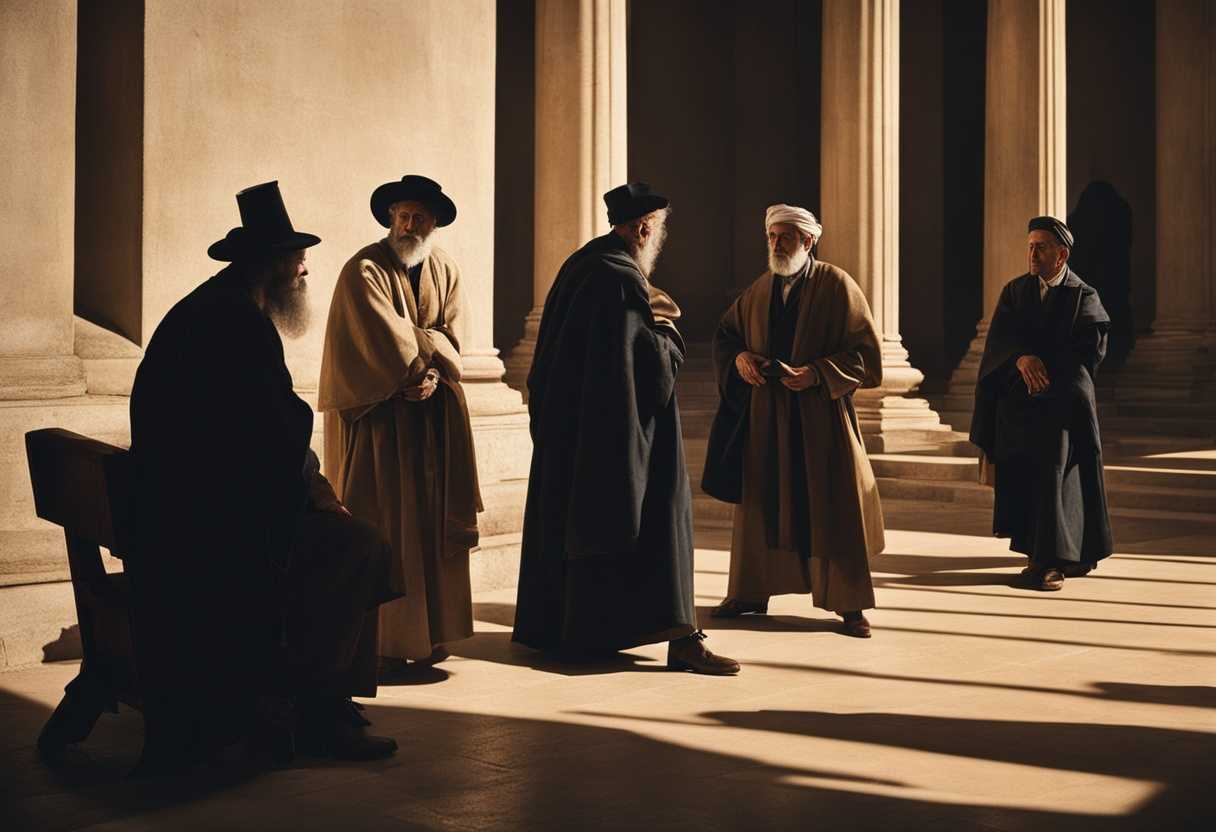
Setting the Scene for John 2:20
In John chapter 2, we find Jesus in Jerusalem during the time of the Passover festival. The scene takes place in the temple, a grand and bustling place filled with people from all over who have come to worship and offer sacrifices. Jesus is in the midst of a heated exchange with the religious leaders, who are questioning his authority and demanding a sign to prove his legitimacy.
Surrounded by a crowd of onlookers, Jesus stands tall and unwavering, his disciples by his side, including Peter, Andrew, James, and John. The atmosphere is tense as Jesus responds to the challenges thrown at him with wisdom and authority, leaving the religious leaders astonished by his teachings. The sun casts a warm glow over the temple courtyard, adding to the intensity of the moment as Jesus asserts his divine authority in the face of skepticism and doubt.
As the scene unfolds, the disciples watch in awe as Jesus displays his power and knowledge, setting the stage for the miracles and teachings that will follow. The clash of beliefs and the clash of wills create a dramatic backdrop for the unfolding events, setting the tone for the profound lessons that Jesus will impart during his time in Jerusalem.
What is John 2:20 about?
Jesus in this verse is not only predicting the destruction of the temple but also his own resurrection. He is asserting his divine authority and power by foretelling these events. This prediction showcases Jesus’ knowledge of future events and emphasizes his role as the Son of God. It is a profound statement that highlights the central message of Christianity – that Jesus is not just a mere mortal but the divine savior who triumphs over death.
Imagine witnessing Jesus confidently proclaiming his resurrection after predicting the destruction of a monumental structure like the temple. It must have been a time of great confusion and wonder for his disciples. This verse serves as a reminder of Jesus’ ultimate sacrifice and victory over death, reinforcing the belief in his divinity. It challenges us to reflect on our own faith and understanding of who Jesus is – a mere prophet or the Son of God with the power to overcome even death itself.
Understanding what John 2:20 really means
In John 2:20, we find a pivotal moment where Jesus responds to the Jewish leaders who question His authority after He cleanses the temple. These leaders, steeped in the physicality of the temple’s construction that spanned 46 years, challenge Jesus’ assertion that He could raise it in three days. This exchange sets the stage for deeper reflections on faith, resurrection, and spiritual renewal.
The context of this verse is crucial in understanding the tension between the tangible world and the spiritual realm. Jesus’ reference to raising the temple in three days is not about physical reconstruction but points to His impending resurrection. This challenges us to consider the limits of our understanding and the necessity of faith in the unseen, much like the struggle the Jewish leaders faced in comprehending Jesus’ words.
Related passages like John 2:19, where Jesus speaks of His resurrection, and 1 Corinthians 6:19, where Paul likens our bodies to temples of the Holy Spirit, further illuminate the significance of John 2:20. These connections emphasize the sacredness of Christ’s resurrection and the spiritual implications for believers today.
In our modern context, the themes of faith, hope, and renewal embedded in this verse remain profoundly relevant. Just as the Jewish leaders grappled with Jesus’ words, we too are often challenged to trust in God’s plan, especially when it surpasses our understanding. The promise of resurrection highlighted in this verse serves as a beacon of hope, assuring us of life beyond death and the transformative power of Christ’s sacrifice.
To illustrate the depth of this concept, consider a community center that took years to build, symbolizing unity and support. If someone claimed they could rebuild it in three days after its destruction, it would seem implausible. However, if this rebuilding signified a spiritual renewal within the community, the significance would resonate on a profound level, mirroring the spiritual renewal Jesus offers through His resurrection.
Through phrases like “forty-six years” and “raise it up in three days,” the verse conveys the contrast between human effort and divine power. The lengthy construction period of the physical temple juxtaposed with the swift resurrection of Christ underscores the limitations of human achievement and the surpassing glory of God’s redemptive work.
In contemplating John 2:20 and its implications, we are invited to transcend the confines of the material world and embrace the profound truths of faith and resurrection. This verse challenges us to look beyond the temporal and trust in God’s greater plan, finding assurance in the promise of new life and spiritual transformation through Christ’s resurrection.
In what ways do we offer our bodies to God?
We are called to offer our bodies to God in a sacrificial manner, just as Christ sacrificed his body for us in this verse. We dedicate our entire being to God’s service and will by presenting ourselves as living sacrifices. This involves surrendering not just our physical bodies, but also our minds, hearts, and spirits to Him.
Offering our bodies to God also means submitting our desires, passions, and actions to His guidance and direction. We are to align our thoughts and behaviors with God’s Word and purposes, allowing His Spirit to dwell within us and work through us. This requires a complete surrender of self-will and a commitment to following God’s ways above our own.
Furthermore, offering our bodies to God involves using our physical abilities, talents, and resources in a way that honors and glorifies Him. This may include serving others, using our gifts for the benefit of the church, and living in a manner that reflects the love and truth of Christ to the world. Our bodies are instruments through which we can carry out God’s work on earth, and when we offer them up to Him, He can use us to bring about His kingdom purposes.
Application
Think of your body as your home office, where both work and family life thrive. John 2:20 invites us to view our bodies as temples, sacred spaces for the Holy Spirit. Are you treating your body with the respect and care it deserves, both physically and spiritually? Will you commit to nurturing yourself, recognizing this as an essential duty in honoring God? Are you ready to make your well-being a top priority, an act of daily worship?

Reverend Michael Johnson is an experienced Church Minister with a profound expertise in spirituality and guidance. With a serene presence and a compassionate heart, he has faithfully served his congregation for over 20 years, leading them on a spiritual journey towards inner peace and enlightenment. Reverend Johnson’s extensive knowledge of religious philosophies and profound understanding of human nature have made him a trusted confidant and mentor to many, as he seamlessly weaves his profound wisdom into life teachings. Reverend Johnson’s calming demeanor and empathetic nature continue to uplift and heal souls, nurturing a sense of unity and tranquility within his community.