
John 3:16-23 is about the demonstration of God’s profound love for humanity through the sacrificial gift of His Son, Jesus Christ, to provide salvation and bring light into a darkened world, with an emphasis on the importance of believing in Jesus as the light and following Him faithfully.
16 “For God so loved the world, that he gave his only Son, that whoever believes in him should not perish but have eternal life.”
17 For God did not send his Son into the world to condemn the world, but in order that the world might be saved through him.
18 Whoever believes in him is not condemned, but whoever does not believe is condemned already, because he has not believed in the name of the only Son of God.
19 And this is the judgment: the light has come into the world, and people loved the darkness rather than the light because their works were evil.
20 For everyone who does wicked things hates the light and does not come to the light, lest his works should be exposed.
21 But whoever does what is true comes to the light, so that it may be clearly seen that his works have been carried out in God.
22 After this Jesus and his disciples went into the Judean countryside, and he remained there with them and was baptizing.
23 John also was baptizing at Aenon near Salim, because water was plentiful there, and people were coming and being baptized.
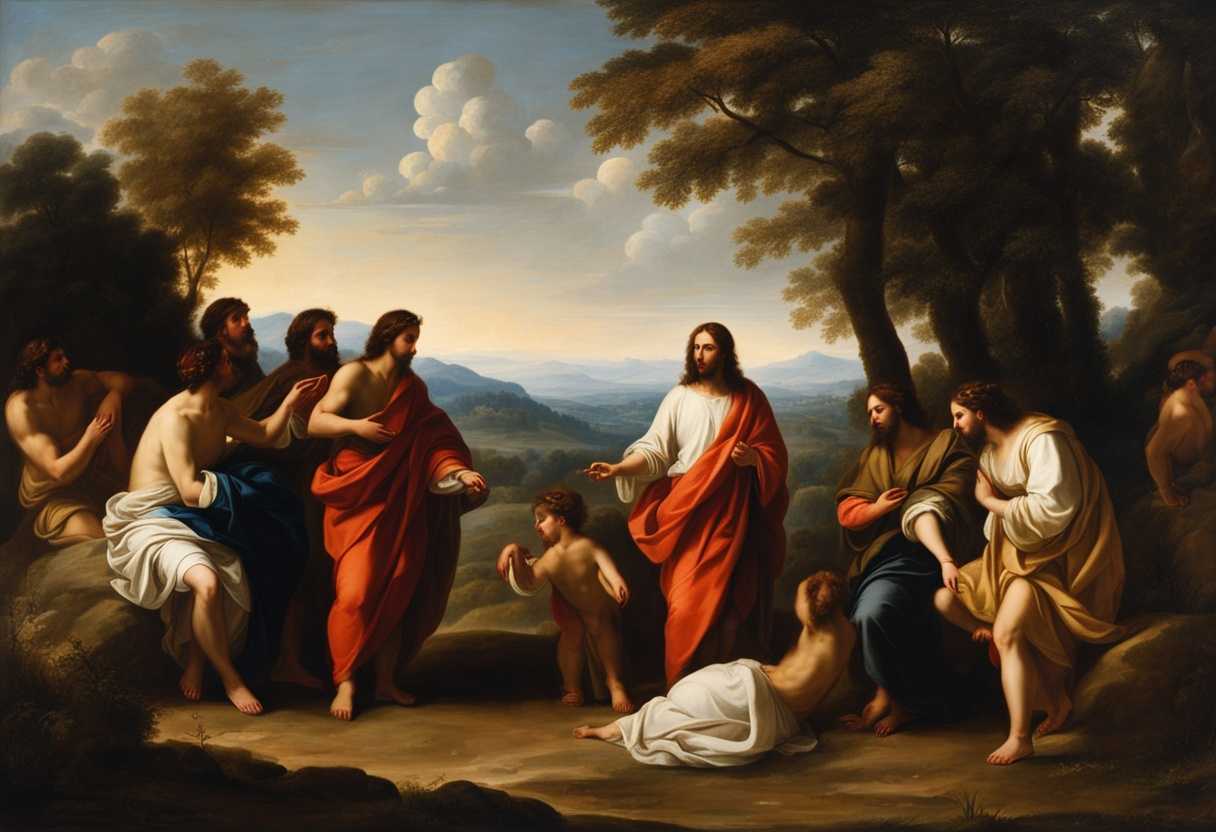
Setting the Scene for John 3:16-23
In John chapter 3, we find Nicodemus, a Pharisee and a member of the Jewish ruling council, coming to Jesus under the cover of night to seek wisdom and understanding. The scene is set in Jerusalem, likely in a quiet corner or secluded area where Nicodemus can speak with Jesus privately without attracting attention. The night sky hangs overhead, casting a serene and contemplative atmosphere over their conversation.
As Nicodemus engages Jesus in a deep discussion about spiritual matters, the two men are surrounded by a sense of anticipation and curiosity. Nicodemus, a respected religious leader, is grappling with the teachings of Jesus, a controversial figure who has been performing miracles and challenging traditional beliefs. Their dialogue delves into the concept of being born again and the nature of salvation, with Jesus imparting profound truths about God’s love and the purpose of his coming into the world.
The interaction between Nicodemus and Jesus in this scene is one of earnest seeking and profound revelation, as the Pharisee grapples with the radical teachings of the man before him. Their meeting under the cover of night symbolizes the spiritual darkness that Nicodemus is seeking to illuminate with the light of Jesus’ wisdom and truth.
What is John 3:16-23 about?
This verse from the Bible, John 3:16, encapsulates the essence of God’s love and sacrifice for humanity. It highlights the immense and unconditional love that God has for all people – a love so profound that He was willing to give His only Son, Jesus Christ, as a gift to save us from sin and grant us eternal life. Just imagine the magnitude of this love – the Creator of the universe offering His most precious possession for the redemption of His creation.
Reflecting on this verse prompts us to consider our own understanding of love and sacrifice. How far are we willing to go for those we care about? How deep is our capacity to love others, even those who may not deserve it? John 3:16 challenges us to embody a love that is sacrificial, selfless, and all-encompassing, mirroring the love that God has shown us through Jesus. It calls us to extend this love not just to those who are easy to love, but also to those who may be difficult or different from us.
Let this verse serve as a reminder of the immeasurable love that God has for each of us, and let it inspire us to love others in the same way – with a love that knows no bounds, no conditions, and no limits. May we strive to emulate God’s love in our daily lives, spreading kindness, compassion, and grace to everyone we encounter, just as God did for us through the ultimate sacrifice of His Son.
Understanding what John 3:16-23 really means
John 3:16-23 is a continuation of Jesus’ conversation with Nicodemus, a Pharisee and member of the Jewish ruling council. This passage is central to Christian theology, emphasizing God’s love, the purpose of Jesus’ mission, and the response required from humanity. “For God so loved the world” underscores the universality of God’s love, extending to all of humanity. “He gave his one and only Son” signifies the sacrificial nature of God’s love, an act of divine generosity and grace. “Whoever believes in him shall not perish but have eternal life” highlights the promise of salvation through faith in Jesus Christ. “Light has come into the world” symbolizes Jesus as truth, purity, and divine revelation. “People loved darkness instead of light because their deeds were evil” speaks to the human tendency to reject divine truth and cling to sinful behaviors.
Related biblical passages such as Romans 5:8, 1 John 4:9-10, and John 1:4-5 reinforce the themes of God’s unconditional love, Jesus’ sacrificial mission, and his role as the light of the world. The message of God’s love and the offer of eternal life through faith in Jesus remain timeless and universal, relevant in a world filled with darkness, despair, and confusion. The call to believe and step into the light is an invitation to transformation and a new way of living. Imagine a person lost in a dense forest at night, feeling hopeless and afraid, who sees a distant light guiding them to safety. This light represents Jesus, guiding us out of the darkness of sin into God’s love.
In modern times, individuals struggling with addiction or depression often find new purpose, hope, and direction through encountering Jesus’ love and choosing to believe. John 3:16-23 is a powerful reminder of God’s immense love and the transformative power of faith in Jesus. It calls each of us to step out of darkness and into the light, embracing the eternal life offered through Christ. This passage encourages reflection on how we can live in the light of God’s love and truth, inviting us to consider our own response to the message of salvation.
How can we show God’s love to others?
We can show God’s love to others by imitating His example of sacrificial love. We can demonstrate love by giving of ourselves for the benefit of others, just as God gave His only Son for us. This can be shown through acts of service, kindness, forgiveness, and compassion toward those around us. We can strive to show patience, understanding, and respect in our interactions with others, reflecting the love and grace that God extends to us. We mirror God’s love in our own lives and relationships by treating others with love and kindness.
Showing God’s love to others also involves sharing the message of His love and salvation. We can spread the good news of Jesus Christ through both our words and actions, pointing others towards the hope and redemption found in Him. We can help others experience the transformative power of His grace by living out our faith and sharing the truth of God’s love.
Application
Imagine the power of love that guides us in our toughest times at work or in our family. John 3:16-23 shows us the ultimate love from God, a love that offers us salvation through Jesus. Let’s turn our gratitude into action by sharing this incredible news. Walk in the light, live out the truth and let God’s love shine through you. Will you share this love and message of Christ with everyone you meet today?

Reverend Michael Johnson is an experienced Church Minister with a profound expertise in spirituality and guidance. With a serene presence and a compassionate heart, he has faithfully served his congregation for over 20 years, leading them on a spiritual journey towards inner peace and enlightenment. Reverend Johnson’s extensive knowledge of religious philosophies and profound understanding of human nature have made him a trusted confidant and mentor to many, as he seamlessly weaves his profound wisdom into life teachings. Reverend Johnson’s calming demeanor and empathetic nature continue to uplift and heal souls, nurturing a sense of unity and tranquility within his community.